When will robotaxi’s become commonplace? (8/8)

Autonomous shuttle bus in tourist hotspot Terhills (Genk, Belgium)

Until recently, optimists would say “in a few years.” Nobody believes that anymore, except for Egon Musk. The number of – so far small – incidents involving robot taxis is increasing to such an extent that the cities where these taxis operate on a modest scale, San Francisco in particular, want to take action.

Europe vs USA

In any case, it will take a long time before robotaxis are commonplace in Europe. There are two major differences between the US and Europe when it comes to transportation policy.

In the US, each state can individually determine when autonomous vehicles can hit the road. In Europe, on the other hand, a General Safety Regulation has been in force since June 2022 that applies to all countries. This states, among other things, that a driver must maintain control of the vehicle at all times. Strict conditions apply to vehicles without a driver: separate lanes, short routes on traffic-calmed parts of the public road and always with a ‘safety driver’ on board.

The second difference is that in the US 45% of all residents do not have public transport available. In Europe you can get almost anywhere by public transport, although the frequency is low in remote areas. Governments say they want to further increase accessibility by public transport, even if this is at the expense of car traffic. To this end, they want an integrated transport policy, a word that is virtually unknown in the US.

Integrated transport policy

In essence, integrated transport policy is the offering of a series of transport options that together result in (1) the most efficient, safe and convenient satisfaction of transport needs, (2) reduction of the need to travel over long distances (including via the ’15- minutes city’) and (3)  minimal adverse effects on the environment and the quality of life, especially in the large cities. In other words, transport is part of policy aimed at improving the quality of the living environment.

Integrated transport policy assesses the role of vehicle automation in terms of their contribution to these objectives. A distinction can be made between the automation of passenger cars (SAE level 1-3) and driverless vehicles (SEA level 4-5).

Automation of passenger cars

Systems such as automatic lane changes, monitoring distance and speed, and monitoring the behavior of other road users are seen as contributing to road safety. However, the driver always remains responsible and must therefore be able to take over steering at any time, even if the car does not emit a (disengagement) signal. Eyes on the road and hands on the wheel.

Driverless cars

‘Hail-riding’ will result in growth of traffic in cities because the number of car kilometers per user increases significantly, at the expense of walking, cycling, public transport and to a much lesser extent the use of private cars. Sofar, the number of people who switch from their own car to ‘hail-riding’ is minimal. The only way to reverse this trend is to impose heavy taxes on car kilometers in urban areas. On the other hand, the use of robot shuttles is beneficial in low-traffic areas and on routes from residential areas to a station. Shuttles are also an excellent way to reduce car use locally. For example, in the extensive Terhills resort in Genk, Belgium, where people leave their cars in the parking lot and transfer to autonomous shuttles that connect the various destinations on the site with high frequency.

A few months ago (April 2023), I read that Qbus in the Netherlands wants to experiment with 18-meter-long autonomous buses, for the time being accompanied by a ‘safety driver’. Routes on bus lanes outside the busiest parts of the city are being considered. Autonomous metros and trains have been running in various cities, including London, for years. It is this incremental approach that we will need in the coming years instead of dreaming about getting into an autonomous car, where a made bed awaits us and we wakes us rested 1000 kilometers away. Instead of overcrowded roads with moving beds, we are better off with a comfortable and well-functioning European network of fast (sleeper) trains on a more modern rail infrastructure and efficient and convenient pre- and post-transport.

Automated cars; an uncertain future (7/8)

For more than a decade, car manufacturers have been working on technology to take over driver’s actions. A Lot  of money has been invested in this short period and many optimistic expectations have been raised, but no large-scale implementation of the higher SAE levels resulted so far. Commercial services with robotaxi’s are scarce and still experimental.

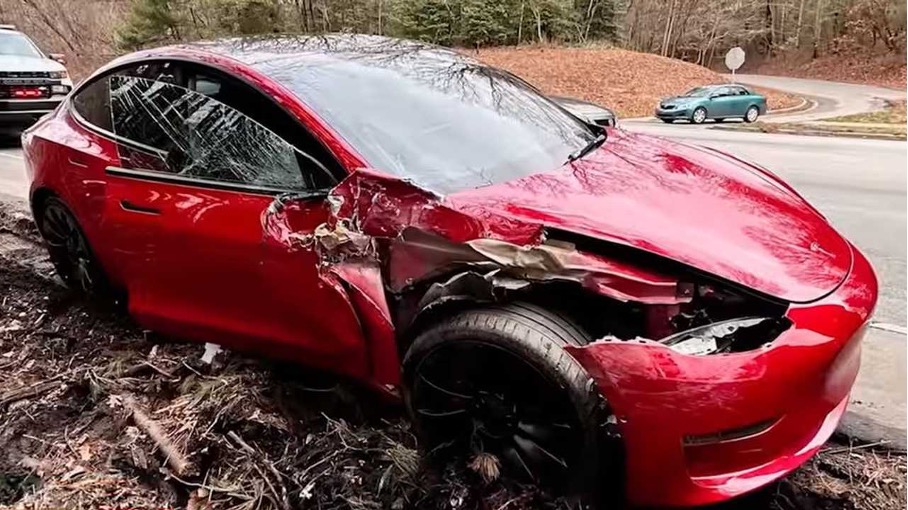
Misleading photo: This is not allowed in any country, unless the car is parked

The changing tide

Especially in the period 2015 – 2018, the CEOs of the companies involved cheered about the prospects; soon after, sentiment changed. In November 2018, Waymo CEO John Krafcik said that the spread of autonomous cars is still decades away and that driving under poor circumstances and in overcrowded cities will always require a human driver. Volkswagen’s CEO said fully self-driving cars “may never” hit public roads.

The companies involved are therefore increasingly concerned about the return on the $100 billion invested in the development of car automation until the end of 2021. The end of the development process is not yet in sight. Much has been achieved, but the last 20% of the journey to the fully autonomous car will require the most effort and much more investment. Current technology is difficult to perfect. “Creating self-driving robotaxi is harder than putting a man on the moon,” said Jim Farley, CEO of Ford, after terminating Argo, the joint venture with Volkswagen, after the company had invested $100 million in it.

The human brain can assess complex situations on the road much better than any machine. Artificial intelligence is much faster, but its accuracy and adaptability still leave much to be desired. Driverless cars struggle with unpredictability caused by children, pedestrians, cyclists, and other human-driven cars as well as with potholes, detours, worn markings, snow, rain, fog, darkness and so on. This is also the opinion of Gabriel Seiberth, CEO of the German computer company Accenture, and he advises the automotive industry to focus on what is possible. Carlo van de Weijer, director of Artificial Intelligence at TU Eindhoven, agrees: “There will not be a car that completely takes over all our tasks.”

Elon Musk, on the other hand, predicted that by 2020 all Tesla’s will have SEA level 5 thanks to the new Full Self Driving Chip. In 2023 we know that its performance is indeed impressive. Tesla may therefore be the first car to be accredited at SAE level 3. That is not yet SAE level 5. The question is whether Elon Musk minds that much!

The priorities of the automotive industry

For established automotive companies, the priority is to sell as many cars as possible and not to make a driver redundant. The main objective is therefore to achieve SAE levels 2 and possibly 3. The built-in functions such as automatic lane changing, keeping distance, and passing will contribute to the safe use of cars, if drivers learn to use them properly. Research shows that drivers are willing to pay an average of around $2,500 for these amenities. That is different from the $15,000 that the beta version of Tesla’s Full Self Driving system costs.

The automotive industry is in a phase of adjusting expectations, temporizing investments, downsizing involved business units, and looking for partnerships. GM and Honda are collaborating on battery development; BMW, Volkswagen and Daimler are in talks to share R&D efforts for autonomous vehicles; and Ford and VW have stopped developing an autonomous car and are working together on more realistic ambitions.

Safety issues at SAE level 3

But even with a focus on SAE level 3, the problems do not go away. The biggest safety problem may well lie at this level. Elon Musk has suggested for years that Tesla’s autopilot would allow drivers to read a book or watch a movie. All they must do is stay behind the wheel. They must be able to take control of the car if the automatic system indicates that it can no longer handle the situation. Studies in test environments show that in this case the reaction time of drivers is far too long to prevent disaster. An eye on the road and a hand on the wheel is still mandatory everywhere in the world, except in  few paces for cars accredited at SEA level 4 under specified conditions.

The assumption is that the operating system is so accurate that it indicates in time that it considers the situation too complex. But there are still many doubts as to whether these systems themselves are sufficiently capable of properly assessing the situation on the road at all times. Recent research from King’s College London showed that pedestrian detection systems are 20% more accurate when dealing with white adults than when dealing with children and 7.5% more accurate when dealing with white people compared to people with dark skin.

In the next post I will go into more detail about the legislation and what the future may bring.

First driverless taxis on the road 6/8

Since mid-2022, Cruise and Waymo have been allowed to offer a ride-hailing service without a safety driver in a quiet part of San Francisco from 11pm to 6am. The permit has now been extended to the entire city throughout the day. The company has 400 cars and Waymo 250. So far, it has not been an unqualified success.

A turbulent start

In a hilarious incident, an empty taxi was pulled over by police; it stopped properly, but kept going after a few seconds, leaving the officers wondering if they should give chase. The National Highway Traffic Safety Administration is investigating this incident, as well as several others involving Cruise taxis stalling at intersections, and the Fire Department reports 60 incidents involving autonomous taxis.

Pending further investigation, both companies are only allowed to operate half of their fleet. In addition to the fire department and public transport companies, trade unions are also opposed to the growth of autonomous taxis. California’s governor has rejected the objections, fearing that BigTech will swap the state for more car-friendly ones. It is expected that autonomous taxis will gradually enter all major US cities, at a rate just below that of Uber and Lyft.

Cruise has already hooked another big fish: In the not-too-distant future, the company will be allowed to operate autonomous taxis in parts of Dubai. 

The number of autonomous taxi services in the world can still be counted on one hand. Baidu has been offering ride-hailing services in Wuhan since December 2022, and robot taxis have been operating in parts of Shenzen since then.

Singapore was the first city in the world to have several autonomous taxis operating on a very small scale. These were developed by nuTonomy, an MIT spin-off, but the service is still in an experimental phase. Another company, Mobileye, also plans to start operating in Singapore this year. 

The same company announced in 2022 that it would launch a service in Germany in 2023 in partnership with car rental company Sixt 6, but nothing more has been heard. A survey by JD Power found that almost two-thirds of Germans do not trust ‘self-driving cars’. But that opinion could change quickly if safety is proven and the benefits become clear.

What is it like to drive a robotaxi?

Currently, the group of robotaxi users is still small, mainly because the range is limited in space and time. The first customers are early adopters who want to experience the ride. 

Curious readers: Here you can drive a Tesla equipped with the new beta 1.4 self-driving system, and here you can board a robotaxi in Shenzhen.

The robotaxis work by hailing: You use an app to say where you are and where you want to go, and the computer makes sure the nearest taxi picks you up. Meanwhile, you can adjust the temperature in the car and tune in to your favourite radio station.

Inside the car, passengers will find tablets with information about the journey. They remind passengers to close all doors and fasten their seatbelts. Passengers can communicate with remote support staff at the touch of a button. TV cameras allow passengers to watch. Passengers can end the journey at any time by pressing a button. If a passenger forgets to close the door, the vehicle will do it for them. 

The price of a ride in a robotaxi is just below the price of a ride with Uber or Lyft. The price level is strongly influenced by the current high purchase price of a robotaxi, which is about $175,000 more than a regular taxi. Research shows that people are willing to give up their own cars if robotaxis are available on demand and the rides cost significantly less than a regular taxi. But then the road is open for a huge increase in car journeys, CO2 emissions and the cannibalisation of public transport, which I previously called the horror scenario.

Roboshuttles

In some cities, such as Detroit, Austin, Stockholm, Tallinn and Berlin, as well as Amsterdam and Rotterdam, minibuses operate without a driver, but usually with a safety officer on board. They are small vehicles with a maximum speed of 25 km/h, which operate in the traffic lane or on traffic-calmed streets and follow a fixed route. They are usually part of pilot projects exploring the possibilities of this mode of transport as a means of pre- and post-transport.

Driving without a driver has a price (5/8)

In an autonomous car from SAE level 4, perception equipment – the eyes and ears – and software take over human brain functions. This requires accurate maps, laser, radar, lidar and cameras. The lidar, which means ‘detect light and range’, works in conjunction with the car’s cameras. This system pulses laser waves to map the distance to objects day and night, up to up to 100 meters with an accuracy of a few centimeters. The price of all this equipment is between €150,000 and €200,000. The lidar is a high-cost item, although this system is becoming increasingly cheaper due to industrial production. Together, these tools build a four-dimensional image of the environment, and all functions of the moving car are controlled using stored software and communications in the cloud.

Google/Waymo

Google’s X-lab began developing an autonomous car in 2009. In 2016, the company had already completed more than 1.5 million test kilometers and spent $1.1 billion on the development of an autonomous car. The company previously used a self-developed model (‘the firefly’, see photo). The company then deployed converted Chrysler Pacifica Hybrids, and these will be exchanged for fully electric Jaguar I-Pace cars.

In 2016, Google’s parent company Alphabet parlayed autonomous car developments into a new company called Waymo (derived from “a new way of mobility”).

General motorcycles/cruise

Cruise was founded in 2013 with the intention of developing a self-driving car. In 2016, General Moters acquired the company for an amount of $500 million. To date, the company has completed 700,000 test miles in San Francisco’s urban environment with no fatalities.

Uber

In 2016, Uber began working with Volvo to develop an autonomous car that could serve as a taxi. The company had acquired software manufacturer Otto for a net $600 million. The company predicted that there will be 75,000 self-driving cars on the road by 2019. That became zero. During the test phase, the company experienced several accidents, including one with a fatal outcome. In addition, Waymo became a target of data theft, a case that was decided in Waymo’s favor by the court. Uber therefore had to pay damages of €250 million (in shares). This led to the departure of Uber founder Travis Kalanick. His successor, Dara Khosrowshahi, has put the development of an autonomous car on the back burner. It was recently announced that Uber has signed a contract with Waymo to use this company’s autonomous cars in the future.

Tesla

Until recently, the use of lidar was not possible due to the high costs for car manufacturers that opt for accreditation at SAE level 3. Tesla therefore equipped its cars exclusively with radar, cameras and computer vision. The latter means that all driving Teslas transmit camera images of traffic and the way in which motorists react to ‘the cloud’. The company has been developing these images with artificial intelligence for years. It prides itself on the fact that its cars have rules of conduct for every conceivable traffic situation.

The development of the Tesla was accompanied by high expectations but also by many accidents, some of which were fatal. Last year, Tesla made available a beta version of the FSD (“Full Self Driving”) software package for a price of $15,000. However, the company had to recall as many as 362,000 cars under the authority of the Traffic Safety Administration because this package was encouraging illegal driving. It looks like that these issues have been resolved and some experts have suggested that Tesla will be able to qualify for accreditation at least at SEA Level 3. This still has to happen.

Ford and Volkswagen 

These companies threw in the towel in 2022 and unplugged Argo, a company that was supposed to develop an autonomous car to provide SAE level 4 taxi services. Instead, both companies announced focusing on the SAE levels 2 and 3, like most auto makers.

According to analysts at AlixPartners, the industry has invested $100 billion in developing car automation by 2023, in addition to $250 billion in development of electric cars. I will discus the profitability of these investments later.

The automation of driving: two views (4/4)

Currently, every car manufacturer plus hundreds of startups are working on developing artificial intelligence for driving automation. This should enable communication with the car’s passengers, sensing and anticipating the behavior of other vehicles and road users, communicating with the cloud and planning a safe and fast journey. I will write later about the investments made to achieve this goal.

Incorrect use of Tesla’s autopilot has led to fatal crashes

The development of car automation became visible when Google was the first to start a project in 2009. The activities that technology companies and the automotive industry carry out start from two different visions of the desired result.

Maintain the existing traffic system

The first view assumes that automation is a gradual process that will result in drivers ability to transfer control of the vehicle in a safe manner. It is provisionally assumed that a driver will always be present. That is why taking over control is no problem under specific conditions, such as bad weather and crowded streets. Tesla, an outspoken supporter of this vision, has therefore been talking about its autopilot for years. This came under heavy criticism because the number of functions that were automated was limited. Partly because of this, the so-called autopilot could only be used on a limited number of roads and under favorable conditions.

Most established automotive manufacturers primarily have in mind the higher segment of automobiles and announce they will only make relatively cheaper models suitable for this purpose at a later stage. Maintaining the current traffic system is paramount. The car industry wants to avoid at all costs that people will eventually stop buying cars and limit themselves to ride-hailing in autonomous vehicles.

To another traffic system

The latter is exactly the intention of the companies that adhere to the second vision. These primarily include non-traditional automotive companies, with Google (later Alphabet) in the lead. What they had in mind from the start was to achieve SAE level 4 and, in the long term, SAE 5 level, cars that can drive safely on the road without the presence of a driver. Companies belonging to this group advocate a completely new transport system. In their opinion, safe driving at SAE level 3 is impossible if the driver is not constantly paying attention. They believe that in the event of a ‘disengagement signal’, taking control of the car takes too much time and will result in dangerous situations. In addition to Google, Uber (in collaboration with Volvo) also belonged to this group, but now appears to have dropped out. This also applies to Ford and Volkswagen. General Motors is betting on two horses and aims to maintain accreditation at SAE level 4 with its subsidiary Cruise, although Alphabet’s subsidiary Waymo has by far the best cards.

Important message for the readers.

From next year, the frequency of my articles about the quality of our living environment will decrease sharply. I admit to an old love: Music. In my new website (in Dutch) I write about why we love music, richly provided with examples. Maybe you will kike it too. Follow the link below to have a look.

https://www.hermanvandenbosch.online

Why we should stop talking about self-driving cars (3/8)

The term ‘self-driving car’ is used for a wide variety of technical support systems for car drivers. The Society of Automotive Engineers (SAE) has distinguished six types. This classification is recognized worldwide.

The six SAE levels of automotive automation

At SAE level 0, a car has been equipped with various warning systems, such as unvoluntary deviation from lane, traffic in the blind spot, and emergency braking. At SEA levels 1 and 2, cars can steer independently or/and adjust their speed in specific conditions on motorways. Whether drivers are allowed to take their hands from the steering wheel depends on national law. That is certainly not the case in Europe. As soon as environmental conditions make steering and acceleration more complex, for example after turning onto a busy street, the driver must immediately take over the steering.

A properly functioning SAE Level 3 system allows drivers to take their eyes off the road and focus on other activities. They must sit behind the wheel and be on standby and are always held responsible for driving the car. They must immediately take over control of the car as soon as ‘the system’ gives a (‘disengagement’) signal, which means that it can no longer handle the situation. There is currently no car worldwide that is accredited at SEA-3 level.

This level of control is not sufficient for driverless taxi services. Automotive and technology companies such as General Moters and Alphabet have been working hard to meet the requirements of the higher levels (SAE 4). Their expensive cars (up to $250,000) have automated backups, meaning they can handle any situation under specified conditions, such as well-designed roads, during the day and at a certain speed. Under these circumstances, no driver is required to be present.

SAE Level 5 automation can operate without a driver in all conditions. There is currently no vehicle that meets this requirement.

The variety of options in this classification explains why the term ‘self-driving car’ should not be used. Cars classified at SAE level 1 and 2 can best be called ‘automated cars’ and cars from SAE level 3 onwards can be called autonomous cars.

The state of California introduced new rules in 2019 that allow cars at SAE 4 level to participate in traffic. Very strict conditions apply to this. As a result, Alphabet (Waymo) and General Motors (Cruise) have been allowed to launch driverless taxi services. All rides are monitored with cameras to prevent reckless behavior or vandalism.

Last week, you might have read the last in a series of 25 posts about improving environmental quality.  Right now, I have finalized an e-book containing all posts plus additional recommendations.  If you follow this link, you can download the book (90 pages) for free. A version in Dutch language can be downloaded HERE