
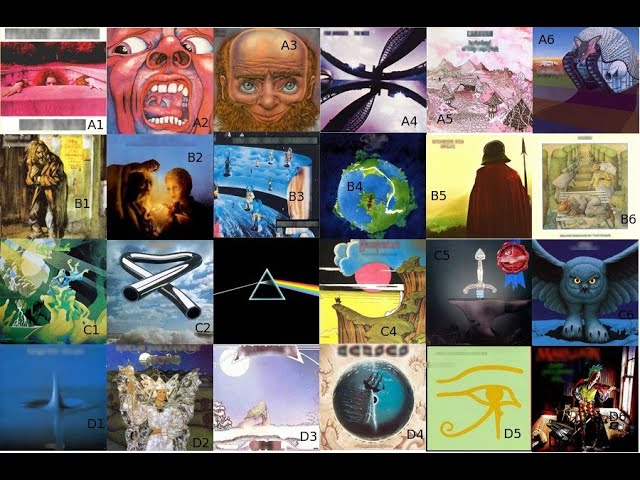
Neo-progressive rock (Prog rock 1965 – 2025 part 6)

To understand the evolution from prog rock to neo-progressive rock and later to post progressive rock, it is necessary to dwell on what was happening on the musical scene in the period after 1975, in particular the rise of punk.[1]

Changing environment

Punk opposed what were seen as musical excesses, such as psychedelic-influenced musical styles, theatrical and virtuoso playing, long songs, imaginative themes and social utopias. This mainly concerned hard rock, metal, symphonic rock and prog rock. Fans also got tired of the long, complicated songs with sometimes inimitable lyrics. For this, see my post on punk in the history of rock after 1960 series. 

The popularity of punk was short-lived, after which most of the remaining groups improved mastery of their instruments and replaced political slogans with appealing lyrics. Initially, this new brand of punk was referred to as ‘post punk’; record companies started using the term ‘new wave’, music critics spoke of ‘alternative’ or ‘alt-rock’ and young people spoke of ‘underground music’. A wide variety of styles fall under this heading. Groups included in this category are R.E.M, Nirvana, Pearl jam, Red hot chili peppers, Pixies, Cure, Green day and many others. What these bands have in common is that they distance themselves from what they saw as commercial pop music, which of course is partly a sham.  You can also read about this in my post on alternative rock.

All this, of course, does not escape the notice of prog rock groups. They realise that adjustments are inevitable, first and foremost, improving the accessibility of their music. This would also increase the willingness of radio stations to play it. This went down well with groups like Pink Floyd, Genesis, Asia and Yes. Especially by taking substantial steps towards pop. Groups without an established tradition, such as Marillion, IQ and Pendragon were looking for a way to renew prog rock itself. This certainly succeeded well in the 1980s.

Characteristics of neo-progressive rock

I will list characteristics of neo-progressive rock below and for each of these you can look and listen to a song for illustration. Remember that the differences between prog rock and neo-progressive rock are gradual. For that matter, so are the differences between neo-progressive and post-progressive rock. Also, you must realise that typifying music on the basis of stylistic characteristics is usually done afterwards and musicians are hardly concerned with it.

1. Melody and accessibility (versus complexity and long songs)

Neo-progressive rock remains more complex than ‘mainstream rock’. There is more emphasis on catchy melodies and the articulation of emotion, making songs more resonant than older prog rock tunes.

And good example is: ‘Kayleigh’ (Misplaced childhood, 1985) by MarillionThis song has personal and emotional lyrics and a simple structure.

2. Synthesiser-driven sound (versus analogue instruments such as guitar and organ)

Synthesisers and other electronic instruments play a dominant role in neo-progressive rock, partly replacing guitar and piano. With electronic instruments, greater differences in timbre can be created, ranging from dreamy (or ethereal) to menacing and bombastic. You can now watch and listen to ‘Awake and Nervous’ (Tales from the lush attic, 1983) by IQ, a recording from 2019. The synthesiser creates a layered pallet of sounds to reinforce the emotion this song seeks to evoke.

3. Influence of pop and new wave (versus classical and jazz)

Influences from pop music, new wave and alternative rock result in a tighter and more polished sound, and as a consequence, music that resonates better with a wider audience.

A good example is ‘A man of nomadic traits'(Not of this world, 2001) by Pendragon, a 2008 recording. You can watch and listen to this song here

4. Introspective texts (versus philosophical, mythical and science fiction sources)

Song lyrics are often introspective and based on personal experiences or feelings of melancholy, sadness or anger. A good example is Marillion’s album ‘Script for a Jester’s tear’ (1983). You can hear the title track with the same name here, also recorded in 1983.

5. Less experimental with more focus on atmosphere (versus virtuosity and variation of beat, rhythm, timbre and volume)

Creating an atmospheric experience is more important than complexity and technical feats. A good example of such a melodic song is ‘The voyager’ (Men who climb mountains, 1994) by Pendragon. The version here was recorded in 2018. 

6. Conceptual approach

Albums, like their prog rock predecessors, often have overarching themes, but now with a more personal or introspective slant rather than a mythological character

A good example is ‘This Green and Pleasant Land’ (Out of order comes chaos, 2012) by Pendragon. You can watch and listen to this song here.

Other differences include focus on a wider audience rather than on a niche market and modern production techniques versus analogue recordings.

Similarities and differences between prog rock and alternative rock become manifest from the 1980s onwards . Both styles are reactions to mainstream rock and pop music. Prog rock is mainly driven by the pursuit of recognition as an art form and translates this into virtuosity and complexity.  Alternative rock also is experimental but is mainly driven by authenticity and introspection and expresses this through variations in timbre. The differences between the two styles are sometimes easily audible but sometimes not, for instance in the case of some songs by NirvanaRadioheadThe Mars Volta and Tool

Marillion is one of the most pronounced neo-prog rock groups. This group will be in the spotlight in the next post and I will show why the above-mentioned characteristics of neo-prog rock fit this group well.


[1] This post is based on an analysis of articles in Wikipedia (Eng.) and recordings on YouTube. ChatGPT was used as an aid in structuring the information.
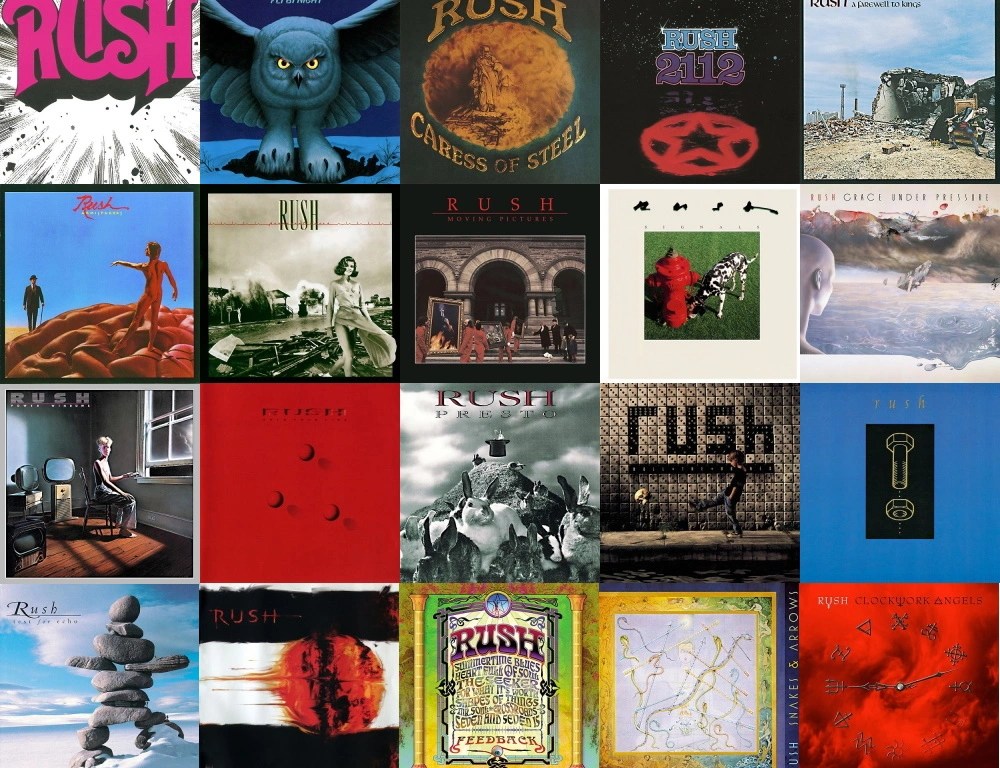
Rush (Prog rock 1965 – 2025 part 5)

Rush is a Canadian band formed in 1968 in Toronto. After some personnel changes, until its disbanding in 2015, the band consisted of Geddy Lee (vocals, bass guitar and keyboards), Alex Lifeson (guitar) and Neil Peart (drums, percussion). Lee and Lifeson wrote the music, Peart the lyrics.

Most prog rock groups were psychedelic-oriented in their early years, in the late 1960s. Rush, on the other hand, was a hard rock band and as such entered the world of prog rock. Hard rock has always remained the group’s DNA; the group made a conscious decision to be inspired by prog rock and smoothly moved with the different guises that prog rock took over the years. Hard rock combined with prog rock rock the phenomenal craftsmanship of the three members have led to the group always having a large following.

Giving attention to the band is warranted because it illustrates the development of progressive rock over three periods, giving a first impression of the changes that took place in the genre.  

Embracing prog rock 

The band’s hard rock roots still dominate its second album, ‘Fly by night’, which also shows the first signs of prog rock. A song like ‘By-Tor & the Snow Dog’ (Fly by night, 1975) consists of several sections, has complex arrangements and a mythological theme.

The next album, Caress of Steel, continues the trend towards prog rock. This is evident in the long compositions, choice of mythological themes and complex structures. You can hear this in the song ‘The Necromancer’ (Caress of Steel, 1975), an atmospheric epic song, b great success either. The fourth album ‘2112’ (1976) provides a breakthrough. You’re watching and listening here to an animation of the full title track ‘2112’ (2112, 1976) that covers one side of the record and consists of seven parts; here a live recording from โ€˜2112โ€™. It is a sci-fi epic set in the city of Megadon in the year 2112. Hard rock fans who like progressive rock are in the right place here, and vice versa. 

The upward trend in interest in Rush as a prog rock band continues in ‘A farewell to kings’ (1977) and Hemisphere(1978). The group now also lends its ear to established prog rock groups such as Yes and King Crimson. You are now watching and listening to ‘A Farewell to kings’ (A Farewell to kings, 1977)

The transition to neo-progressive rock

In albums from the late 1970s and early 1980s such as “Permanent Waves” (1980) and “Moving Pictures” (1981), more neo-progressive characteristics come through. To this end, Lifeson starts experimenting with classical and 12-string guitars and Lee adds bass pedal synthesisers and Mini Moog. Peart expands his already no small amount of percussion instruments to include triangles, wood blocks, cowbells, timpani and a gong. Besides adding instruments, the band stayed in tune with progressive rock trends by composing long, conceptual songs with science fiction and fantasy themes, which are more accessible than the songs from the previous period.  โ€˜Permanent wavesโ€™, and especially โ€˜Moving pictureโ€™ penetrated to the top of the charts in Canada, the US and Europe. and were even appreciated by the critics.

A number of songs from both albums Pictures’ also scored high as a single.

The ‘Spirit of Radio’ (Permanent Waves, 1980) is a complex yet accessible composition with diverse styles, including reggae and new wave elements. The content of the songs shifts from a fairy-tale and mythical fantasy world to current social themes.

Rush toured with ‘Permanent waves’ for six months and reached some 650,000 fans during that period. 

‘The camera eye’ (Moving Pictures, 1981) combines neo-progressive elements and contains experiments with electronics. This song, which lasted 11 minutes, was the band’s last long song. The same album also features ‘Tom Sawyer’ (Moving pictures, 1981). You can watch and listen to that now, a recording from 2007 in Ahoy, Rotterdam.

These two albums were followed by another series of albums, for instance โ€˜Signalsโ€™ that found a warm reception and, while retaining the hard rock DNA, went along with the changes that prog rock was undergoing.

‘Subdivisions’ ( Signals,1982) is an introspective song in which synthesisers play a more important role than the guitar. This makes this song a model for neo-progressive rock. Other songs on this album, such as ‘Digital man‘, ‘The weapon‘ and ‘Chemistry’ show that the band was also influenced by ska, reggae and funk and, of course, hard rock. You watch and listen to Chemistry here.

Post-progressive influence

Over time, Rush evolves further with a focus on textures, atmospheres and simpler structures. Synthesisers continue to play an important role in this initially. The album ‘Grace under pressure’ (1984) builds on the style of ‘Signals’. The title is a paraphrase of Hemmingway’s quote ‘Courage is grace under pressure’. This is followed by ‘Power window’ (1985) and Hold your fire (1987). Illustrative songs in the last album are ‘Time stand still’ย and ‘The pass’. In this album, the guitar again resonates more strongly than in the previous albums.

In the early 1990s, Rush further abandons the heavily keyboard-dominated sound. This is evident in the albums Presto (1989), Rolling the bones (1991), Counterparts (1993) and Test for Echo.  From the latter album, you can hear here the title track ‘Test for Echo’, performed live in Toronto (1997). After the ‘Test for Echo’ tour, the band took a break, eventually lasting five years. Cause were tragic events in Peart’s life.

The trio picked up where they left off in 2001 and the first album the group released is ‘Vapor Trails’ (2002). All songs were recorded without keyboards and synthesizers. The same applies to Snakes & Arrows (2007), whose song ‘Far cry’ became a hit. You can listen to this song here. The recording was made at Rotterdam Ahoy in 2007. 

The group’s latest studio album is Clockwork Angels (2012). You can listen to three songs from this album; ‘Caravan‘, ‘Halo effect‘ and ‘The garden’. In the latter song, hard rock has finally largely given way to more introspective neo-pro rock sounds, accompanied by a string section.

In August 2020, Peart dies of brain cancer. Lee and Lifeson declare that they will still play songs together but will never tour again.

The band has sold about 40 million albums. โ€˜Moving picturesโ€™ was the best-selling and also highest-rated album, which you should definitely listen to in its entirety once.

In essence, Rush remained a hard rock band with an open eye to other styles, the development of prog rock first and foremost. This led to long songs, irregular and shifting tunings and changing time signatures. In the 1980s, the band added elements borrowed from new wave, reggae and pop. At the time, synthesisers and electronic percussion were widely used. The mix of hard rock, technical virtuosity and features of prog rock made Rush unique, and the group in turn influenced the further development of post-progressive rock. 

Generalising, you could say that neo-progressive rock is more concerned with atmosphere and emotion and less with demonstrating technical virtuosity. Long songs are less prominent and there is more focus on accessibility. Post-progressive rock further opens to other genres, such as alternative rock and pop music. In the next post, I discuss the differences between the first and second periods more systematically, then shift the focus to the third period and put the three periods side by side.

Genesis (Prog rock 1965 – 2025 part 4)

Genesis is the most prominent prog rock band โ€“ probably after Pink Floyd – at least in the 1970s. This post focuses on that period. For each of the songs you can listen to, I refer to one or more characteristics of prog rock distinguished in the previous instalment.[1]

Genesis was formed in 1967 by pupils at Charterhouse School in Godalming (Surrey). The hard core consists of Tony Banks (keyboards) and Mike Rutherford (bass) guitar have been members of the band until its disbanding in 2022. Other members include Phil Collins (1970 – 1996) drums and vocals, Peter Gabriel (1967 – 1975) vocals and Steve Hackett (1971 – 1977) guitar.

Their first tracks, melodic pop songs like ‘The silent sun‘ (From Genesis to revelation, 1968) are not a commercial success. Nevertheless, the members of the band decide to carry on. They perform regularly in small venues and work steadily on their next album, Trespass (1970), with which the band scores much better. The song ‘The knive’ (Trespass, 1970) is illustrative of the band’s transition from psychedelic rock to prog rock, evidenced by its length, complexity and beat changes, among other things. This live recording was made in 1973 at Bataclan, Paris.

Nursery cryme (1971)

Meanwhile, the next album is in the works.  This new album, Nursery Cryme has a conceptual and theatrical approach. The song ‘The musical box’ (Nursery cryme, 1971) illustrates this. The lyrics of this song are macabre and surreal, which is accentuated by Peter Gabriel’s theatrical recitation, to be see here in a live recording at Shepperton Studios in London (1973). It is easy to hear that a mellotron has also been added to the instrumentation. 

The story is set in Victorian Britain. Henry is accidentally decapitated by his girlfriend Cynthia while playing criquet. At home, Cynthia turns on Henry’s old music box, which unleashes the ghost of Henry as an old man, who tries to seduce Cynthia. A nurse enters the room and throws the music box against the wall, destroying Henry. 

The press pays more attention to Peter Gabriel’s costuming than the music, which evokes mixed feelings among the remaining band members but is good for public interest.

Another song from this album you can listen to here illustrates the use of mythological, historical and fantasy themes. This song (length 13 minutes) ‘The fountain of Salmacis’ (Nursery Cryme, 1971) is about Hermaphroditus and the nymph Salmacis and features alternately dreamy and dramatic musical support. The group’s popularity on the European continent is steadily increasing; that in the UK lags behind.

Foxtrot (1972)

We are a year later and then Foxtrot is released. The group now falls completely for producing long songs. The suite ‘Summer’s ready’ (Foxtrot, 1972) lasts 23 minutes and consists of seven parts, ranging from serene to bombastic. You’ll find almost all the hallmarks of prog rock in it. The recording you see dates from 1973 and was filmed in various locations.

Another track on this album, ‘Watcher of the skies’ (Foxtrot, 1972) stands out for its experimentation with electronic instrumentation. The intro evokes an ‘otherworldly’ atmosphere thanks to the use of the mellotron. Listening and watching this song recalls a variety of genres: opera, rock, surrealism and drama. Gabriel appears in a different costume in each song.

Peter Gabriel wrote the lyrics. The songs together project daily experiences of two lovers about good versus evil in the Old Testament. Find short descriptions of the individual parts of the suite here.

Selling England by the pound (1973)

The album ‘Selling England by the pound’ (1973) followed another year later. In the song ‘Firth of fifth’ (Selling England by the pound, 1973), symphonic and classical influences stand out in particular: Classical piano parts and an epic guitar solo give the impression of listening to a short symphony. The following recording (without the piano part, which was omitted during live performance) was made in Rome in 2007. The song consists of three parts, of which especially the first – the piano part – is complex in terms of rhythm and tempo and uses rare time signatures, such as 13/16 and 15/16 interspersed with 2/4 measure. This song is considered one of the best examples of prog rock.

The song’s title refers to the erratic and ever-changing estuary of the River Forth, a metaphor for man’s ever-changing and unpredictable life course.

Another song on this album โ€˜The Cinema Showโ€™ (Selling England by the Pound, 1973) also has complicated and unusual beat changes. The recording you watch and listen to here was filmed at the Apollo theatre in Glasgow and at the New Bingley Hall in Stafford on 9 and 10 June 1976, respectively. During the first part of the recording, we are watching a silent movie. Iโ€™am always amazed at how this kind of film plays on the chuckles. 

The lamb lies down on Broadway (1974)

After internal struggles over content, the next (concept) album, ‘The lamb lies down on Broadway’, is released in 1974. Ultimately, the story is about Rael, a Puerto Rican boy living in New York City who goes on a spiritual quest to establish his freedom and identity. In the process, he encounters several bizarre characters. 

Most of the album’s lyrics are written by Gabriel, but he left the music to the other members of the group. He wanted to spend more time at home because his first child, Anna was born prematurely and had health problems. The other members of the band were not happy about this. As a matter of fact, they had been annoyed for some time by Gabriel’s increasing role as singer. Gabriel himself had already concluded that a solo career would do better justice to his artistic ambitions.

‘The Lamb Lies Down on Broadway’ (1974) is the last album Peter Gabriel was involved with. During the tour to promote the album, he announced he would be leaving the band.

A trick of the tail (1976)

 The remaining members set to work on the next album ‘A trick of the tail’ (1976) after the tour. Finding a replacement for Gabriel was difficult, but then it turned out that the best candidate was already a member of the band, namely Phil Collins. He would increasingly leave the drumming to others as ‘frontman’ in the following years. Virtuosity, both of individual band members and as a group, is also a hallmark of prog pop. You can hear and see that in ‘Dance on a vulcano’ (A trick of the tail, 1976). The recording was filmed in the Lyceum ballroom in 1980. 

in 1977, Steve Hackett also decides to leave the group. He feels shortchanged by Tony Banks and Mike Rutherfort, who increasingly disapproves of his lyrics and compositions. The deeper cause was a growing distance between their ideas about the band’s musical direction. Banks, Rutherford and Collins opted for accessible pop-oriented music, while Hackett was unfailingly attracted to the experimental and symphonic music that is characterising Genesis until then.  Hackett, meanwhile, had made his first solo album ‘Voyage of the acolyte’ (1975), which was warmly received. He too opts for a solo career in which he can realise his artistic ideas. Compare ‘Ace of wands ‘(Voyage of the  acolyte, 1975) by Hackett with ‘Follow you follow me’ (…And then there were three’, 1978) by Genesis and you’ll hear what I mean. 

For Steve Hackettt, this was the beginning of a career in which he would made 24(!) solo albums to this day, taking every opportunity to experiment with a variety of musical genres. Together with ex-Yes guitarist Steve Howe, he made his highest-scoring hit, ‘When the  heart  rules  the mind‘( 1985). You can also watch and listen to a performance of ‘Firth of Fifth’ (2013), together with large orchestra at London’s Royal Festival Hall, now with the piano intro.

Genesis’ fans are disappointed with the band’s new direction, but the number of new fans compensates. A period is now dawning for Genesis, with the group releasing one high-scoring album after another: ‘Land of confusion’ (Invisible touch, 1985) and ‘I can’t dance’ (We can’t dance, 1991) and more. Watch and listen to a recording of ‘I can’t dance’ in Rome (2007) here. Unadulterated pop, but worth listening to.  Also note the grand staging.

In 1996, Phil Collins decides to leave the band after 25 years to take up other projects. He would later return for short periods a few more times.  In 2014, the BBC broadcasts a programme on the band’s history, ‘Together  and apart’  in which Hackett also takes part. The group gives its last concert on 26 March in London. 

Genesis eventually sold between 100 and 150 million albums; most of them in the post-1980 period, when the group had traded prog rock for pop. 

As was the case with other prog rock groups, it took a long time for Genesis to gain respect from music critics and for the public in general to discover the group. Later, most critics changed their minds and now Genesis ranks as one of the most prominent bands of the past 50 years: ‘Ultimate Classic Rock’ summed up, “There is no denying that Genesis helped create the identity of prog-rock and made some of the genre’s most essential albums,” but continued “the group’s music gradually became less and less progressive, until the band became an outright pop act.”

Starting with the band Rush’s transition from hard rock to prog rock and from prod rock to neo-progressive rock, the next articles will look at the development of neo-progressive rock between 1975 and 1985.  


[1] This post is based on an analysis of articles in Wikipedia (Eng.) and recordings on YouTube. ChatGPT was used as an aid in structuring the information.