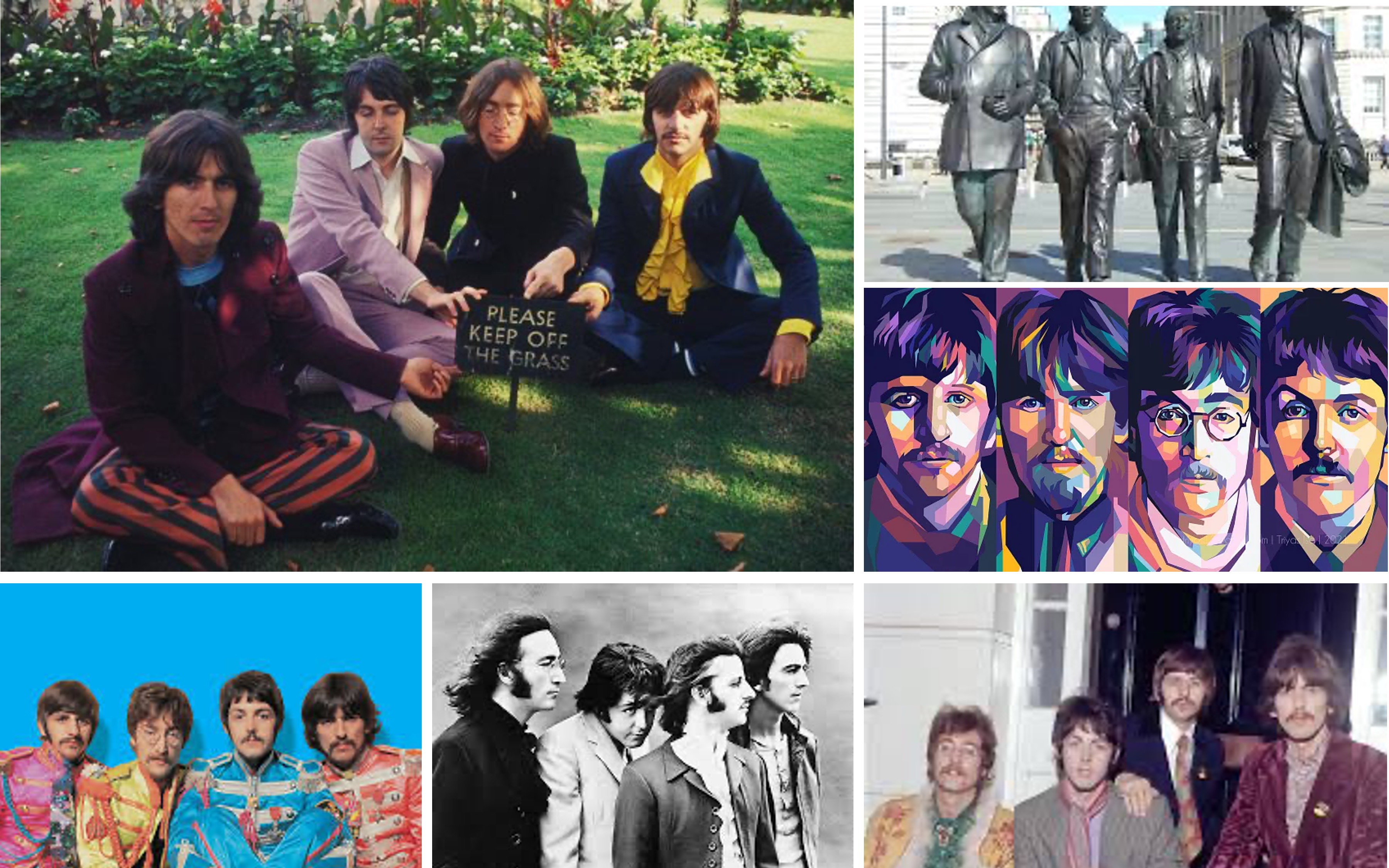
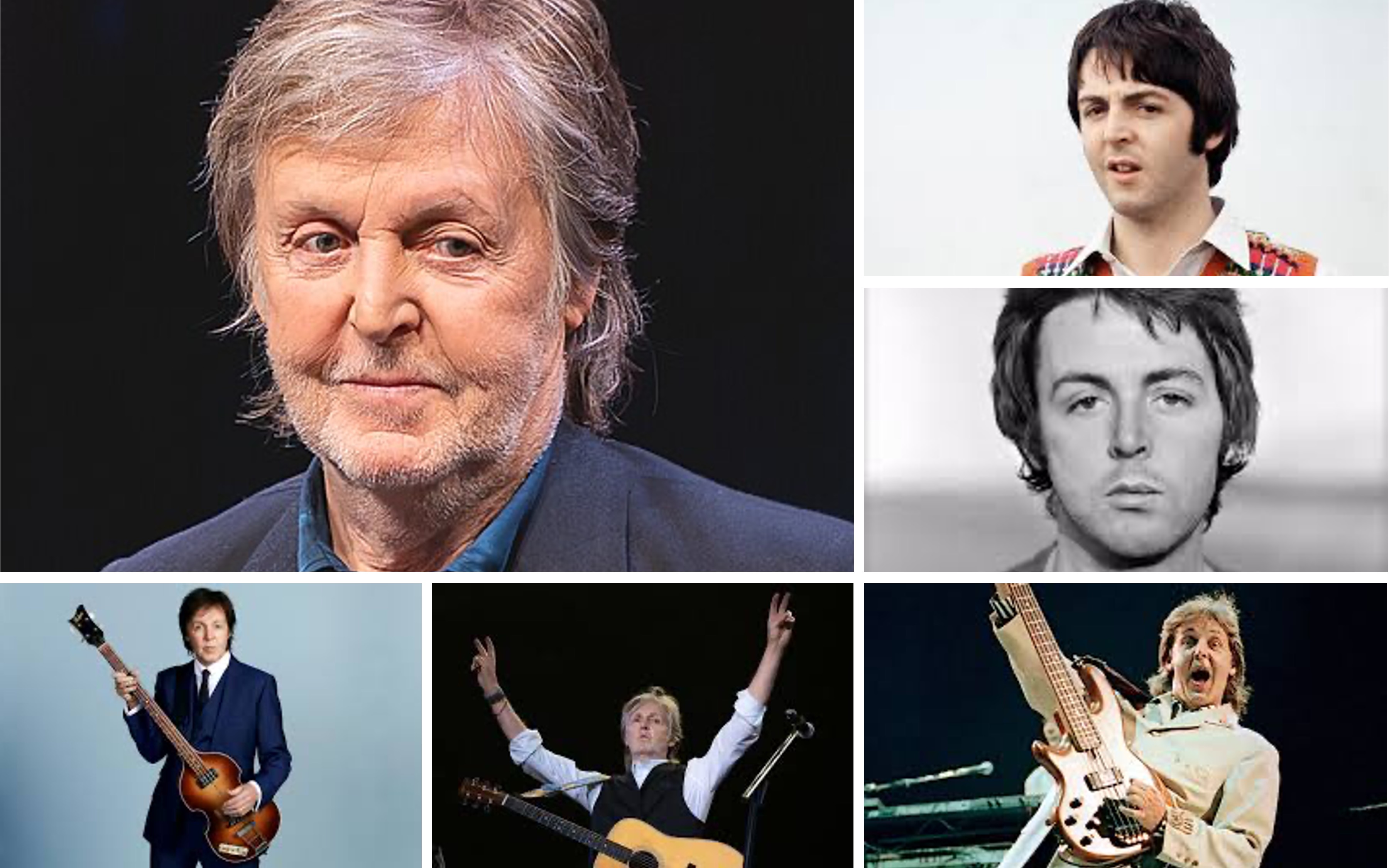
Paul McCartney 1942 – (The Beatles after the Beatles, part 5)

Paul McCartney is born in Liverpool on 18 June 1942. He taught himself to play the piano and guitar as a teenager. His father, a jazz musician, was a source of inspiration, as were rock & roll artists such as Little Richard and Buddy Holly. In 1957, he joined John Lennon’s skiffle group ‘The Quarrymen’.

It annoyed him that critics often attributed the success of his and/or John Lennon’s songs to the hype surrounding The Beatles. For this reason, he maintained a shadow discography for 60 years of songs he released under a pseudonym, initially Bernard Webb. Many of these songs were performed by others and became big hits, such as ‘Woman’, ‘A World Without Love’ and ‘Nobody I Know’ by Peter and Gordon, ‘One and One Is Two’ by The Strangles, ‘Come and Get It’ by Badfinger and ‘Love of the Loved’ by Cilla Black. When these songs received rave reviews, Paul laughed up his sleeve. Problems with the insincerity of some critics would haunt him throughout his life.

Discography                        

  1. McCartney (1970)
  2. Ram (1971)
  3. Wild Life (1971, with Wings)
  4. Red Rose Speedway (1973, with Wings)
  5. Band on the Run (1973, with Wings)
  6. Venus and Mars (1975, with Wings)
  7. Wings at the Speed of Sound (1976, with Wings)
  8. London Town (1978, with Wings)
  9. Back to the Egg (1979, with Wings)
  10. McCartney II (1980)
  11. Tug of War (1982)
  12. Pipes of Peace (1983)
  13. Press to Play (1986)
  14. Flowers in the Dirt (1989)
  15. Off the Ground (1993)
  16. Flaming Pie (1997)
  17. Driving Rain (2001)
  18. Chaos and Creation in the Backyard (2005)
  19. Memory Almost Full (2007)
  20. Kisses on the Bottom (2012)
  21. New (2013)
  22. Egypt Station (2018)
  23. McCartney III (2020)

McCartney (1970), Ram (1971) and Wild Life (1971)

Paul begins his solo career with the desire to make music without constraints. He does not want to immediately try to live up to the high expectations of critics and fans. The first album, McCartney (1970), consists of a series of intimate home recordings, including ‘Maybe I’m Amazed’, which you can listen to here:

This recording is made with members of his future band Wings. 

The next album, Ram (1971), contains melodic and layered pop songs. Years later, it appeared that Paul made two versions of Ram. One of them has remained on the shelf. Paul was satisfied with the first version and wanted to focus on forming his new band so that he could go on tour. 

The first album with Wings, Wild Life (1971), builds on the relaxed pop songs that had already been released. Here you can hear and see the performance of the title song ‘Wild Life’, filmed in The Hague (1972). Meanwhile, he made another single with Wings, ‘Hi, Hi, Hi’ (1973), which became a top 10 hit. The BBC boycotted the song for some time because of alleged references to drugs and sex. 

Red Rose Speedway (1973) and Life and Let Die (1973)

With this album, Paul and Wings take a leap towards the quality that had become the norm during the last years of the Beatles. The album includes the mega-hit ‘My Love’. The album was a huge commercial success; critics thought that even more quality was within reach. Watch and listen to ‘My Love’ here:

Red Rose Speedway was intended to be a double album.  Due to the moderate success of Paul McCartney and Wings’ previous album, the record company decided to release it as a single album, and once again some of the recordings ended up on the shelf. Many years later, when this album was remastered, the forgotten recordings resurfaced and the double album was finally released. Critics refer to it as a ‘forgotten masterpiece’. Listen to some of the ‘lost’ recordings here: ‘‘Out’ , ‘The mess’, ‘ Tragedy ‘, ‘Mama’s little girl’, ‘The medley’ and ‘Little lamb dragonfly‘.

After completing the recordings for ‘Red Rose Speedway’, Paul McCartney and Wings record the song ‘Life and Let Die’ from the James Bond film of the same name, which became a number one hit worldwide.

Band on the Run (1974), Venus and Mars (1975) and Wings at the Speed of Sound (1976)

Band on the Run (1974) is considered one of the best albums in rock and pop history. It is Paul McCartney’s most celebrated album in his post-Beatles era. Critics believe that the album approaches the level of the songs from the Beatles’ heyday. Listen to the title song:

Paul wanted to record the song somewhere abroad. It ended up being the EMI studio in Nigeria. Just before the crew was about to leave, drummer Danny Seiwell and guitarist Henry McCullough declined the honour. There was no time to find replacements, so Paul, his wife Linda Eastman and Denny Laine took it on together. The title of the album is often jokingly associated with the band members who left.

The album Venus and Mars (1975) was another big hit. The song ‘Listen to What the Man Said’ reached number one in the US. 

McCartney & Wings went on a successful world tour after the release of these two albums. In the middle of this tour, the album ‘Wings at the Speed of Sound’ (1976) was released, which ended up in the upper echelons of the album charts. The single ‘Love Songs’ reached number one in the US.

The success of ‘London Town’ (1978) lagged somewhat behind that of previous albums. Although it reached number five in the US and the UK, the single ‘a Little Luck’ (1978) was the only one to become number one in the US. Most critics dismissed the album. 

During the recording sessions, Paul also records the non-album single ‘Mull of Kintyre’ (1978). This song became the fourth best-selling single ever in the UK, scoring higher than old Beatles songs such as ‘She loves you’.

Listen to this last song here:

Back to the Egg (1979), McCartney II (1980), Tug of War (1982), Pipes of Peace (1983), Press to Play (1986), Flowers in the Dirt (1989)

The sales figures for ‘Back to the egg’ were not too bad, but critics dismissed this album. Timothy White (Rolling Stone Magazine) called it ‘the sorriest grab bag of dreck in recent memory’. After the release of this album, McCartney disbands his band Wings; he wants to move in the direction of electronic music, which required different forms of accompaniment. 

Paul tries out various styles. McCartney II is experimental and, like McCartney I, a solo album in the true sense of the word: Paul plays all the instruments himself. The album was characterised as ‘new wave’, proto-electronica and eccentric synthpop. Composers such as John Cage, Cornelius Cardew and Luciano Berio were sources of inspiration. Others compared it to ‘Krautrock’, triple hop or called it ambient. The album rose to number one in the UK; the single ‘Up ‘ also became a number one hit. In my opinion, this song does not give a good impression of the album.  Listen instead to ‘Secretary’ or  ‘Nobody knows’.

You will hear the latter song here:

Critics were initially negative, but eventually the tide turned. Then, the album was hailed as a precursor to the sound of the 1980s: you should listen to it once in your life. 

Tug of War (1982) This album also became number one in several countries and sold over a million copies in the US alone. Critics saw it as a distinct improvement on the standard Paul had set in recent years and were overwhelmingly positive: “the masterpiece everyone has always known Paul McCartney could make”, according to Stephen Holden (Rolling Stone). Three songs from the album reached the top: ‘Ebony and Ivory’  (with Stevie Wonder), ‘Tug of War’ and ‘Take It Away’. The recordings were suspended for two months when Paul learned that John Lennon had been shot dead.

Watch and listen to a studio recording of Tug of War here

Pipes of Peace (1983) This album was less well received than its predecessor, although two songs, ‘Say, Say, Say’ (featuring Michael Jackson) and the title track, reached the top of the charts. Jeff Strowe (Pop Matters) considers the album ‘most regrettable’.

Press to Play (1986) Sales of this album were lower than most of the previous ones, although it did reach the eighth place in the UK. The song ‘Press’ was the only top 30 hit. Critics were divided: ‘McCartney is dabbling in each of his strengths’ (Erlewine, All Music) and ‘No doubt about it, this is McCartney’s most rocking album in ages. Much of it’s catchy, most of it’s fun’ (Lynn Van Matre, Chicago Tribune).

Flowers in the Dirt (1989) received positive reviews; the album reached number one in the UK, among other places, and contained several hit singles, such as ‘My Brave Face‘.

The problem during the ten-year period in which these albums were released was that Paul lacks a counterpart to challenge him both in the creation and the performance of his music. He would continue his search for an inspiring producer while making his next albums.

His fans had not forgotten him. On 21 April 1989, he performs for 184,000 people in Rio de Janeiro during the ‘Paul McCartney World Tour’.

‘Classical’ music

The Royal Liverpool Philharmonic Orchestra asked him to write an oratorio for the orchestra’s 150th anniversary. Four other ‘classical’ compositions would follow. The reviews were negative: ‘too slow’, according to The Guardian. Nevertheless, the ‘Liverpool Oratorio’ took first place in the classical charts. Here it is:

McCartney’s second classical album, ‘Standing Stone’, was released in 1997.

The Fireman

Looking for a new challenge, Paul teams up with Martin Glover to form a new band, The Firemen. The group’s debut album, Strawberries oceans ships forest (1993), is an exploration of the emerging genre of electronic dance music, particularly ambient and trance. The album mainly uses samples from Paul’s latest album, Off the Ground, without mentioning his name or Martin Glover’s. This led to speculation, and eventually the record company confirmed McCartney and Glover’s involvement. You can listen here to ‘Universal Here, Everlasting Now’, a song typical of this album. 

This album was followed by ‘Rushes’ (1998) and ‘Electric Arguments’ (2008), an intense experiment with a succession of soundscapes. The opening lyrics of the latter album, ‘Nothing Too Much Just Out of Sight’ is similar to ‘Helter Skelter’ (1968).  The rough lyrics and uncompromising hard rock sound set an unexpected tone for The Fireman’s final album.

Off the Ground (1993), Flaming Pie (1997) and Driving Rain (2001) 

These are mediocre pop albums. McCartney had a lot of fun making them, but they are neither innovative nor experimental.

Off the Ground (1993) This album did not achieve high chart positions, except for Germany, where it spent 20 weeks in the top 10. The single ‘Hope of Deliverance’ was also successful, particularly on the European mainland.

Flaming Pie (1997). This album reached number 2 in the US and UK charts. A total of 1.5 million copies were sold. The reviews from critics were positive. The best after Tug of War (1982). Three singles from the album reached the upper echelons: ‘Young Boy’, ‘The World Tonight’ and ‘Beautiful Night’.

Listen to ‘Young Boy’ here:

Driving Rain (2001) 

On 11 September 2001, McCartney was on a plane in New York City when the terrorist attacks took place. He composed the song ‘Freedom’ and helped to organise the ‘Concert for New York City’, an all-star benefit concert at Madison Square Garden on 20 October 2001.

McCartney stopped pressing ‘Driving Rain’ so that ‘Freedom’ could be released as a hidden track (since the artwork had already been printed). ‘Driving Rain’ (2001) received good reviews, but sales figures remained at a historic low. 

Paul toured extensively during this period, including in Eastern Europe, which explains the stagnation in album production in the first decade of the new millennium.

Chaos and creation in the backyard (2005)

Meanwhile, Paul continues to search for new musical challenges, so he sought collaboration with Nigel Goodrich, a ‘star producer’. He realised that he needed a sparring partner who was his equal. The two produced two songs to see if a collaboration would be fruitful. It turned out to be the case, although Nigel often wanted to go in a different direction and claimed veto rights on songs he didn’t like. Paul then thinks, “This is why I’m working with him.” The song ‘Friends to Go’ is dedicated to the late George Harrison. The first single released was ‘Fine Line’ (2005), followed by ‘Jenny Wren’, both of which appeared on the album and reached around 20th place in the charts. 

Here you can hear a studio recording of Fine Line.

After the album’s release, critics responded positively for the fourth time in a row. The album is described as ‘unusually reflective and intimate-sounding’. In the US, the album scored high in the charts; in the UK, it scored much lower.  Total sales reached 1.5 million copies.

Kisses on the Bottom (2012), New (2013), Egypt Station (2018) and McCartney III (2020)

Kisses on the Bottom (2012) contains only two original compositions by McCartney. The rest are covers of traditional pop music and jazz. It ens up in the highest echelons in both the US and the UK, with critics being positive, calling it “fun and touching” (Rolling Stone). Listen to McCartney’s song ‘My Valentine’ and to ‘Bye Bye Blackbird’ here:

New (2013) consists of new compositions only, and McCartney mainly choses young producers to work on it. This album and the single ‘New’ also scored high in the charts and critics were equally positive: “Most enjoyable record in years”. 

Egypt Station (2018) A single featuring the songs ‘I Don’t Know’ and ‘On to Me’ was released a month before the album. The album reached number 1 in the US, for the first time since ‘Tug of War’ (1982). Once again, critics were positive: ‘The finest songs land here immediately and hum with urgency’ (Kitty Empire, The Observer).

McCartney III (2020)

McCartney III dates from the coronavirus period and, as in the previous instalments of the ‘McCartney trilogy’, Paul plays all the instruments. A nice detail is that Paul coordinated the release date of this album with that of Taylor Swift’s ‘Evermore’. It became his first number 1 solo album in the UK since ‘Flowers in the Dirt’ (1989); in the US it peaked at number 2. Critics were enthusiastic: ‘A playful gem’ (Rob Sheffield, Rolling Stone), ‘Weird, wonderful and whimsical: A real treat’ (Helen Brown, The Independent). Listen to the longer song ‘deep feeling’ and to one of the singles: ‘Find my way’below:

Special events (2010 – 2014)

  • The Library of Congress Gershwin Prize for Popular Song is a prestigious award that has only been given to Stevie Wonder and Paul Simon before. In 2010 Paul McCartney was the third recipient of this award, presented by President Obama.
  • In June 2012, McCartney closed Queen Elizabeth’s Diamond Jubilee concert outside Buckingham Palace with the songs ‘Let It Be’ and ‘Live and Let Die’. 
  • Paul closed the opening ceremony of the Summer Olympics in London on 27 July 2012 with ‘The End’ and ‘Hey Jude’ and invited the audience to join in the chorus. 
  • On 12 December 2012, McCartney performed with three former members of Nirvana (Krist Novoselic, Dave Grohl and Pat Smear) during the closing act of ’12-12-12: The Concert for Sandy Relief’ at Madison Square Garden in New York. The broadcast was watched by approximately two billion people worldwide. The concert was organised to raise money for the victims of Hurricane Sandy. Many artists participated in this benefit concert, including The Who, Bruce Springsteen, Alicia Keys, Eric Clapton, Billy Joel, The Rolling Stones and many others. 
  • A primetime special was recorded at the Ed Sullivan Theater on 27 January 2014 and broadcasted on 9 February 2014. The show celebrated the legacy of The Beatles and their groundbreaking performance on The Ed Sullivan Show in 1964. Entitled ‘The Night That Changed America: A Grammy Salute to The Beatles’, the show featured 22 classic Beatles songs performed by various artists, including Paul McCartney and Ringo Starr. You can watch and listen to the entire show here:

Another hidden gem: One Hand Clapping (1973, 2010, 2024)

This is yet another story about music and film recordings that have been gathering dust on the shelf for years. The film ‘One Hand Clapping’ was intended as a documentary about Paul McCartney and his band Wings. The film shows a live performance by the band at Abbey Road Studios, which was also recorded for release as an album. It features songs by McCartney, Wings and The Beatles. For some reason, the material was never released, although parts of the recording were included in several ‘special editions’ of other McCartney and Wings albums. This finally happened in 2010 with the original film.

The film ‘One Hand Clapping’ and the accompanying album have now been remastered and released. The film also premiered in cinemas on 26 September 2024, more than 50 years later than originally planned. The album and film are highly recommended. The album can be listened to here: 

What else has Paul done?

Avant-garde art

While still at school in the 1950s, Paul was captivated by avant-garde artists such as Andy Warhol, Claes Oldenburg, Peter Blake, Willem de Kooning and Richard Hamilton. He has retained this interest throughout his life. In 1983, he started painting himself. His first exhibition was in Siegen in 1999. A year later, another exhibition opened in the UK. It included 500 canvases and took place at the Arnofini Gallery in Bristol. 

Film music

In 1966, independently of the Beatles, he composed the film music for ‘The Family Way’. The soundtrack did not make it into the charts, but Paul won an Igor Novello Award for the best instrumental theme.

In 1981, Paul asked Geoff Dunbar to make a short, animated film, Rubert and the Frog Song. McCartney was the author and producer. The song ‘We All Stand Together’ from the film’s soundtrack was a big hit on the UK singles chart. You can listen to it here:

The controversial soundtrack to the film ‘Give My Regards to Broad Street’ flopped. One of the songs on it was ‘No More Lonely Nights’.

In 1992, he collaborated with Dunbar on an animated film about the work of French artist Honoré Daumier. This earned McCartney a BAFTA award.

Animal rights

Paul and Linda were committed vegetarians and supported international organisations working for animal rights. They also supported organisations fighting the spread of landmines and poverty, as well as music education.

Author

Paul has written several children’s books. His first was High in the Clouds: An Urban Furry Tail (2005), in collaboration with writer Philip Ardagh and animator Geoff Dunbar. The book is about a squirrel whose home in the forest is destroyed by property developers. McCartney and Dunbar turned it into an animated film consisting of several episodes.

Biographies

There are countless biographies about Paul McCartney. Two stand out because he collaborated on them himself. These are: ‘Many Years From Now’ by Barry Miles and, more recently, ‘The Lyrics’, which he wrote himself (2021). 

Miles has spent hundreds of hours with McCartney. The poet Paul Muldoon helped Paul write the second book. Both books are completely different. ‘Many Years From Now’ is a factual account of Paul’s life and comprises 617 pages. ‘The Lyrics’ tell the story of his life through 154 old and new song lyrics, resulting in an equal number of standalone short stories.

Looking back

There is no doubt that Paul McCartney has the most versatile career of any former Beatle, both before and after the break-up of the Beatles. His work includes pop and rock songs and more experimental electronic tracks such as the McCartney trilogy and The Firemen.  

Many of his songs became number one hits in the US or the UK, such as ‘Uncle Albert’ (1971), ‘My Love’ (1973), ‘Life and Let Die’ (1973), ‘Band on the Run’ (1973), ‘Listen to What the Man Said’ (1975), ‘Silly Love Songs’ (1978), ‘Mull of Kintyre’ (1978), ‘With a Little Luck’ (1978), ‘Coming Up’ (1980), ‘Ebony and Ivory’ (1982), Tug of War (1982), Pipes of Peace (1983), Take It Away (1982), Flowers in the Dirt (1989), Egypt Station (2018), McCartney III (2020). 

Many albums also reached number one status on the album charts in the US or the UK, such as ‘McCartney I’ (1970), ‘Band on the Run’ (1974), ‘Venus and Mars’ (1975), ‘Wings at the Speed of Sound’ (1976), Flowers in the Dirt (1989), McCartney II (1980), Tug of War (1982), Egypt Station (2018) and McCartney III (2020).

John Lennon 1940 – 1981 (The Beatles after the Beatles part 4)

In my latest post, you can read that twelve years after his mother's death, Lennon found comfort in making his first post-Beatles debut album, 'Plastic Ono Band'. It is an intense and rather inaccessible album. Lennon's second solo album, 'Imagine' (1971), is much more accessible than 'Plastic Ono Band' and would become the best-selling album of his solo career.

John Winston Lennon (later John Winston Ono Lennon) is born on 9 October 1940 in Liverpool. His musical career is influenced by the double loss of his mother. After John’s father divorced, she was unable to raise him and Aunt Mimi took John in. Musically, John, like many of his peers, is captivated by skiffle music and at the age of 16, he forms his first band, the Quarrymen, together with Paul McCartney. At the age of fourteen, his mother reappeared in his life and they enjoy a happy time together until 15 July 1958, when she was killed by a drunk driver.

Later, Yoko Ono would play an important role in helping John process this trauma. Yoko Ono is an artist of Japanese origin who specializes in conceptual art. John met her on 9 November 1966 during an exhibition in London. After they got together, they did some experimental therapy called ‘primal scream’, which helped John express his grief over losing his mum.

Between 1968 and 1970, John and Yoko make three experimental studio albums: ‘Unfinished Music No. 1: Two Virgins’, best known for its cover, ‘Unfinished Music No. 2: Life with the Lions’ and ‘Wedding Album’, released on John and Yoko’s wedding. During this period, their famous ‘Bed-ins’ took place in Amsterdam and Montreal, where the songs ‘Ballad of John and Yoko’ and ‘Give Peace a Chance’ were written, songs on which Paul McCartney also collaborated.

After the Beatles split up, his relationship with Paul McCartney is particularly strained for a long time. According to some, this was partly due to John’s fear of being abandoned. Nevertheless, both continued to have intense feelings for each other. Lennon summed this up in an interview shortly before his death: ‘Throughout my career, I’ve chosen to work with… only two people: Paul McCartney and Yoko Ono’.

Discography

  1. Plastic Ono Band (1970)
  2. Imagine (1971)
  3. Some Time in New York City (1972)
  4. Mind Games (1973)
  5. Walls and Bridges (1974)
  6. Rock ‘n’ Roll (1975)
  7. Double Fantasy (1980)
  8. Milk and Honey (1984, posthumous)

Plastic Ono Band (1970) 

Twelve years after the death of his mother Julia, Lennon finds solace in making his first post-Beatles debut album, Plastic Ono Band. It is an intense and somewhat inaccessible album, which received mixed reviews from critics. They did agree, however, that it was a statement that united John’s state of mind and musical qualities. 

The first song is harrowing:  Instead of a song it is more of a catharsis with an oppressive arrangement. John plays the piano, Ringo drums and Klaus Voormann plays the bass. 
Lennon has always struggled with the authoritarian structure surrounding religion. This is expressed in the song ‘God‘. For Lennon, authority, especially religious authority, used to be source of resistance. The penultimate song on the album, ‘God’, has clever lyrics. Critics consider it one of the most profound artistic statements of his career. With gospel-like sounds in the background, he makes a statement, including the words: ‘I don’t believe in God, I don’t believe in Yoga, I don’t believe in Kings, I don’t believe in Elvis, I don’t believe in Zimmerman, I don’t believe in Beatles’.

In ‘I Found Out’, he gives a concise account of his ‘primal scream’ therapy. The song ‘Class Hero ‘ is of a different nature, namely an indictment of capitalism.

Imagine (1971)

Lennon’s second solo album Imagine (1971) is much more accessible than Plastic Ono Band and would become the best-selling album of his solo career. Three songs stand out: the Yoko Ono-inspired ‘Imagine’, a plea for a peaceful world; ‘guy’ , in which he links his condescending attitude towards women to his persistent feelings of insecurity. You can listen to the first song here.

 ‘How do you sleep’ is a sneer at an unfriendly lyric written by Paul McCartney about him and Yoko.

Some Time in New York City (1972)

This album is a collection of songs about civil and women’s rights (‘Woman is the nigger of the world’), race relations and the situation in Northern Ireland. The album was a commercial and artistic failure and was reviled by critics, who found the political slogans heavy-handed and relentless. Tony Tyler (New Musical) called Lennon a ‘pathetic, ageing revolutionary’. It was to be expected that the song ‘Woman ‘would lead to a lot of resistance, but also to approval from the women’s movement. The song was boycotted by several radio stations. 

Temporary break with Yoko Ono

In 1973, Yoko Ono announces that she and John had grown apart. She arranges for her assistant May Pang and John to start a relationship. They liked each other and agreed to go ahead. The ‘couple of convenience’ settles in Los Angeles. John would later refer to this period as his ‘lost weekend’. Pang supported Lennon and for instance to combat his chronic alcoholism. She also encouraged him to reconnect with his son Julian, whom he had not seen for two years, and to restore contact with the other ex-Beatles.

Mind Games (1973) 

The album Mind Games (1973) was released at a time when his relationship with Yoko Ono was coming to an end and John was under a lot of stress since the FBI was monitoring him because of his political activities. At the same time, John is distancing himself from his political activism of recent years. Writing lyrics for a new album supports him in doing this. In a sense, the album is a chronicle of his life. Melancholy prevails when it comes to his relationship with Yoko Ono, as in ‘Out of the Blue’, but the album also contains light-hearted and humorous songs, in which John sings about the growth of his life experience during the previous period. The song ‘Mind games’ is a musical statement from the Beatles era that repeats the mantras ‘make love and not war’ and ‘love is the answer’. You can listen to it here:

The album scored moderately well in the charts and received mixed reviews: “Lennon doesn’t know which way to go, so he tries everything” (Erlewine, AllMusic), “Misguided in underrating his audience’s intelligence” (Landau, Rolling Stone), “Step in the right direction” (Christgau, Cream Magazine).

Walls and Bridges (1974)

Walls and Bridges (1974) is about what separates and connects people. The recordings went smoothly, and John is surprised that he keeps going despite his (alcohol) problems. This album also features different styles and the songs are about both his divorce from Yoko and the new freedom that came with it. This is true, for example, of ‘‘Bless you’ , which Lennon considers as the best song on the album. He is also very pleased with ‘#9 Dream’, with May Pang singing along in the background. ‘‘Beef Jerky’ is one of Lennon’s rare instrumental songs. It is also a nod to Paul McCartney, who wrote ‘Let Me Roll It’ in Lennon’s style years earlier. A nice touch is that his son Julian plays drums on the last track.

The album reached No. 1 in the US and the hit singles ‘Whatever Gets You Through the Night’ and ‘#9 Dream’ also scored high. The former was Lennon’s first No. 1 hit as a solo artist in the US and the UK. 

The reviews are mixed, but they were the best since Imagine: “A truly superb album by any standards,” “Words and music are a joy to hear” (Ray Coleman, Melodymaker), but also: “The album suffers from Lennon’s disorientation and lost conviction” (Christgau, The Village Voice).

During one of the recording sessions, Elton John dropped in and sang and played along with the song ‘Whatever Gets You Through the Night’. Then bet with John, that this song would be a number one hit. After this happened, Lennon made his appearance at Madison Square Garden during Elton John’s concert on Thanksgiving Day. Here you can listen to and see the recording of ‘Whatever Gets You Through the Night’, sung by Elton John and John Lennon, followed by ‘Lucy in the Sky with Diamonds’ and ‘I Saw Her Standing There‘.

The end of the lost weekend

Elton John had arranged for Yoko Ono to be in the audience. After the show, John and Yoko got talking and their relationship blossomed again in the weeks that followed. On 9 October 1975, their son Sean was born.  John puts his musical career on hold and became a househusband. Rock ‘n’ Roll (1975) would be his last album for the time being. On this album, Lennon sings rock ‘n’ roll songs from the 1950s and 1960s. The album sold well and received favourable reviews: “John lends dignity to these classics; his singing is tender, convincing and fond” (Rolling Stone album guide) and “A peak in (Lennon’s) post-Imagine catalogue” (AllMusic). Listen to ‘B-Bop-A-Lula’ here.

His relationship with May Pang ends abruptly; they met a few more times, but the intimacy was gone. Pang and Ono also lost contact. Pang has written two books about her relationship with John Lennon, and in 2022, the documentary “The Lost Weekend: A Love Story” premiered.

Double Fantasy (1980)

In 1980, John and Yoko decide to return to the studio. Lennon was inspired by Paul McCartney’s recent single “Coming Up” (1980). Critics slammed the resulting album Double Fantasy (1980), on which John and Yoko each sang a few songs, calling it a monstrosity: “Indulgent sterility… a godawful yawn” (Melody Maker). Three weeks after the album’s release, John Lennon was murdered outside his apartment in New York. Sales of the album skyrocketed and the critics suddenly became more lenient: “These are really nice tunes” (Erlewine). In 1982, Yoko and John were posthumously awarded a Grammy for what had become the album of the year. 

Milk and honey (posthumous 1984)

After the completion of Double Fantasy, there were       enough recordings left on the shelf and Yoko Ono wrote several new songs. The album seems unfinished, but critics nevertheless find it more balanced than its predecessor. Sales figures are good, but lag behind those of Double Fantasy. The song “Nobody Told Me” became a top 10 hit worldwide. Listen to it here:

What else did John do?

John and Yoko were politically active for many years and opposed the war in Vietnam, to the extent that John was on the verge of being deported from the US. During his years as a househusband, John created erotic lithographs. During an exhibition, some of these were confiscated; this turned out to be unjustified because the exhibition took place in a private gallery. Paul also writes books: ‘Skywriting’ is his third book of drawings, autobiographical stories and poems.

Looking back

During his years as a solo artist, John wrote a limited number of hit songs. Critics praised his highly personal lyrics in ‘Mother’ and ‘Working Class Hero’ (Plastic Onoband 1970), but these songs failed to appeal to the public. This was not the case with ‘Imagine’ and ‘Jealous guy’ (Imagine’1971), which are among his most highly acclaimed and highest-scoring songs. ‘Whatever Gets You Through the Night’ (Walls and Bridges, 1974) was the first and only single by John to reach number one on the Billboard Hot 100 during his solo career. The song ‘(Just Like) Starting Over’ (Double Fantasy, 1981) also rose to number one in the US and UK charts after his death. Finally, ‘Nobody told me’  also scored well.

Although the harvest is meagre, John Lennon still shows that he is a good singer and songwriter, even if none of these songs match what he wrote with Paul McCartney between 1966 and 1968, for whom the same applies. The best songwriting duo ever no longer existed, and we must accept that.

Sean Lennon

In 1998, at the age of 22, Sean Lennon released his first album, Into the Sun. It is lively and melodious music. You can listen to ‘Mystery Juice’ here:

Sales were mediocre and reviews were mixed; it didn’t get more than a condescending pat on the back. Worse still, he was mainly judged as the son of…

With that, Sean decides to take a break from making albums and starts producing music for other artists. He also accompanied his mother on her tours. An interesting detail is that Sean co-wrote a song by James McCartney, ‘Hill’ .

In 2006, he tried again with the album ‘Fire’ , which was also a moderate success. He promoted this album during a long tour, which was particularly well received in France. The music from this album was later used in the film of the same name. He then wrote music for a series of other films. His most recent album is ‘Asterisms’.

He is the founder of two bands.  The first, together with his girlfriend, Charlotte Kemp Muhl: ‘The Ghost of a Sabre Tooth Tiger’ (2010). In 2014, the band produced a successful album entitled ‘Midnight Sun’, which Rolling Stone ranked among the 50 best albums of that year. Here is the title track.

Even more success followed when he teamed up with Les Claypool to form Claypool Lennon Delirium. Their debut album ‘Monolith of Phobos’ reached the top 3 of the Billboard charts. You can listen to the title trackhere. Their second album, ‘South of Reality’, followed in 2019. In both cases, you will detect little influence from the Beatles.

After a somewhat difficult start, Sean has gained great fame as a musician, producer, session musician and composer of film music. He is also politically active, including campaigns for a free Tibet, against shale gas extraction and in support of the Occupy Wall Street movement.

Ringo Starr 1940 – (The Beatles after the Beatles 3)

Richard Starkey, later known as Ringo Starr, is born in Liverpool in 1940. As a child, he was in poor health, which resulted in inactivity and boredom. After one of his many stays in hospital, he was asked to play a percussion instrument in the school band. That was helpful. Richard’s interest in music was further heightened when he and his friend Roy Trafford listened to skiffle, which was popular at the time. In the early 1960s, both joined the Hurricanes, a group that soon landed a contract to perform in Hamburg. There he met the Beatles, and the rest is history. 

Discography

  1. Sentimental Journey (1970)
  2. Beaucoups of Blues (1970)
  3. Ringo (1973)
  4. Goodnight Vienna (1974)
  5. Ringo’s Rotogravure (1976)
  6. Ringo the 4th (1977)
  7. Bad Boy (1978)
  8. Stop and Smell the Roses (1981)
  9. Old Wave (1983)
  10. Time Takes Time (1992)
  11. Vertical Man (1998)
  12. Ringo Rama (2003)
  13. Choose Love (2005)
  14. Liverpool 8 (2008)
  15. Y Not (2010)
  16. Ringo 2012 (2012)
  17. Postcards from Paradise (2015)
  18. Give More Love (2017)
  19. What’s My Name (2019)
  20. Look Up (2025)

In addition, between 1990 and the present day, eight albums of live performances by ‘Ringo Stars’ all-star band’ have been released. I will come back to that later.

Sentimental Journey and Beaucoup de Blues (1970)

His first album (1970) is mainly an experiment by the record company. To everyone’s surprise, Ringo was presented as a crooner singing songs by super crooners such as Frank Sinatra. For curiosity’s sake, you can listen to ‘Night and Day’ here:

With Beaucoup de blues (1970), Ringo returns to his ‘habitat’. Here you can hear him sing the title track ‘Beaucoup de blues’, an unpretentious song in country & western style. Critics responded favourably, but commercially the album was a flop. In the years that followed, the tide would briefly turn. From now on, Ringo combines his musical activities with appearances as a film actor.

Concert for Bangladesh (1971)

Ringo accepts George Harrison’s invitation to participate in the ‘Concert for Bangladesh’. For the occasion, Ringo and George write the song ‘It Don’t Come Easy’, which reached number four in the charts in both the US and the UK. It is a catchy pop song.  Here you can listen and see a recording from 2016, together with Joe Walsh, filmed during one of the ‘All-stars’ concerts.

Back of Boogaloo (1972) 

The single ‘Back to Boogaloo’ is also a co-production with George Harrison. The song was written for a documentary film about Marc Bolan. Unlike previous songs, this is a real ‘rocker’. The song reached number two in the UK and Canada and number nine in the US. Malicious tongues claim that the song is also a dig at the songs Paul McCartney wrote as a solo artist. Both Ringo and George vehemently deny this. The song features a beautiful guitar solo by George Harrison.  This song is also recorded during one of Ringo’s All-stars concerts. You can listen to this version here.

Ringo (1973) and Goodnight Vienna (1974)

The album Ringo is also successful. ‘Ringo’ was the first rock album released by Ringo. Two singles achieved high chart positions: ‘Photograph‘ scored as a number one hit in the US and reached eighth place in the UK. This song too, was  a co-production with George Harrison.  The second song, ‘You’re Sixteen’, was written by the Sherman Brothers and scored also high. You can listen to that song here. It was recorded in 2016.

This successful album was followed by an equally successful sequel, ‘Goodnight Vienna’1974). The title track scored high in the US and moderately in the UK.

Ringo’s Rotogravure (1976) and Ringo the 4th (1977)

Ringo’s Rotogravure (1976), featuring many old Beatles songs, was a commercial disappointment, even though he had put a lot of effort into promoting it. The record company decided to take a new direction. Ringo the 4th was a combination of disco and 1970s pop. This album was also a failure. To get an impression, you can watch and listen to the music video for the song Drowning the Sea of Love here:

Bad Boy (1978), Stop and Smell the Roses (1981) and Old Wave (1982) 

These three albums were neither commercially nor artistically successful. Ringo struggles to find a record company for this last album. There was a clear reason for Ringo’s artistic decline after his early years.

In 1979, Ringo suffers from intestinal problems related to peritonitis in his youth. During an operation, he hovered between life and death. That did not prevent him from performing at Eric Clapton’s wedding three weeks later, together with Paul  McCartney and George Harrison.   

The period of misfortune was not over yet. On 28 November, a fire destroyed his home in Hollywood, also destroying much of the material from his Beatles era. 

By then, Ringo and his wife have become heavy drinkers and spent six weeks in a clinic in Arizona. He later said of his long addiction: “Years I’ve lost, absolute years … I’ve no idea what happened. I lived in a blackout.” After leaving the clinic, Ringo became a teetotaler. 

Ringo Starr and his All-star band

Ringo changes course and came up with the brilliant idea of touring with a band every year.  He has done this 14 times. The name of the band is ‘Ringo Starr and his All-star band’ and its line-up changes every year.  The first edition took place in Dallas (1989) in front of an audience of 10,000. The band members, who usually perform as soloists in their own bands, each play several of their songs, while Ringo mainly sings songs from the Beatles’ repertoire. His son Zak Starkey usually performs as the drummer. 

Ringo Starr has toured worldwide with his ‘All-stars’ from the very beginning. To name a few examples, the first edition (1989) took him to Canada, Japan, France and Finland. During the second edition (1992), several other European countries were added, such as the UK and Belgium. The third edition (1995) focused mainly on Latin America. The fourth edition (1997–1998) took him back to various European countries and to Russia. The eleventh edition (2010–2011) again visited many European countries, including the Netherlands. During 2025 ten concerts – the fifteenth edition – are planned.

Eight editions have been released on album, none of which have ever reached the charts, except for the album ‘Live at the Greek Theatre’ (2008), which reached number one in Greece. Incidentally, the Greek Theatre is in Los Angeles!

Earlier in this post, I showed some footage of Ringo’s performance with his ‘All-star band’.  Here you can watch and listen to the song ‘Up the cripple creek’, which he sings together with Levon Helm during the 1989 edition.

Time Takes Time (1992)

Time Takes Time (1992) was the next studio album, nine years after the former one. Again, it was not a commercial success, apart from a minor hit at number 74, ‘Weight of the World’, which he sings together with a number of members of the ‘All-Star Band’, including Nils Lofgren, Todd Rundgren and Joe Walsh. These artists were also present during the All-Star Band’s performance in Montreux, where they played ‘No Time’, among other songs, and that recording is also on this album. Listen to this heavy rocker here:

Beatle anthology (1996)

Like George Harrison, Ringo contributes to the creation of the Beatles anthology. You can find out more about this in my post about George Harrison.

Vertical Man (1998), Ringo Rama (2003), Choose Love (2005)

These albums were produced by Mark Hudson and his band, the Roundheads, who form the core of the backing group. The albums all reflect the ‘All-stars’ formula, with many guest artists but no audience. Many of the songs are written by Ringo or come from the Beatles repertoire.

Guests on Vertical Man (1998) included Brian Wilson, Alanis Morriset, Tom Petty, George Harrison and Paul McCartney. You can listen to two songs from the album here: Love Me Do and La Da Da. The album was not a commercial success in the US or the UK. Only 2,000 copies were sold in the UK.

Ringo Rama (2003) also features a host of guest artists, including Charlie Haden, David Gilmour and Eric ClaptonThe album also included the song co-written by Ringo, which he sang during the ‘Concert for George’ (at the Royal Albert Hall in London in 2002) in memory of George Harrison: ‘Never without you’. Listen to it here:

This recording also comes from one of the All-Star concerts at the Greek Theatre in Los Angeles (1990). The same goes for the next song: Honey Don’t. This album scored moderately, except for the single version of Never Without You.

Choose Love (2005) also followed the ‘All-stars’ approach, and the album again lacked commercial success. The same applies to Liverpool 8 (2008). It tried to piggyback on Liverpool’s election as European Capital of Culture that year. It was the last album on which Hudson participated as co-producer, alongside Ringo himself. The reviews were mixed: The Times wrote in a review, “Just because [the album] was fun to make, it doesn’t follow that you might enjoy listening to it.” 

Ringo produced the next album, Y Not (2010), himself. It ended up in the lower regions of Billboard’s top 100 and sold no more than 30,000 copies worldwide. Billboard wrote that Ringo’s friendly voice was interchangeable with his previous albums, full of fond memories of Starr’s days as a Beatle in Liverpool. Once again, a number of other artists joined in: Paul McCartney sings on the ballad ‘Walk with you’ and Starr sings on the last track, ‘Who’s your daddy’, a duet with Joss Stone in a catchy rock song. 

Ringo 2012, produced by Ringo himself, was again not a big hit, selling less than 10,000 copies worldwide. It is the third consecutive album in which he looks back melancholically on his years ‘In Liverpool‘. 

The next album, Postcards from Paradise (2015), again features a large group of colleagues and friends, and again the album does not make it beyond the lower regions of the charts. The critics were kinder than they had been to the previous albums. The song ‘‘Rory and the Hurricanes’ refers to the first band Ringo ever played in. It is worth mentioning that all the members of the then ‘All-stars band’ co-wrote the song ‘Island in the sun‘. On ‘Give Me More Love’ (2017), the now familiar group of colleagues and friends plays again, as well as Paul McCartney, who sings along in the background and plays bass on ‘We’re on the Road Again‘. Thomas Erlewine of AllMusic finds it an open and friendly album. Other reviews are moderate, and the album’s chart positions are once again in the lower half. 

What’s My Name (2019) again was not a big commercial success, but some reviewers were more lenient than on previous occasions. Erlewine from AllMusic notes that the mood is sunny and the songs melodious. Mark Smotroff from Audiophile enjoyed listening to the album, calling it one of Ringo’s best. The song ‘Grow Old with Me’ is one of the last songs John Lennon wrote. In Ringo’s adaptation, which you can hear here, Paul McCartney plays the bass part. It is the most highly rated song on this album. You can listen to it here.

In 2025, his last album ‘Look Up’ is released, an album in country & roots style. Most reviewers rated ‘Look Up’ positively, describing it as ‘full of sensitive accents’, ‘contemporary and energetic’ and ‘Ringo’s voice being true to himself’. Here is the music video for the title track ‘Look Up‘. Most of the songs on this album were written by T-Bone Burnett.

What else did Ringo do?

Like other ex-Beatles, Ringo helped fellow artists to release albums through his company Ring O’Records. At the same time, his inspiration for writing his own songs dried up because of his chronic alcohol and drug use. He eventually kicked his addictions and remained teetotal.

Ringo has appeared in numerous films and television programmes. For two years, he was the voice of Thomas, the blue steam locomotive in the series ‘Thomas & friends’. 

Looking back

Ringo always did what he wanted to do. He loved drumming, but without much practising and never playss a beat too much.  He was able to support the Beatles well in this way, until their music became more complex and Paul McCartney started giving him instructions. That made him nervous. His vocal contributions to the Beatles’ repertoire are limited. He is the singer of ‘Yellow Submarine’ and ‘With a Little Help from My Friends’, written for him by Lennon and McCartney. He wrote and sang ‘Don’t Pass Me By’, ‘Octopus’s Garden’ and a handful of others. s

At the beginning of his solo career, Ringo distinguished himself with several well-received songs, such as ‘Back off Bogaloo’, ‘It doesn’t come easy’, ‘Photograph’ and ‘You’re sixteen’. He received a great deal of support from George Harrison and afterwards many of his songs were co-produced with George. His first albums, Ringo (1973) and Goodnight Vienna (1974), were successful. However, it is fair to say that most of his subsequent albums had little commercial and artistic success, except for a few songs that were released as singles. Ringo had to wait until 2025 for a positive turnaround in critical acclaim and sales, brought about by the album Look Up, inspired by country and roots music.

Ringo has done his own thing all these years, focusing on making enjoyable and accessible pop and rock music without artistic pretensions. His music is usually catchy, optimistic and playful, with a message of peace and love. His career got a boost when he decided in 1989 to go on tour every year with a changing line-up called ‘Ringo Starr and his All-star band’. On these occasions, he sings several songs – including many Beatles songs – and each of the band members sings hits from their own past as soloists or members of a band. This formula has proven successful to date and is enjoyed by the audience, the band members and Ringo himself. At the same time, this is also the reason for Ringo’s limited success in selling his albums. Unlike those of George Harrison and Paul McCartney, his own songs have hardly evolved over the years. Few people eagerly await Ringo’s next album: nice to listen to, but not a ‘must-have’.  An evening with ‘Ringo Starr and his All-starr band’, on the other hand, is a warm musical bath, but the albums made during these evenings also score poorly. One thing is certain. For the Beatles, continuing to perform live after 1966 was no longer possible. Ringo has managed to make up for this loss during his solo career.

George Harrison 1943 – 2001 (The Beatles after the Beatles part 2)

George’s later love of Indian music may have come about in a remarkable way. During her pregnancy, his mother regularly listened to the mysterious sounds of sitars and tablas in the hope that they would have a calming influence on the child in her womb.  Later, she fully supported Harrison’s career: when he was 14, she bought him his first guitar and a friend of his father’s taught him how to play it. George’s first musical influences were Django Reinhardt and Lonnie Donogram, under whose influence he founded the skiffle group ‘The Rebels’ before moving on to Lennon and McCartney’s group ‘The Quarrymen’.  He accompanied the group, then called ‘The Beatles’, to Hamburg and was deported several times because he was too young to play in nightclubs. 

Now, let’s skip ahead to Georges’ later years: In 1999, a paranoid and schizophrenic man attacks him and his wife Olivia in their home. He stabs George with a kitchen knife, puncturing his lung. Olivia eventually overpowers him with a poker. Shortly afterwards, throat cancer is diagnosed, which is successfully treated with radiotherapy.  Unfortunately, the cancer returns and George dies in November 2001. His ashes are scattered in the Ganges according to Hindu tradition.

Discography

George Harrison has already made two solo albums while the Beatles were still together: Wonderwall (1968) and Electric Sound (1969). These mainly contain instrumental tracks. ‘Wonderwall’ is the soundtrack to the film of the same name and is mixing Indian and Western sounds. ‘Electric Sound’ mainly features electronic music, in which the Moog synthesizer plays an important role.

After the Beatles split up, George releases the following albums:

  1. All Things Must Pass (1970)
  2. Living in the Material World (1973)
  3. Dark Horse (1974)
  4. Extra Texture (Read All About It) (1975)
  5. Thirty Three & 1/3 (1976)
  6. George Harrison (1979)
  7. Somewhere in England (1981)
  8. Gone Troppo (1982)
  9. Cloud Nine (1987)
  10. Brainwashed (2002, posthumous)

All Things Must Pass (1970)

Harrison can now indulge himself. His musical contribution to the albums released by the Beatles had been limited to two songs per album. ‘All Things Must Pass’ contains two CDs with original songs. This album topped the charts in both the US and the UK. You can listen to one of the songs: ‘What Is Life’ (recorded in 1992). The second song, ‘My Sweet Lord’ (recorded in 1970), can be found here:

This last song led to a lawsuit because of its similarity to the hit ‘So Fine’ by the Chiffons (1963). George lost the case and had to pay $600,000. 

Concert for Bangladesh (1971)

George doesn’t have much time to dwell on his disappointment, because his mentor and Indian sitar virtuoso Ravi Shankar calls on his help in organising a benefit concert for refugees from the former East Pakistan. Two concerts are scheduled for Madison Square Garden, one in the afternoon and one in the evening on 1 August 1971. George calls on his friends and colleagues: Ringo, Bob Dylan, Eric Clapton, Billy Preston and the band Badfinger. The concert and the album featuring the recordings raised 12 million dollars.

Living in a material world (1973)

Due to his conviction for plagiarism, George struggles with a writer’s block for quite some time, but eventually a new album, ‘Living in a Material World’, was released in 1973, the year in which he professes his Hindu faith. The album spent five weeks at number one in the US and UK charts. The single ‘Give Me Love (Give Me Peace on Earth)’ was a huge hit. Listen to a recording in George’s later years here.

According to some, this album contains the strongest compositions of his career. Critics used terms such as ‘vastly appealing’ and ‘profoundly seductive’; others found it ‘awkward’ and ‘overtly sentimental’.

Dip in career

After ‘Living in a material world’, a handful of albums were released that were of much lower quality than ‘All things must pass’ and ‘Living in a material world’. With the song ‘Blow Away’ on the album ‘George Harrison’ (1979), he reaches the top 20 in the US and Canada for the first time in years. It is one of his most popular songs, a straightforward pop song with little melodic variation.

Somewhere in England (1981) and Cloud Nine (1987)

The death of John Lennon in 1981 is a shock to George, who still considers John a mentor. He reworks the song ‘All Those Years Ago’ as a tribute to John; Paul and Linda McCartney and Ringo also contributed to it. The song peaked at number two in the US and is included on the album ‘Somewhere in England’ (1981).

I also want mention the album ‘Cloud Nine’ (1987) with hits such as ‘Got My Mindset on You’ and ‘When We Was Fab’, which is also a nostalgic look back at the time when the Beatles conquered the world as a group. Ringo also plays on this song. You can listen to it here:

The song is very similar to older Beatles songs such as ‘I am the walrus’ and contains references to ‘Drive my car’ and ‘Within you, without you’. Complete with cellos, sitar and special effects, it brings the era of psychedelic rock back to life. It is Harrison’s last hit in the US; the public considers it one of his ten best songs.

The Traveling Wilburys (1988)

Harrison’s passion for music has faded somewhat in recent years. Then something happens that brings his joy back: the formation of the supergroup ‘The Traveling Wilburys’, whose members, besides George, are Bob Dylan, Jeff Lynne, Roy Orbison and Tom Petty (of Tom Petty and the Heartbreakers). They present themselves as a group of travelling half-brothers, the Wilburys and released two albums of classic rock. The first is a huge success and has won a Grammy for ‘Best Rock Performance by a Duo or Group’. Here you can hear ‘End of the Line’, one of the songs from this album.

The group released a second album, jokingly titled ‘Traveling Wilburys Vol. III’. By then, the group has become a quartet following the death of Roy Orbison from a heart attack. George have big plans, including a series of performances, but nothing comes of it and eventually the interest of the group members waned.

The Beatles Anthology (1994)

A new project ‘The Beatles Anthology’ presented itself. It was a multimedia project consisting of six hours of television documentaries, three sets of double albums and a book about the history of the Beatles, all arranged chronologically. Apparently, each of the three remaining Beatles feel the need to record and document the past as much as possible. They first allow Jools Holland to be interviewed at length. Afterwards they start cataloguing lyrics from the past, unfinished songs, takes from recordings and all the correspondence surrounding them. Several songs by John Lennon also surface: ‘Free as a Bird’, ‘Real Love’ and ‘Now and Then’. Of these songs, only a poorly recorded vocal track and a piano part were available. Then they decide to finish these songs using digital tools and add them to each of the parts of the anthology. Free as a Bird is released in 1995, ‘Real Love in 1996. You can hear that song here

It took until 2023 for ‘Now and then’ to become available, because only then the quality of the source material can be improved with AI.

The production of this enormous project took approximately 5,000 hours of work. Apart from the priceless cultural value of the whole, it was also a great commercial success.

Brainwashed (2002)

Meanwhile George Harrison has started working on a new album: ‘Brainwashed’. He passes away during the production process. The album has been completed by his son Dhani and his friend and colleague Jeff Lynne. The album reachs the top 20 in the US and is positively reviewed by most critics, who particularly praise George’s deeply emotional slide guitar playing.

The album includes the singles ‘‘Inside a cloud’ , ‘‘Road’. The instrumental ‘Marwa Blues’ receives a Grammy Award in 2004 for ‘Best Pop Instrumental Performance’. Listen to this number here.

The song is named after Raga Marwa, an Indian classical raga that was usually played at sunset.

What else did George Harrison do?

George’s somewhat waning interest in making new albums and the overall lower quality of most of the songs in the period 1975–1985 relates to other activities that were taking up more and more of his time.

Dark Horse Records.

In 1974, George founds Dark Horse Records, a label to enable musicians to release songs that record companies were not interested in, following in the footsteps of the now defunct Apple Corps. George is helping them as a producer. Harrison’s own albums are also released under this label from 1976 onwards. A&M Records handles the worldwide distribution of the label.  Harrison’s son Dhawi revives the label in 2002 after a 10-year hiatus, in connection with the release of Harrison’s last album, Brainwashed. The label still exists, although its roster consists of a limited number of artists, such as Ravi Shankar, Joe Strummer, Leon Russell, Cat Stevens and, of course, the legacy of George Harrison himself.

Handmade Films

In 1978, George Harrison and Dennis O’Brien found Handmade Films, initially to produce Monty Python’s Life of Brian. The next blockbuster was Time Bandits (1981). Twenty-one other films followed. Most of them flopped, partly due to the excessive debts incurred by O’Brien, some of which Harrison recovers after legal intervention. Handmade Films ceased operations in 1991. 

Humanitarian activities

Throughout his career, Harrison has been politically active. In the 1960s, he supports the civil rights movement and is protesting the war in Vietnam. Later, he joins Greenpeace and Friends of the Earth in opposing the use of nuclear energy. He donates one of his houses to the Hare Krishna movement, which turned it into a temple.

Looking back

Harrison demonstrated outstanding songwriting skills, which developed already during his Beatles’ years. However, I doubt whether he ever equaled the standard of his best songs from that period. Inspired by Hinduism, he continued to explore themes such as transience and personal growth. His most important songs as a solo artist are: ‘What is life’ and ‘My sweet Lord’ (both on the album ‘All things must pass’, 1970), although a court ruled that the latter was partly plagiarised. ‘Give Me Love (Give Peace on Earth)’ (on ‘Living in a Material World’, 1973) and ‘Blow Away’ (on ‘George Harrison’, 1979) are simple pop songs, but among his most popular. In addition’’Got My Mind Set on You’ and ‘When We Was Fab’ (both on Cloud Nine, 1987).

Between 1966 and 1968, George devoted himself to learning to play the sitar. Until his teacher Ravi Shankar advised him to go back to his roots. Ravi Shankar saw him as a world-class guitarist, but he was only able to achieve an average level on the sitar. Harrison’s ‘Marwa blues’ (on ‘Brainwashed’, 2002), which posthumously won a Grammy Award, proved that Shankar was right about the guitar.

The beginning of the end – The Beatles after the Beatles part 1

In September 1969, John Lennon announces that he will leave The Beatles. At the insistence of manager Klein, he refrained from making his departure public at that time. Paul McCartney did the same shortly afterwards. Incidentally, Ringo Starr and George Harrison had already discussed leaving soon.  George felt undervalued because only two of his songs were permitted to be included in each album. These were not the worst ones: “Taxman”, “Here Comes the Sun”, “Within You Without You”, “While My Guitar Gently Weeps” and “Something”. Ringo was becoming increasingly nervous about the comments on his drumming style from Paul, himself a talented drummer.

Growing artistic and personal differences

The Beatles’ break-up is the result of a series of mutually reinforcing developments. The role of John’s relationship with Yoko Ono is often exaggerated. Yoko was an artist with her own life. More important is that Paul gradually eclipsed John Lennon musically and commercially. This became apparent after the sudden death of manager Brian Epstein and his replacement by Allen Klein, who in fact ran the business into the ground. Paul was the only one to denounce this, even taking the matter to court, where he was proven right.  This mismanagement was particularly evident in the way Apple Corps, the Beatles’ company, wasted capital on its ‘artist-oriented’ policy, which allowed each Beatle to pursue his hobbies. These were avant-garde projects by John Lennon and Yoko Ono, making electronic music by George Harrison, and producing films by Ringo Starr. The problems of Apple Corps are widely discussed in the 2021 documentary Get back.

The best band of all time

Anyone who discusses the break-up of the Beatles is mentioning the exceptional quality of their music between 1965 and 1967. The album Rubber Soul (1965) marks a watershed between the appealing pop the band played before and the later songs, which have the allure of art music. I devoted a separate blog post to art rock, psychedelic rock and its main exponents some time ago; read it here.

There were several reasons why the group was able to realise this ambition. First and foremost was the creativity of the members, followed by their broad musical background and, thirdly, their use of drugs. ‘Norwegian Wood’ is the most striking song on Rubber Soul. It deviates from what was common at the time in terms of melody structure, composition and instrumentation. It is the first song ever to feature a sitar. 

Listen to this song again, filmed during the recording of the album.

The Beatles become a studio band

When the Beatles decided to stop touring in 1966, they were able to focus on studio recordings and explore its the growing capabilities. The album Revolver (1967) was the first result of this. The song ‘Eleanor Rigby’ (here performed by Paul McCartney in 2007) once again illustrates the direction the group had taken in terms of melody and lyrics. The same applies to the singles released shortly afterwards, ‘Strawberry fields forever’ , and ‘Penny Lane’ (1967). The song ‘Tomorrow Never Knows’ opened the doors to psychedelic rock. Listen to it here:

‘Sgt. Pepper’s Lonely Hearts Club Band’ was less a new high point and more a confirmation of the path the Beatles have chosen and the consistency of the quality of their work. The same applies to ‘Magical Mystery Tour’ and the albums that followed.

The Beatles opened themselves up to a wide variety of musical influences, like:

  • German avant-garde composer Karlheinz Stockhausen: Revolution 9, I ‘am the Walrus
  • Music hall sounds from the 1920s: When I’m 64, ‘With a little help from my friends’, ‘Maxwell’s silver hammer’, ‘Honey pie’, ‘Your mother should know’ and ‘Lovey Rita’.
  • Classical music: the piccolo trumpet on ‘Penny Lane’, the piano intermezzo in ‘My Life’ and the guitar on ‘Blackbird’.
  • The use of different types of scales, in addition to the usual minor and major scales. You can hear the effect of this in ‘Norwegian Wood’, ‘Golden Slumbers’ and ‘We Can Work It Out’. In the last song, this effect is reinforced by a change in time signature from 4/4 to 3/4.
  • Religious music: The hymn-like structure of ‘Hey Jude‘. The acoustic guitar in ‘Blackbird’ is inspired by Bach’s Bourrée in E minor.
  • Folk music: ‘Eleanor Rigby’, ‘Norwegian Wood’, ‘Dear Prudence’, ‘I’ve Just Seen a Face’, ‘You’ve Got to Hide Your Love Away’, ‘I Am a Loser’, ‘Two of Us’ and ‘Julia’
  • Indian music: ‘Within You Without You’ and ‘The Inner Light’ are entirely Indian. Indian influences can be found in: ‘Across the Universe’, ‘Sexy Sadie’, ‘Norwegian Wood’ (sitar), ‘Love You To’, ‘Lucy In The Sky With Diamonds’, ‘The Indian Drone’, ‘Tomorrow Never Knows’ and ‘I Am The Walrus’.

Although Rubber Soul was the first comprehensive example of the new direction, the older song  ‘PS I love you’ already showed upcoming changes. Just listen to it:

Recognition for the Beatles as the best band ever

Just how good were the Beatles really? The 2019 edition of Billboard, by far the most important music magazine in the world, ranked the Beatles as the greatest popular music artists of all time, followed by the Rolling Stones in second place. The Beatles’ first place applies on almost all fronts: number of albums sold, number of top scores in the UK and the US, the quality of lyrics and music, instrumental and vocal quality of the band members and variety of repertoire. Only when it comes to lead vocals does Mick Jagger beat John and Paul.

In his book ‘The Songwriting Secrets of The Beatles’, Dominique Pedler shows how the harmonic patterns that the Beatles use and combine in their songs have never been used before in pop music and have since become exemplary. Many of these patterns originated in the ‘magical’ interaction between Paul and John. This collaboration makes them the most successful songwriting duo in modern music history. The dichotomy between Paul McCartney’s optimism and John Lennon’s realism forced both to outdo each other, resulting in the unprecedented production of 180 songs, the most albums sold by any artist, and a still unbroken record of 20 number one hits on the Billboard Hot 100. Lennon said he wanted to write a pop song like McCartney; McCartney said he always wanted to have Lennon’s skeptical view of sacred cows. Meanwhile, the value of the collaboration with George Harrison and Ringo Starr should not be overlooked. The Beatles were not called ‘the fabulous four’ for nothing, and Mick Jagger spoke of a four-headed monster.

Let it be

Back to 1969, the year the Beatles decided to split up. Their work was far from over, apart from the solo albums each of them was preparing. The coffers were empty and they were contractually obliged to deliver two more albums, which would be called ‘Let it be’ and ‘Abbey Road’. 

The band members agreed that the next album would be a ‘live’ performance. Paul was particularly keen on this idea, but in the end, all that remained was an unannounced performance on the roof of the Apple Corps building in London.

Writing new songs was the hardest part and led to further tension between the band members. Paul wrote the songs ‘Let it be’ and ‘Get back’, which would eventually end up on the album. As a result, there was nowhere near enough material when the ‘rooftop concert’ was due to take place. Despite all the problems and the fact that it was cold and bleak on the roof, the Beatles celebrated their (last) party. More and more people flocked to the Apple Corps building. Traffic came to a standstill and eventually the police put an end to it.

You can watch and listen to the entire ‘rooftop concert’ on 30 January 1969 in Central London here:

Abbey Road

The group decides to put the finishing touches to ‘Let it be’ on hold for a while – which appeared to be one year – and concentrate on the Abbey Road album. Everyone now seems to be back on track. George Harrison writes excellent songs: ‘Here comes the sun’ and ‘Something’; John writes ‘Come together’, Ringo comes up with ‘Octopus’s garden’, which becomes a resounding sing-along, and Paul writes ‘O Darling’ and ‘You never give me your money’, a swipe at manager Klein.  There are still a few short fragments and unfinished ideas left, and then the brilliant decision is made to combine them into a medley, which becomes an overview of what the Beatles have written in recent years. The medley ends with ‘The End’, a song with short guitar solos by each of the band members and a drum solo – his first te be recorded – by Ringo. Many fans consider this medley to be one of the highlights of the Beatles’ oeuvre. There is no filmed recording of the medley. You can listen to how it sounds on the album ‘Abbey Road’ here.

It might be interesting to watch and listen to a live performance as part of the Sheffield Beatles Project (cover). You can do so here: 

To finish the last album, ‘Let it be’, in addition to the songs played during the ‘rooftop concert’, a series of old unused songs are dug out and reworked. On 9 May 1970, the album hits the shops. By then, the Beatles are no longer together. Music critics praise both albums and, contrary to expectations, especially ‘Let it be’. 

Paul’s first solo album is released three weeks later, much to the annoyance of John, George and Ringo. Over time, they stop avoiding each other but they occasionally play on each other’s albums.

The Beatles after the Beatles

John, Paul, George and Ringo are determined to continue their musical careers as solo artists. They will each produce a considerable number of albums. According to critics, only a few of their songs come close to the work in the Beatles’ heyday. The main reason is the disappearance of the magic in the collaboration between John and Paul.

The albums of George Harrison (who died in 2001) are spiritual, melodious and perfectionist, with a penchant for world music, in which his love of Indian music is prominent. Paul makes melodious pop music and rock and is constantly searching for new forms. He misses the ‘band feeling’ and for this reason he forms the group Wings in 1972. John Lennon (murdered in 1981) wrote politically engaged songs with a very personal character, and Ringo did what he had never been allowed to do before and made party music.

The break-up of the band did not affect the members financially. Immediately after the band split up, each Beatle was worth between 10 and 20 million dollars. Their fortunes grew rapidly through concerts, solo albums, royalties, investments, film productions and other business ventures. John Lennon’s fortune at the time of his death (1981) was 200 million dollars. This has risen to 700-800 million (in favour of Yoko Ono). George Harrison had an estate worth approximately 400 million at the time of his death (2001). Exact figures are unknown, but at least half of that has certainly been added to date (in favour of Olivia Harrison). Ringo Starr’s estate is worth around 350 million dollars. Paul McCartney’s is worth between 1.2 and 1.5 billion dollars.

A chronological overview of the most important parts of the oeuvre and activities of George Harrison, Ringo Starr, John Lennon, and Paul McCartney, including lots of music, is presented in each of the four upcoming episodes. These episodes begin with some notes about their lives. At the end, I will reflect on their individual careers.