
George Harrison 1943 – 2001 (The Beatles after the Beatles part 2)

George’s later love of Indian music may have come about in a remarkable way. During her pregnancy, his mother regularly listened to the mysterious sounds of sitars and tablas in the hope that they would have a calming influence on the child in her womb.  Later, she fully supported Harrison’s career: when he was 14, she bought him his first guitar and a friend of his father’s taught him how to play it. George’s first musical influences were Django Reinhardt and Lonnie Donogram, under whose influence he founded the skiffle group ‘The Rebels’ before moving on to Lennon and McCartney’s group ‘The Quarrymen’.  He accompanied the group, then called ‘The Beatles’, to Hamburg and was deported several times because he was too young to play in nightclubs. 

Now, let’s skip ahead to Georges’ later years: In 1999, a paranoid and schizophrenic man attacks him and his wife Olivia in their home. He stabs George with a kitchen knife, puncturing his lung. Olivia eventually overpowers him with a poker. Shortly afterwards, throat cancer is diagnosed, which is successfully treated with radiotherapy.  Unfortunately, the cancer returns and George dies in November 2001. His ashes are scattered in the Ganges according to Hindu tradition.

Discography

George Harrison has already made two solo albums while the Beatles were still together: Wonderwall (1968) and Electric Sound (1969). These mainly contain instrumental tracks. ‘Wonderwall’ is the soundtrack to the film of the same name and is mixing Indian and Western sounds. ‘Electric Sound’ mainly features electronic music, in which the Moog synthesizer plays an important role.

After the Beatles split up, George releases the following albums:

  1. All Things Must Pass (1970)
  2. Living in the Material World (1973)
  3. Dark Horse (1974)
  4. Extra Texture (Read All About It) (1975)
  5. Thirty Three & 1/3 (1976)
  6. George Harrison (1979)
  7. Somewhere in England (1981)
  8. Gone Troppo (1982)
  9. Cloud Nine (1987)
  10. Brainwashed (2002, posthumous)

All Things Must Pass (1970)

Harrison can now indulge himself. His musical contribution to the albums released by the Beatles had been limited to two songs per album. ‘All Things Must Pass’ contains two CDs with original songs. This album topped the charts in both the US and the UK. You can listen to one of the songs: ‘What Is Life’ (recorded in 1992). The second song, ‘My Sweet Lord’ (recorded in 1970), can be found here:

This last song led to a lawsuit because of its similarity to the hit ‘So Fine’ by the Chiffons (1963). George lost the case and had to pay $600,000. 

Concert for Bangladesh (1971)

George doesn’t have much time to dwell on his disappointment, because his mentor and Indian sitar virtuoso Ravi Shankar calls on his help in organising a benefit concert for refugees from the former East Pakistan. Two concerts are scheduled for Madison Square Garden, one in the afternoon and one in the evening on 1 August 1971. George calls on his friends and colleagues: Ringo, Bob Dylan, Eric Clapton, Billy Preston and the band Badfinger. The concert and the album featuring the recordings raised 12 million dollars.

Living in a material world (1973)

Due to his conviction for plagiarism, George struggles with a writer’s block for quite some time, but eventually a new album, ‘Living in a Material World’, was released in 1973, the year in which he professes his Hindu faith. The album spent five weeks at number one in the US and UK charts. The single ‘Give Me Love (Give Me Peace on Earth)’ was a huge hit. Listen to a recording in George’s later years here.

According to some, this album contains the strongest compositions of his career. Critics used terms such as ‘vastly appealing’ and ‘profoundly seductive’; others found it ‘awkward’ and ‘overtly sentimental’.

Dip in career

After ‘Living in a material world’, a handful of albums were released that were of much lower quality than ‘All things must pass’ and ‘Living in a material world’. With the song ‘Blow Away’ on the album ‘George Harrison’ (1979), he reaches the top 20 in the US and Canada for the first time in years. It is one of his most popular songs, a straightforward pop song with little melodic variation.

Somewhere in England (1981) and Cloud Nine (1987)

The death of John Lennon in 1981 is a shock to George, who still considers John a mentor. He reworks the song ‘All Those Years Ago’ as a tribute to John; Paul and Linda McCartney and Ringo also contributed to it. The song peaked at number two in the US and is included on the album ‘Somewhere in England’ (1981).

I also want mention the album ‘Cloud Nine’ (1987) with hits such as ‘Got My Mindset on You’ and ‘When We Was Fab’, which is also a nostalgic look back at the time when the Beatles conquered the world as a group. Ringo also plays on this song. You can listen to it here:

The song is very similar to older Beatles songs such as ‘I am the walrus’ and contains references to ‘Drive my car’ and ‘Within you, without you’. Complete with cellos, sitar and special effects, it brings the era of psychedelic rock back to life. It is Harrison’s last hit in the US; the public considers it one of his ten best songs.

The Traveling Wilburys (1988)

Harrison’s passion for music has faded somewhat in recent years. Then something happens that brings his joy back: the formation of the supergroup ‘The Traveling Wilburys’, whose members, besides George, are Bob Dylan, Jeff Lynne, Roy Orbison and Tom Petty (of Tom Petty and the Heartbreakers). They present themselves as a group of travelling half-brothers, the Wilburys and released two albums of classic rock. The first is a huge success and has won a Grammy for ‘Best Rock Performance by a Duo or Group’. Here you can hear ‘End of the Line’, one of the songs from this album.

The group released a second album, jokingly titled ‘Traveling Wilburys Vol. III’. By then, the group has become a quartet following the death of Roy Orbison from a heart attack. George have big plans, including a series of performances, but nothing comes of it and eventually the interest of the group members waned.

The Beatles Anthology (1994)

A new project ‘The Beatles Anthology’ presented itself. It was a multimedia project consisting of six hours of television documentaries, three sets of double albums and a book about the history of the Beatles, all arranged chronologically. Apparently, each of the three remaining Beatles feel the need to record and document the past as much as possible. They first allow Jools Holland to be interviewed at length. Afterwards they start cataloguing lyrics from the past, unfinished songs, takes from recordings and all the correspondence surrounding them. Several songs by John Lennon also surface: ‘Free as a Bird’, ‘Real Love’ and ‘Now and Then’. Of these songs, only a poorly recorded vocal track and a piano part were available. Then they decide to finish these songs using digital tools and add them to each of the parts of the anthology. Free as a Bird is released in 1995, ‘Real Love in 1996. You can hear that song here

It took until 2023 for ‘Now and then’ to become available, because only then the quality of the source material can be improved with AI.

The production of this enormous project took approximately 5,000 hours of work. Apart from the priceless cultural value of the whole, it was also a great commercial success.

Brainwashed (2002)

Meanwhile George Harrison has started working on a new album: ‘Brainwashed’. He passes away during the production process. The album has been completed by his son Dhani and his friend and colleague Jeff Lynne. The album reachs the top 20 in the US and is positively reviewed by most critics, who particularly praise George’s deeply emotional slide guitar playing.

The album includes the singles ‘‘Inside a cloud’ , ‘‘Road’. The instrumental ‘Marwa Blues’ receives a Grammy Award in 2004 for ‘Best Pop Instrumental Performance’. Listen to this number here.

The song is named after Raga Marwa, an Indian classical raga that was usually played at sunset.

What else did George Harrison do?

George’s somewhat waning interest in making new albums and the overall lower quality of most of the songs in the period 1975–1985 relates to other activities that were taking up more and more of his time.

Dark Horse Records.

In 1974, George founds Dark Horse Records, a label to enable musicians to release songs that record companies were not interested in, following in the footsteps of the now defunct Apple Corps. George is helping them as a producer. Harrison’s own albums are also released under this label from 1976 onwards. A&M Records handles the worldwide distribution of the label.  Harrison’s son Dhawi revives the label in 2002 after a 10-year hiatus, in connection with the release of Harrison’s last album, Brainwashed. The label still exists, although its roster consists of a limited number of artists, such as Ravi Shankar, Joe Strummer, Leon Russell, Cat Stevens and, of course, the legacy of George Harrison himself.

Handmade Films

In 1978, George Harrison and Dennis O’Brien found Handmade Films, initially to produce Monty Python’s Life of Brian. The next blockbuster was Time Bandits (1981). Twenty-one other films followed. Most of them flopped, partly due to the excessive debts incurred by O’Brien, some of which Harrison recovers after legal intervention. Handmade Films ceased operations in 1991. 

Humanitarian activities

Throughout his career, Harrison has been politically active. In the 1960s, he supports the civil rights movement and is protesting the war in Vietnam. Later, he joins Greenpeace and Friends of the Earth in opposing the use of nuclear energy. He donates one of his houses to the Hare Krishna movement, which turned it into a temple.

Looking back

Harrison demonstrated outstanding songwriting skills, which developed already during his Beatles’ years. However, I doubt whether he ever equaled the standard of his best songs from that period. Inspired by Hinduism, he continued to explore themes such as transience and personal growth. His most important songs as a solo artist are: ‘What is life’ and ‘My sweet Lord’ (both on the album ‘All things must pass’, 1970), although a court ruled that the latter was partly plagiarised. ‘Give Me Love (Give Peace on Earth)’ (on ‘Living in a Material World’, 1973) and ‘Blow Away’ (on ‘George Harrison’, 1979) are simple pop songs, but among his most popular. In addition’’Got My Mind Set on You’ and ‘When We Was Fab’ (both on Cloud Nine, 1987).

Between 1966 and 1968, George devoted himself to learning to play the sitar. Until his teacher Ravi Shankar advised him to go back to his roots. Ravi Shankar saw him as a world-class guitarist, but he was only able to achieve an average level on the sitar. Harrison’s ‘Marwa blues’ (on ‘Brainwashed’, 2002), which posthumously won a Grammy Award, proved that Shankar was right about the guitar.

From ‘rock & roll to ‘rock’

From ethnical to age group based division of musical preferences

in the second half of the 1950s rock & roll was a previously unprecedentedly popular type of music. But ‘rock & roll’ was played in the black community in the US much earlier and was simply called ‘rhythm and blues’, boogie-woogie or jazz. Examples include: “Roll ’em Pete” by Big Joe Turner and pianist Pete Johnson (1939), “Rocking this house” by Memphis Slim and the House Rockers (1946), “Rock and Roll” by Wild Bill Moore (1948), “Rock the joint” by Jimmy Preston (1949), “Saturday night fish fry” by Louis Jorden (1949) and “Rocket 88” by Jackie Brenston.

The following short film (15 minutes) shows many artists who can be retrospectively classified under the ‘rock & roll’ label. The influence of Afro-American roots, boogie-woogie in particular, is clearly audible.

While the term ‘rock and roll’ was well known, it did not refer to a type of music in the beginning. It was the name of the movement of a ship on the waves (‘rocking and rolling’) and later took on an explicitly sexual meaning when, among others, Trixie Smith sings ‘My (man) rocks me with one steady roll’ in 1922 or Billy Ward ‘I rock ’em roll ’em all night long’ in 1951.

Disk jockey Alan Feed was the first who used the term in 1951 as a designation for a type of music. His radio show was listened to by both white and black American youths. ‘Rock and roll’ has been said to be the first style of music to appeal to a specific age group and not an ethnic group as had been the case in the US until then. With that, the term is also linked to the development of a youth culture, with its own clothing, style of going out and dancing. The twist is inextricably linked to rock and roll. 

The genre’s breakthrough was caused by white musicians – or perhaps better their record labels – such as Bill Haley and his Commets with “Rock the joint“(1952), which had previously been sung by Jimmy Preston, “Rock around the clock” (1954), and “Shake, rattle and roll” previously sung by Big Joe Turner. 

The song “Rock around the clock” only became a world hit in 1955 thanks to the film ‘Blackboard Jungle’, a film in which later icon Sidney Poitier debuted. For the first time, riots broke out with fans wanting to attend a performance by the group. You can see Bill Haley and his Comets (and his audience) at work here

Bill Haley’s other hits included “See you later alligator” ,” Rock-a-beatin’ boogie“, “Rip it up“, “Hot dog buddy buddy” and more….

Bill Haley’s fame declined rapidly; when Elvis Presley appeared on the scene and appeared to have much greater sex appeal, his fans turned their backs on him. But first and foremost, he had a fantastic voice. Bill Haley was giant on whose shoulders, Elvis could glory. Here you can watch “Ready Teddy” (1957) on the Ed Sullivan Show. Usually only his upper body is in view, as people found the jerky movements with his lower body offensive to viewers.

In an earlier post, I  have explored his songs.

Rockability: Cross-over between rock and roll and hillbilly music

Others who rode the wave of rock & roll were Johnny Cash with “Folsom prison Blues” and, of course, Buddy Holly, whose career ended by a plane crash (1959). Buddy Holly gained great fame with songs “Peggy Sue“, “Oh boy” and “That will be the day“. Here you can listen to Peggy Sue during a performance on the Ed Sullivan show (1957).

Incidentally, some black artists did gain recognition as rock & roll artists, such as Little Richard, here with “Long tall Sally“(1955, with Bill Haley in the audience), Chuck Berry with “Johnny B. Goode“(1958) and Fats Domino. In 1957, the latter said: ‘What they call rock ‘n’ roll now is rhythm and blues. I’ve been playing it for 15 years in New Orleans’.

The now next song “Jambalaya” was certainly not meant to be rock and roll, but the musicians didn’t care about that and the audience even less. The musicians are none others than Fats Domino, Jerry Lee Lewis, Ray Charles, Ron Wood (now Rolling Stones) and Paul Shaffer. The totally revved-up audience provides the background ‘vocals’ (well, background….).

Elvis Presley was well acquainted with and greatly admire ‘black’ rock & roll artists.  When he was called ‘King of rock & roll’ he held it off by referring to Fats Domino, in his opinion (rightly) the only singer to whom this title was appropriate. 

The record industry, which was responsible for landing Bill Haley and Elvis Presley, later thought it would do well to launch a somewhat more polished version of rock & roll that was accessible to a wider audience and therefore more commercial. Partly as a result, artists like Ricky Nelson, here with “Hello Mary-Lou“(1959), and Del Shannon with “Runaway‘ (1959). 

This ‘new’ type of music was named ‘rockabilly’, a word that refers to the crossover of rock and country & western (‘hillbilly’ music). This is an example of how whites left their mark on historiography. Rock & roll music, as you have heard, was played from as early as the 1940s and has African-American roots.

Rather, whites, some of whom were country singers until then, were adopting the musical style of their black colleagues. 

Provider of a British rock and roll version was Harry Webb, who later adopted the stage name Cliff Richard, and his band ‘The Shadows’, previously called ‘the Drifters’. Their songs and instrumental numbers became world famous. They were widely imitated, especially in the rest of Europe.

Here, Cliff Richard sings with the Shadows “Move it” (1958), which was considered the first authentically British rock and roll song. 

The record company pushed Cliff Richard to impersonate Elvis, to dress as much as possible. It looks a bit forced, but he does his best. Here you can also see him in “Do you wanna dance“(1958).

It is fun to compare this performance of “Move it” from a performance by the same Cliff, now with Hank Marvin, one of the former Shadows in 1995. They perform at London’s Dominion Theatre with ‘The Queen’ in the front row. You can see it here.

But Great Britain had another answer….  

By the late 1950s, ‘skiffle’ music had gained high popularity. In essence, skiffle has the same roots as American country music, which in turn emerged from European folk music.  This can be well heard on a recording of Lonnie Donegan’s “Putting on thes tyle”(1957). 

The rise of skiffle was in response to the growing commercialization of mainstream pop music. The thousands of skiffle groups that sprang up all over the UK used simple instruments like guitar, mandolin and washboard or drums. For many, Lonnie Donegan was the role model. For ‘The Quarryman’ too.

Over time, ‘The Quarrymen’ developed their own sound, by adding a bit more ‘beat’ to their songs. They changed their name and with it music history. You can see their first gig at ‘The Cavern’ here (1962)

With their new name, ‘The Beatles’ conquered the world, at least musically, the ‘British Invasion’. Countless other English ‘beat groups’, such as Freddie and the DreamersHerman HermitsDave Clark Five traveled to the States. This list could also include the Rolling Stones, the Animals and the Yardbirds, but their music, especially in the early days, was more strongly inspired by the ‘rhythm & blues’ genre. All recordings date from the early 1960s.

The second half of the 1960s saw the emergence of many new styles of music, generally referred to by the term ‘rock’.  Within rock, a division tok place between ‘hard rock’, sometimes also referred to as ‘metal’, and ‘soft rock’, sometimes called ‘folk rock’.  Famous exponents of the former include Steppenwolf with, for example, “Born to be wild” and of the latter the Eagles with “Hotel California. From the turn of the century, the boundaries between pop and rock blurred and we also saw the rise of electronic (dance) music, with all its variations.   Of course, I will come back to all this later.

However, there are also musicians who keep the spirit of rock and roll alive. Some of them have recently formed the group “The Barnstones” and they made a brilliant album. This  super formation is featuring Jimmy Barnes, Slim Jim Phantom, Chris Cheney , Kevin Shirley and Jools Holland’, whose piano is unmistakably present.  Here you listen to the song ‘Johnny’s Gone ‘from this album, accompanied by a fast-paced cartoon. The best rock & roll ever from 2023….

Folk rock, country rock & blues rock (History of rock after 1960 2/6)

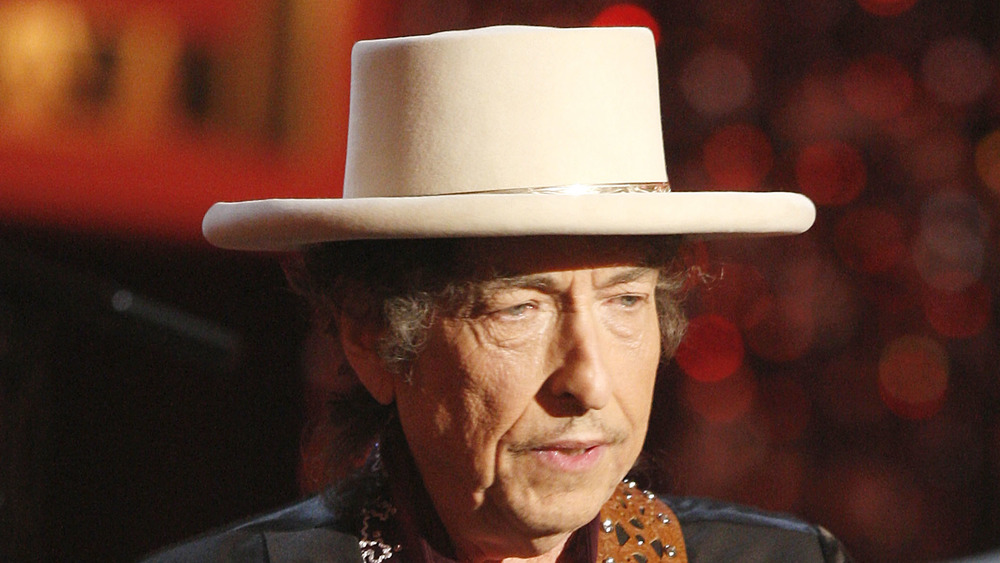
Bob Dylan (2011) Photo by Kevin Winter

The revolution in music in Western Europe had a huge impact in the US. Until the early 1960s, folk, surf music and the Nashville sound were dominant musical styles there. Almost overnight, these genres faded into the background in favour of music imported from Western Europe; only the ‘Motown sound, managed to hold its own. Talk was therefore of the ‘British Invasion’. The ‘Beatles’ performance on the Ed Sullivan Show (1964) was the starting point. You can see this performance HERE.

A much better picture of the Beatles’ reception in the US is provided by the following recording of their performance at the Washington Coliseum a few days after the Ed Sullivan show. The group sang five of his well-known songs. Remarkably, they more or less had to build the stage themselves.

Many members of (future) folk-rock acts, such as ‘Byrds’, ‘Jefferson Airplane’, ‘Lovin’ Spoonful’, ‘Mamas & Papas’ and ‘Buffalo Springfield’, also turned away from traditional folk music in 1964 and 1965. The careers of Chubby Checker, Ricky Nelson, Fats Domino, Everly Brothers and ‘Elvis Presley’ suffered (temporary) damage. The British invasion also influenced the style of garage bands. Their numbers also increased to an estimated 180,000 bands, of which at most a few thousand did record at one time or another. 

A US reaction to the British invasion was not absent. American artists blended the sounds of existing embattled genres with European ‘rock’ influences. 

From ‘folk’ to ‘folk rock’

In the early 1960s, ‘rock’ and ‘folk’ were separate genres, with their own audiences and festivals. ‘Folk’ as a genre – poetic songs accompanied by acoustic instruments – totally snowballed in the 1960s as a result of the ‘British Invasion’, which temporarily established the hegemony of Beatles and Rolling Stones and related groups and artists in the US. But several former ‘folk’ singers struck back. They mixed the existing ‘folk’ repertoire with rock, including the use of electric guitars and drums. One inspiration was the group ‘the Animals’ who turned the acoustic lament ‘House of the rising sun’ into an archetypal folk-rock song. Precursors in the US of ‘folk rock’ were the Byrds and Bob Dylan. The latter indicated that the rock version of ‘House of the rising sun’ had motivated him to perform with electric instruments.

The first folk-rock song of American origin was ‘Mr Tambourine Man’, a composition by Bob Dylan, sung here by the Byrds in 1965. In turn, the Byrds influenced countless other artists such as ‘the Mamas & the Papas’, Simon & Garfunkel and Sonny & Cher.

Compare the folkrock version HERE with the acoustic version sung by Melanie in 1968. 

Bob Dylan’s metamorphosis can be heard on his album ‘Bringing it all back home’. On 7 of the 11 tracks, he is accompanied by a band with electronic instruments. On his later albums, such as ‘Like a rolling stone’, he continued this trend, much to the dismay of some of his original fans, who made no secret of it during performances. I now play two songs from the album ‘Bringing it all back home’. 

Acoustic is ‘It’s all over now, baby blue’, live at the Newport folk festival:

Next you can watch and listen to Maggie’s farm, a solid rock version. Dylan sang this version at the same edition of the Newport folk festival. Bob Dylan achieved great fame as a folk singer, think of songs like ‘Blowin’ on the wind’ and ‘The times they are changing’.  Less well known is that Dylan was a lover of rock & roll from a young age. In 1965, he decided to manifest it as such. According to exegetes, when he sings ‘I don’t want to work on Maggie’s farm anymore’, Maggie’s farm symbolizes the folk music scene. Listen to ‘Maggie’s farm’ here, including the booing at the end.

To this day, a significant group of fans of original ‘folk’ and ‘country’ music has continued to exist, outside the US too. This genre is called Americana or ‘roots music’. Examples include The BandCreedence Clearwater RevivalCrosby, Stills, Nash & Young as well as Ry Cooder and Bonnie Raitt. Another example is the Dutch group ‘CCC Incorporated’. You can hear a recording of the latter here.

From ‘country’ to ‘country rock’

‘Country music’ also suffered badly during the ‘British invasion’.  But many songs by artists like Hank Williams and Merle Haggard remained popular, and their popularity increased again when a dose of ‘rock’ was added. After Gram Parsons joined the Byrds, the group turned to country rock and songs like ‘Sweetheart of the rodeo’ and ‘You ain’t going nowhere’ were considered prime examples of this genre. 

Here you can watch and listen but the latter song (1968):

In the 1970s, Emmylou Harris and Linda Ronstadt became performers at respite from this genre. So did John Denver and Neil Young. Members of Ronstadt’s backing band later continued under the name ‘Eagles‘ continued the tradition.

From ‘blues’ to ‘blues rock’

In the development of blues rock, there was no one-way traffic between the US and Britain. As early as 1958, the American blues guitarist Muddy Waters toured Europe (see my exploration of the development of the blues in the US) and, especially in Britain, this led to a true blues boom. This inspired among others the members of the (future) Rolling Stones, Cream, Animals, Yardbirds, Kinks, Who and others. All these bands added a ‘rock twist’ to it.  Their music became so popular in the US in the second half of the 1960s that one could speak of a second British invasion. The blues rock was fiercer and louder that the beat music that was starting to sound dated. In the US, Paul Butterfield Blues Band, Canned Heat and the Doors were the first exponents of this new genre.  The members of these the bands often played long solos during performances, following the blues. 

Here, Canned Heat plays ‘On the road again’

Blues rock was getting louder and louder, moving towards heavy metal. I will come back to this in a subsequent post. However, there were also bands that stayed closer to the traditional blues genre. In the 1980s, these included, for example, ‘the Fabulous thunderbirds’ and ‘Stevie Ray Vaughan’.

In the above, we see the dichotomy emerging between ‘soft rock’ and ‘hard rock’. Folk rock and country rock were the basis for soft rock. The emphasis was on harmonic melodies. Key artists were, Carole King, Cat Stevens, James Taylor. Commercial highlights were provided by Fleetwood Mac and Billy Joel.

Hard rock was fiercer, mainly featured repetitive ‘runs’ and distortion of the sound and joined blues rock. This genre had numerous variations from the 1960s onwards, ranging from acid rock, metal, pink and grunge. International successes were mainly achieved by Queen, Thin Lizzy, Aerosmith, AC/DC and Van Halen.