Few (top) hits have become as popular and played by as many singers, vocalists, choirs and orchestras as Viva la Vida, or ‘Long live life’. The song is on the fourth album released by Coldplay, which was called Viva la vida or death and all his friends (2008). The then already popular band had been around for quite some time. In 1996, singer Chris Martin and drummer Jonny Buckland had met during an induction week at University College London. Students Will Champion and Guy Berryman joined the duo and Starfish, a band that mainly performed in pubs, was born. They soon changed the name to Coldplay when a friendly band of that name ceased to exist. The band still exists in this formation.
To introduce the song, here is the ‘official’ music video.
This video gives a better idea of the song than a recording in one of the gigantic stadiums where Coldplay usually performs and where the vocals of the audience dominate Chris Martin’s voice. To have an idea of that, watch a snippet of Coldplay’s performance at Pinkpop in 2011.
According to singer Chris Martin, the song Viva la Vida came about by accident. He could not fall asleep and had just taken a couple of sleeping pills when the words ‘I used to rule the world’ along with a matching tune shot through his head. He expelled the emerging sleep, picked up his guitar and formed an idea of the rest of the song, which he later finished together with his bandmates.
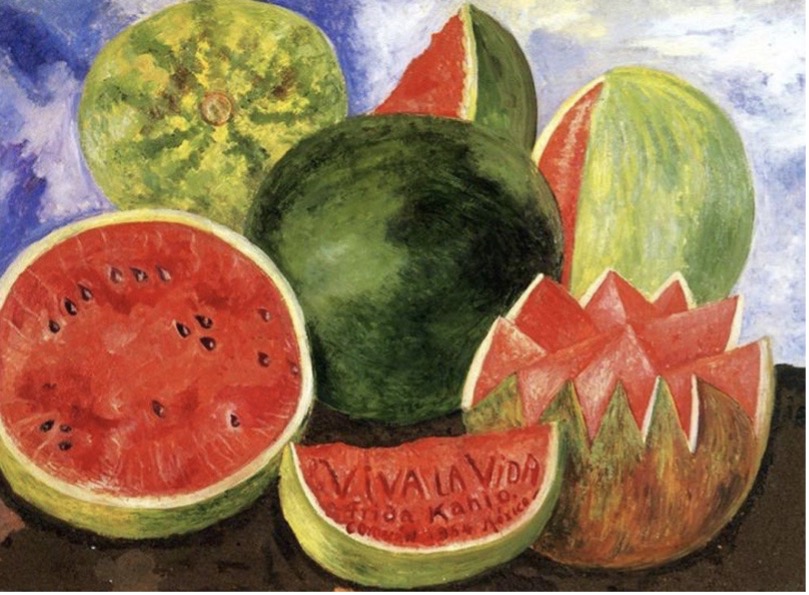
The lyrics are all optimism about the possibility of overcoming adversity, as well as authoritarian rulers. The title of the song and the album as well were inspired by the words on a painting by the Spanish artist Frida Kahlo (pictured above), who herself had endured several setbacks and illnesses, but had always kept her faith in better times. Hereis a link to the lyrics
The song is written from the perspective of an authoritarian monarch who has lost his power and now ‘sweeps the streets he once owned’ and complains that he once had the key, but the gates now remain closed to him. The reference to the fact that the gates to heaven will also remain closed is a childhood trauma of singer Chris Martin who, as a ‘naughty boy’, was often promised eternal damnation’. He says he is fascinated by the (delusional) idea that in heaven there is some kind of court analysing people’s lives. On the positive side, at least, there is no place there for the ‘I character’ from the song.
As an interlude, listen and watch the version by a large choir and orchestra conducted by Cicero Alves. The choir’s presentation is infectious.
The instrumentation of Coldplay’s song deviates from the usual piano and guitars. The intro consists of violins, that also carry the rest of the song, along with an electric piano and bass guitar. Otherwise, there are only the sustained thump of a bass drum, the sound of a timpani and a church bell.
The song’s popularity was not limited to the music world. In the 2008-2009 season, the song was played in Hamburger SV’s stadium after every goal. Unfortunately for the club, it could never say ‘we used to rule the world’. That same season, the song became the anthem of FC Barcelona and that club was more successful than ever.
Finally, look at a flash mob in which the youth symphony orchestra Amici Della Musica Allumiere from the Italian city of Trento played the stars from heaven.
Is Vida la Vida can Coldplay plagiarism?
It’s not all gold that shines. After Viva la Vida reached the top of the charts, Coldplay faced several charges of plagiarism. Was the song, the melody in particular, all Coldplay’s? When the song became a hit, there were at least four accusations of plagiarism.
The first came from US singer Cat Stevens. The song ‘Foreigner Suite’ features two passages that are suspiciously simi lar to passages in Viva la Viva. The video below compares the allegedly similar parts.
The second accusation came from an unknown American band Creaky Boards. Coldplay allegedly used part of the melody of ‘The Songs I Didn’t Write’ in Viva la Vida as the melody of their song. A song in which the singer is expressing his jealousy of all those nice songs he didn’t write. You only must listen to the first minute. The chorus is clearly different. By the way, it is quite a nice song.
The third song is ‘Love again’ by Carly Rae Jelsen from 2005. The accusation is the intro and the chorus. I believe the similarity is only on a few bars, so here the chance of coincidence is very high.
The fourth indictment came from guitar virtuoso Joe Satriani in his instrumental song’ ‘If i could fly’:
The video below shows the deliberate clips from ‘Viva la Vida’ and ‘If I could fly’ in sequence.
This appears to be the most serious charge for plagiarism. In Joe Satriani’s case, there was a very real chance that a judge would have confirmed plagiarism. Musicologists who have examined both pieces of music find that there is a high degree of similarity. The chord progression, tempo and rhythm are almost identical. A minute comparison of the score shows that both songs have so many similarities that coincidence is out of question.
Yet this does not necessarily mean that Chris Martin deliberately copied the tune. The story is that the phrase ‘I used to rule the world’ along with a matching tune came to his mind at night. At night, our brain works in full force and countless memories can emerge from the subconscious, tunes once heard included.
In 2009, the two parties reached an out-of-court settlement. The content of the settlement was an undisclosed financial agreement resolving the copyright dispute, without an admission of copying by Coldplay and any public disclosure of the exact monetary or contractual terms.
Chris Martin has always dismissed accusations of plagiarism. He says they these accusations inspire him to make even better songs. Deliberate use of ‘samples’ often results from appreciation and is explicitly announced.
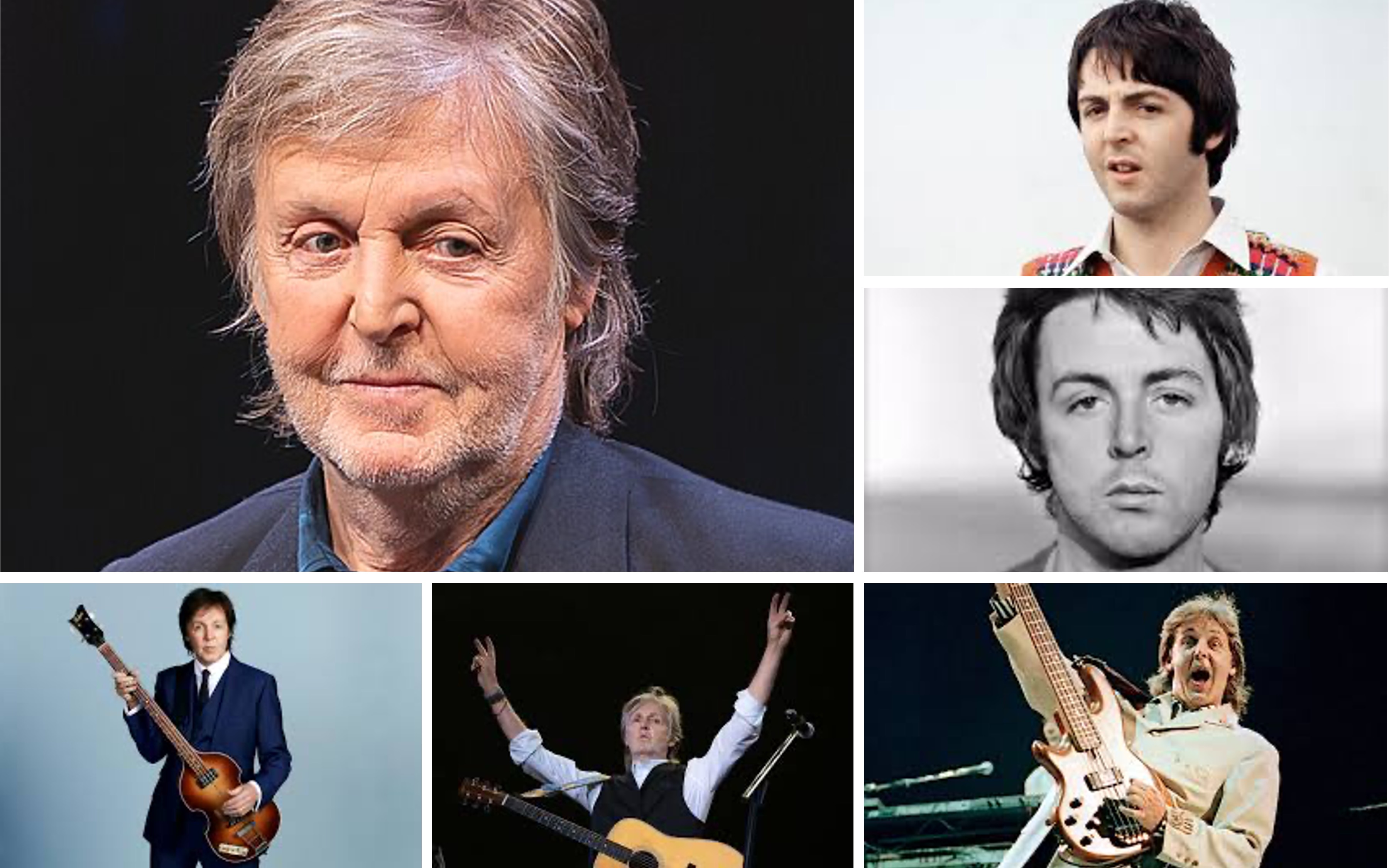
Paul McCartney is born in Liverpool on 18 June 1942. He taught himself to play the piano and guitar as a teenager. His father, a jazz musician, was a source of inspiration, as were rock & roll artists such as Little Richard and Buddy Holly. In 1957, he joined John Lennon’s skiffle group ‘The Quarrymen’.
It annoyed him that critics often attributed the success of his and/or John Lennon’s songs to the hype surrounding The Beatles. For this reason, he maintained a shadow discography for 60 years of songs he released under a pseudonym, initially Bernard Webb. Many of these songs were performed by others and became big hits, such as ‘Woman’, ‘A World Without Love’ and ‘Nobody I Know’ by Peter and Gordon, ‘One and One Is Two’ by The Strangles, ‘Come and Get It’ by Badfinger and ‘Love of the Loved’ by Cilla Black. When these songs received rave reviews, Paul laughed up his sleeve. Problems with the insincerity of some critics would haunt him throughout his life.
Discography
McCartney (1970)
Ram (1971)
Wild Life (1971, with Wings)
Red Rose Speedway (1973, with Wings)
Band on the Run (1973, with Wings)
Venus and Mars (1975, with Wings)
Wings at the Speed of Sound (1976, with Wings)
London Town (1978, with Wings)
Back to the Egg (1979, with Wings)
McCartney II (1980)
Tug of War (1982)
Pipes of Peace (1983)
Press to Play (1986)
Flowers in the Dirt (1989)
Off the Ground (1993)
Flaming Pie (1997)
Driving Rain (2001)
Chaos and Creation in the Backyard (2005)
Memory Almost Full (2007)
Kisses on the Bottom (2012)
New (2013)
Egypt Station (2018)
McCartney III (2020)
McCartney (1970), Ram (1971) and Wild Life (1971)
Paul begins his solo career with the desire to make music without constraints. He does not want to immediately try to live up to the high expectations of critics and fans. The first album, McCartney (1970), consists of a series of intimate home recordings, including ‘Maybe I’m Amazed’, which you can listen to here:
This recording is made with members of his future band Wings.
The next album, Ram (1971), contains melodic and layered pop songs. Years later, it appeared that Paul made two versions of Ram. One of them has remained on the shelf. Paul was satisfied with the first version and wanted to focus on forming his new band so that he could go on tour.
The first album with Wings, Wild Life (1971), builds on the relaxed pop songs that had already been released. Here you can hear and see the performance of the title song ‘Wild Life’, filmed in The Hague (1972). Meanwhile, he made another single with Wings, ‘Hi, Hi, Hi’ (1973), which became a top 10 hit. The BBC boycotted the song for some time because of alleged references to drugs and sex.
Red Rose Speedway (1973) and Life and Let Die (1973)
With this album, Paul and Wings take a leap towards the quality that had become the norm during the last years of the Beatles. The album includes the mega-hit ‘My Love’. The album was a huge commercial success; critics thought that even more quality was within reach. Watch and listen to ‘My Love’ here:
Red Rose Speedway was intended to be a double album. Due to the moderate success of Paul McCartney and Wings’ previous album, the record company decided to release it as a single album, and once again some of the recordings ended up on the shelf. Many years later, when this album was remastered, the forgotten recordings resurfaced and the double album was finally released. Critics refer to it as a ‘forgotten masterpiece’. Listen to some of the ‘lost’ recordings here: ‘‘Out’ , ‘The mess’, ‘ Tragedy ‘, ‘Mama’s little girl’, ‘The medley’ and ‘Little lamb dragonfly‘.
After completing the recordings for ‘Red Rose Speedway’, Paul McCartney and Wings record the song ‘Life and Let Die’ from the James Bond film of the same name, which became a number one hit worldwide.
Band on the Run (1974), Venus and Mars (1975) and Wings at the Speed of Sound (1976)
Band on the Run (1974) is considered one of the best albums in rock and pop history. It is Paul McCartney’s most celebrated album in his post-Beatles era. Critics believe that the album approaches the level of the songs from the Beatles’ heyday. Listen to the title song:
Paul wanted to record the song somewhere abroad. It ended up being the EMI studio in Nigeria. Just before the crew was about to leave, drummer Danny Seiwell and guitarist Henry McCullough declined the honour. There was no time to find replacements, so Paul, his wife Linda Eastman and Denny Laine took it on together. The title of the album is often jokingly associated with the band members who left.
The album Venus and Mars (1975) was another big hit. The song ‘Listen to What the Man Said’ reached number one in the US.
McCartney & Wings went on a successful world tour after the release of these two albums. In the middle of this tour, the album ‘Wings at the Speed of Sound’ (1976) was released, which ended up in the upper echelons of the album charts. The single ‘Love Songs’ reached number one in the US.
The success of ‘London Town’ (1978) lagged somewhat behind that of previous albums. Although it reached number five in the US and the UK, the single ‘a Little Luck’ (1978) was the only one to become number one in the US. Most critics dismissed the album.
During the recording sessions, Paul also records the non-album single ‘Mull of Kintyre’ (1978). This song became the fourth best-selling single ever in the UK, scoring higher than old Beatles songs such as ‘She loves you’.
Listen to this last song here:
Back to the Egg (1979), McCartney II (1980), Tug of War (1982), Pipes of Peace (1983), Press to Play (1986), Flowers in the Dirt (1989)
The sales figures for ‘Back to the egg’ were not too bad, but critics dismissed this album. Timothy White (Rolling Stone Magazine) called it ‘the sorriest grab bag of dreck in recent memory’. After the release of this album, McCartney disbands his band Wings; he wants to move in the direction of electronic music, which required different forms of accompaniment.
Paul tries out various styles. McCartney II is experimental and, like McCartney I, a solo album in the true sense of the word: Paul plays all the instruments himself. The album was characterised as ‘new wave’, proto-electronica and eccentric synthpop. Composers such as John Cage, Cornelius Cardew and Luciano Berio were sources of inspiration. Others compared it to ‘Krautrock’, triple hop or called it ambient. The album rose to number one in the UK; the single ‘Up ‘ also became a number one hit. In my opinion, this song does not give a good impression of the album. Listen instead to ‘Secretary’ or ‘Nobody knows’.
You will hear the latter song here:
Critics were initially negative, but eventually the tide turned. Then, the album was hailed as a precursor to the sound of the 1980s: you should listen to it once in your life.
Tug of War (1982) This album also became number one in several countries and sold over a million copies in the US alone. Critics saw it as a distinct improvement on the standard Paul had set in recent years and were overwhelmingly positive: “the masterpiece everyone has always known Paul McCartney could make”, according to Stephen Holden (Rolling Stone). Three songs from the album reached the top: ‘Ebony and Ivory’ (with Stevie Wonder), ‘Tug of War’ and ‘Take It Away’. The recordings were suspended for two months when Paul learned that John Lennon had been shot dead.
Watch and listen to a studio recording of Tug of War here
Pipes of Peace (1983) This album was less well received than its predecessor, although two songs, ‘Say, Say, Say’ (featuring Michael Jackson) and the title track, reached the top of the charts. Jeff Strowe (Pop Matters) considers the album ‘most regrettable’.
Press to Play (1986) Sales of this album were lower than most of the previous ones, although it did reach the eighth place in the UK. The song ‘Press’ was the only top 30 hit. Critics were divided: ‘McCartney is dabbling in each of his strengths’ (Erlewine, All Music) and ‘No doubt about it, this is McCartney’s most rocking album in ages. Much of it’s catchy, most of it’s fun’ (Lynn Van Matre, Chicago Tribune).
Flowers in the Dirt (1989) received positive reviews; the album reached number one in the UK, among other places, and contained several hit singles, such as ‘My Brave Face‘.
The problem during the ten-year period in which these albums were released was that Paul lacks a counterpart to challenge him both in the creation and the performance of his music. He would continue his search for an inspiring producer while making his next albums.
His fans had not forgotten him. On 21 April 1989, he performs for 184,000 people in Rio de Janeiro during the ‘Paul McCartney World Tour’.
‘Classical’ music
The Royal Liverpool Philharmonic Orchestra asked him to write an oratorio for the orchestra’s 150th anniversary. Four other ‘classical’ compositions would follow. The reviews were negative: ‘too slow’, according to The Guardian. Nevertheless, the ‘Liverpool Oratorio’ took first place in the classical charts. Here it is:
McCartney’s second classical album, ‘Standing Stone’, was released in 1997.
The Fireman
Looking for a new challenge, Paul teams up with Martin Glover to form a new band, The Firemen. The group’s debut album, Strawberries oceans ships forest (1993), is an exploration of the emerging genre of electronic dance music, particularly ambient and trance. The album mainly uses samples from Paul’s latest album, Off the Ground, without mentioning his name or Martin Glover’s. This led to speculation, and eventually the record company confirmed McCartney and Glover’s involvement. You can listen here to ‘Universal Here, Everlasting Now’, a song typical of this album.
This album was followed by ‘Rushes’ (1998) and ‘Electric Arguments’ (2008), an intense experiment with a succession of soundscapes. The opening lyrics of the latter album, ‘Nothing Too Much Just Out of Sight’ is similar to ‘Helter Skelter’ (1968). The rough lyrics and uncompromising hard rock sound set an unexpected tone for The Fireman’s final album.
Off the Ground (1993), Flaming Pie (1997) and Driving Rain (2001)
These are mediocre pop albums. McCartney had a lot of fun making them, but they are neither innovative nor experimental.
Off the Ground (1993) This album did not achieve high chart positions, except for Germany, where it spent 20 weeks in the top 10. The single ‘Hope of Deliverance’ was also successful, particularly on the European mainland.
Flaming Pie (1997). This album reached number 2 in the US and UK charts. A total of 1.5 million copies were sold. The reviews from critics were positive. The best after Tug of War (1982). Three singles from the album reached the upper echelons: ‘Young Boy’, ‘The World Tonight’ and ‘Beautiful Night’.
Listen to ‘Young Boy’ here:
Driving Rain (2001)
On 11 September 2001, McCartney was on a plane in New York City when the terrorist attacks took place. He composed the song ‘Freedom’ and helped to organise the ‘Concert for New York City’, an all-star benefit concert at Madison Square Garden on 20 October 2001.
McCartney stopped pressing ‘Driving Rain’ so that ‘Freedom’ could be released as a hidden track (since the artwork had already been printed). ‘Driving Rain’ (2001) received good reviews, but sales figures remained at a historic low.
Paul toured extensively during this period, including in Eastern Europe, which explains the stagnation in album production in the first decade of the new millennium.
Chaos and creation in the backyard (2005)
Meanwhile, Paul continues to search for new musical challenges, so he sought collaboration with Nigel Goodrich, a ‘star producer’. He realised that he needed a sparring partner who was his equal. The two produced two songs to see if a collaboration would be fruitful. It turned out to be the case, although Nigel often wanted to go in a different direction and claimed veto rights on songs he didn’t like. Paul then thinks, “This is why I’m working with him.” The song ‘Friends to Go’ is dedicated to the late George Harrison. The first single released was ‘Fine Line’ (2005), followed by ‘JennyWren’, both of which appeared on the album and reached around 20th place in the charts.
Here you can hear a studio recording of Fine Line.
After the album’s release, critics responded positively for the fourth time in a row. The album is described as ‘unusually reflective and intimate-sounding’. In the US, the album scored high in the charts; in the UK, it scored much lower. Total sales reached 1.5 million copies.
Kisses on the Bottom (2012), New (2013), Egypt Station (2018) and McCartney III (2020)
Kisses on the Bottom (2012) contains only two original compositions by McCartney. The rest are covers of traditional pop music and jazz. It ens up in the highest echelons in both the US and the UK, with critics being positive, calling it “fun and touching” (Rolling Stone). Listen to McCartney’s song ‘My Valentine’ and to ‘Bye Bye Blackbird’ here:
New (2013) consists of new compositions only, and McCartney mainly choses young producers to work on it. This album and the single ‘New’ also scored high in the charts and critics were equally positive: “Most enjoyable record in years”.
Egypt Station (2018) A single featuring the songs ‘I Don’t Know’ and ‘On to Me’ was released a month before the album. The album reached number 1 in the US, for the first time since ‘Tug of War’ (1982). Once again, critics were positive: ‘The finest songs land here immediately and hum with urgency’ (Kitty Empire, The Observer).
McCartney III (2020)
McCartney III dates from the coronavirus period and, as in the previous instalments of the ‘McCartney trilogy’, Paul plays all the instruments. A nice detail is that Paul coordinated the release date of this album with that of Taylor Swift’s ‘Evermore’. It became his first number 1 solo album in the UK since ‘Flowers in the Dirt’ (1989); in the US it peaked at number 2. Critics were enthusiastic: ‘A playful gem’ (Rob Sheffield, Rolling Stone), ‘Weird, wonderful and whimsical: A real treat’ (Helen Brown, The Independent). Listen to the longer song ‘deep feeling’ and to one of the singles: ‘Find my way’below:
Special events (2010 – 2014)
The Library of Congress Gershwin Prize for Popular Song is a prestigious award that has only been given to Stevie Wonder and Paul Simon before. In 2010 Paul McCartney was the third recipient of this award, presented by President Obama.
In June 2012, McCartney closed Queen Elizabeth’s Diamond Jubilee concert outside Buckingham Palace with the songs ‘Let It Be’ and ‘Live and Let Die’.
Paul closed the opening ceremony of the Summer Olympics in London on 27 July 2012 with ‘The End’ and ‘Hey Jude’ and invited the audience to join in the chorus.
On 12 December 2012, McCartney performed with three former members of Nirvana (Krist Novoselic, Dave Grohl and Pat Smear) during the closing act of ’12-12-12: The Concert for Sandy Relief’ at Madison Square Garden in New York. The broadcast was watched by approximately two billion people worldwide. The concert was organised to raise money for the victims of Hurricane Sandy. Many artists participated in this benefit concert, including The Who, Bruce Springsteen, Alicia Keys, Eric Clapton, Billy Joel, The Rolling Stones and many others.
A primetime special was recorded at the Ed Sullivan Theater on 27 January 2014 and broadcasted on 9 February 2014. The show celebrated the legacy of The Beatles and their groundbreaking performance on The Ed Sullivan Show in 1964. Entitled ‘The Night That Changed America: A Grammy Salute to The Beatles’, the show featured 22 classic Beatles songs performed by various artists, including Paul McCartney and Ringo Starr. You can watch and listen to the entire show here:
Another hidden gem: One Hand Clapping (1973, 2010, 2024)
This is yet another story about music and film recordings that have been gathering dust on the shelf for years. The film ‘One Hand Clapping’ was intended as a documentary about Paul McCartney and his band Wings. The film shows a live performance by the band at Abbey Road Studios, which was also recorded for release as an album. It features songs by McCartney, Wings and The Beatles. For some reason, the material was never released, although parts of the recording were included in several ‘special editions’ of other McCartney and Wings albums. This finally happened in 2010 with the original film.
The film ‘One Hand Clapping’ and the accompanying album have now been remastered and released. The film also premiered in cinemas on 26 September 2024, more than 50 years later than originally planned. The album and film are highly recommended. The album can be listened to here:
What else has Paul done?
Avant-garde art
While still at school in the 1950s, Paul was captivated by avant-garde artists such as Andy Warhol, Claes Oldenburg, Peter Blake, Willem de Kooning and Richard Hamilton. He has retained this interest throughout his life. In 1983, he started painting himself. His first exhibition was in Siegen in 1999. A year later, another exhibition opened in the UK. It included 500 canvases and took place at the Arnofini Gallery in Bristol.
Film music
In 1966, independently of the Beatles, he composed the film music for ‘The Family Way’. The soundtrack did not make it into the charts, but Paul won an Igor Novello Award for the best instrumental theme.
In 1981, Paul asked Geoff Dunbar to make a short, animated film, Rubert and the Frog Song. McCartney was the author and producer. The song ‘We All Stand Together’ from the film’s soundtrack was a big hit on the UK singles chart. You can listen to it here:
The controversial soundtrack to the film ‘Give My Regards to Broad Street’ flopped. One of the songs on it was ‘No More Lonely Nights’.
In 1992, he collaborated with Dunbar on an animated film about the work of French artist Honoré Daumier. This earned McCartney a BAFTA award.
Animal rights
Paul and Linda were committed vegetarians and supported international organisations working for animal rights. They also supported organisations fighting the spread of landmines and poverty, as well as music education.
Author
Paul has written several children’s books. His first was High in the Clouds: An Urban Furry Tail (2005), in collaboration with writer Philip Ardagh and animator Geoff Dunbar. The book is about a squirrel whose home in the forest is destroyed by property developers. McCartney and Dunbar turned it into an animated film consisting of several episodes.
Biographies
There are countless biographies about Paul McCartney. Two stand out because he collaborated on them himself. These are: ‘Many Years From Now’ by Barry Miles and, more recently, ‘The Lyrics’, which he wrote himself (2021).
Miles has spent hundreds of hours with McCartney. The poet Paul Muldoon helped Paul write the second book. Both books are completely different. ‘Many Years From Now’ is a factual account of Paul’s life and comprises 617 pages. ‘The Lyrics’ tell the story of his life through 154 old and new song lyrics, resulting in an equal number of standalone short stories.
Looking back
There is no doubt that Paul McCartney has the most versatile career of any former Beatle, both before and after the break-up of the Beatles. His work includes pop and rock songs and more experimental electronic tracks such as the McCartney trilogy and The Firemen.
Many of his songs became number one hits in the US or the UK, such as ‘Uncle Albert’ (1971), ‘My Love’ (1973), ‘Life and Let Die’ (1973), ‘Band on the Run’ (1973), ‘Listen to What the Man Said’ (1975), ‘Silly Love Songs’ (1978), ‘Mull of Kintyre’ (1978), ‘With a Little Luck’ (1978), ‘Coming Up’ (1980), ‘Ebony and Ivory’ (1982), Tug of War (1982), Pipes of Peace (1983), Take It Away (1982), Flowers in the Dirt (1989), Egypt Station (2018), McCartney III (2020).
Many albums also reached number one status on the album charts in the US or the UK, such as ‘McCartney I’ (1970), ‘Band on the Run’ (1974), ‘Venus and Mars’ (1975), ‘Wings at the Speed of Sound’ (1976), Flowers in the Dirt (1989), McCartney II (1980), Tug of War (1982), Egypt Station (2018) and McCartney III (2020).
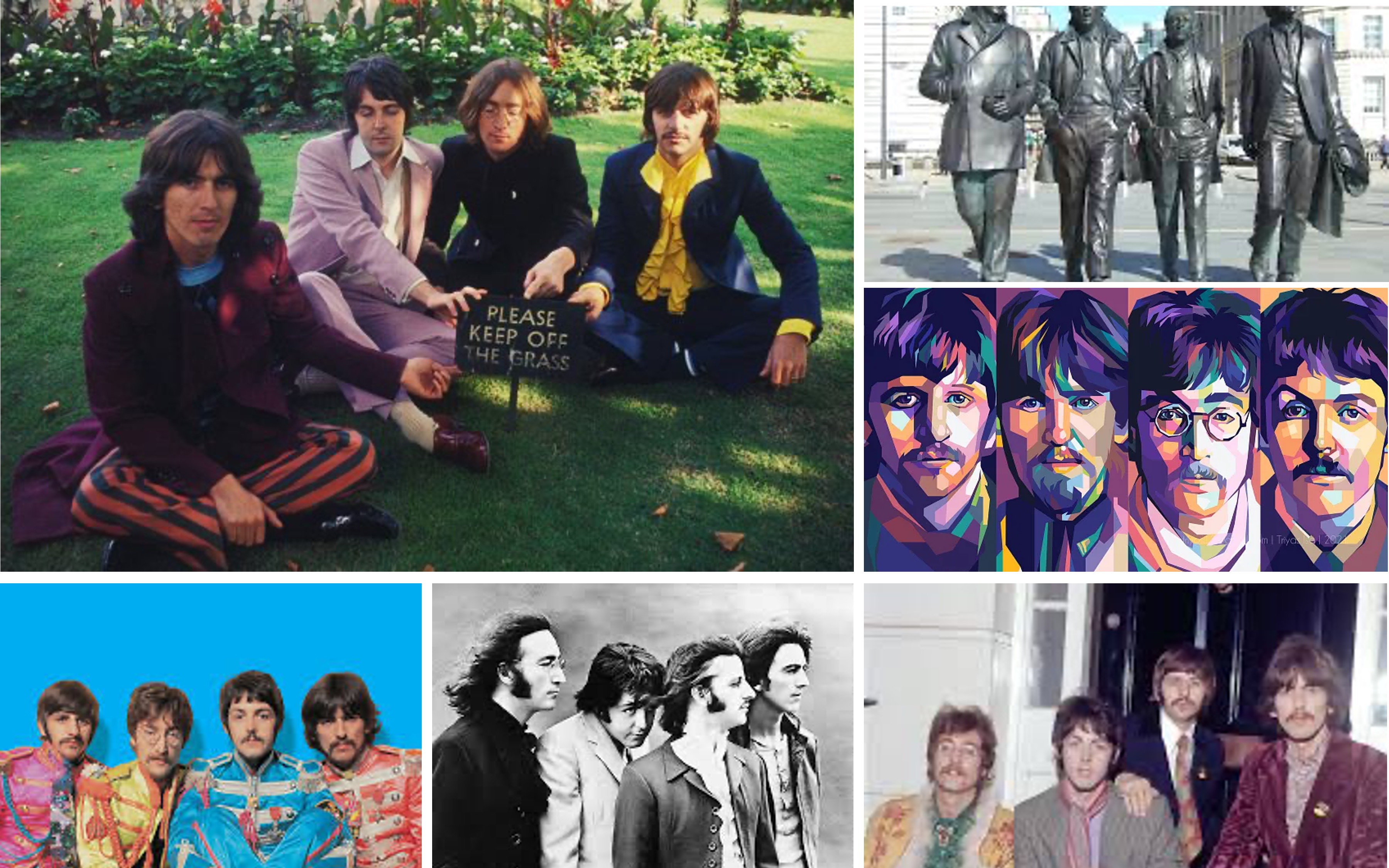
In September 1969, John Lennon announces that he will leave The Beatles. At the insistence of manager Klein, he refrained from making his departure public at that time. Paul McCartney did the same shortly afterwards. Incidentally, Ringo Starr and George Harrison had already discussed leaving soon. George felt undervalued because only two of his songs were permitted to be included in each album. These were not the worst ones: “Taxman”, “Here Comes the Sun”, “Within You Without You”, “While My Guitar Gently Weeps” and “Something”. Ringo was becoming increasingly nervous about the comments on his drumming style from Paul, himself a talented drummer.
Growing artistic and personal differences
The Beatles’ break-up is the result of a series of mutually reinforcing developments. The role of John’s relationship with Yoko Ono is often exaggerated. Yoko was an artist with her own life. More important is that Paul gradually eclipsed John Lennon musically and commercially. This became apparent after the sudden death of manager Brian Epstein and his replacement by Allen Klein, who in fact ran the business into the ground. Paul was the only one to denounce this, even taking the matter to court, where he was proven right. This mismanagement was particularly evident in the way Apple Corps, the Beatles’ company, wasted capital on its ‘artist-oriented’ policy, which allowed each Beatle to pursue his hobbies. These were avant-garde projects by John Lennon and Yoko Ono, making electronic music by George Harrison, and producing films by Ringo Starr. The problems of Apple Corps are widely discussed in the 2021 documentary Get back.
The best band of all time
Anyone who discusses the break-up of the Beatles is mentioning the exceptional quality of their music between 1965 and 1967. The album Rubber Soul (1965) marks a watershed between the appealing pop the band played before and the later songs, which have the allure of art music. I devoted a separate blog post to art rock, psychedelic rock and its main exponents some time ago; read it here.
There were several reasons why the group was able to realise this ambition. First and foremost was the creativity of the members, followed by their broad musical background and, thirdly, their use of drugs. ‘Norwegian Wood’ is the most striking song on Rubber Soul. It deviates from what was common at the time in terms of melody structure, composition and instrumentation. It is the first song ever to feature a sitar.
Listen to this song again, filmed during the recording of the album.
The Beatles become a studio band
When the Beatles decided to stop touring in 1966, they were able to focus on studio recordings and explore its the growing capabilities. The album Revolver (1967) was the first result of this. The song ‘Eleanor Rigby’ (here performed by Paul McCartney in 2007) once again illustrates the direction the group had taken in terms of melody and lyrics. The same applies to the singles released shortly afterwards, ‘Strawberry fields forever’ , and ‘Penny Lane’ (1967). The song ‘Tomorrow Never Knows’ opened the doors to psychedelic rock. Listen to it here:
‘Sgt. Pepper’s Lonely Hearts Club Band’ was less a new high point and more a confirmation of the path the Beatles have chosen and the consistency of the quality of their work. The same applies to ‘Magical Mystery Tour’ and the albums that followed.
The Beatles opened themselves up to a wide variety of musical influences, like:
German avant-garde composer Karlheinz Stockhausen: Revolution 9, I ‘am the Walrus
Music hall sounds from the 1920s: When I’m 64, ‘With a little help from my friends’, ‘Maxwell’s silver hammer’, ‘Honey pie’, ‘Your mother should know’ and ‘Lovey Rita’.
Classical music: the piccolo trumpet on ‘Penny Lane’, the piano intermezzo in ‘My Life’ and the guitar on ‘Blackbird’.
The use of different types of scales, in addition to the usual minor and major scales. You can hear the effect of this in ‘Norwegian Wood’, ‘Golden Slumbers’ and ‘We Can Work It Out’. In the last song, this effect is reinforced by a change in time signature from 4/4 to 3/4.
Religious music: The hymn-like structure of ‘Hey Jude‘. The acoustic guitar in ‘Blackbird’ is inspired by Bach’s Bourrée in E minor.
Folk music: ‘Eleanor Rigby’, ‘Norwegian Wood’, ‘Dear Prudence’, ‘I’ve Just Seen a Face’, ‘You’ve Got to Hide Your Love Away’, ‘I Am a Loser’, ‘Two of Us’ and ‘Julia’
Indian music: ‘Within You Without You’ and ‘The Inner Light’ are entirely Indian. Indian influences can be found in: ‘Across the Universe’, ‘Sexy Sadie’, ‘Norwegian Wood’ (sitar), ‘Love You To’, ‘Lucy In The Sky With Diamonds’, ‘The Indian Drone’, ‘Tomorrow Never Knows’ and ‘I Am The Walrus’.
Although Rubber Soul was the first comprehensive example of the new direction, the older song ‘PS I love you’ already showed upcoming changes. Just listen to it:
Recognition for the Beatles as the best band ever
Just how good were the Beatles really? The 2019 edition of Billboard, by far the most important music magazine in the world, ranked the Beatles as the greatest popular music artists of all time, followed by the Rolling Stones in second place. The Beatles’ first place applies on almost all fronts: number of albums sold, number of top scores in the UK and the US, the quality of lyrics and music, instrumental and vocal quality of the band members and variety of repertoire. Only when it comes to lead vocals does Mick Jagger beat John and Paul.
In his book ‘The Songwriting Secrets of The Beatles’, Dominique Pedler shows how the harmonic patterns that the Beatles use and combine in their songs have never been used before in pop music and have since become exemplary. Many of these patterns originated in the ‘magical’ interaction between Paul and John. This collaboration makes them the most successful songwriting duo in modern music history. The dichotomy between Paul McCartney’s optimism and John Lennon’s realism forced both to outdo each other, resulting in the unprecedented production of 180 songs, the most albums sold by any artist, and a still unbroken record of 20 number one hits on the Billboard Hot 100. Lennon said he wanted to write a pop song like McCartney; McCartney said he always wanted to have Lennon’s skeptical view of sacred cows. Meanwhile, the value of the collaboration with George Harrison and Ringo Starr should not be overlooked. The Beatles were not called ‘the fabulous four’ for nothing, and Mick Jagger spoke of a four-headed monster.
Let it be
Back to 1969, the year the Beatles decided to split up. Their work was far from over, apart from the solo albums each of them was preparing. The coffers were empty and they were contractually obliged to deliver two more albums, which would be called ‘Let it be’ and ‘Abbey Road’.
The band members agreed that the next album would be a ‘live’ performance. Paul was particularly keen on this idea, but in the end, all that remained was an unannounced performance on the roof of the Apple Corps building in London.
Writing new songs was the hardest part and led to further tension between the band members. Paul wrote the songs ‘Let it be’ and ‘Get back’, which would eventually end up on the album. As a result, there was nowhere near enough material when the ‘rooftop concert’ was due to take place. Despite all the problems and the fact that it was cold and bleak on the roof, the Beatles celebrated their (last) party. More and more people flocked to the Apple Corps building. Traffic came to a standstill and eventually the police put an end to it.
You can watch and listen to the entire ‘rooftop concert’ on 30 January 1969 in Central London here:
Abbey Road
The group decides to put the finishing touches to ‘Let it be’ on hold for a while – which appeared to be one year – and concentrate on the Abbey Road album. Everyone now seems to be back on track. George Harrison writes excellent songs: ‘Here comes the sun’ and ‘Something’; John writes ‘Come together’, Ringo comes up with ‘Octopus’s garden’, which becomes a resounding sing-along, and Paul writes ‘O Darling’ and ‘You never give me your money’, a swipe at manager Klein. There are still a few short fragments and unfinished ideas left, and then the brilliant decision is made to combine them into a medley, which becomes an overview of what the Beatles have written in recent years. The medley ends with ‘The End’, a song with short guitar solos by each of the band members and a drum solo – his first te be recorded – by Ringo. Many fans consider this medley to be one of the highlights of the Beatles’ oeuvre. There is no filmed recording of the medley. You can listen to how it sounds on the album ‘Abbey Road’ here.
It might be interesting to watch and listen to a live performance as part of the Sheffield Beatles Project (cover). You can do so here:
To finish the last album, ‘Let it be’, in addition to the songs played during the ‘rooftop concert’, a series of old unused songs are dug out and reworked. On 9 May 1970, the album hits the shops. By then, the Beatles are no longer together. Music critics praise both albums and, contrary to expectations, especially ‘Let it be’.
Paul’s first solo album is released three weeks later, much to the annoyance of John, George and Ringo. Over time, they stop avoiding each other but they occasionally play on each other’s albums.
The Beatles after the Beatles
John, Paul, George and Ringo are determined to continue their musical careers as solo artists. They will each produce a considerable number of albums. According to critics, only a few of their songs come close to the work in the Beatles’ heyday. The main reason is the disappearance of the magic in the collaboration between John and Paul.
The albums of George Harrison (who died in 2001) are spiritual, melodious and perfectionist, with a penchant for world music, in which his love of Indian music is prominent. Paul makes melodious pop music and rock and is constantly searching for new forms. He misses the ‘band feeling’ and for this reason he forms the group Wings in 1972. John Lennon (murdered in 1981) wrote politically engaged songs with a very personal character, and Ringo did what he had never been allowed to do before and made party music.
The break-up of the band did not affect the members financially. Immediately after the band split up, each Beatle was worth between 10 and 20 million dollars. Their fortunes grew rapidly through concerts, solo albums, royalties, investments, film productions and other business ventures. John Lennon’s fortune at the time of his death (1981) was 200 million dollars. This has risen to 700-800 million (in favour of Yoko Ono). George Harrison had an estate worth approximately 400 million at the time of his death (2001). Exact figures are unknown, but at least half of that has certainly been added to date (in favour of Olivia Harrison). Ringo Starr’s estate is worth around 350 million dollars. Paul McCartney’s is worth between 1.2 and 1.5 billion dollars.
A chronological overview of the most important parts of the oeuvre and activities of George Harrison, Ringo Starr, John Lennon, and Paul McCartney, including lots of music, is presented in each of the four upcoming episodes. These episodes begin with some notes about their lives. At the end, I will reflect on their individual careers.
“From ‘country & western to crossover’ is a recurring theme in recent posts. Now is the perfect time to focus on Taylor Swift. At the start of her career, she decided to focus on this genre. After releasing three albums, she has since become a versatile artist.
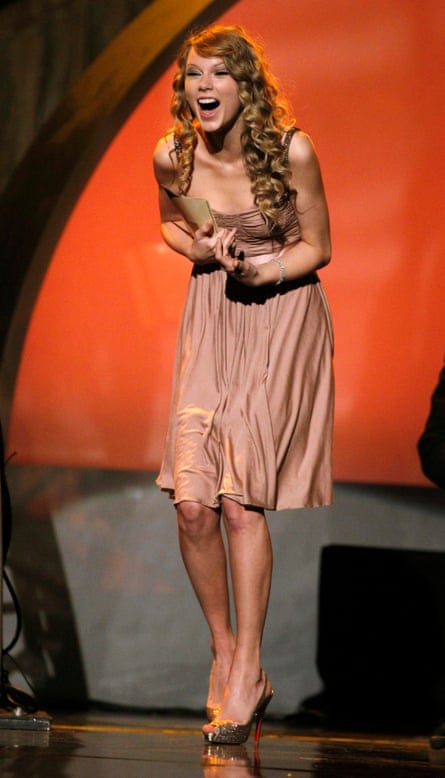
Taylor Alison Swift is born on 13 December 1989 in Reading, Pennsylvania, US. Her parents named her after American songwriter James Taylor. To get right to the point, she is currently considered the world’s best singer-songwriter in the popular genre.
At nine, she performs at local festivals, singing her own songs. Taylor travels regularly with her mother to New York, where she take singing and drama lessons. Taylor feels attracted to the narrative nature of country and western music. She was a great admirer of Shania Twain.
At the age of 11, she recorded some songs. With these, she and her mother visited several record companies, but they thought she was too young. Yet she did not go unnoticed, because at the age of 15, Sony/ATV hired her as a ‘songwriter’ and record company Big Machine Record offered her a contract. The family then moved to Nashville.
In 2006, she debuted her first album ‘Taylor Swift’. This album subsequently spent 157(!) weeks on the Billboard 200 list. This made her the youngest artist in US history to reach number one with an album full of self-penned songs.
First album ‘Taylor Swift’
You can listen to one of the songs from this album, titled ‘Tim McGraw’, here. He is also a singer-songwriter. In the song, she asks her ex-boyfriend to always think of her when he hears Tim McGraw’s song ‘Can’t Tell Me Nothing’. This recording shows Taylor meeting Tim McGraw and his wife Faith Hill. She was 16 years old at the time.
Before I delve a little deeper into the development between 2006 and now, I want to illustrate her abilities. This recording was made during of the 2019 American Music Awards ceremony. The show is a ‘potpourie’ of seven songs from previous years. Swift herself was awarded the title ‘artist of the decade’ (2010 – 2020). She had previously been named ‘woman of the decade’.
I consider the last song, Lover’, one of the highlights of her work.
On next version of the same song, she accompanies herself on guitar along with the band that has accompanied her for years, including during the big stage performances.
I return to the beginning. In the early years, like Shania Twain, she was considered a country singer and on her first three albums ‘Taylor Swift’, ‘Fearless’ and ‘Speak now’, it was evident.
Three characteristics are often mentioned as distinguishing country music: its narrative character, simple melody and the choice ofl instruments. As for the first characteristic, even her later songs are about personal experiences. The typical country instruments such as banjo, dobra (steel guitar) and violin soon disappeared from the scene. Her songs are not complicated, but their literary content exceeds that of the average country song. The tempo is also much faster and therefore suits a younger audience better.
Fearless
Her second album is Fearless. Half a million albums were sold in its first week of its release. This turned into 18 million worldwide. It is also the most acclaimed album in the history of country music. Here is from this album Love story, the song with which she broke through internationally (2008). It tells the story of Romeo and Juliet, with Taylor in the role of Juliet.
The songs on the first three albums were fueled by personal experiences: Infatuation, heartbreak and insecurity. A rotten afternoon at school could easily produce a world hit. She usually wrote down what she felt first and corresponding melodies bubbled up naturally.
Red
From the fourth album ‘Red’, you have already heard a song during her show at the American Music Awards ceremony: ‘I knew you were trouble’.
You can now watch and listen to another song from this album ‘We are never ever getting back together’. The song expresses her frustration over a revolving-door relationship with an ex-boyfriend, in which she also felt humiliated by his lack of appreciation for her music.
You can look and listen to three versions of this song. the first one is a recording for a limited number of fans, with her accompanying herself on guitar.
Click here for the lyrics of ‘We will never ever get back together’
Then compare this with tversion wo more ones from her world tours, namely the Red tour and the 1989 tour. You can hear the ‘pop’ content increasing; especially in the latter version where Taylor starts with a long introduction on an electric guitar.
In 2014, she announced that her album ‘1989’ would be her first ‘proper’ pop album. On previous occasions, she had always waved away criticism from the Nashville establishment that her music was more pop than country, saying “I leave the genre labelling to other people”. Now she did just that herself. She considered it a ‘rebirth’, hence the reference to her birth year of 1989. The album is predominantly synth-pop, 80s-style and was widely praised and Taylor was now also added to the line-up of the decade’s best pop stars.
From ‘1989’, you’ve already heard ‘Blank Space’. Other big hits from ‘1989’ were ‘Shake it off’, ‘Bad Blood, ‘Style’, ‘Wldest dreams‘, ‘New romantics‘ and ‘Out of the woods’. You can hear the latter song here. In it, Taylor accompanies herself on the piano.
The song describes a fragile relationship full of uncertainty and doubt .The recurring question ‘Are we out of the woods yet’ describes her unrequited desire to stabilise this relationship. According to critics, this song succeeds best of all the others on ‘1989’ in approximating the synth-pop of the 1980s. Of course, you hear less of that on this acoustic version. On the music video, which you can see here, Taylor tries to escape from a magical forest. The beautiful footage was shot New Zealand.
The two subsequent albums, ‘Reputation’ (2017) and ‘Lover’ (2019), unlike ‘1989’, include crossovers to rhythm & blues and hip-hop.
Reputation
In ‘Reputation’, she broaches the drawbacks of her celebrity after a period in which she had received a lot of negative press attention because of her many and what she considered opportunistic relationships, and themes of alienation and sexism come up. Reputation has a heavy sound and is made almost entirely with synthesisers and (drum) computers except for the last song ‘New year’s day’ which was recorded with only an acoustic piano. You can see the premiere of this song here. Other songs include ‘Ready for it‘, ‘End game’, ‘Delicate‘, ‘Getaway car’, ‘Look what you made me do’and ‘Georgeous’, which you can watch now.
This song is dedicated to a new love, but whether it will be something she does not know. In any case, she doesn’t take it too hard: In that case “I’ll just stumble on home to my cats… alone”. Critics call the song a relief compared to the sombre nature of the rest of the album.
‘Lover’ covers the whole spectrum of adult relationships and love and, according to Swift, is “a love letter to love”. She also takes a stand on human rights, feminism and against racism. The production is lighter in nature than ‘Reputation’ and besides electronics, acoustic instruments make their return. In terms of style, it contains elements of country, folk, funk and pop. The album was received very positively by critics, critics also saw in it a consolidation of the qualities she had established before Reputation. Some raise the question, what will Swift come up with next….
You have already heard the title song ‘Lover’; it was the piano solo in her 2019 American Music Rewards performance. Other hits from ‘Lover’ include ‘I forgot that you existed’, ‘You need to calm down’, ‘me‘, ‘Soon you’ll get better’ and ‘The man’. Finally, an acoustic rendition of this song. It’s about double standards: much more is accepted from men than from women, so she imagines what it would be like if she were a man. For the witty music video, directed and played by Swift, she received an MTV Music Award.
What you’ve heard so far now reflects Taylor’s first six albums. In the next post, I’ll explore the last five ones and then you’ll get acquainted with other aspects of Taylor Swift’s singing.
From ethnical to age group based division of musical preferences
in the second half of the 1950s rock & roll was a previously unprecedentedly popular type of music. But ‘rock & roll’ was played in the black community in the US much earlier and was simply called ‘rhythm and blues’, boogie-woogie or jazz. Examples include: “Roll ’em Pete” by Big Joe Turner and pianist Pete Johnson (1939), “Rocking this house” by Memphis Slim and the House Rockers (1946), “Rock and Roll” by Wild Bill Moore (1948), “Rock the joint” by Jimmy Preston (1949), “Saturday night fish fry” by Louis Jorden (1949) and “Rocket 88” by Jackie Brenston.
The following short film (15 minutes) shows many artists who can be retrospectively classified under the ‘rock & roll’ label. The influence of Afro-American roots, boogie-woogie in particular, is clearly audible.
While the term ‘rock and roll’ was well known, it did not refer to a type of music in the beginning. It was the name of the movement of a ship on the waves (‘rocking and rolling’) and later took on an explicitly sexual meaning when, among others, Trixie Smith sings ‘My (man) rocks me with one steady roll’ in 1922 or Billy Ward ‘I rock ’em roll ’em all night long’ in 1951.
Disk jockey Alan Feed was the first who used the term in 1951 as a designation for a type of music. His radio show was listened to by both white and black American youths. ‘Rock and roll’ has been said to be the first style of music to appeal to a specific age group and not an ethnic group as had been the case in the US until then. With that, the term is also linked to the development of a youth culture, with its own clothing, style of going out and dancing. The twist is inextricably linked to rock and roll.
The genre’s breakthrough was caused by white musicians – or perhaps better their record labels – such as Bill Haley and his Commets with “Rock the joint“(1952), which had previously been sung by Jimmy Preston, “Rock around the clock” (1954), and “Shake, rattle and roll” previously sung by Big Joe Turner.
The song “Rock around the clock” only became a world hit in 1955 thanks to the film ‘Blackboard Jungle’, a film in which later icon Sidney Poitier debuted. For the first time, riots broke out with fans wanting to attend a performance by the group. You can see Bill Haley and his Comets (and his audience) at work here
Bill Haley’s fame declined rapidly; when Elvis Presley appeared on the scene and appeared to have much greater sex appeal, his fans turned their backs on him. But first and foremost, he had a fantastic voice. Bill Haley was giant on whose shoulders, Elvis could glory. Here you can watch “Ready Teddy” (1957) on the Ed Sullivan Show. Usually only his upper body is in view, as people found the jerky movements with his lower body offensive to viewers.
Rockability: Cross-over between rock and roll and hillbilly music
Others who rode the wave of rock & roll were Johnny Cash with “Folsom prison Blues” and, of course, Buddy Holly, whose career ended by a plane crash (1959). Buddy Holly gained great fame with songs “Peggy Sue“, “Oh boy” and “That will be the day“. Here you can listen to Peggy Sue during a performance on the Ed Sullivan show (1957).
Incidentally, some black artists did gain recognition as rock & roll artists, such as Little Richard, here with “Long tall Sally“(1955, with Bill Haley in the audience), Chuck Berry with “Johnny B. Goode“(1958) and Fats Domino. In 1957, the latter said: ‘What they call rock ‘n’ roll now is rhythm and blues. I’ve been playing it for 15 years in New Orleans’.
The now next song “Jambalaya” was certainly not meant to be rock and roll, but the musicians didn’t care about that and the audience even less. The musicians are none others than Fats Domino, Jerry Lee Lewis, Ray Charles, Ron Wood (now Rolling Stones) and Paul Shaffer. The totally revved-up audience provides the background ‘vocals’ (well, background….).
Elvis Presley was well acquainted with and greatly admire ‘black’ rock & roll artists. When he was called ‘King of rock & roll’ he held it off by referring to Fats Domino, in his opinion (rightly) the only singer to whom this title was appropriate.
The record industry, which was responsible for landing Bill Haley and Elvis Presley, later thought it would do well to launch a somewhat more polished version of rock & roll that was accessible to a wider audience and therefore more commercial. Partly as a result, artists like Ricky Nelson, here with “Hello Mary-Lou“(1959), and Del Shannon with “Runaway‘ (1959).
This ‘new’ type of music was named ‘rockabilly’, a word that refers to the crossover of rock and country & western (‘hillbilly’ music). This is an example of how whites left their mark on historiography. Rock & roll music, as you have heard, was played from as early as the 1940s and has African-American roots.
Rather, whites, some of whom were country singers until then, were adopting the musical style of their black colleagues.
Provider of a British rock and roll version was Harry Webb, who later adopted the stage name Cliff Richard, and his band ‘The Shadows’, previously called ‘the Drifters’. Their songs and instrumental numbers became world famous. They were widely imitated, especially in the rest of Europe.
Here, Cliff Richard sings with the Shadows “Move it” (1958), which was considered the first authentically British rock and roll song.
The record company pushed Cliff Richard to impersonate Elvis, to dress as much as possible. It looks a bit forced, but he does his best. Here you can also see him in “Do you wanna dance“(1958).
It is fun to compare this performance of “Move it” from a performance by the same Cliff, now with Hank Marvin, one of the former Shadows in 1995. They perform at London’s Dominion Theatre with ‘The Queen’ in the front row. You can see it here.
But Great Britain had another answer….
By the late 1950s, ‘skiffle’ music had gained high popularity. In essence, skiffle has the same roots as American country music, which in turn emerged from European folk music. This can be well heard on a recording of Lonnie Donegan’s “Putting on thes tyle”(1957).
The rise of skiffle was in response to the growing commercialization of mainstream pop music. The thousands of skiffle groups that sprang up all over the UK used simple instruments like guitar, mandolin and washboard or drums. For many, Lonnie Donegan was the role model. For ‘The Quarryman’ too.
Over time, ‘The Quarrymen’ developed their own sound, by adding a bit more ‘beat’ to their songs. They changed their name and with it music history. You can see their first gig at ‘The Cavern’ here (1962)
With their new name, ‘The Beatles’ conquered the world, at least musically, the ‘British Invasion’. Countless other English ‘beat groups’, such as Freddie and the Dreamers, Herman Hermits, Dave Clark Five traveled to the States. This list could also include the Rolling Stones, the Animals and the Yardbirds, but their music, especially in the early days, was more strongly inspired by the ‘rhythm & blues’ genre. All recordings date from the early 1960s.
The second half of the 1960s saw the emergence of many new styles of music, generally referred to by the term ‘rock’. Within rock, a division tok place between ‘hard rock’, sometimes also referred to as ‘metal’, and ‘soft rock’, sometimes called ‘folk rock’. Famous exponents of the former include Steppenwolf with, for example, “Born to be wild” and of the latter the Eagles with “Hotel California. From the turn of the century, the boundaries between pop and rock blurred and we also saw the rise of electronic (dance) music, with all its variations. Of course, I will come back to all this later.
However, there are also musicians who keep the spirit of rock and roll alive. Some of them have recently formed the group “The Barnstones” and they made a brilliant album. This super formation is featuring Jimmy Barnes, Slim Jim Phantom, Chris Cheney , Kevin Shirley and Jools Holland’, whose piano is unmistakably present. Here you listen to the song ‘Johnny’s Gone ‘from this album, accompanied by a fast-paced cartoon. The best rock & roll ever from 2023….
This post is focussing at one band and one song: ‘Forever Young’ by the German group Alphaville was a hit 40 years ago and it is again today.
In the 1980s, many young people were pessimistic about the future. Unlike for the ‘baby boomers’, job opportunities were downright poor. People were talking about ‘lost generation’ for a reason. But the state of the world was also unstable. These were the years of the ‘cold war’ and many were afraid of ‘the (nuclear) bomb’. Alphaville’s big hits should therefore be seen against this background.
Look and listen here at the ‘official version’ of ‘Forever young’. It starts with footage of a church that people apparently used as a hiding place:
In 1981, (singer) Marian Gold (stage name for Hartwig Schierbaum), Bernard Lloyd (Bernard Gössling) and Frank Mertens (Frank Sorgatz) formed the band Alphaville, initially called ‘Forever young’. They were joined by fellow members that changed over time. The name of the band was taken from the science fiction film Alphaville from 1965 by Jean-Luc Godard.
The band spent the necessary hours in a primitive studio, where cheap synthesizers and a drum computer were the main instruments. They sent recordings of which would later prove to be the three biggest hits in the band’s existence to several record companies: ‘Big in Japan’, ‘Forever young’ and ‘Sounds like a melody’. To their surprise, they received three offers. These titles all feature on the band’s 1984 debut album.
The band still exists, but Marian Gold is the only remaining member from the first hour. He was born in 1954 in Herford, Germany. As a young student in Berlin, he joined an artists’ collective, Nelson Community, where he formed the band Chinchilla. It also included Bernard Loyd. As a singer, Marian stands out for his multi-octave vocal range.
In the years following their successful debut album, several other albums followed, most of which were well received but rarely containing songs that reached the absolute top. The most recent album (2022) is ‘Eternally yours’ and harks back to old success songs played in a symphonic arrangement. The band presented this version in a concert tour, along with a chamber orchestra. The last song I am featuring on this exploration is a recording of the symphonic version of Forever young.
Before, I will delve a little deeper into the background of the song ‘Forever young’, here are the lyrics and their Dutch translation:
Alphaville: Forever young’
Let’s dance in style, let’s dance for a whileHeaven can wait, we’re only watching the skiesHoping for the best but expecting the worstAre you gonna drop the bomb or not?
Laten we in stijl dansen, voor een tijdje dansen De hemel kan wachten, we bekijken alleen de lucht Hopend op het beste, maar verwachtend het ergste Zul je de bom laten vallen of niet
Let us die young or let us live foreverWe don’t have the power but we never say neverSitting in a sandpit, life is a short tripThe music’s for the sad men
Laat ons jong sterven of voor altijd leven We missen de kracht, maar nooit zeggen we nooit We zitten in een kuil, het leven is een korte reis De muziek is voor de droevige mensen
Can you imagine when this race is wonTurn our golden faces into the sunPraising our leaders, we’re getting in tuneThe music’s played by the, the mad man
Kun je je voorstellen, na winnen van de wedstrijd We keren onze gouden gezichten keren naar de zon Terwijl we onze leiders prijzen stemmen we af op de muziek gespeeld door dwazen.
Some are like water, some are like the heatSome are a melody and some are the beatSooner or later, they all will be goneWhy don’t they stay young?
Sommige zijn als water, sommige als de hitte Sommigen zijn de melodie, anderen het ritme Vroeger of later zullen ze allemaal vertrokken zijn Waarom blijven ze niet jong
It’s so hard to get old without a causeI don’t want to perish like a fading horseYouth’s like diamonds in the sunAnd diamonds are forever
Het is zo moeilijk om zonder doel oud te worden Ik wil niet sneuvelen als een verzwakkend paard De jeugd lijkt op diamanten in de zon En diamanten blijven altijd bestaan
So many adventures couldn’t happen todaySo many songs we forgot to playSo many dreams swinging out of the blueWe’ll let ’em come true
Zo veel avonturen konden vandaag niet gebeuren Zo veel liedjes die we vergeten zijn te spelen Zo veel dromen, die komen uit het niets We laten ze allemaal uitkomen
Forever youngI want to be forever youngDo you really want to live forever?Forever, and everForever youngI want to be forever youngDo you really want to live forever?Forever, and ever
Voor altijd jong, Ik wil voor altijd jong zijn Wil je echt voor altijd leven? Voor altijd en voor alle tijdenVoor altijd jong Ik wil voor altijd jong zijn Wil je echt voor altijd, leven? Voor altijd en alle tijden.
Like many peers, the members of the band were gloomy about the world they lived in. Their first song ‘Big in Japan’ was about drug addiction of young people in 1980s Berlin. ‘Forever young’ is focusing on the cold war. The threat that one of the world powers will use an atomic bomb and start a nuclear war widespread in those days. The song is about the resulting feeling of helplessness: ‘Hoping for the best but expecting the worst: Are you going to drop the bomb or not?” The song expresses little faith in political leaders. In the original version, this was even stronger, but under pressure from the record company, the group made the lyrics less explicit: ‘Little fascist lady she loves you so. Following her leader, she’s getting in tune the music’s played by the madmen’ became ‘Turn our golden faces into the sun, praising our leaders, we’re getting in tune the music’s played by the mad man’. According to Marian Gold, the least successful line of the whole song.
The song has a strong allegorical character, and the lyrics are almost poetic. Its message is clear: The fear of dying from the bomb deprives young people of the will to live. What they want is a view of the future: ‘Youth’s like diamonds in the sun, and diamonds are forever’.
In an interview, Marian Gold said that in the first years of the band’s existence, none of the members could really play an instrument well. Therefore, they felt not good enough to play concerts, which they did on occasion with a lot of synthesizer support. ‘We felt more like studio rats’. Gradually this changed, also thanks to the arrival of new band members with ample stage experience.
The song’s fame was helped by the fact that other artists also included it in their repertoire. One of the most famous of these is by Laura Branigan, who ensured that it also received high praise in the US.
The song ‘Forever young’ is in the repertoire of countless (wind) orchestras and choirs. I show an example of both.
First, a recording of the Kreisorchester Borken from 2022. It is a filmed version of the studio recording for a CD of the orchestra.
Next, a recording by the Spanish choir Grupal from 2020.
The song has also been used in several movie pictures and TV shows. The producers of the popular US television series The O.C. (O.C. stands for Orange Country) had asked the Australian ‘Youth group’ to record the song as the title track. This resulted in another top spot on the charts in both the US and Australia. In the Netherlands, the song featured continuously on the NPO Top 2000. The highest place it reached was 68ste in 2003; in 2022, it was at position 302.
Alphaville itself has also repeatedly released new versions, including a dance version. The latest version dates from 2022. With it, the band toured Germany together with a chamber orchestra. For this occasion, a new album was released, playing a series of the group’s successes in a symphonic arrangement. I conclude with a recording of this symphonic version. This version was recorded on WDR’s (also) 40-year Schlagerjubiläum.
In a previous episode, I described how skillful producers are betting that new songs will achieve high sales. At the time, I used songs by Beyoncé and Rihanna as examples. In separate posts, starting with this one, I will pay attention to both mega-stars. The story about the development of prog rock will continue in the next post.
Beyoncé Giselle Knowles-Carter is born in Houston, Texas, in 1981. Her name is an homage to her mother’s birth name (Tina Beyincé Carter). She owned a hair salon, and her father was a sales manager at Xerox. As a child, Beyoncé was a steady participant in singing and dancing competitions. At her 7the, she won a talent contest with John Lennon’s song Imagine. She pursued a musical education. Due to the requirements of her fast-developing career, she did not finish it.
From the age of eight, she attempts to become known on the girl groups circuit. Her father quit his job to become a full-time manager, bringing the family to the brink of poverty. At her 15th, success glimmered when the group signed a contract with Columbia Records, resulting in the first album ‘No, no, no’, The group was called Destiny’s Child from then on, inspired by the Bible book Isaiah. Large success came in 1999 with the group’s second album ‘Writings on the wall’, and with the third album ‘Survivor’ that followed a year later.
Listen to the song ‘Say my name’ from the second album
In the meantime, Beyoncé struggled with severe depression. In varying line-ups, the group would go on to become the best-selling girl group ever. Beyoncé was the brains behind the music and choreography. The group went on a lengthy successful world tour. After slowing down and producing another album, the group broke up amicably.
Before Destiny’s Child ceased to exist, Beyoncé released a solo album “Dangerously in love”. It sold 11 million copies, and she received 5 Grammy Awards for it, the highest accolade in music.
From her debut album, you can see the best-selling single here. The recording also captures the large-scale set-up of her shows, which would continue to grow with each subsequent tour. Today, she is considered one of the best entertainers, surrounded by extremely costly and sophisticated choreography, for which the world’s best dancers are hired. So far, only Taylor Swift has caught up with her on this.
The second solo album followed in 2006. The third ‘I am… Sacha Fierce’ (2008) consists of two parts. In the first part, she is herself; in the second part, she ‘plays’ ‘Sacha Fierce’, her ‘alter ego’. The first part contains more quiet songs, while the second reveals more dance influences. This album added eight Grammys to her collection.
Now, you can listen to the ‘quiet’ Halo, not a live performance, but a music video. A halo is an attribute, with which statues of saints were generously provided.
From the album ‘4’ (2011) Beyoncé’s lucky number, you can listen here to ‘(Girls) run the world’, performed on the 25th anniversary of the Opray Winfrey show, also her last one.
Each new album received more rave reviews from public, press and music critics. This was especially true of album six, ‘Lemonade’, the best album of the entire decade because of the music, but also the cocktail of styles. The album is a modern form of R&B primarily, but it has also components of reggae, blues, rock, hip-hop, soul, funk, americana, country, gospel, electronics and rap. It also contained frank lyrics, for example about her husband’s infidelity. Beyoncé calls herself a “modern-day feminist” and many of her songs are about love, relationships, female sexuality and independence.
With music mainly from this album, she toured all major stadiums around the world from 2016, the ‘Formation tour’, named after one of the songs from the album ‘Lemonade’. Here the song ‘Formation’. On 16 July 2016, she performed at the Amsterdam Arena.
Her seventh album, ‘Renaissance’ (2022) was also particularly well received, and it is the basis for the world tour Beyoncé just finished. The song that you can listen to now is ‘Break my Soul’ and was filmed at the London performance of the show in June 2023. Electronic dance music dominates. More than 80 performances of this mega-show were scheduled. The cheapest tickets in London cost around €250; in Toronto, you could go for €100 less.
Even before the tour is over, Beyoncé has achieved just about everything imaginable musically before Taylor Swift took over. Never has an artist has earned 28 ‘Grammys’. She has now sold 200 million albums (physical and digital), which can be added to the 60 million together with Destiny’s Child. Leading magazines like Billboard and Time name her as the best female artist of the 21stecentury. She is on the list of the 100 most influential people in the world. Beyoncé’s nickname is ‘bee queen’ and her fans are called the bee-hive.
Finally, some details about the context of her life. Beyoncé married (also) world-famous rapper Jay-Z on 4 April 2008. Here, the couple is pictured together. They have a daughter aged 11 (Blue Ivy) and twins born in 2017 (Rumy and Sir).
Beyoncé was the face of her own fashion line, House of Deréon, which she set up with her mother in 2006: ‘Where sidewalk and catwalk meet’. Their clothes were wildly popular among fans, but sales declined eventually due to a lack of innovative momentum. The line was discontinued in 2012, partly after a fuss about overly sexy clothes for young girls. It has been revived in 2020 in connection with the then upcoming world tour. Later Beyoncé launched a swimwear line with Adidas. Now she is working in partnership with Balmain. Several perfumes have been named after her. Beyoncé has further appeared in numerous films, such as Pink Panther. Her voice is also heard in Lion King (Nala).
According to US business magazine Forbes, Beyoncé’s wealth is about $540 million. She has earned most of it from her singing, but the clothing line and her long-term association with Pepsi, for which she received $50 million, also contribute. From the ongoing world tour, whose gross proceeds are estimated at $2 billion, she is also sure to make several hundred millions.
It wasn’t just making money that rang the bell. Beyoncé also collaborates on campaigns to encourage schoolchildren to exercise. A nice clip to illustrate.
Beyoncé’s fortune stands in the shadow of that of her husband, rapper Jay-Z, whose name is derived from the two underground lines (J and Z) that run through Brooklyn. He grew up in one of Brooklyn’s most dangerous neighbourhoods, repeatedly got into trouble with the police but managed to break away from the criminal milieu and became a successful musician and businessman. Unlike Beyoncé, he owes his fortune mainly to successful business activities; besides his own record label (Roc-A-Fella), he invests in beauty products and in expensive champagne and cognac brands. He owns his own film company and finally, he owns a large collection of works by Jean-Michel Basquiat. Forbes estimates his wealth at over $2.5 billion. This makes him the richest hip-hop artist in the world, falling just short of the 1,000 richest people in the world (place 1208). In June 2023 Jay-Z and Beyoncé bought the most expensive house ever sold ($200 million) in the state of California.




 Music: Listen, Look and Enjoy