An ever-increasing part of the global population lives in cities. At one side the cities are engines of economic growth. At the other side, a large part of their population lives in poverty. At one side, technology is propagated as a mighty enabler and cities must be ‘smart’, at the other side it has replaced craftsmanship by dull jobs, as long as these are note wiped away too. These sides belong to one type of coins, which is the predominant disconnection between the interests behind economic growth and social and ecological values.
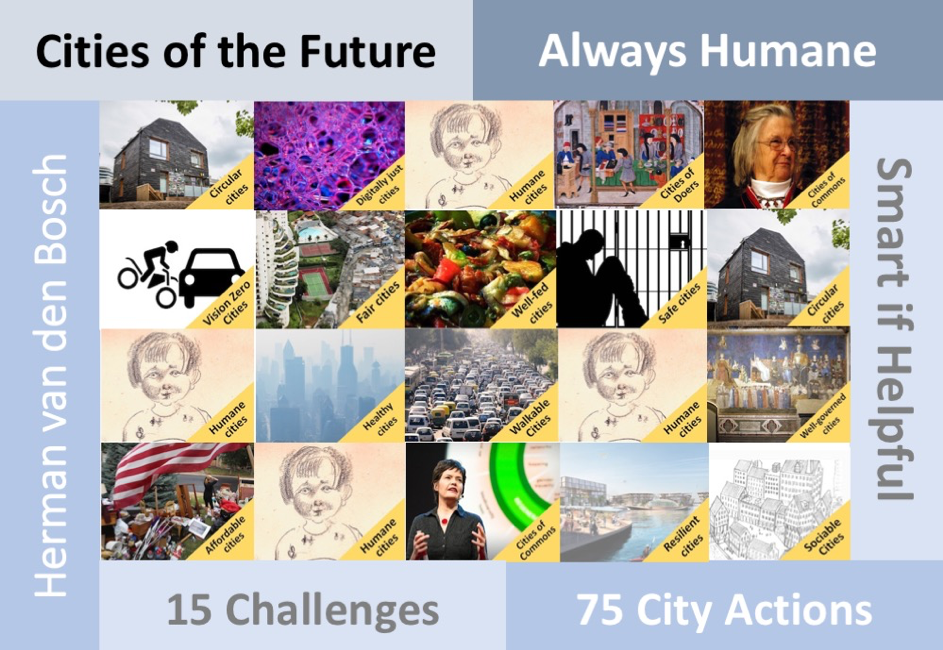
I have tried to forge another coin, the humane city, were all citizens live decently and children have equal chances. The fifteen chapters of the book Future Cities, Always Humane. Smart if helpful. provide a comprehensive picture of the development of humane cities.
Anybody interested can download for free the English version here and the Dutch version here (both optimized for screen use). A Dutch version (optimized for printing) can be found here.
During the next months, this blog enables you to reed posts representing the tragic of urban life but also the prospects of improvement, which ultimately will bring humane cities closer. These posts represent the most important findings in my book, updating and supplementing them.
This post is illustrated with two sketches that my father made in 1939 of children in Maastricht Stokstraat quarter, then a slum-like neighborhood, now gentrificated.
When I was writing about the humane city, I always had in mind these and the hundreds of millions other children who still live on the brink of poverty. Only in the US – which is said to be ‘the greatest country in the world’ – we are talking about 40% of all children. Unfortunately, the fate of their children will not be much better.
Writing the book has depressed me and also made me angry at those who believe that technology can solve all problems. Instead, societal changes at all levels are necessary preconditions. Still, each chapter illustrates that well-chosen technologies that might support the de development of humane cities.
The most important question is, what is the main challenge to become a humane city? The best answer is in Julian Agyeman’s definition of just sustainability: The need to ensure a better quality of life for all, now and in the future, in a just and equitable way, while living within the boundaries of supporting ecosystems[1].
Unequal opportunities for the inhabitants of the earth are a recurring theme in most chapters. Many attempts have been made already to improve the fate of mankind. Some were successful, many failed. For instance, social housing projects were counterproductive because social housing has increased segregation and came without (better) work, liveable income and education.
The only way towards a humane city is indeed the most difficult one: An approach that tackles all problems at once, considering their interrelatedness. Cities are the right place for such an approach, as the interdependence of their problems is obvious. Still, it will take many years, provided the preconditional societal reforms occur.
[1] Ducan McLaren & Julian Agyeman: Sharing Cities, A case for Truly Smart and Sustainable Cities. MIT, 2015, p. 200
Buildings account for 40% of the global energy use. As a consequence, the mass realisation of net zero-energy buildings (NZEBs) is top priority for urban developers. therefore the integration of photovoltaics (BIPV) in the billions of windows is a top challenge that seems to be realized.
Promising steps
At first sight, harvesting energy from sunlight and maintaining full-transparency seem incompatible. Photovoltaics use ambient light at the same frequencies the human eye can see, and efforts to increase the efficiency of sun panels are at odds with maintaining transparency.
The past 10 years researchers at MIT, UCLA, Michigan State University and several other institutions – Delft Technical University among them – have made progress in bridging both objectives[1].
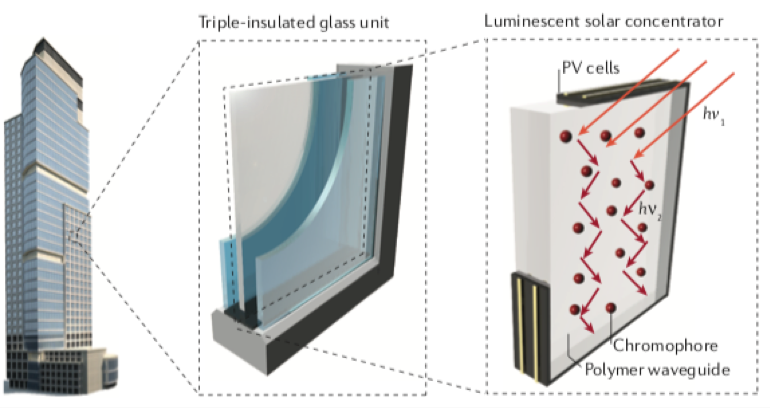
Until to date Luminescent Solar Concentratorsare the most promising technology to combine harvesting electricity and transparency[2].
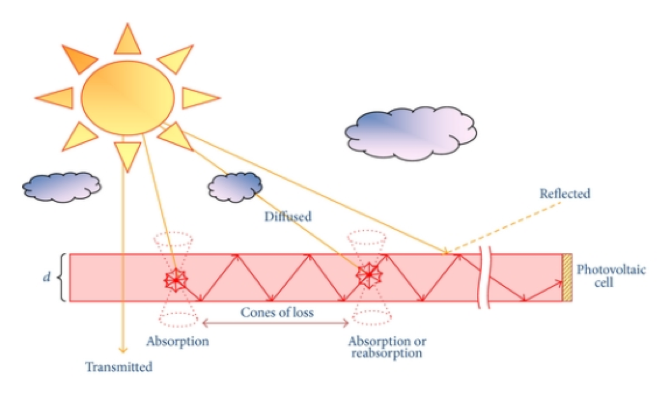
Luminescent solar concentrators catch both diffused and direct solar radiation. The light penetrates a so-called waveguide, a polymeric or glassy optical plate or thin film coated with luminescent materials. Within the waveguide the light is moving sideways. It is absorbed and turned into electricity by narrow strips of photovoltaic cells, which are either sporadically embedded in the plate or placed at the plate’s ends.
The efficiency of the process depends largely from the chromophores, the particles in the luminescent coating that have to catch as much light as possible. At the same time, these particles need to change the wavelength of the light in order to prevent other particles absorbing the light again on its way to the photovoltaic cells in the periphery of the window. For the time being, the effectiveness of this process is at the expense of the transparency of the window. With other words, the more electricity is harvested, the less transparent the window is. Nevertheless, the results so far already are commercialized successfully[3]. A few examples:
5575 m2skylight with 20% transparency in former Bell Building by Onyx Solar
Onyx Solar
Onyx solar is a global company (Spanish by origin) that is developing and producing energy harvesting glass panes for construction and retrofitting purposes[4]. Onyx Solar offers fully glass panels in stunning designs and in in specific colors, shapes and transparency (title picture). The company is able to trade off different degrees of transparency and color with different degrees of harvesting electricity. For instance, its most transparent panels (XL Vision) combine a transparency of 30% with a peak power of 28 watt (m2)[5]. This is about 25% of the output of ‘regular’ thin film solar panels[6].
Physee
Physee
Physee is a startup from Delft Technical University in the Netherlands[7]. During the 2017 World Economic Forum, the company was called ‘technology pioneer’. Its flagship product is the Power Window, which surpasses the transparency of Onyx’s windows, but – not by surprise – has a lower electricity generating capacity: 8 – 10 watt (m2)[8]. The company deploys thulium, a rare earth metal on the waveguide, together with a CIGS PV-cell strip attached to one glass-edge[9]. Currently, a few companies are deploying Power Windowsto support the development of this ambitious B-company.
The transparency of ClearView
Is a break-through underway?
A couple of years ago, a team directed by Richard Lunt of Michigan State University, took a different approach[10]. The principle behind it resembles that of the LSC discussed above. The concentrator also is a thin layer of material that can be placed on windows, phone screens or any flat, clear surface. Its thickness is less than 1/1,000th of a millimeter, and it is virtually indistinguishable from glass. This layer captures the photons of ultraviolet and infrared light while allowing the photons of visible light to pass through. For this reason, the result is exceptionally transparent to the human eye.
This technology is called ClearView power. The short video below is disclosing some technical details of this technology.
Ubiquitous Energy
In an effort to commercialize transparent solar technology Lunt founded the company Ubiquitous Energy[11], which is currently in the rolling out its first windows/panels for commercial use. I couldn’t find information about the window’s electricity generating power at this time, except that the company announced that 50 watt (m2) is feasible.
Meanwhile…..
architects and urbanists might follow the example of theInternational School in Copenhagen[12]that covered 6000 m2 of its walls with green solar panels to produce more then 50% of its electricity and also to contribute significantly to the building’s aesthetic.
[2]J.W.E. Wiegman, E. van der Kolk, Building integrated thin film luminescent solar concentrators: detailed efficiency characterization and light transport modelling, Solar Energy Materials & Solar Cells 103 (2012) 41-47.
[9]The applicability of thulium has been studied by Lisset Manzano Chávez, in her master theses Optimization of a Luminescent Solar Concentrator: Simulation and application in PowerWindow designat the Delft University of Technology.
[10]The principles behind this process are disclosed in a paper titled ‘Emergence of highly transparent photovoltaics for distributed applications’, published in Nature Research (2017)
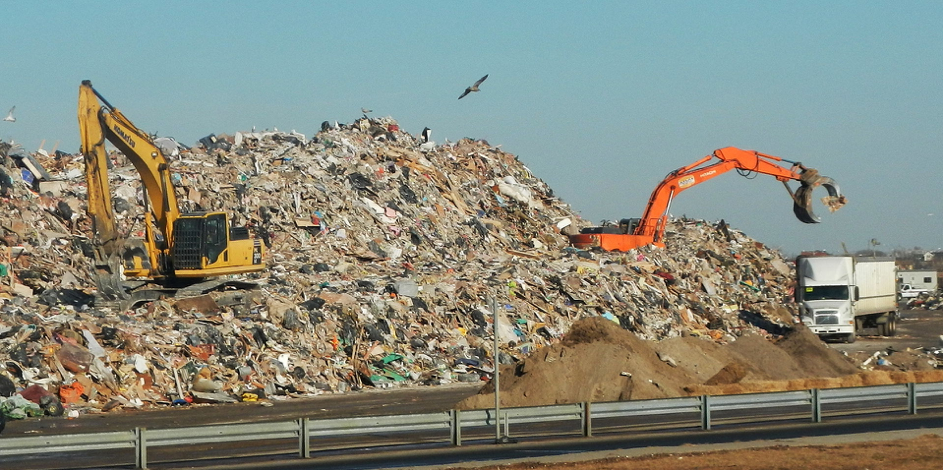
Demolition waste – Photo Jim Henderson Licensed under Creative Commons
Possibly, in 2050 the word wastecan be removed from our dictionaries. At that time, the Dutch economy will be circular according to the government. Meaning in essence, that all raw materials are reused infinitely. In order to reach this goal, an agreement with respect to the use of raw materials has been concluded between 325 parties. Its first milestone is halving the use of primary raw materials before 2030[1].
Many are skeptical of the outcomes of this agreements. Admittedly, 38.7% of the Dutch population feels that we are on the right track, although progress is slow. Jan Jonker[2], professor of business administration at Radboud University, is more pessimistic: We do not think circular yet. Institutions, from legal to fiscal, are fully geared to the linear economy.
Amsterdam is making progress. In 2015, the municipality explored opportunities for a circular economy, which have been published in Amsterdam Circular: Vision and roadmap for city and region[3]. Dozens of projects have been started, albeit mostly on a small scale and starting from a learning-by-doing perspective.
The report Amsterdam circular; evaluation and action perspectives[4](2017) is an account of the evaluation of these projects. It concludes that a circular economy is realistic. The city has also won the World Smart City Award for Circular Economy for its approach – facilitating small-scaled initiatives directed at metropolitan goals. Nevertheless, a substantial upscaling must take place in the shortest possible time.
Below, I focus on the construction sector, which includes all activities related to demolition, renovation, transformation and building. Its impact is large; buildings account for more than 50% of the total use of materials on earth, including valuable ones such as steel, copper, aluminum and zinc. In the Netherlands, 25% of CO2 emissions and 40% of the energy use comes from the built environment.
By circular construction we mean design, construction, and demolition of houses and buildings focused on high-quality use and reuse of materials and sustainability ambitions in the field of energy, water, biodiversity, and ecosystems as well. For example, the Bullitt Centerin Seattle, sometimes called the greenest commercial building in the world, is fully circular[5]
Photo: James Provost licensed under Creative Commons
The construction sector is not a forerunner in innovation, but of great importance with respect to circularity goals. The Amsterdam metropolitan region is planning to build 250,000 new homes deploying circular principles before 2050.
The evaluation of the projects that have been set up in response to the Amsterdam Circular Planhas yielded a number of insights that are important for upscaling: The most important is making circularity one of the key criteria in granting building permits. The others are the role of urban planning and the contribution of urban mining, which will be dealt with first.
The role of urban planning
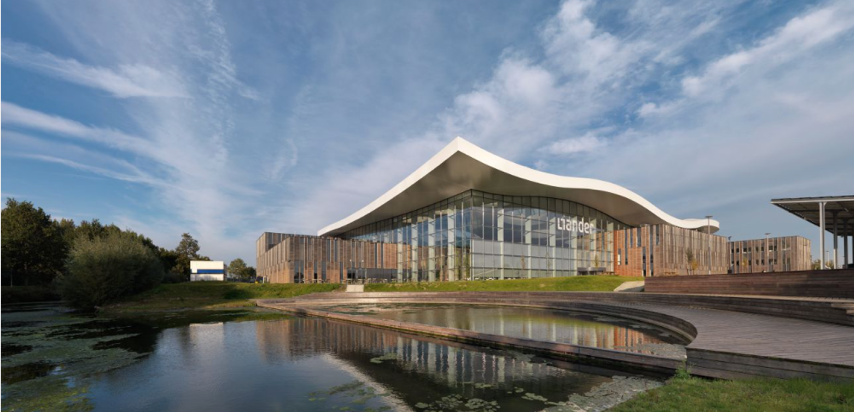
Urban planning plays a crucial role in the promotion of circularity. It is mandatory that all new plans depart from circular construction; only then a 100% reuse of components after 2050 is possible. The renovation of existing houses and buildings is even more challenging than the construction of new ones. Therefore, circular targets must also apply here. Dialogue with the residents, and securing their long-term perspective is essential. The transformation of the office of Alliander in Duiven into an energy neutral and circular building is exemplary (photo below).
Photo: VolkerWessels Vastgoed
The contribution of urban mining
Existing buildings include countless valuable materials. The non-circular way of building in the past impedes securing these materials in a useful form during the demolition process. Deploying dedicated procedures enables the salvation of a large percentage of expensive materials. In this case we speak of urban mining. Unfortunately, at this time re-used materials are often more expensive than new ones. Therefore, a circular economy will benefit with a shift from taxes on labor to taxes on raw materials.
Issuing building permits
The municipality of Amsterdam made a leap forwards with respect to issuing building permits to enable circularity[6]. Based on the above-mentioned definition of circular building, five themes are addressed in the assessment of new building projects: Use of materials, water, energy, ecosystems as well as resilience and adaptivity. Each of these themes can scrutinized from four angles:
The reduction of the use of materials, water and energy
The degree of reuse and the way in which reuse is guaranteed.
The sustainable production and purchase of all necessary materials.
Sensible management, for example a full registration of all components used.
Application of these angles to the five themes yields 32 criteria. A selection of these criteria is made in each project, depending from whether the issuing of building permits or renovation is concerned, and also from where the building takes place. For instance, a greenfield site versus a central location in a monumental environment.
One of the projects
In recent years, the municipality of Amsterdam has included circular criteria in four tenders: Buiksloterham, Centrumeiland, the Zuidas (all residential buildings) and Sloterdijk (retail and trade). On the Zuidas, the first circular building permit was granted in December 2017. 30% of the final judgment were based on circularity criteria.
The winner is AM, in collaboration with Team V Architects. In their project Cross over, they combined more than 250 homes with offices, work space for small businesses and a place for creative start-ups. The project doesn’t have a fixed division between homes and offices. Reuse in future demolition is facilitated by a materials passport and by building with dry connections, enabling easy dismantling.
Crossover – photo Zwartlicht
Need to organize learning
The detailed elaboration of the 32 criteria for circularity to be applied in tenders, covers more than 40 densely printed pages. One cannot expect from potential candidates to meet the requirements routinely. It would therefore be welcomed if the municipality of Amsterdam shared its knowledge with applicants collectively during the submission process.
I also would welcome ‘pre-competitive’ cooperation by communities with manufacturers, knowledge institutions, clients and construction partners with the aim to develop circular building. This involves for instance standardization of the dimensioning of components (windows, frames, floorboards) and the ‘rehabilitation’ of ‘demolished’ components while maintaining the highest possible value. This might be combined with a database in which developers can search for available components.
In Zwolle, another strategy is followed: the municipality, housing corporations and construction companies have formed a Concilium[7], which aims to significantly expand the already planned construction of houses, using circular principles.
Circularity requires closing circles. Collaboration within the supply-chain is one of these.
This short essay is looking for an answer to the question “Does technology develop autonomously or can society be in control?
This issue takes a central position in two thought-provoking books to be discussed below [1].
The first book is Radical Technologies, written by Adam Greenfield (Verso, 2017). The second one is A New Digital Dealby Bas Boorsma (Rainmaking Publications, 2017). Both authors have been involved in the development of smart cities for many years. Bas Boorsma among others in various global and regional roles in Cisco. Adam Greenfield – also author of Against the Smart City[2]has been working among others as an information architect for Nokia. Nowadays he is teaching at London School of Economics. Both books go beyond smart cities and focus on the role of digitalization in society.
Setting the stage
Bas Boorsma has a strong belief in the – until now only partially realized – potential of digital technology. Adam Greenfield refuses to discuss any such hypothetical value. He refers at Stafford Beer’s famous phrase The purpose of a system is what it doesand that is the colonization of the daily life by technology giants and near-monopolists like Google, Apple, Amazon, and Facebook, called ‘the Stacks’ and other big technology companies.
Digitalization
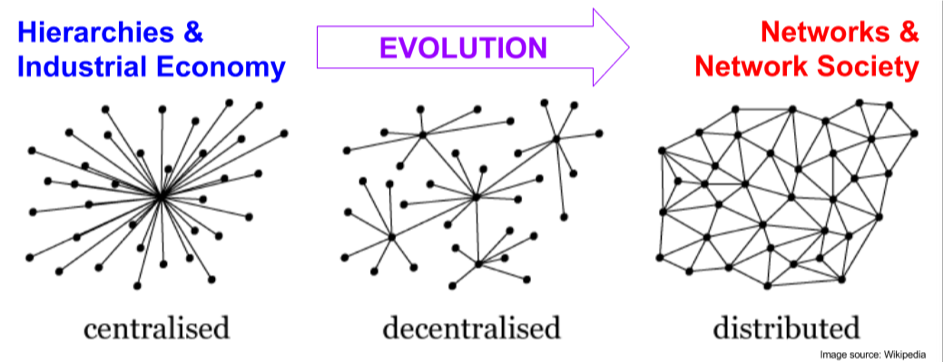
The essence of digitalization is restructuring economy and society with digital communication and infrastructures. According to Bas Boorsma, the network paradigm will replace centralist thinking by the development of many connected nodes, in society and in the digital world as well. The organisation of society and the principles behind the Internet will reinforce each other.
Many expected digitalization to facilitate the emergence of a ‘true’ free market, i.e. an economy based on peer-to-peer principles, collaboration, with small enterprises relying of the network effect and digital tools to conduct business in ways previously reserved for large corporations (New Digital Deal, p.52). This is what initially happened indeed: The development of platforms empowered start-ups, small companies and professionals. Many network utopians believed the era of ‘creative commons’ had arrived and with it, a non-centralized and highly digital form of ‘free market egalitarianism’(New Digital Deal, p.52).
Some already predicted the decline of capitalism.
Bas Boorsma
However, the network paradigm and the platform economy have been appropriated to a large extend by ‘the Stacks’ and other big companies. As a consequence, the workings of capitalism, revitalizing monopolism and oligarchy have been amplified. Digitalization-powered capitalism now possesses a speed, agility and rawness that is unprecedented(New Digital Deal, p.54). In this respect Bas Boorsma’s en Adam Greenfield’s visions do not divert much.
A New Digital Deal
According to Bas Boorsma digitalization cannot be countered, but steering is needed and feasible. He applies the analogy of a skillfully steered canoe sailing an incredible fast-flowing river, harvesting its energy. A New Digital deal must steer the further development and impact of digitalization to deliver on its promise in full, and we have to do this in a moral context… (New Digital Deal, p.42). In order to deploy digitalization and to manage platforms for the greater good of the individual and society as a whole, new regulatory approaches will be required… (New Digital Deal, p.46). This has to enable us to manage technological growth, regulate platforms, celebrate recalibrated free market principles, prepare for the emergence of new and better jobs, harvest digitalization generated wealth… and to tax wealth and platform rather than labor(New Digital Deal, p.65).
Thus the New Digital Deal requires strong regulatory power to bridge the tension between at one side the initial expectations and hopes for a post-capitalist society, dominated by many connected small actors and at the other side the appropriation of the digitalization and the platform-economy by ‘the Stacks’ and other companies. The question is what does this regulatory power include.
Bas Boorsma deals in depth with the societal impact of digitalization in domains like healthcare, education, transport, and energy. In each case he explores the content of the New Digital Deal. In the meantime I searched in vain for the answer to the question about the regulation of free markets and growing monopolism of ‘the Stacks’. The answer to this question is particularly important because it is exactly the unrestricted growth of monopolism that feeds Adam Greenfield’s deep pessimism with respect to the societal benefits of digitalisation. Adam Greenfield does not answer this question either, presumably because there is no answer. Still, I think there is one.
The vanity of a digital paradise
Adam Greenfield
Before returning to the New Digital Deal, I go deeper into the reason of Adam Greenfield’s pessimism. In consecutive chapters of his book he unveils how big companies – sometimes in cooperation with the state – have taken possession of digital technologies: Where previously everything that transpired in the fold of the great city evaporated in the moment it happened, all of these rhythms and processes are captured by the network and retained for inspection (Radical Technologies, p.5). This because of the combined effect of smartphones, sensors, security cameras, ‘wearables’ – like Hitatchi’s Business Microscope – and the fast increasing capabilities of the algorithmic production of knowledge.
Was blockchain technology intended as the foundation for newly to develop decentralized peer-to peer distributed organizations, is it actually captured by large companies. They embrace it as a fundamentally improved entrusted framework for identity and data sharing (contracts and databases).
However truly transformative circumstances will arise not from any one technology standing alone, but from multiple technical capabilities woven together in combination (Radical technologies, p.273). Again ‘the Stacks’ will benefit most. Their innovation capacity is larger than any other company and their cash is unlimited. They are turning the entire planetary-scale entrepreneurial community into a vast distributive R&D lab… At any given moment there are thousands of startups busily exploring the edges of technological possibility, and shouldering all the risk of involved in doing so. (Radical Technologies, p.281) By focusing on the development of ‘minimum viable products’ they anticipate to be taken over by one of ‘the Stacks’ or other technology companies and cash the millions these companies offer. The start-up community is more vital than ever before but is nothing like the decentralized occupants of the nodes of the network on the eve of a new liberalized order. In stead they support the dominance of ‘the Stacks’.
The failing of politics
The influence of politics – other then incidental support – in western countries with respect to the growing power of ‘the Stacks’ is negligible. Maybe with the exception of the European Union that is entangled in rearguard actions by fining some eye-catching forms of monopolism. In contrast, the Chinese gouvernment is molding technology to its own aims, albeit not in an exemplary way. Supported by China’s own ‘Stacks’ – among them Alibaba and Baihe – the government is integrating smartphones, wearables and social networking services to establish the degree of ‘social credit’ of all of its citizens.
I expect a negative answer from Adam Greenfield to the question whether technological development is an autonomous force like the fast-floating river in Bas Boorsma’s analogy. In the USA large-scale scientific programs supervised by state-institutions like the legendary DARPA enabled major technological development. This carefully planned process resulted not only in the nuclear bomb but also in the discovery of all components of the later iPhone, which initial development – by the way – has been subsidized by the state too, as has been disclosed in detail by Mariana Mazzocato[3].Nowadays the development of technology and its impact on employment is predominantly instigated by strategic choices made by ‘the Stacks’ and other technological companies.
As a consequence, any ‘deal’ regarding steering technological development or safeguarding the interest of citizens and society at large will have to target ‘the Stacks’.
The New Digital Deal revisited
This brings us back to the New Digital Deal. Targeting ‘the Stacks’ has to be preceded by decisive lawmaking at national or supranational level with respect to the aim and the conditions of digitalization for the purpose of society at large. Referring at Bas Boorsma the aim is enabling a networked and connected society with thriving activity in all nodes and free markets in between. A far from complete – list of conditions includes:
A strong and enforced anti-trust policy.
The discouragement of acquisitions in favor of collaboration within networks.
Unbundling heterogeneous conglomerates of companies (‘to big to fail’).
Governance guidelines discouraging short-termism, the stock markets included.
Considerable taxes on profits, which might be released by participation in state-coordinated research programs together with universities and other stakeholders.
A basic-income combined with the right at paid work for adult citizens.
An emerging digital community
I seriously doubt the ability of the bitterly divided European states to settle conditions as mentioned above in the near future. Meanwhile my expectations of lower level governments – cities in particular – are higher. At this level, high and low tech digital tools might be applied and enabled to prove their value in relation to challenges as traffic, healthy air, sustainable energy and safety. Bas Boorsma’s 20 building blocks of community digitalization will prove their value here. Each of these building blocks is actionable. The ‘community digitalization’ approach puts citizen’s needs and wants in the center and their fulfillment will come from a network of stakeholders. The local government can be held responsible for robust connectivity and digital safety and also for interoperability and the deployment of non-proprietary protocols.
Somewhere at an undetermined but eagerly awaited moment in the future a world of collaborating cities might force states to take their responsibility and issue the laws that are necessary to establish a New Digital Deal.
Did your appetite grown?
Start reading both books! Those who are attuned to practical solutions better start with Adam Greenfield’s because his well-documented approach to technology definitely will put practice in a new light. Also his way of phrasing is excellent. Readers with a more academic mind-set are advised to start with Boorsma’s book, because his life-long experience will be helpful in making theory actionable. And that is where many of us are waiting for.
[1] The title of this short essay is inspired by the phrase ‘Culture eats strategy for breakfast’ attributed to management guru Peter Drucker. This post has been published before at Smart City Hub.
Recently, Amsterdam[1]published its plan for the energy transition. The obvious conclusion is that the town, like other towns[2], need a lot of hot water for district heating from as yet unknown underground sources and a decuple supply of wind and solar energy. Looking for other supplies, the idea of hydrogen soon comes up.
Looking for other supplies of energy, the idea of hydrogen soon comes up.
Before answering the question about the feasibility of hydrogen as an additional source of heat and electricity, some characteristics of hydrogen have to be discussed.
Advantages and disadvantages of hydrogen.
The process of electrolysis brings water into contact with electricity, resulting in oxygen and hydrogen. A 100% clean process, provided the use of energy from carbon-free sources. ‘Blue’ hydrogen occurs when the CO2released during the production of electricity is collected and stored.
The storage of hydrogen is easy, particularly if conversed into ammonia. A kilo of hydrogen is producing the same amount of energy as a fully-fledged Tesla Power Wall. A tank with 60,000 m3of ammonia can deliver more than 200 million kilowatt hours. That is the annual production of 30 wind turbines on land. The problem with hydrogen is that 60% of energetic value is lost when electricity is used to make hydrogen and hydrogen is converted it into electricity again. Storing electricity in a battery yields only 5% loss of value.
Hydrogen plant in Rotterdam (blue containers) and the apartment complex (left center ) that will be heated with hydrogen. Photo: DNV GL
As a consequence, an obvious application of hydrogen is as a substitute for natural gas, which limits energy loss to 30%.
The Dutch grid operator Stedin will use green hydrogen gas to heat an apartment complex in Rotterdam. The hydrogen will be produced locally and transported via dedicated gas pipelines[3] (photo). An electric heat pump would have reduced energy use with 75%, given perfect isolation. Exactly to avoid the expenditures for isolation, housing corporations are considering hydrogen in older houses. However, the financial advantages of ‘green’ hydrogen, in the long run, have to be seen[4]. Eventually, heating on hydrogen will be reserved for historic city centres, where few alternatives are available.
But what if hydrogen will become much cheaper? In the near future, the Gulf States will export cheap ‘green’ hydrogen converted into ammonia on a large scale. The production costs of solar energy in desert areas are considerably lower than in Europe, because the yield of solar panels and collectors is twice as large due to the high intensity of insulation[5]. The feasibility of this alternative depends on geopolitical considerations in the first place: Many Western countries will be reluctant to become dependent again from ‘former’ oil producing countries. However, the advantages are obvious.
Another attractive prospect is that hydrogen (ammonia) offer a new destination for a couple of brand new but already depreciated energy plants. In this respect, an experiment in the Magnum power plant at the Eemshaven is of great importance. NUON is investigating whether this type of power plants can be used in a flexible way for the production of electricity while deploying various types of low- or no-emission fuels like hydrogen. In times of a surplus of green electricity, these plants can be used to produce hydrogen. If there is a shortage of electricity, the power plant can convert imported cheap hydrogen into electricity. In the future, probably one of the gas-powered energy plants in Amsterdam will be deployed in the same way.
e-Bike on hydrogen. The Alpha 2.0. Photo Pragma Industries
An also frequently mentioned application of hydrogen is transport[6]. In the meantime, for all forms of transport – even e-bikes[7]– hydrogen models are available.
With the foregoing in mind, hydrogen as fuel for passenger cars – not to speak of bikes – is quite odd[8]. Although the range is about 600 km and refueling is fast, the difference with electric cars is reducing fast. There are few car brands left that go for passenger cars on hydrogen; Toyota is one of these. The development of a hybrid car that runs on electricity with a battery that can be charged by a fuel cell while driving is noteworthy. Daimler is working on this, after having stopped the development of a fully hydrogen-powered passenger car recently.
For other means of transport, the verdict may be more positive[9]. The rule is, the larger the desired range and the heavier the load, the more the benefits of hydrogen equal or outweigh the advantages of batteries. Examples are buses, lorries, but also planes[10]and ships[11]. The province of Groningen and QBuzz, a regional transport company, are experimenting with buses on hydrogen. The 20 buses will run on the long routes. This in contrast with the rest of the fleet, which will become electric because loading can be fitted into the timetable.
The conclusion is that the use of Dutch solar or wind energy for the production of hydrogen is costly and does not qualify mostly when electricity can be used directly[12]. The availability of cheap imported hydrogen might be a gamechanger. In the first place, it is a ‘green’ alternative for the use of natural gas particular in buildings or parts of the town where a high level of isolation is costly or infeasible at all. In the second place it is an excellent alternative for long-term energy storing probably in combination with depreciated gas-powered energy plants. Buses, trucks, trains, ships and planes might be a third application.
[1]MRA Warmte Koude – Grand Design 2.0: Handelingsperspectief en Analyse, september 2018 Metropoolregio Amsterdam
Many are convinced of the value of sustainable energy and the number of proponents continues to grow. Nor is energy storage an issue anymore. In this short essay, I discuss three different methods for storing energy[1].
A forth solution, storage in hydrogen, will be dealt with in a next article.
Storage in batteries
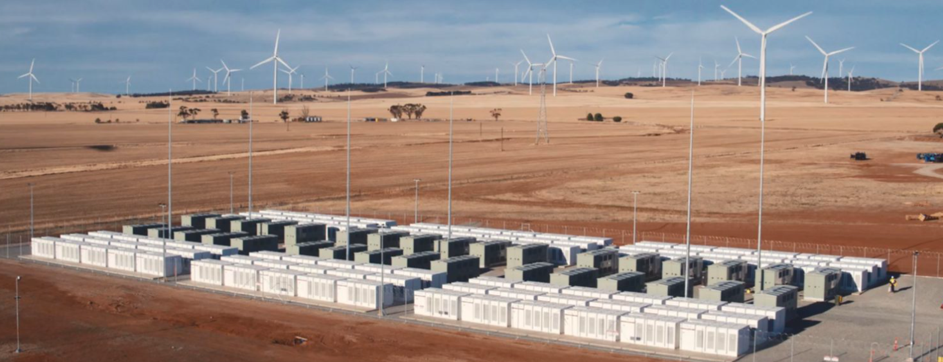
For the time being, Tesla has built the largest energy storage battery in the world in South Australia with a power of 100 megawatts and a storage capacity of 129 megawatt-hours[2]. The electricity comes from a local wind farm. The battery has immediately proven its value. In the event of a recent power outage, it restarted the supply of energy many times faster and without any problems for the users than the available gas turbines. Moreover, for a price that is 90% lower. It is very plausible that a storage system of sufficient size could have prevented the problems at Schiphol half a year ago due to a short-circuit in a Tennet cable[3].
Vattenfall uses 500 BMW i3 batteries for its energy storage project in Wales[4]. Their joint power is 22 megawatts and they are fed by of 76 wind turbines. They supply 13% of the electricity needs of all households in Wales annually.
The projects mentioned-above are examples of centralized storage facilities for large-scale delivery of renewable energy. The Amsterdam virtual power plant is a small-scale example[5]. Here 50 households produce electricity with solar panels, store them in-house and trade them if the price on the energy market is the most favorable. Tesla will do the same in Australia, but with 50,000 households[6]. The company is working on a huge virtual power plant. Each household has solar panels, with a power of 5 kilowatts and a Tesla Powerwall 2 battery with 13.5 kilowatt-hours capacity. The power of plant as a whole is 250 megawatts and its storage capacity 675 megawatt-hours.
Neighborhood battery – Photo DNV GL
Energy production and storage in the Netherlands will contain both large and small-scale elements. In the report Feasibility and scalability of the neighborhood battery, DNV GL investigates the contribution to the storage of energy in the Netherlands of small-scale energy storage systems, also known as neighborhood batteries[7]. Their construction is simple and the impact on the environment is limited. The concept of the neighborhood battery is well applicable in residential areas. It enables peer-to-peer exchange and trading of electricity.
The Amsterdam Energy Arena is an example of the application of a neighborhood battery. Its storage capacity is 3 megawatts[8]. Energy comes from 4200 solar panels on the roof of the stadium. This virtual power plant will supply power in the immediate vicinity and is also a buffer for the grid.
The grid of the Amsterdam Energy Arena – image Amsterdam Arena.
All projects that have been discussed up to now deploy Litihum (li’ion) batteries. The fast-growing demand makes lithium increasingly scarce and expensive. That is why alternatives are sought. One is the manganese-hydrogen battery[9], another the silicon battery[10]. The latter might have a storage capacity that is ten times larger than that of the li’ion battery. However, it will take years before both are on the market.
Test set-up heat storage in salt – Photo TNO
Heat storage in salt
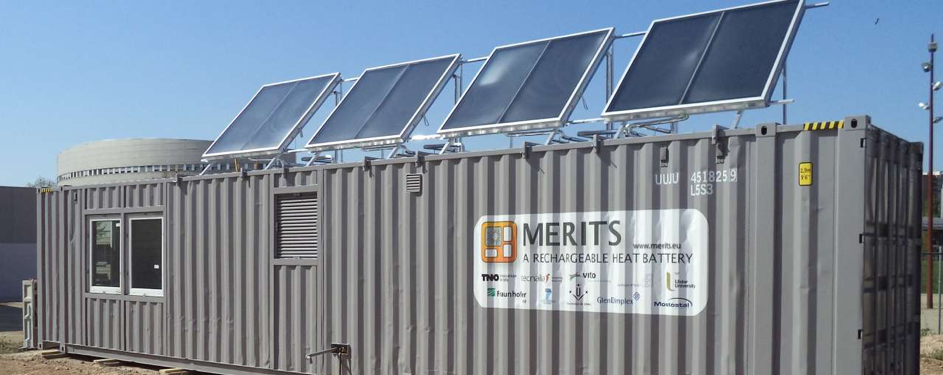
The storage of heat is very simple. All you need is a block of salt of two cubic meters. This will provide enough energy to heat your home throughout the winter: Thermal solar collectors convert sunlight into heat. The heat causes a chemical reaction in the salt, resulting in its dehydration. Conversely, adding water to the dry salt releases heat.
PhD student Pim Donkers (TU / e) investigated how that process works exactly and which salt you can use best[11]. The biggest problem was the degeneration of the salt, which gradually reduced its storage capacity.
The Dutch research institute TNO has solved this problem by influencing the properties of the salt used[12]. The advantage is obvious; salt is cheap and widely available. TNO is collaborating with nine companies in eight European countries to develop this invention into a market-ready product within the framework of the European project CREATE. A demo house that is supplied with heat in this way will be open for the public in short notice.
For several years, Marnix ten Kortenaar has been working on the development of the sea salt battery in his company Dr. Ten[13]. In all its simplicity, the principle is a container with dissolved sea salt and carbon electrodes. The Gridflex project is a pilot in the Dutch village of Heeten, deploying 25 salt batteries and that aims to create a local energy market[14]. The solar energy is generated, stored, traded and consumed completely locally. For this pilot, Energy cooperative Endona was granted exemption from the Dutch Electricity Act[15].
A third example comes from the German company EWE that intends to use salt domes for the storage of electricity[16], based on the principle of the redox battery[17].
The largest redox battery in the world – Image EWE
The project is called brine4power. A positive and a negatively charged electrolyte form the basis for this ‘natural’ battery, starting from the ions of ordinary salt[18].
A test set-up is realized in containers. Their storage capacity will gradually be increased to 2500 kilowatt-hours. Next, the storage of the electrolytes in salt domes will be piloted . This trial will take place in Jemgum along the Ems, near Groningen. EWE now uses these domes for the storage of gas. In 2023 ultimately, the battery will consist of two salt domes with a volume of 100,000 m3 and a total storage capacity of 700 megawatt-hours. As far as is known yet, no harmful effects are attached to this form of sustainable energy management.
Energy storage with water
Plan Lievense 1981 – Drawing brothers Das
One of the oldest and still most common way of storing energy is pumping water to reservoirs with the help of surplus electricity. In times of energy scarcity, this water is used to generate hydro-energy. In the early 1980s, Luc Lievense designed a number of applications for this principle that could be used by the Netherlands[19]: Artificial lakes in the Markerwaard and even in the North Sea varying in height from a few ten to hundred (!), meters.
It soon became clear that maintaining one or two conventional power plants for peak capacity was much cheaper.
A demonstration project has been realized in the Dutch village of Uden. This project has a capacity of 88,000 kilowatt-hours and can supply up to 1,000 homes with heat. Ecovat works together with Enexis, a regional grid operator in the Netherlands. Ecovat is part of a consortium called Flexible Heat and Power (FHP). This consortium is co-financed under Horizon 2020.
The reduction of the production of natural gas production in the Netherlands has increased the urgency of the question from where we will get our heat in the future. Sustainable sources like wind, sun and earth are plentiful, provided huge investment to make them available. For the purpose of storing several alternatives are available too, which enables making locally-adapted choices.
Demolition waste – Photo Jim Henderson Licensed under Creative Commons
Possibly, in 2050 the word waste can be removed from our dictionaries. At that time, the Dutch economy will be circular according to the government. Meaning in essence that all raw materials are reused infinitely. In order to reach this goal, an agreement with respect to the use of raw materials has been concluded between 325 parties. Its first milestone is halving the use of primary raw materials before 2030[1].
Many are sceptical of the outcomes of this agreement. Admittedly, 38.7% of the Dutch population feels that we are on the right track, although progress is slow. Jan Jonker[2], professor of business administration at Radboud University, is more pessimistic: We do not think circular yet. Institutions, from legal to fiscal, are fully geared to the linear economy.
Amsterdam is making progress. In 2015, the municipality explored opportunities for a circular economy, which have been published in Amsterdam Circular: Vision and roadmap for city and region[3]. Dozens of projects have been started, albeit mostly on a small scale and starting from a learning-by-doing perspective.
The report Amsterdam circular; evaluation and action perspectives[4](2017) is an account of the evaluation of these projects. It concludes that a circular economy is realistic. The city has also won the World Smart City Award for Circular Economy for its approach – facilitating small-scaled initiatives directed at metropolitan goals. Nevertheless, a substantial upscaling must take place in the shortest possible time.
Below, I focus on the construction sector, which includes all activities related to demolition, renovation, transformation and building. Its impact is large; buildings account for more than 50% of the total use of materials on earth, including valuable ones such as steel, copper, aluminum and zinc. In the Netherlands, 25% of CO2 emissions and 40% of the energy use comes from the built environment.
By circular construction, we mean design, construction, and demolition of houses and buildings focused on high-quality use and reuse of materials and sustainability ambitions in the field of energy, water, biodiversity, and ecosystems as well. For example, the Bullitt Centerin Seattle, sometimes called the greenest commercial building in the world, is fully circular[5]
Photo: James Provost licensed under Creative Commons
The construction sector is not a forerunner in innovation but of great importance with respect to circularity goals. The Amsterdam metropolitan region is planning to build 250,000 new homes deploying circular principles before 2050.
The evaluation of the projects that have been set up in response to the Amsterdam Circular Plan has yielded a number of insights that are important for upscaling:
The most important is making circularity one of the key criteria in granting building permits.
The others are the role of urban planning and the contribution of urban mining, which will be dealt with first.
The role of urban planning
Urban planning plays a crucial role in the promotion of circularity. It is mandatory that all new plans depart from circular construction; only then a 100% reuse of components after 2050 is possible. The renovation of existing houses and buildings is even more challenging than the construction of new ones. Therefore, circular targets must also apply here. Dialogue with the residents, and securing their long-term perspective is essential. The transformation of the office of Alliander in Duiven into an energy neutral and circular building is exemplary (photo below).
Photo: VolkerWessels Vastgoed
The contribution of urban mining
Existing buildings include countless valuable materials. The non-circular way of building in the past impedes securing these materials in a useful form during the demolition process. Deploying dedicated procedures enables the salvation of a large percentage of expensive materials. In this case, we speak of urban mining. Unfortunately, at this time re-used materials are often more expensive than new ones.
Therefore, a circular economy will benefit with a shift from taxes on labor to taxes on raw materials.
Issuing building permits
The municipality of Amsterdam made a leap forwards with respect to issuing building permits to enable circularity[6]. Based on the above-mentioned definition of circular building, five themes are addressed in the assessment of new building projects: Use of materials, water, energy, ecosystems as well as resilience and adaptivity. Each of these themes can be scrutinized from four angles:
– the reduction of the use of materials, water and energy
– the degree of reuse and the way in which reuse is guaranteed.
– the sustainable production and purchase of all necessary materials.
– Sensible management, for example, full registration of all components used.
Application of these angles to the five themes yields 32 criteria. A selection of these criteria is made in each project, depending from whether the issuing of building permits or renovation is concerned, and also from where the building takes place. For instance, a greenfield site versus a central location in a monumental environment.
One of the projects
In recent years, the municipality of Amsterdam has included circular criteria in four tenders: Buiksloterham, Centrumeiland, (residential buildings), the Zuidas (offices) and Sloterdijk (retail and trade). On the Zuidas, the first circular building permit was granted in December 2017. 30% of the final judgment were based on circularity criteria.
The winner is AM, in collaboration with Team V Architects. In their project Cross over, they combined more than 250 homes with offices, work space for small businesses and a place for creative start-ups. The project doesn’t have a fixed division between homes and offices. Reuse in future demolition is facilitated by a materials passport and by building with dry connections, enabling easy dismantling.
Crossover – photo Zwartlicht
Need to organize learning
The detailed elaboration of the 32 criteria for circularity to be applied in tenders, covers more than 40 densely printed pages. One cannot expect from potential candidates to meet the requirements routinely. It would therefore be welcomed if the municipality of Amsterdam shared its knowledge with applicants collectively during the submission process.
I also would welcome ‘pre-competitive’ cooperation by communities with manufacturers, knowledge institutions, clients and construction partners with the aim to develop circular building.
This involves for instance standardization of the dimensioning of components (windows, frames, floorboards) and the ‘rehabilitation’ of ‘demolished’ components while maintaining the highest possible value. This might be combined with a database in which developers can search for available components.
In Zwolle, another strategy is followed: the municipality, housing corporations and construction companies have formed a Concilium[7], which aims to significantly expand the already planned construction of houses, using circular principles.
Circularity requires closing circles. Collaboration within the supply-chain is one of these.
Aside from smart and resilient, a growing number of cities is wielding the adjectieve sharing. Seoul was in 2013 the first self-appointed Sharing City in the world. In 2015 Amsterdam claimed to be the first one in Europe.
San Francisco
However, the most eyecatching initiatives with respect to sharing originate from one city in particular – San Francisco – the hometown of sharing-oriented start-ups like Twitter, Dropbox, Lyft and Airbnb. A sharing aptitide is characterizing the life style of many of its millennial population: co-working, co-living (also due to sky-rocketing rents), eschewing car-ownership and a preference for living in the city center.
San Francisco brand of ‘sharing’ is commercial in the first place and has beside winners also many losers, for instance the drivers of companies like Uber and Lyft and those in other taxi-companies. The unprecedented influx of tourists in cities like Amsterdam and Barcelona due to the succes of one of the sharing economy icons, Airbnb, also will not contribute to its popularity.
For this reason Duncan McLaren & Julian Agyeman plea for a brand of real sharing cities, based on just sustainabilities. In their seminal book Sharing cities’ (MIT Press, 2015) they elaborate examples from Seoul, Copenhagen, Amsterdam and Medellin to clarify a more inclusive communal sharing paradigmthat goes beyond commercial motives. Real sharing cities relate questions with respect to social needs and welfare – economic opportunity included – to social justice and environmental limits imposed by supporting ecosystems.
Summing up, sharing means that more persons use the same product or service without owning it. This can apply to the (re)use of bikes, cars, appartments of books. But the sharing paradigm includes also includes recycling, common facilities for water and energy, credit unions and cooperative banks. Sharing might be motivated by cost reduction by social justice or by decreasing our ecological footprint.
Seoul
Communal sharing is connected with the sources of wellbeing: Fresh air, water, energy, education, cure and care, socializing, inclusion and liveable space. The city of Seoul offers many examples in this respect. The concept of jeong plays a key role. People believe that being kind and cooperative will benefit all in the long term. More specific, the administration of the city is promoting and supporting collaboration and caretaking in the densely populated apartment blocks. At the same time mayor and eldermen value listening to the inhabitants. People can easily utter complaints and requests talking in the ‘listening ear’ in front of the town hall (photo below).
The city administration also plays an intermediate role in the economic development. Start-ups are supported by the ‘Dreambank’, a pooled facility of 20 banks.
Medellin
Other cities offer additional insight in the intermediate role of city government to enhance the ‘sharing potential’ of their towns. An striking example is Medellin, the second town in Colombia and the former center of drug trafficking, also known as ‘murder capita’ of the world. After that military shot the infamous gangleader Pablo Escobar, the city government started to repair the ruined social fabric of the town. It invested large sums in education and communal facilities, often in iconic buildings like the Biblioteca de Espagna in the middle of poor areas, to enable their inhabitants regaining some feeling of proudness.
At the same time all isolated parts of the town were connected by a new public transport system of metrolines, gondolas and escalators. Participatory budgetting was introduced an instrument to increase citizen involvement.
Copenhagen and Amsterdam
McLaren & Agyeman also feature Copenhagen and Amsterdam as examples of ‘social urbanism’, because these city’s sharing policies are community motivated in the first place. Copenhagen has improved the liveabllity of its city center with an infrastructure based on the use of bicycles. Amsterdam did the same with its dense public transport network and creating bikelanes as well. In addition Amsterdam’s social housing policy has accomplished more integration of its immigrant population than many other cities. The city also facilitates a huge number of ‘commoning’ activities.
Reflecting upon the cases above, a couple of concepts demand clarification.
Collaboration
Collaboration is used often as an equivalent for sharing. This is not necessary true. Collaboration refers to collective action to get things done; sharing usually involves individual action. Collaboration happens in the economic domain – for instance cooperative work, self-managed companies and community currences and in the social domain as well, for instance commoning activities like gardening, cooking, the exploitation of collective housing, community shops and even swimming pools and transport. Apart from the direct benefits of collaboration, its value is also the growth of social capital. As a consequence, collaboration is a necessary extension of the concept of sharing.
Connectivity
Commercial sharing depends heavily from the availability of IT-platforms, think of Airbnb and Uber. But connectivity is also critical for certain social forms ‘sharing’, for instance instaneous mapping of damagein case of earthquakes or flooding in order to support rescuing activities.
Sharing versus smart
Sharing and smart are not equivalents; however accentuating its sharing capacity, might be a way to for smart cities to be more specific about its characteristics. My description of Smart City 3.0 includes many characteristics of the sharing city that are described above.
Amsterdam is profiling itself for some years as a smart city. Recently, the city also embraced the adjectives ‘sharing’ and ‘collaborative’. I doubt the wisdom of this policy. The content of the missions of Amsterdam Smart City and Amsterdam Sharing city do not differ that much. Therefore applying two adjectives is confusing, given that most citizens still have to become acquaintant with the benefits and challenges of living in a smart city. From a communication viewpoint, I would have chosen to clarify being smart with a small number of key words. Sharing might be one of these. My choice of the other ones would have been: citizen-based, inclusive, entrepreneurial, collaborative, sustainable and IT-enabled. Maybe my advise is still useful.
This is an episode in a series that elaborates aspects of smart cities. This article has already been published in Smart City Hub.
Aside from smart and resilient, a growing number of cities is wielding the adjectieve sharing. Seoul was in 2013 the first self-appointed Sharing City in the world. In 2015 Amsterdam claimed to be the first one in Europe.
San Francisco
However, the most eyecatching initiatives with respect to sharing originate from one city in particular – San Francisco – the hometown of sharing-oriented start-ups like Twitter, Dropbox, Lyft and Airbnb. A sharing aptitide is characterizing the life style of many of its millennial population: co-working, co-living (also due to sky-rocketing rents), eschewing car-ownership and a preference for living in the city center.
San Francisco brand of ‘sharing’ is commercial in the first place and has beside winners also many losers, for instance the drivers of companies like Uber and Lyft and those in other taxi-companies. The unprecedented influx of tourists in cities like Amsterdam and Barcelona due to the succes of one of the sharing economy icons, Airbnb, also will not contribute to its popularity.
For this reason Duncan McLaren & Julian Agyeman plea for a brand of real sharing cities, based on just sustainabilities. In their seminal book Sharing cities’ (MIT Press, 2015) they elaborate examples from Seoul, Copenhagen, Amsterdam and Medellin to clarify a more inclusive communal sharing paradigmthat goes beyond commercial motives. Real sharing cities relate questions with respect to social needs and welfare – economic opportunity included – to social justice and environmental limits imposed by supporting ecosystems.
Summing up, sharing means that more persons use the same product or service without owning it. This can apply to the (re)use of bikes, cars, appartments of books. But the sharing paradigm includes also includes recycling, common facilities for water and energy, credit unions and cooperative banks. Sharing might be motivated by cost reduction by social justice or by decreasing our ecological footprint.
Seoul
Communal sharing is connected with the sources of wellbeing: Fresh air, water, energy, education, cure and care, socializing, inclusion and liveable space. The city of Seoul offers many examples in this respect. The concept of jeong plays a key role. People believe that being kind and cooperative will benefit all in the long term. More specific, the administration of the city is promoting and supporting collaboration and caretaking in the densely populated apartment blocks. At the same time mayor and eldermen value listening to the inhabitants. People can easily utter complaints and requests talking in the ‘listening ear’ in front of the town hall (photo below).
The city administration also plays an intermediate role in the economic development. Start-ups are supported by the ‘Dreambank’, a pooled facility of 20 banks.
Medellin
Other cities offer additional insight in the intermediate role of city government to enhance the ‘sharing potential’ of their towns. An striking example is Medellin, the second town in Colombia and the former center of drug trafficking, also known as ‘murder capita’ of the world. After that military shot the infamous gangleader Pablo Escobar, the city government started to repair the ruined social fabric of the town. It invested large sums in education and communal facilities, often in iconic buildings like the Biblioteca de Espagna in the middle of poor areas, to enable their inhabitants regaining some feeling of proudness.
At the same time all isolated parts of the town were connected by a new public transport system of metrolines, gondolas and escalators. Participatory budgetting was introduced an instrument to increase citizen involvement.
Copenhagen and Amsterdam
McLaren & Agyeman also feature Copenhagen and Amsterdam as examples of ‘social urbanism’, because these city’s sharing policies are community motivated in the first place. Copenhagen has improved the liveabllity of its city center with an infrastructure based on the use of bicycles. Amsterdam did the same with its dense public transport network and creating bikelanes as well. In addition Amsterdam’s social housing policy has accomplished more integration of its immigrant population than many other cities. The city also facilitates a huge number of ‘commoning’ activities.
Reflecting upon the cases above, a couple of concepts demand clarification.
Collaboration
Collaboration is used often as an equivalent for sharing. This is not necessary true. Collaboration refers to collective action to get things done; sharing usually involves individual action. Collaboration happens in the economic domain – for instance cooperative work, self-managed companies and community currences and in the social domain as well, for instance commoning activities like gardening, cooking, the exploitation of collective housing, community shops and even swimming pools and transport. Apart from the direct benefits of collaboration, its value is also the growth of social capital. As a consequence, collaboration is a necessary extension of the concept of sharing.
Connectivity
Commercial sharing depends heavily from the availability of IT-platforms, think of Airbnb and Uber. But connectivity is also critical for certain social forms ‘sharing’, for instance instaneous mapping of damagein case of earthquakes or flooding in order to support rescuing activities.
Sharing versus smart
Sharing and smart are not equivalents; however accentuating its sharing capacity, might be a way to for smart cities to be more specific about its characteristics. My description of Smart City 3.0 includes many characteristics of the sharing city that are described above.
Amsterdam is profiling itself for some years as a smart city. Recently, the city also embraced the adjectives ‘sharing’ and ‘collaborative’. I doubt the wisdom of this policy. The content of the missions of Amsterdam Smart City and Amsterdam Sharing city do not differ that much. Therefore applying two adjectives is confusing, given that most citizens still have to become acquaintant with the benefits and challenges of living in a smart city. From a communication viewpoint, I would have chosen to clarify being smart with a small number of key words. Sharing might be one of these. My choice of the other ones would have been: citizen-based, inclusive, entrepreneurial, collaborative, sustainable and IT-enabled. Maybe my advise is still useful.
Worldwide 55 percent of all people is living in cities. They cover 4 percent of the landsurface, use 67 percent of all energy that is produced and are responsible for 70 percent of the emission of greenhouse gasses. Cities are not only the most important economic centres of the world, their political power is also increasing. Observers believe that growing sustainability will result in the first place from policies issued by the world’s largest cities instead of by national governments.
In order to express their intentions, many cities showcase themselves with adjectives such as ‘smart’, resilient’, sustainable’, ‘sharing’ and the like. These predicates refer to results that already have been accomplished, however small, but they express their mission for the future in the first place.
An inventory of current literature (1) resulted in more then 30 definitions of smart city. Most cited (348 times) is the definition of Caragliu (2009): ‘We believe a city to be smart when investments in human and social capital and and traditional (transport) and modern (ICT) communication infrastructure fuel sustainable economic growth and a high quality of life, with a wise management of natural resources, through participatory governance.’
The first appearance of the concept resilience in connection with urban policy dates back to2002. However, only in 2012 the frequency of searches in Google for resilient city started to boom.
In contrast with smart city, the number of definitions of resilient city is limited. Cities who call themselves resilient, like Rotterdam and The Hague in The Netherlands, claim to build capacity withinindividuals, communities, institutions, businesses, and systems to survive, adapt, and grow no matter what kinds of chronic stresses and acute shocks they experience.
Chronic stresses weaken the fabric of a city on a daily or cyclical basis. Examples include: high unemployment, overcrowded or inefficient public transportation systems, endemic violence and chronic food and water shortages. Acute shocks are sudden, sharp events that threaten a city. Examples include earthquakes, floods, disease outbreaks and terrorist attacks.
The concepts smart and resilient city have different roots. Large technology companies, like Cisco, IBM, Siemens, Philips started promoting to become a smart city expert ten years ago during the economic crisis as part of their strategy to find new markers and to attract new customers.
The use of the concept resilient city is promoted by international organizations and associations of cities in order to improve city’s capabilities to deal with hazards like the hurricanes Katarina in the New Orleans region (2005) and Sandy along the eastcoast of North America (2012).
As evidenced in the definition mentioned above, the concept hazard has been broadened to include external pressures in general, varying from climate change and environmental degradation to poverty and traffic congestion.
The concept smart city has also evolved. In another article I made a distinction between smart city 1.0, 2.0 and 3.0. These descriptions mark the evolution from the mere accentuation of the deployment of ICT as a key tool to fuel economic growth and competitiveness, to a multi-objective and participatory strategy capable to tackle problems of environmental deterioration, social equity and inclusion and building social capital.
The Resilient City Movement has been boosted in 2014 when the Rockefeller Foundation invested $100 million in the 100 Resilient Cities Challenge. Partly because its institutionalization, the policies of the cities partnering in the 100 Resilient City Challenge have more in common than those of the self appointed smart cities. The so-called City Resilience Framework, plays a key role in each of the participating city’s strategy.
The city Resilience framework
Based upon this framework, an index has been developed. Cities can calculate an indicator of their resilience with respect to the topics mentioned above and subsequently develop a strategy to improve weak points. The result of the analysis made in Rotterdam is indicated below. At this time 30 cities have published strategy reports to increase their resilience in the next decade. Among them are Rotterdam and Athens, a city that came with a brilliantly elaborated action report. A brand new report, Cities taking Action, written on occasion of the World Summit in July 2017, offers an anthology of what has been reached during the recent past within a selection of the 100 participating cities.
An analysis of definitions of smart and resilient cities and of characteristics attributed to each of these concepts is revealing a very broad overlap as is demonstrated in the box below.
As a consequence, some publications consider resilience as a characteristic of smart cities. Others believe that resilience will replace smart.I am not in favor of the assimilation of one of these terms by the other. Both concept have there own roots and are on their way to become meaningful for citizens. Therefore, they better can be treated as comparable, as is understood well by one of the platforms. Otherwise, the City Resilience Framework is an extremely useful policy making tool for smart cities because of its high level of elaboration.
Taking into account the convergence of definitions, both smart and resilient cities are building capabilities to deal with and prevent chronic stress and acute shocks, deploying a broad range of technologies. They enable individuals, communities, institutions and businesses to participate in the definition and execution of policies. They invest in the growth of human and social capital by education, meaningful work, communing, and sharing, and including all of its citizens to live in a decent way.
This is the 5th episode in a series of 6 articles about smart cities and the like. This article has already been publicised in the Smart City Hub
[1] Resilient cities: A systematic approach for developing cross-sectoral strategies in the face of climate change: Rocco Papa. Adrina Galderisi, Maria Christina Vigo Majello, Erica Saretta. in: TeMA Journal of Land Use Mobility and Environment 1 (2015)


























 San Francisco brand of ‘sharing’ is commercial in the first place and has beside winners also many losers, for instance the drivers of companies like Uber and Lyft and those in other taxi-companies. The unprecedented influx of tourists in cities like Amsterdam and Barcelona due to the succes of one of the sharing economy icons, Airbnb, also will not contribute to its popularity.
 Other cities offer additional insight in the intermediate role of city government to enhance the ‘sharing potential’ of their towns. An striking example is Medellin, the second town in Colombia and the former center of drug trafficking, also known as ‘murder capita’ of the world. After that military shot the infamous gangleader Pablo Escobar, the city government started to repair the ruined social fabric of the town. It invested large sums in education and communal facilities, often in iconic buildings like the Biblioteca de Espagna in the middle of poor areas, to enable their inhabitants regaining some feeling of proudness.


 Music: Listen, Look and Enjoy