Post-progressive rockย (Prog rock 1965 – 2025 part 8)

The first songs called post-progressive date from the mid-1980s. Most prog rock in the years that follow can be characterized as such.  So, you can expect ‘post-prog rock’ to have a high degree of diversity. Differences exist over time, by group and within albums too. 

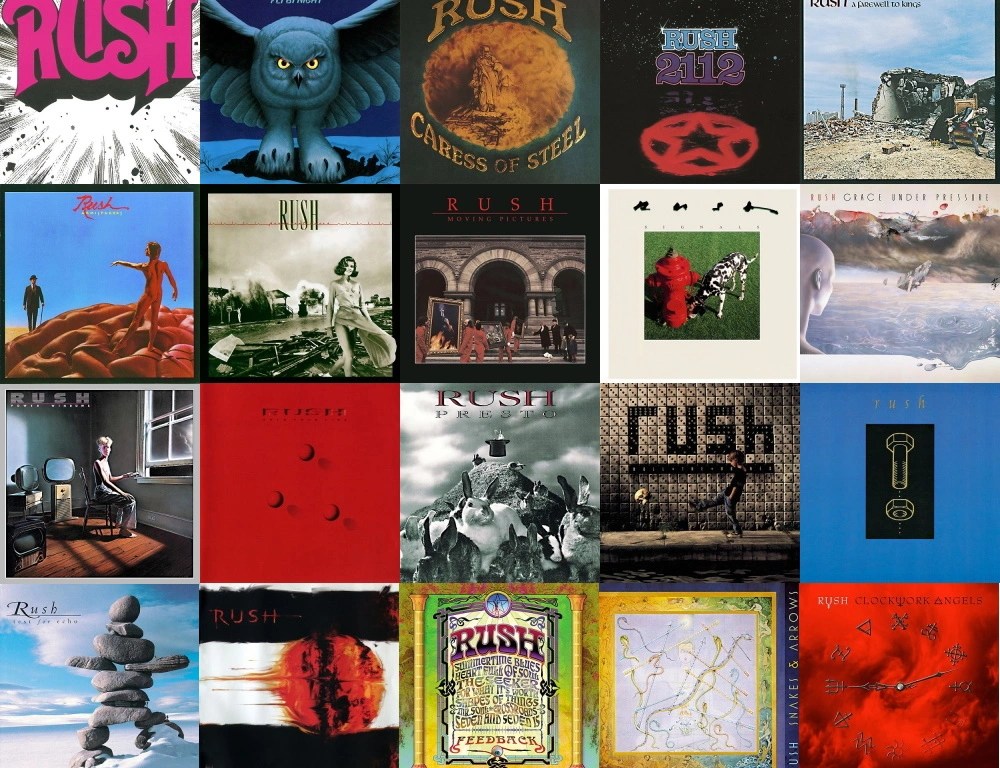
Among others, the groups Rush and Marillion illustrate the transition from neo- to post- progressive rock. As for Rush, an album like ‘Presto’ (1989) is characterized by its emphasis on atmosphere and simpler structure. ‘The pass‘ from this album is a simple song, introspective in nature and has meaningful lyrics. In its early years, Marillion embodies the characteristics of the neo-progressive period through its use of synthesizers and dramatic lyrics. Gradually, the emphasis shifts to conveying emotion, creating atmosphere and topical themes, typical of post-progressive rock. 

Below, I will I list seven characteristics and give some examples of each[1] . I have embedded an example in the text and added references to other examples as hyperlinks to YouTube. Many characteristics apply to most songs. The emphasis in this episode is on watching and listening. The explanatory texts have therefore been kept short.

1. Focus on atmosphere and texture

The emphasis is on creating a rich, atmospheric soundscape. The intimate approach is well heard in Porcupine Tree’s song ‘ Trains ‘, from the album ‘Arriving somewhere’. ‘Living with the big lie’ by Marillion from the album Brave is also an emotional song, which goes far beyond a simple ballad due to its layering. You can listen to this song here.

2. Interaction with alternative rock 

Elsewhere, I have dwelt at length on ‘alternative’ rock.  This style and prog rock have common elements. Both genres set themselves against ‘mainstream rock music’ in the late 20th century.  Both are experimenting. Prog rock does so with complex structures, unusual time signatures and is influenced by many other genres including classical and jazz. Alternative rock’s song structure tends to be simpler and influenced by post-punk. At the same time, there is great variation within the genres. Radiohead is a band that can be counted as belonging to both genres, consider the album OK computer'(1997) from which you can listen to ‘Paranoid Android’ here.

3. Minimalism through repetition

Parts are sometimes drawn out for a long time, which can have a hypnotic effect. An example is Radiohead’s ‘Pyramid Song’ (2001). The emphasis is on atmosphere and emotion in a minimal but compelling arrangement

This also applies to the track ‘Untouchable, parts 1 & 2) from the album ‘Weather systems’ (2012) by Anathema, an English rock band from Liverpool. This two-part song embodies the emotional content and atmospheric timbre characteristic of much post-progressive rock. It starts with a powerful acoustic melody and evolves into a grand orchestral climax. You can listen to it here:

4. Less emphasis on displaying virtuosity

The emphasis is no longer on individual solos, but on contribution to a collective sonic experience. An example is the song ‘ Lateralus ‘ by the band ‘Tool’ (2014). It has complex time signatures (7/8 and 9/8) and is about spiritual and philosophical growth. The technically high-quality playing expresses its emotional side. 

5. Introspective and social themes

Lyrics are personal, philosophical or socially engaged and often have a melancholic or subdued undertones.

The first example is ‘ Anesthetize ‘ by Porcupine Tree from the album ‘Fear of a blank planet’. For 17 minutes, it addresses topics such as technology and alienation. From a musical point of view, it consists of an alternation between atmospheric and heavy guitar-driven parts. Steven Wilson and his Porcupine Tree are at the heart of the (contemporary) post-progressive movement. 

The group Marillion also occupies a central position in post-progressive rock. The track ‘Care’ from the album ‘An hour before it is dark’ (2022) is an atmospheric composition with socially-conscious lyrics, including climate change. You can listen to it here:

6. Broad influences and cross-genre experimentation

I already referred to the interfaces between post-progressive and alternative rock. In many songs categorized as post-progressive, its creators have deliberately used elements from other genres. Therefore, one of the main characteristics of post-progressive rock is its eclectic nature.

Dream Theater is an example of fusing post-progressive characteristics and hard rock. This is evident in the song ‘Through her eyes’ on the album ‘Live in London’ (2020), but also, for that matter, in most of the band’s other songs. The band is heavily influenced by prog rock bands like Rush, Yes and Pink Floyd, but equally by heavy metal bands like Iron Maiden and Judas Priest.

A song like ‘Take the veil cerpin taxi’ by the group ‘Mars Volta’ adds influences of punk, jazz and Latin American music to a prog rock base.

Again, I refer to the group Marillion. The song ‘The party’ from the album ‘Holidays in Eden’ (1991) is almost a pop song. It is accessible, melody plays an important role, and the structure is simpler than most of Marillion’s other songs.

Finally, the group ‘Talking Heads’ combined (post-)punk influences with the more refined sound of progressive rock.  This group was a model for many a band. Listen to ‘Life during wartime’ here 

7. Dynamics and contrast

Dynamics and contrast are essentially features of prog rock in general, but in the case of post-prog  rock they are more subtle and emotionally charged.

As a first example, listen to Porcupine Tree’s song ‘The start of something beautiful’ from the album Arriving somewhere but not here’ (2006).

The second example comes from Marillion, namely the song ‘Neverland’ from the album โ€˜Out of seasonsโ€™ (2009). A highlight of the band’s career, it combines melodic style and layered structure.

Finally, I refer to the song ‘From silence to somewhere’ from the group Wobbler’s album ‘From silence to somewhere'(2017). This album ranks as the highest on Prog rock archives’ database in the period 2001 – 2020. You can listen to it here:

I make a preliminary assessment. In the preceding episodes, the characteristics of prog rock, neo-progressive and of post-progressive rock have been discussed. In each case, I showed numerous examples, which incidentally revealed not only differences but also similarities between these periods. 

The main similarities are complexity. layered structure, dynamics, rich lyrics, personal character and virtuoso playing. 

The main differences are summarized in the table below.

AspectProgressive RockNeo-Progressive RockPost-Progressive Rock
ComplexityHigh technical complexity and long songs.Less complex, focus on melody.Complexity is in atmosphere and texture, not technique.
InfluencesClassical music, jazz, and psychedelics.Synthpop, new wave, melodic rock.Alternative rock, post-rock, ambient, minimalism.
InstrumentationVirtuoso and bombastic (Mellotron, organ).Synthesizers and modern rock setup.More experimental, mix of electronic and organic.
TextsPhilosophical, mythical, epic.Emotional, introspective, often dramatic.Personal, socially critical, introspective.
DynamicsGrand contrasts, theatrical outbursts.Slightly simpler, but still dynamic.More subtle, atmospheric dynamics.
PublicNiche, music lovers of complex structures.Broader, often hit-sensitive.Eclectic audience, including fans of alternative styles.

In summary, progressive rock was characterized by technical complexity, epic themes and classical influence. Neo-progressive rock is more accessible, more focused on appealing melodies and the use of synthesizers plays an important role. Post-progressive rock mainly seeks atmosphere, within the layered structures of the genre. 

It is more the rule than the exception that bands evolve and the nature of their music changes, as the diagram above indicates. The transitions are then fluid and each band put its own stamp on it. 

In the development of styles, several musicians have played a role beyond the creative power of individual bands, who largely create their songs themselves.  In the next instalment, I briefly consider four of these trailblazers: Rick Wakeman, Peter Gabriel, Mike Portnoy and Steven Wilson. In doing so, I looked at their qualities as musicians and those of the bands they played in, the extent to which their compositions broke new ground, their influence on other bands and musicians and social activities.


[1] This post is based on an analysis of articles in Wikipedia (Eng.) and recordings on YouTube. ChatGPT was used as an aid in structuring the information.

Marillion (Prog rock 1965 – 2025 part 7)

Marillion has been formed in Aylesbury in 1979 (Buckinghamshire). The band’s roots lie in post-punk and from there the group bridged towards prog rock. From 1984 to the present, the band consisted of Steve Rothery (guitar), Ian Mosley (drums), Mark Kelly (keyboards) and Pete Trewavas (bass guitar). Singer Steve Hogarth replaced singer  Fish in 1987 and is also still a member of the band. Mark Kelly said in 2016: “One of the reasons we still together is because we’re successful enough to make a living, but not successful enough not to have to do anything.”

The group is releasing its first studio album in 1983: ‘Script for a jester’s tear’. 19 others would follow, the last being ‘An hour before it’s dark’ in 2022. Many albums reached the top 10. I selected a limited number of post-1980 albums, and from each I chose songs that exemplify neo-progressive and, in some cases, post-progressive rock. in subsequent posts. I will go into this distinction between the two in more detail. But first a list of characteristics of neo-prog rock. These characteristics differ only gradually from those of ‘prog rock’ as discussed so far. 

1. More symphonic approach

2. Shorter songs, even if they consist of more parts.

3. Narrative, theatrical construction with lyrics and vocals full of emotion.

4. More dominant use of synthesisers.

5. In the case of a conceptual approach, greater use of topical and personal themes.

6. Atmosphere is more often melancholic and introspective.

7. Less need to demonstrate virtuosity.

8. Stronger influence from pop music, especially alt-rock.

Script for a jester’s tear (1983)

The title track ‘Script for a jester’s tear’ from this album illustrates the symphonic approach, but also the construction of several songs with different parts, the extensive role of synthesisers and the narrative structure. Especially its emotional lyrics and theatrical vocals set it apart from older prog rock songs. You can listen to it here.

The album also includes ‘He knows, you know….’. Here, too, Fish’s powerful, emotion-rich and theatrical vocals stand out. The lyrics are poetic and full of metaphors. The third track from this album I mention is ‘Chelsea Monday’. This illustrates the use of synthesisers in creating a dreamy and melancholic atmosphere.

Misplaced childhood (1985)

The single ‘Kayleigh’ illustrates that the group certainly does not shy away from shorter ‘poppy’ songs. Nevertheless, the melancholic and emotive vocals and use of keyboards stand out. The song is about a former girlfriend of the singer and the unhappy way the relationship ended. The group’s fame increased significantly after this accessible song. Incidentally, the number of children named Kayleigh also increased. Watch and listen to this song here.

The single ‘Blind curve‘ consists of several parts that together tell the story of a bizarre journey, based on contemporary themes.

Finally, from this album, I mention ‘Lavender‘. The structure and melody of this song are simple; not because the members of the band cannot play complex solos, but because the story comes out better that way. 

Clutching at straws (1987)

This album was also successful, especially the song ‘Incommunicado’Key neo-prog rock characteristics of this song are its narrative nature, layered structure and the influence of 1980s pop music.  The recording dates from 1990, when Steve Hogarth already had replaced Fish.

Another track on this album is ‘Sugar mice’ Again, the emotion-rich vocals and melancholic atmosphere evoked using synthesisers, characterise the song as neo-progressive.

After going on one last tour with the band, singer Fish leaves the band due to the stress and fatigue such a tour caused, in return for which there were limited earnings.  He opts for a solo career.

During Fish’s time as vocalist, neo-progressive influences predominated. Partly due to the arrival of Steve Hogarth as vocalist, the band increasingly opens to other influences.  Some songs are still clearly neo-prog, others are post-prog or alternative in the first place. I will give examples of these.  However, the distinction between neo-progressive and post-progressive rock will be discussed in more detail in the following episodes.

Holidays in Eden

The band’s first album with Hogarth was ‘Holidays in Eden’ (1990). This album is heavily influenced by pop, much to the chagrin of hardcore fans. The band went on tour with it, completed at a sold-out Wembley stadium in London. At least in two songs, neo-prog characteristics can be heard: ‘Splintering heart’ and ‘The party’.

Splintering heart’ has an introspective intro that develops into a dramatic climax, which returns to a contemplative and melancholic part. This pattern repeats itself at the end of the song. You can listen to it here:

The party’ is an emotionally charged story that far exceeds the character of a pop ballad through its changes of timbres. In this song, prog-rock and alternative rock come close together.

Brave

The group used the whole of 1993 to make a new album, which would become one of the most impressive in its history: ‘Brave’, released in 1994. It is a rich and complex concept album, with longer songs, in which emotion masterfully finds a release. The album can be characterised as neo- and post-progressive. Examples include ‘Bridge’, ‘The great escape’ and the title track ‘Brave’.

The beginning of ‘Bridge’ is almost classic, the story is told against a varying musical backdrop and features a hard rock-like release with accompanying guitar solos. You can listen to it here.

 ‘The great escape’ is an epic song that can be listened to like as a pop song, but it evokes more atmosphere and commitment in its vocals and instrumentation.

Brave‘ is a mostly neo-prog, atmospheric and melodic song, full of synth sound and rhythm changes. You can see a live recording of the song ‘Brave’ (Brave, 1994) here. 

‘Afraid of sunlight’

The next album Afraid of sunlight’ (1995) was a lesser commercial success. It contained a remarkable song ‘Out of this world’. The song is about Donald Campbell’s failed attempt to set a speed record with his speedboat. An atmospheric prog rock song that makes abundant use of synthesizers, complemented by Hogarth’s subdued vocals. This song prompted a successful attempt in 2001 to salvage the boat. You can listen to a 2008 recording here.

Another song that qualifies as neo prog-rock is ‘King’ which poignantly sings of the destructive influence of fame. The ‘poppy’ melody is wrapped in a sea of sounds that highlights destruction and transience with an overwhelmingly bombastic ending.

The band was not destitute, but the resources to invest in new tours or in developing a new album were lacking. Towards the end of the 20ste century, fans began to play an increasing role in financing the band. For instance, they raise the funds to enable a US tour and to promote the new album ‘This strange machine’ (1997). Later, they are willing to pre-order albums even before these are made. The band’s next step is organising holiday camps, worldwide. Fans are invited to a three-day stay during which they can attend three concerts. In February 2007, the first ‘Marillion weekend’ took place abroad, namely at Center Parcs, Port Zรฉlande in the Netherlands.

Marbles (2004) was another successful album, to be classified as (post) progressive rock. ‘You’re  gone’ and ‘Don’t hurt yourself’ have a solid dose of pop. โ€˜Neverlandโ€™ and โ€˜Fantastic placeโ€™ are closest to the neo-progressive period. The first because of its dramatic tension and the second because of the melancholic atmosphere it evokes. You can hear the second song here.

In 2009, the group released an acoustic album, ‘Less is more’. This consisted largely of older songs. You can listen to ‘This train is my live’ and ‘Anniversary‘. 

I am now making a leap in time.  During this period, the band produced a few more albums, toured regularly and the members worked on a few solo projects. A show at London’s Royal Albert Hall in 2018 sold out within four minutes. A film was made of the performance: โ€˜All One Tonight – Live at the Royal Albert Hallโ€™. You can watch ‘White Paper’ here.

The band’s most recent album is ‘An hour before it’s dark’ (1922) The album is post-progressive and focused on current themes. Two examples are ‘Be hard on yourself‘ – an outspoken climate protest song – and ‘Care‘. Of the first song, the beat changes and tension building stand out. The second is atmospheric and contains a compelling melody

The music press in the UK always left the band loopy and wrote about them smugly, as if the band’s members were “prog rock dinosaurs”. Music by Marillion was rarely broadcasted on radio and TV appearances were scarce too. In contrast, the hard core of fans called ‘the Freaks’ have been and supported the band in many ways. Much recognition for the band also exists in the ‘Progressive rock community’. At the ‘2017 Progressive Music Awards’ ceremony, the band was voted ‘UK Band of the year’.

Neo-progressive rock (Prog rock 1965 – 2025 part 6)

To understand the evolution from prog rock to neo-progressive rock and later to post progressive rock, it is necessary to dwell on what was happening on the musical scene in the period after 1975, in particular the rise of punk.[1]

Changing environment

Punk opposed what were seen as musical excesses, such as psychedelic-influenced musical styles, theatrical and virtuoso playing, long songs, imaginative themes and social utopias. This mainly concerned hard rock, metal, symphonic rock and prog rock. Fans also got tired of the long, complicated songs with sometimes inimitable lyrics. For this, see my post on punk in the history of rock after 1960 series. 

The popularity of punk was short-lived, after which most of the remaining groups improved mastery of their instruments and replaced political slogans with appealing lyrics. Initially, this new brand of punk was referred to as ‘post punk’; record companies started using the term ‘new wave’, music critics spoke of ‘alternative’ or ‘alt-rock’ and young people spoke of ‘underground music’. A wide variety of styles fall under this heading. Groups included in this category are R.E.M, Nirvana, Pearl jam, Red hot chili peppers, Pixies, Cure, Green day and many others. What these bands have in common is that they distance themselves from what they saw as commercial pop music, which of course is partly a sham.  You can also read about this in my post on alternative rock.

All this, of course, does not escape the notice of prog rock groups. They realise that adjustments are inevitable, first and foremost, improving the accessibility of their music. This would also increase the willingness of radio stations to play it. This went down well with groups like Pink Floyd, Genesis, Asia and Yes. Especially by taking substantial steps towards pop. Groups without an established tradition, such as Marillion, IQ and Pendragon were looking for a way to renew prog rock itself. This certainly succeeded well in the 1980s.

Characteristics of neo-progressive rock

I will list characteristics of neo-progressive rock below and for each of these you can look and listen to a song for illustration. Remember that the differences between prog rock and neo-progressive rock are gradual. For that matter, so are the differences between neo-progressive and post-progressive rock. Also, you must realise that typifying music on the basis of stylistic characteristics is usually done afterwards and musicians are hardly concerned with it.

1. Melody and accessibility (versus complexity and long songs)

Neo-progressive rock remains more complex than ‘mainstream rock’. There is more emphasis on catchy melodies and the articulation of emotion, making songs more resonant than older prog rock tunes.

And good example is: ‘Kayleigh’ (Misplaced childhood, 1985) by MarillionThis song has personal and emotional lyrics and a simple structure.

2. Synthesiser-driven sound (versus analogue instruments such as guitar and organ)

Synthesisers and other electronic instruments play a dominant role in neo-progressive rock, partly replacing guitar and piano. With electronic instruments, greater differences in timbre can be created, ranging from dreamy (or ethereal) to menacing and bombastic. You can now watch and listen to ‘Awake and Nervous’ (Tales from the lush attic, 1983) by IQ, a recording from 2019. The synthesiser creates a layered pallet of sounds to reinforce the emotion this song seeks to evoke.

3. Influence of pop and new wave (versus classical and jazz)

Influences from pop music, new wave and alternative rock result in a tighter and more polished sound, and as a consequence, music that resonates better with a wider audience.

A good example is ‘A man of nomadic traits'(Not of this world, 2001) by Pendragon, a 2008 recording. You can watch and listen to this song here

4. Introspective texts (versus philosophical, mythical and science fiction sources)

Song lyrics are often introspective and based on personal experiences or feelings of melancholy, sadness or anger. A good example is Marillion’s album ‘Script for a Jester’s tear’ (1983). You can hear the title track with the same name here, also recorded in 1983.

5. Less experimental with more focus on atmosphere (versus virtuosity and variation of beat, rhythm, timbre and volume)

Creating an atmospheric experience is more important than complexity and technical feats. A good example of such a melodic song is ‘The voyager’ (Men who climb mountains, 1994) by Pendragon. The version here was recorded in 2018. 

6. Conceptual approach

Albums, like their prog rock predecessors, often have overarching themes, but now with a more personal or introspective slant rather than a mythological character

A good example is ‘This Green and Pleasant Land’ (Out of order comes chaos, 2012) by Pendragon. You can watch and listen to this song here.

Other differences include focus on a wider audience rather than on a niche market and modern production techniques versus analogue recordings.

Similarities and differences between prog rock and alternative rock become manifest from the 1980s onwards . Both styles are reactions to mainstream rock and pop music. Prog rock is mainly driven by the pursuit of recognition as an art form and translates this into virtuosity and complexity.  Alternative rock also is experimental but is mainly driven by authenticity and introspection and expresses this through variations in timbre. The differences between the two styles are sometimes easily audible but sometimes not, for instance in the case of some songs by NirvanaRadioheadThe Mars Volta and Tool

Marillion is one of the most pronounced neo-prog rock groups. This group will be in the spotlight in the next post and I will show why the above-mentioned characteristics of neo-prog rock fit this group well.


[1] This post is based on an analysis of articles in Wikipedia (Eng.) and recordings on YouTube. ChatGPT was used as an aid in structuring the information.

Rush (Prog rock 1965 – 2025 part 5)

Rush is a Canadian band formed in 1968 in Toronto. After some personnel changes, until its disbanding in 2015, the band consisted of Geddy Lee (vocals, bass guitar and keyboards), Alex Lifeson (guitar) and Neil Peart (drums, percussion). Lee and Lifeson wrote the music, Peart the lyrics.

Most prog rock groups were psychedelic-oriented in their early years, in the late 1960s. Rush, on the other hand, was a hard rock band and as such entered the world of prog rock. Hard rock has always remained the group’s DNA; the group made a conscious decision to be inspired by prog rock and smoothly moved with the different guises that prog rock took over the years. Hard rock combined with prog rock rock the phenomenal craftsmanship of the three members have led to the group always having a large following.

Giving attention to the band is warranted because it illustrates the development of progressive rock over three periods, giving a first impression of the changes that took place in the genre.  

Embracing prog rock 

The band’s hard rock roots still dominate its second album, ‘Fly by night’, which also shows the first signs of prog rock. A song like ‘By-Tor & the Snow Dog’ (Fly by night, 1975) consists of several sections, has complex arrangements and a mythological theme.

The next album, Caress of Steel, continues the trend towards prog rock. This is evident in the long compositions, choice of mythological themes and complex structures. You can hear this in the song ‘The Necromancer’ (Caress of Steel, 1975), an atmospheric epic song, b great success either. The fourth album ‘2112’ (1976) provides a breakthrough. You’re watching and listening here to an animation of the full title track ‘2112’ (2112, 1976) that covers one side of the record and consists of seven parts; here a live recording from โ€˜2112โ€™. It is a sci-fi epic set in the city of Megadon in the year 2112. Hard rock fans who like progressive rock are in the right place here, and vice versa. 

The upward trend in interest in Rush as a prog rock band continues in ‘A farewell to kings’ (1977) and Hemisphere(1978). The group now also lends its ear to established prog rock groups such as Yes and King Crimson. You are now watching and listening to ‘A Farewell to kings’ (A Farewell to kings, 1977)

The transition to neo-progressive rock

In albums from the late 1970s and early 1980s such as “Permanent Waves” (1980) and “Moving Pictures” (1981), more neo-progressive characteristics come through. To this end, Lifeson starts experimenting with classical and 12-string guitars and Lee adds bass pedal synthesisers and Mini Moog. Peart expands his already no small amount of percussion instruments to include triangles, wood blocks, cowbells, timpani and a gong. Besides adding instruments, the band stayed in tune with progressive rock trends by composing long, conceptual songs with science fiction and fantasy themes, which are more accessible than the songs from the previous period.  โ€˜Permanent wavesโ€™, and especially โ€˜Moving pictureโ€™ penetrated to the top of the charts in Canada, the US and Europe. and were even appreciated by the critics.

A number of songs from both albums Pictures’ also scored high as a single.

The ‘Spirit of Radio’ (Permanent Waves, 1980) is a complex yet accessible composition with diverse styles, including reggae and new wave elements. The content of the songs shifts from a fairy-tale and mythical fantasy world to current social themes.

Rush toured with ‘Permanent waves’ for six months and reached some 650,000 fans during that period. 

‘The camera eye’ (Moving Pictures, 1981) combines neo-progressive elements and contains experiments with electronics. This song, which lasted 11 minutes, was the band’s last long song. The same album also features ‘Tom Sawyer’ (Moving pictures, 1981). You can watch and listen to that now, a recording from 2007 in Ahoy, Rotterdam.

These two albums were followed by another series of albums, for instance โ€˜Signalsโ€™ that found a warm reception and, while retaining the hard rock DNA, went along with the changes that prog rock was undergoing.

‘Subdivisions’ ( Signals,1982) is an introspective song in which synthesisers play a more important role than the guitar. This makes this song a model for neo-progressive rock. Other songs on this album, such as ‘Digital man‘, ‘The weapon‘ and ‘Chemistry’ show that the band was also influenced by ska, reggae and funk and, of course, hard rock. You watch and listen to Chemistry here.

Post-progressive influence

Over time, Rush evolves further with a focus on textures, atmospheres and simpler structures. Synthesisers continue to play an important role in this initially. The album ‘Grace under pressure’ (1984) builds on the style of ‘Signals’. The title is a paraphrase of Hemmingway’s quote ‘Courage is grace under pressure’. This is followed by ‘Power window’ (1985) and Hold your fire (1987). Illustrative songs in the last album are ‘Time stand still’ย and ‘The pass’. In this album, the guitar again resonates more strongly than in the previous albums.

In the early 1990s, Rush further abandons the heavily keyboard-dominated sound. This is evident in the albums Presto (1989), Rolling the bones (1991), Counterparts (1993) and Test for Echo.  From the latter album, you can hear here the title track ‘Test for Echo’, performed live in Toronto (1997). After the ‘Test for Echo’ tour, the band took a break, eventually lasting five years. Cause were tragic events in Peart’s life.

The trio picked up where they left off in 2001 and the first album the group released is ‘Vapor Trails’ (2002). All songs were recorded without keyboards and synthesizers. The same applies to Snakes & Arrows (2007), whose song ‘Far cry’ became a hit. You can listen to this song here. The recording was made at Rotterdam Ahoy in 2007. 

The group’s latest studio album is Clockwork Angels (2012). You can listen to three songs from this album; ‘Caravan‘, ‘Halo effect‘ and ‘The garden’. In the latter song, hard rock has finally largely given way to more introspective neo-pro rock sounds, accompanied by a string section.

In August 2020, Peart dies of brain cancer. Lee and Lifeson declare that they will still play songs together but will never tour again.

The band has sold about 40 million albums. โ€˜Moving picturesโ€™ was the best-selling and also highest-rated album, which you should definitely listen to in its entirety once.

In essence, Rush remained a hard rock band with an open eye to other styles, the development of prog rock first and foremost. This led to long songs, irregular and shifting tunings and changing time signatures. In the 1980s, the band added elements borrowed from new wave, reggae and pop. At the time, synthesisers and electronic percussion were widely used. The mix of hard rock, technical virtuosity and features of prog rock made Rush unique, and the group in turn influenced the further development of post-progressive rock. 

Generalising, you could say that neo-progressive rock is more concerned with atmosphere and emotion and less with demonstrating technical virtuosity. Long songs are less prominent and there is more focus on accessibility. Post-progressive rock further opens to other genres, such as alternative rock and pop music. In the next post, I discuss the differences between the first and second periods more systematically, then shift the focus to the third period and put the three periods side by side.

Genesis (Prog rock 1965 – 2025 part 4)

Genesis is the most prominent prog rock band โ€“ probably after Pink Floyd – at least in the 1970s. This post focuses on that period. For each of the songs you can listen to, I refer to one or more characteristics of prog rock distinguished in the previous instalment.[1]

Genesis was formed in 1967 by pupils at Charterhouse School in Godalming (Surrey). The hard core consists of Tony Banks (keyboards) and Mike Rutherford (bass) guitar have been members of the band until its disbanding in 2022. Other members include Phil Collins (1970 – 1996) drums and vocals, Peter Gabriel (1967 – 1975) vocals and Steve Hackett (1971 – 1977) guitar.

Their first tracks, melodic pop songs like ‘The silent sun‘ (From Genesis to revelation, 1968) are not a commercial success. Nevertheless, the members of the band decide to carry on. They perform regularly in small venues and work steadily on their next album, Trespass (1970), with which the band scores much better. The song ‘The knive’ (Trespass, 1970) is illustrative of the band’s transition from psychedelic rock to prog rock, evidenced by its length, complexity and beat changes, among other things. This live recording was made in 1973 at Bataclan, Paris.

Nursery cryme (1971)

Meanwhile, the next album is in the works.  This new album, Nursery Cryme has a conceptual and theatrical approach. The song ‘The musical box’ (Nursery cryme, 1971) illustrates this. The lyrics of this song are macabre and surreal, which is accentuated by Peter Gabriel’s theatrical recitation, to be see here in a live recording at Shepperton Studios in London (1973). It is easy to hear that a mellotron has also been added to the instrumentation. 

The story is set in Victorian Britain. Henry is accidentally decapitated by his girlfriend Cynthia while playing criquet. At home, Cynthia turns on Henry’s old music box, which unleashes the ghost of Henry as an old man, who tries to seduce Cynthia. A nurse enters the room and throws the music box against the wall, destroying Henry. 

The press pays more attention to Peter Gabriel’s costuming than the music, which evokes mixed feelings among the remaining band members but is good for public interest.

Another song from this album you can listen to here illustrates the use of mythological, historical and fantasy themes. This song (length 13 minutes) ‘The fountain of Salmacis’ (Nursery Cryme, 1971) is about Hermaphroditus and the nymph Salmacis and features alternately dreamy and dramatic musical support. The group’s popularity on the European continent is steadily increasing; that in the UK lags behind.

Foxtrot (1972)

We are a year later and then Foxtrot is released. The group now falls completely for producing long songs. The suite ‘Summer’s ready’ (Foxtrot, 1972) lasts 23 minutes and consists of seven parts, ranging from serene to bombastic. You’ll find almost all the hallmarks of prog rock in it. The recording you see dates from 1973 and was filmed in various locations.

Another track on this album, ‘Watcher of the skies’ (Foxtrot, 1972) stands out for its experimentation with electronic instrumentation. The intro evokes an ‘otherworldly’ atmosphere thanks to the use of the mellotron. Listening and watching this song recalls a variety of genres: opera, rock, surrealism and drama. Gabriel appears in a different costume in each song.

Peter Gabriel wrote the lyrics. The songs together project daily experiences of two lovers about good versus evil in the Old Testament. Find short descriptions of the individual parts of the suite here.

Selling England by the pound (1973)

The album ‘Selling England by the pound’ (1973) followed another year later. In the song ‘Firth of fifth’ (Selling England by the pound, 1973), symphonic and classical influences stand out in particular: Classical piano parts and an epic guitar solo give the impression of listening to a short symphony. The following recording (without the piano part, which was omitted during live performance) was made in Rome in 2007. The song consists of three parts, of which especially the first – the piano part – is complex in terms of rhythm and tempo and uses rare time signatures, such as 13/16 and 15/16 interspersed with 2/4 measure. This song is considered one of the best examples of prog rock.

The song’s title refers to the erratic and ever-changing estuary of the River Forth, a metaphor for man’s ever-changing and unpredictable life course.

Another song on this album โ€˜The Cinema Showโ€™ (Selling England by the Pound, 1973) also has complicated and unusual beat changes. The recording you watch and listen to here was filmed at the Apollo theatre in Glasgow and at the New Bingley Hall in Stafford on 9 and 10 June 1976, respectively. During the first part of the recording, we are watching a silent movie. Iโ€™am always amazed at how this kind of film plays on the chuckles. 

The lamb lies down on Broadway (1974)

After internal struggles over content, the next (concept) album, ‘The lamb lies down on Broadway’, is released in 1974. Ultimately, the story is about Rael, a Puerto Rican boy living in New York City who goes on a spiritual quest to establish his freedom and identity. In the process, he encounters several bizarre characters. 

Most of the album’s lyrics are written by Gabriel, but he left the music to the other members of the group. He wanted to spend more time at home because his first child, Anna was born prematurely and had health problems. The other members of the band were not happy about this. As a matter of fact, they had been annoyed for some time by Gabriel’s increasing role as singer. Gabriel himself had already concluded that a solo career would do better justice to his artistic ambitions.

‘The Lamb Lies Down on Broadway’ (1974) is the last album Peter Gabriel was involved with. During the tour to promote the album, he announced he would be leaving the band.

A trick of the tail (1976)

 The remaining members set to work on the next album ‘A trick of the tail’ (1976) after the tour. Finding a replacement for Gabriel was difficult, but then it turned out that the best candidate was already a member of the band, namely Phil Collins. He would increasingly leave the drumming to others as ‘frontman’ in the following years. Virtuosity, both of individual band members and as a group, is also a hallmark of prog pop. You can hear and see that in ‘Dance on a vulcano’ (A trick of the tail, 1976). The recording was filmed in the Lyceum ballroom in 1980. 

in 1977, Steve Hackett also decides to leave the group. He feels shortchanged by Tony Banks and Mike Rutherfort, who increasingly disapproves of his lyrics and compositions. The deeper cause was a growing distance between their ideas about the band’s musical direction. Banks, Rutherford and Collins opted for accessible pop-oriented music, while Hackett was unfailingly attracted to the experimental and symphonic music that is characterising Genesis until then.  Hackett, meanwhile, had made his first solo album ‘Voyage of the acolyte’ (1975), which was warmly received. He too opts for a solo career in which he can realise his artistic ideas. Compare ‘Ace of wands ‘(Voyage of the  acolyte, 1975) by Hackett with ‘Follow you follow me’ (…And then there were three’, 1978) by Genesis and you’ll hear what I mean. 

For Steve Hackettt, this was the beginning of a career in which he would made 24(!) solo albums to this day, taking every opportunity to experiment with a variety of musical genres. Together with ex-Yes guitarist Steve Howe, he made his highest-scoring hit, ‘When the  heart  rules  the mind‘( 1985). You can also watch and listen to a performance of ‘Firth of Fifth’ (2013), together with large orchestra at London’s Royal Festival Hall, now with the piano intro.

Genesis’ fans are disappointed with the band’s new direction, but the number of new fans compensates. A period is now dawning for Genesis, with the group releasing one high-scoring album after another: ‘Land of confusion’ (Invisible touch, 1985) and ‘I can’t dance’ (We can’t dance, 1991) and more. Watch and listen to a recording of ‘I can’t dance’ in Rome (2007) here. Unadulterated pop, but worth listening to.  Also note the grand staging.

In 1996, Phil Collins decides to leave the band after 25 years to take up other projects. He would later return for short periods a few more times.  In 2014, the BBC broadcasts a programme on the band’s history, ‘Together  and apart’  in which Hackett also takes part. The group gives its last concert on 26 March in London. 

Genesis eventually sold between 100 and 150 million albums; most of them in the post-1980 period, when the group had traded prog rock for pop. 

As was the case with other prog rock groups, it took a long time for Genesis to gain respect from music critics and for the public in general to discover the group. Later, most critics changed their minds and now Genesis ranks as one of the most prominent bands of the past 50 years: ‘Ultimate Classic Rock’ summed up, “There is no denying that Genesis helped create the identity of prog-rock and made some of the genre’s most essential albums,” but continued “the group’s music gradually became less and less progressive, until the band became an outright pop act.”

Starting with the band Rush’s transition from hard rock to prog rock and from prod rock to neo-progressive rock, the next articles will look at the development of neo-progressive rock between 1975 and 1985.  


[1] This post is based on an analysis of articles in Wikipedia (Eng.) and recordings on YouTube. ChatGPT was used as an aid in structuring the information.

The heydays (Prog rock 1965 – 2025 part 3)

This post covers 11 characteristics of prog rock. Each is illustrated with recordings by prominent groups such as Yes, King Crimson, Soft Machine, Caravan and, of course, Pink Floyd and Genesis. Become aware of their differences and similarities

In the early 1970s, the building blocks that ‘proto prog’ groups had provided in the 1960s fell into place. This resulted in progressive rock becoming an identifiable style within rock music in general. Below, I will summarise its characteristics. In doing so, I recall some songs by Pink Floyd, which you could listen to in Part 2 of this series. I also refer to songs by Genesis, a group that will take centre stage in the next instalment. Most of the songs come from four bands, each of which made its own contribution to the development of prog rock: King Crimson, Yes, Soft Machine and Caravan.

Four innovative bands

King Crimson

Formed in 1968 by Robert Fripp, the band disbanded in 2021, after a few periods of inactivity. More than Pink Floyd, King Crimson has an experimental, sometimes avant-garde character and the music has a high degree of complexity. The members of the band play a variety of instruments, leading to a broad palette of sounds. You can hear Starless here. This complex instrumental song showcases Robert Fripp’s unique guitar playing (Starless and Bible Black, 1974

Yes

Yes was founded in 1968 by Jon Anderson and still exists to this day,  after dozens of line-up changes. Like King Crimson, the band is known for its complex compositions, virtuosity, spiritual lyrics and unusual time signatures. At the same time, the band’s songs are more accessible. The band has announced it will release a new album in 2025. To get acquainted with the group, I will show you here a live performance of โ€˜Round aboutโ€™ (Fragile, 1971) The song opens with acoustic guitar playing by Steve Howe, followed by dynamic and complex bass lines, harmonies and a catchy chorus.

Soft machine

This is an English band from the Canterbury area, formed in 1966. Initially with a strong psychedelic orientation, the group later developed towards prog rock with a jazzy accent. You can listen to ‘The tale of Taliesin’ย (Love makes sweet music, 1969)here.

Caravan

Formed in 1968 by David and Richard Sinclair. The band still exists after several interruptions, although its predicted success never quite has materialised. Its style is more melodic and accessible and less influenced by jazz than Soft Machine’s. The group combines complex structures with a warm, playful atmosphere and is known for its dreamy and sometimes humorous approach. Here you are listening to ‘Golf girl’ (In the land of grey and pink, 1971).

Characteristics of the heyday of prog rock (late 60s, early 70s)

1. Long numbers

Prog rock broke with the standard three-minute pop structure and embraced long songs with individual parts, like classical music. This applies to most of the songs you can listen to below.  I particularly mention Pink Floyd’s suite ‘Dark side of the moon’ (1973), which filled the entire album of the same name.

2. Experimentation , improvisation and innovation

Many songs arose from improvisations during performances and jam sessions in the studio, trying out different instruments and technical aids. Listen and watch Pink Floyd‘s song ‘Interstellar Overdrive’ (The Piper at the Gates of Dawn, 1967). You can at most hear that the song was born out of improvisations during live performances by its lack of structure at the end before the band picks up the theme again. Moreover, widely different long versions of the song circulate among themselves, including the soundtrack of the film London ’66 – ’67. Anyway, you  hear the band’s psychedelic roots.

The ability to improvise makes it attractive for musicians to play in a prog rock band. This is especially true of the most experimental band King Crimson‘Larks’ Tongues in Aspic Part I’ (Larks’ Tongues in Aspic, 1973) is an avant-garde song with great rhythmic complexity and strong dynamics, partly due to the combination of strings with heavy guitar playing.

Another example is Soft Machine’s ‘Facelift‘ (Third, 1970)The organ parts of this 18-minute song were improvised. The song ‘For Richard‘ (If I Could Do It All Over Again, I’d Do It All Over You, 1970) by Carava is one of this band’s most iconic songs. It lasts 18 minutes and begins with a subdued introduction that develops into an intense climax.

3. Dynamics and complex structures 

Almost all the songs by all the bands I review here, consist of contrasting parts that differ in tempo, rhythm and measure. They often start out simple and then build up to a layered and complex whole. You can listen to Caravan’s 22-minute suite ‘Nine Feet Underground’ (In the Land of Grey and Pink, 1971). It consists of several jazzy improvisations that seamlessly blend together, even though they are recorded separately. This live version was recorded in Paris, 2003.

The song ‘Heart of the sunrise by Yes (Fragile, 1971) starts with an explosive bass part by Chris Squire and alternates between intense and subdued moments. Alternating time signatures and virtuoso instrumentation also add to the dynamics. This song is one of the classic examples of prog rock. Finally, you can take another listen to Pink Floyd’‘Brain Damage/Eclipse‘ (The Dark Side of the Moon, 1973)This is the last part of the suite that, as mentioned, covers the entire album. 

4. Unusual time signatures

Prog rock experiments with time signatures such as 7/8, 5/4 and other non-standard patterns, giving the melodies a special character. The King Crimson song you can listen to and watch below, ’21st century schizoid men’ (In the court of King Crimson, 1969) is taken from the group’s debut album. This album later turns out to be their most successful and influential album. In the song, 4/4 and 6/4 bars alternate. The last part (the ‘outro’) has no beat at all. The song combines an unusual beat with cryptic lyrics and an epic arrangement with symphonic grandeur. This 2016 recording enhances this effect as the group now performs with three (!) drummers.

I also mention Pink Floyd’s song ‘Money’ (The Dark Side of the Moon1973). It is written in 7/4 time.

5. Instrumental virtuosity

In prog rock, technical prowess of the musicians played an important role. This was linked to the presence of extended instrumental passages, often with solos by all members of the band. This applies to all the bands you can listen to here. Still, a couple of examples. The first comes from Yes‘ Homeworld’ (The Ladder, 1997).

After the group had increasingly turned to a polished pop style in previous years, ‘Homeworld’ is a successful balance between accessibility and the bandโ€™s 1970s prog rock roots. King Crimson also revives ’70s ements in one of its later songs, ‘FraKtured’ (The constrKuction of light, 2000). Furthermore, this recording (Berlin, 2000) shows even more matured virtuosity. ‘Winter Wine‘ (In the Land of Grey and Pink, 1971) by Caravan combines dreamy melodies with a nostalgic atmosphere and imaginative lyrics. It shows the introspective and lyrical side of the group.

6. Concept albums and thematic cohesion

Many prog rock songs tell a story with a philosophical, mythical or sci-fi background. In some cases, this background extends over an entire album. Pink Floyd has carried this feature furthest in both album art, music videos and films. Here you are listening to an excerpt from the filmed version of ‘Another Brick in the Wall (Part 2)’ (The Wall1979). Both the album and the film revolved around alienation and the impact of a repressive upbringing.

Another example is ‘The dark side of the moon’, also by Pink Floyd. Theme of this album is time, mortality, and the human condition. You can hear ‘Time’ (The Dark Side of the Moon1973here

7. Orchestral character with influences from classical music and jazz

Prog rock integrates among others classical compositional techniques (such as fugues and symphonic structures) and jazzy improvisation. You can watch and listen to ‘Firth of fifth’ (Selling England by the pound’, 1974) by Genesis. The piano intro, with its complex beat and Steve Hackett’s guitar solo are heavily influenced by classical music. The awkward piano intro was usually omitted in live concerts.

Yes’s song Close to the Edge (Close to the Edge, 1972) lasts almost 19 minutes and has an epic character with symphonic grandeur. The album is considered as the high point of Yes’s career. Moon in June (Third, 1970) by Soft Machine marks the transition from psychedelic rock to jazzy prog rock with long instrumental passages with surreal lyrics. The fully instrumental song ‘Slightly all the time’ (Third, 1970), also by Soft Machine, features extended and virtuoso saxophone and organ parts and moves smoothly between jazz, rock and avant-garde. Caravan’s song ‘If I could do It all over again, I’d do It all over you’ (If I could do It all over again, I’d do it all over you, 1970) combines a catchy melody with complex jazzy parts.

8. Use of synthesizers and other electronic instruments

All bands increasingly used electronic keyboard instruments such as mellotron and mini Moog from the early 1970s to create orchestral, sometimes bombastic sounds.  The song below, ‘Out-bloody-rageous’ (Third, 1970) by Soft machine starts with electronics, followed by more traditional jazz-rock instrumentation.

In Genesis‘ ‘Watcher of the Skies’ (Foxtrot, 1973), you can hear the ominous sounds a mellotron can produce The mellotron intro is one of prog rock’s most iconic ‘samples’. King Crimson’s orchestral number ‘Epitaph‘ (In the Court of the Crimson King, 1969) has a classically epic and melancholic atmosphere thanks to the mellotron.

9. Philosophical and esoteric texts

Many lyrics are poetic and profound, focusing on abstract concepts such as the universe, the human condition and spirituality. Caravan’s song ‘In the Land of Grey and Pink’ (In the Land of Grey and Pink, 1971) is light-hearted, dreamy and playful, with surreal and humorous lyrics and has a relaxed, almost pastoral atmosphere. This is another classic within prog-rock.

Pink Floyd’s ‘Comfortably Numb’ (The Wall, 1979) is also an introspective song about isolation and losing touch with reality.

10. Dynamics and atmosphere

Prog rock plays with dynamics by contracting between quiet, introspective moments and bombastic outbursts. Spatial effects are often used, which can have a hallucinatory effect. Genesis‘ next song The Musical Box’ (Nursery Crime, 1971) combines an imaginative storyline with musical dynamics and theatrical vocals.

Echoes (Meddle, 1971) by Pink Floyd is a 23-minute song that combines complex structures with atmospheric sounds and experimental instrumentation. What you can see is a live performance in Gdansk (2006). The song ‘And You and I’ (Close to the Edge, 1972) by Yes has a poetic, almost spiritual atmosphere, partly due to the combination of mellotron and acoustic guitar.

11. Visual effects and multimedia

Needless to say, Pink Floyd in particular could afford fascinating visual effects in its final years, performing to audiences of tens of thousands, as here in “Shine On You Crazy Diamond (Parts I-V)” (Wish You Were Here, 1975), performed in London (2004).

But Genesis also attached great importance to stage decoration and lighting. During the tour to promote the album ‘The Lamb Lies Down on Broadway’ (1974), three giant screens were used on which eight projectors projected 1450 images. Furthermore, there was a laser show.

Prog rock had a great influence on the development of other forms of rock, including metal, in the 1970s. In Part 6 dealing with ‘neo-progressive rock’, I will show how the genre has renewed itself in the late 1970s and early 1980s, including the further use of electronics and improving the songsโ€™ accessibility. 

The next episode focuses on Genesis, one of the leading and most inspiring rock bands during the last years of the 20stecentury.


[1] This post is based on an analysis of articles in Wikipedia (Eng.) and recordings on YouTube. ChatGPT was used as an aid in structuring the information.

Pink Floyd (Prog rock 1965 – 2025, part 2)

The songs of the English group Pink Floyd reflect many stylistic building blocks of prog rock mentioned in the first episode of this series. This is why this group is often called the first “prog rock” band. Listening to Pink Floyd is therefore a good way to get an impression of this genre. 

The band’s founding members Roger Waters, Nick Mason and Richard Wright studied architecture at London Polytechnic and Syd Barrett at Camberwell College of Arts in the early 1960s. Few bands will have had so many different names in this early period: Sigma 6, Meggadeaths, Screaming Abdabs, Leonard’s Lodgers, Spectrum Five and Tea Set. When Barrett discovered that an eponymous group existed in the distant Netherlands, the name Pink Floyd made its appearance. Pink and Floyd are the first names of two American blues musicians.

The band is performing regularly in clubs and gained some fame for being considered one of the first groups with a psychedelic sound. With Syd Barrett as their main inspiration, Pink Floyd also distinguishes themselves at the time with elaborate compositions, sonic experimentation and philosophical lyrics. The group had its first hits in 1967, Arnold Layne and ‘See Emily play‘. The links point to the corresponding music videos. To my taste, the image and sound are strikingly like the videos the Beatles previously made to accompany their songs.

Syd Barrett’s artistic starring role took its toll when he collapsed mentally and physically due to LSD use. At times, he stood motionless on stage for long periods and was unresponsive. Eventually, he agrees to leave. David Gilmour takes his place and his guitar solos would become an unmistakable part of many of the group’s songs. In the following years, Roger Waters increasingly becomes the artistic brain of the band and gradually takes over the leadership. The second album ‘A saucerful of secrets’ (1968) still features one Syd Barrett song: ‘Jugband blues’. The song ‘Set the controls for the heart of the sun’ exudes a mystical atmosphere and is a bridge to the following albums on which increasingly longer songs appear. You can listen to this song here:

I will leave the next album ‘Ummagumma’ unmentioned. In retrospect, the band members thought this was a failed experiment. And then, in 1970 the group is releasing ‘Atom heart mother’, which would become the band’s first number-one album in the UK. The album’s title track is a six-part suite, covering one side of the LP. The orchestral arrangements include a brass and string section and a 16-piece choir. You can watch and listen to a live performance in full ensemble here. Such large-scale performances were very expensive and later the group shortened the suite to 15 minutes without additional musicians.

Precisely because of the orchestral nature of the original version, symphony orchestras that do not shy away from experimentation have also included the entire suite in their repertoire in edited form. You can watch a performance by the Conservatorio di Cagliari here.

The next album to hit number one in many European countries is ‘The dark side of the moon’. In the US, it spent 14 years (!) on the Billboard Top 100. Global sales reached 50 million copies. The album explores themes of conflict, greed, life, death and mental illness. Memories of Syd Barrett resound in many places. You can watch and listen to a live performance of the album, filmed at Earls Court 1994, here.

Together, both sides of the LP form a continuous piece of music. The five songs on each side reflect different stages in human life, starting and ending with a heartbeat. Below you can listen to six songs that became top-one singles. “Speak to Me” and “Breathe” emphasize the importance of making your own choices in life. The first side of the album ends with Wright’s and Clare Torry’s metaphor for death.

“Money“, the first track on side two, opens with the sound of cash registers and rhythmically ringing coins. The song mocks greed and consumerism. “Money” would become the band’s most commercially successful song. “Us and them”addresses the risks of using black-and-white contrasts to characterise individuals and relationships. The album ends with “Eclipse“, which embraces the concepts of otherness and unity and encourages the listener to recognise common traits in fellow human beings.

Four female vocalists sing on “Brain damage”, “Eclipse” and “Time”, and saxophonist Dick Parry plays on “Us and them” and “Money”. Besides conventional rock band instruments, synthesizers play a prominent role on this album.

The next album ‘Wish you were here’ would also get a number-one listing in many countries, including the US and Great Britain. This album is steeped in melancholic memories of Syd Barrett, co-founder of the band. Dedicated to him is ‘Shine on you crazy diamond’, a nine-part suite. Critics consider this album one of the best prog rock albums of all time. While Pink Floyd was working on the album, Barrett made an unexpected visit to the studio. He had grown fat and bald and was not recognised at first. He hung around a bit without saying much. 

In the mid-1970s, Waters is becoming an increasingly emphatic leader of the band and he is determining the themes for new albums, for which he also writes the lion’s share of the lyrics. For the next album, he writes a script with Bob Ezrin around Pink, a character inspired by Waters’ childhood experiences, the most poignant of which is his father’s death in World War II. Pink would become addicted to drugs and depressed by the music industry, eventually turning into a megalomaniac, a development partly inspired by Syd Barrett’s downfall. By the end of the album, the increasingly fascistic audience would watch Pink break down the wall and become a normal and caring person again. You can watch a 1994 performance of ‘Another brick in the wall’ here.

This song sung by a giant choir and orchestra is also fun to watch. 

Meanwhile, tensions are rising within the band: Waters fires Wright, because of his lack of input in the production of ‘The Wall’, and he sleeps in a different hotel from the other band members after gigs. Gilmour has felt undervalued for years. Indeed, he is not the most creative songwriter, but his guitar playing is leading Pink Floyd. It was under these circumstances that the production of ‘The Final Cut’, the 12de studio album came about (1984). The Final Cut is an anti-war concept album that addresses what Waters considers the betrayal of fallen British servicemen, like his father. They sacrificed their lives during World War II for an unrealized post-war dream. You can watch the subdued song ‘Two sons in the Sunset’ here. It is about the impending atomic holocaust. Critics’ reactions vary. Rolling Stone considers it “art rock’s crowning masterpiece”, the magazine sees it mostly as a solo album by Roger Waters.

‘The final cut’ is the last album Gilmour, Mason and Waters made together. It would take until 1987 to resolve all legal issues, the most important of which was whether Gilmour and Mason can continue with Pink Floyd. They eventually agreed on this, and Wright also came back on board. The trio’s first joint album was ‘A momentary lapse of reason’ (1988). Qualitatively, it did not come close to the albums from the 70s. The ironically titled ‘Signs of Life’ is an instrumental prelude to ‘Learning to Fly‘ in which Gilmour’s guitar comes into its own, and the uplifting ‘On the Turning Away’ is just beautiful. You can listen to and watch this song here.

After this, two more albums, will follow ‘The division bell’ (1994) and Endless river (2014) The group has promoted ‘The division bell’ extensively in the US and Europe, as well as ‘A momentary lapse of reasonโ€™. From ‘The division bell’, you can watch and listen to ‘High hopes’ here and from ‘Endless river’ to ‘Louder than words’ here. 

Wright died of cancer on 15 September 2008, aged 65. His former bandmates all paid tribute to his life and work; Gilmour said on the occasion that his “soulful voice and playing were vital, magical components of our most recognised Pink Floyd sound”. A week after Wright’s death, Gilmour released “Remember a Day” from A Saucerful of Secrets, written and originally sung by Wright, as a tribute on BBC Two’s programme ‘Later… with Jools Holland’. You can watch and listen to this performance here.

After the disbanding of Pink Floyd in 2008, Nick Mason and David Gilmour go their separate ways. By then, Waters already had been performing under his own name for years, singing old and new songs.

In 2018, Mason formed a new band, ‘Nick Mason’s Saucerful of Secrets’, to perform Pink Floyd’s early material. Both the new band and the audience seem to have lots of fun. You can watch ‘Fearless’ here.

It’s quite a seat, but very much worth it. 52 years after Pink Floyd’s filmed a performance in Pompeii, Nick Mason gives a 2.5-hour concert at this venue with his new band.  You can hear almost all the famous Pink Floyd songs in the process.  Watch the full recording here.

David Gilmour has gone in a different direction, producing his own studio albums. The fifth album, ‘Luck and strange’, was released in June 2024. Gilmour’s wife, novelist Polly Samson, wrote most of the lyrics, which often deal with mortality and ageing. Their children contribute additional vocals, lyrics and instrumentation. This music video for the song ‘Luck and Strange’ includes fragments from 2007 of Richard Wrightโ€™s performing, a year before his death.

The ‘Luck and strange tour’ from September 2024, has visited Circo Massimo in Rome, the Royal Albert Hall in London, the Intuit Dome and the Hollywood Bowl in Los Angeles and Madison Square Garden in New York City. YouTube is teeming with worthless videos of visitors. Instead, you can see here some footage of a rehearsal for these gigs, with a prominent contribution from Romany Gilmour.

By 2013, Pink Floyd had sold more than 250 million records worldwide, making the group one of the best-selling music artists of all time at that time. ‘Dark side of the moon’, ‘The wall’ and ‘Wish you were here’ are among the best-selling albums of all time. Four Pink Floyd albums topped the US Billboard 200 and five the UK Albums Chart. In the Sunday Times Rich List, Music Millionaires 2013 (UK), Waters is at number 12 with an estimated fortune of ยฃ150 million, Gilmour at number 27 with ยฃ85 million and Mason at number 37 with ยฃ50 million. 

So, what makes Pink Floyd a prog rock group? In the first instalment of this series, I listed the characteristics of prog rock. Keeping these in mind, what stands out most are the complex orchestral productions, the musical contrasts, their blending with non-conventional sound effects, the thematic nature of the albums, the depth of the lyrics, the psychedelic – others say ‘spatial’ – nature of many melodies, the long, partly improvised solos, the intertwining of music and design of the albums and the spectacular lighting effects during the concerts.  In the next episode, I will start from the characteristics attributed to prog rock and try to recognise them in songs by various prog rock groups.

The beginnings (Prog rock 1965 โ€“ 2025, part 1)

The term “prog rock” (progressive rock) will not be on everyone’s lips. That changes as soon as names of groups like Pink Floyd and Genesis drop. These groups wanted to distinguish themselves by constantly striving for innovation within the boundaries of the genre but also by building bridges with other genres such as jazz and soul. ‘Prog rock’ differs from ‘mainstream rock’, which was discussed at length in the six-part series I published earlier (You can find the first episode of that series here).

In this first post, I will clarify the concept of progressive rock and show some examples of musical styles that underpin it. Broad agreement exists that the development of ‘prog rock’ was decisively influenced by three albums by the Beatles after 1966, namely ‘Rubber Soul’, Revolver and ‘Sgt Pepper’s Lonely Hearts Club Band’. A second influential group were the Beach Boys, particularly their album ‘Pet Sounds’. You are now watching and listening to the song ‘A Day in the Life’ from the album ‘Sgt Pepper’s Lonely Hearts Club Band’. In the absence of live recordings by the Beatles themselves, here you listen and watch the live version made by Dutch cover band ‘The Analogues’. 

Many other groups provided building blocks for the development of ‘prog rock’, such as, ‘The Doors’, ‘The Pretty Things‘, ‘The Zombies‘, ‘The Byrds’, ‘Grateful Dead’, ‘Jethro Tull‘, ‘Caravan‘, ‘Yardbirds‘,’So’Soft Machine‘, ‘Hollies’ and ‘Velvet Underground’. You can spend the next months deepening your acquaintance with most of these groups

Features

Although progressive rock will not mean the same thing to everyone, a few of the characteristics below will be something everyone will be able to mention:

– Striking lyrics or sound figures that attract and hold attention (‘hooks’, also called ‘earworms’.

– Deliberate deviations from rhythm, tempo, measure and key, which may be perceived as surprising or dissonant.

– Unorthodox instrumentation, such as the sitar and harpsichord.

– Distortion of guitar sounds, also to mimic the sound of exotic instruments, such as the sitar.

– The use of electronics in music reproduction and recording.

– High level of instrument mastery.

– Composition techniques borrowed from jazz and classical music.

– Frequent occurrence of long songs and improvised solos.

– In many cases, the studio became the place where the music was developed.

– Music to listen to; not dance music. 

– Symphonic elements.

– Poetic lyrics.     

– Striving to be recognized as an art form.

‘Artrock’

In the beginning of the 1960s musicians distinguished themselves from ‘commercial’ pop music by uswing the label ‘progressive pop’. Identifying with ‘progressive rock’ was a nest step. sometimes the term โ€œart rockโ€ is used exclusively for avant-garde rock music. An example is Bowie’s album ‘Station to station’ (1976), whose title track you can listen to and watch here. Critics were divided over the album and some of his fans had great difficulty with its experimental nature. It would later influence a large group of ‘new wave’ artists. 

The groups I mentioned above each represent different stylistic contributions to the development of ‘prog rock’.  By far the most important contribution came from psychedelia: In the 1960s musicians frequently used hallucinogens as a source of inspiration or to create an atmosphere on stage that supported the use of perception-altering drugs. Other influences came from symphonic rock, ‘space music’, jazz rock, classical music and folk rock, incidentally in combination with the use of hallucinogens. I dwell on each of these forms.

Psychedelics

Especially in the early years, a remarkable difference occurred between Europe and the US. In Europe, the influence of psychedelics was central to the creation of music, which, besides the Beatles’ albums already mentioned, was also true of the Beach Boys with their leading album ‘Petsounds’. 

With lead guitarist Jeff Beck, the ‘Yardbird’s laid the foundations for the ‘psychedelic guitar’ with its ominous sounds in minor, hyperactive instrumental breaks, unpredictable tempo changes, the use of Gregorian chants, Eastern-sounding tonal loaders and shifting rhythms. You can hear and see this here in the song ‘Heart Full of Soul’ (1965)

The psychedelic variety that developed from the American West Coast was primarily intended to enhance the hallucinatory experience of drugs in the public. Among other things, light effects were used for this purpose, but the music, usually based on blues(rock), was also more intense. It was then referred to as acid rock. ‘Grateful death’ was one of the first acid rock bands and Jefferson Airplane was that first whose albums sold widely. You can listen to this group here, which also explicitly referred to the use of drugs in ‘White rabbit’.

Acid rock also featured many long guitar solos as in this song by the Paul Butterfield Blues band ‘Driftin Blues’ The electric (Hammond) organ, here in โ€˜The Doors’ Riders on the Storm โ€“ is also often heard.

In the late 1960s, the partly drug-based youth culture experienced highlights like ‘Summer of love’ (1967) and the Woodstock Rock Festival(1969). Legislation became stricter and several headliners (such as Jimi Hendrix, Janis Joplin and Jim Morrison) died. Acid rock developed in the direction of hard rock and heavy metal. That transition can be clearly heard in the song ‘In-A-Gada-Da-Vida’from ‘Iron Butterfly’. 

Other groups eventually shifted towards ‘prog rock’. They experimented with electronics and added classical and jazz-related themes to their music. Examples are Pink Floyd, Yes and King Crimson. Here, you watch and listen to Lark’s Tongues in Aspic Part 2 by the latter group here.

‘Space or cosmic rock’, also called ‘Krautrock’ 

The term โ€˜Krautrockโ€™ refers to a broad collection of experimental musical forms, which developed mainly in West Germany. The artists involved combined elements of psychedelic rockavant-garde composition and electronic sounds. Common elements were hypnotic rhythms, extensive improvisation, use of realistic sounds and of early synthesisers. Themes often related to space. Prominent groups associated with the Krautrock label included ‘Tangerine Dream‘ (1975), ‘Osees‘ (2021), ‘Kraftwerk’ (1974), ‘Can‘ (1973) and more recently Neu!!! (2016), The development of this style resulted from young people’s desire to develop their own genre of music in their own language and apart from German ‘Schlagers’. Here as an example, Kraftwerk’s best-known song, ‘Autobahn’.

Jazz and classical music

Several groups sought to enrich their timbre by incorporating jazz. They usually used wind instruments in addition to guitars. Examples include ‘Colosseum‘ (1970), ‘Blood, Sweat and Tears‘ (1969), ‘Chicago‘ (1969), ‘Caravan‘ (1972), ‘Soft Machine’ (1974) and the Dutch group ‘Focus‘ (1973). Of more recent origin is ‘In Cahoots’ (2015).

Classical influences sometimes be heard in the choice of melodies, such as ‘Beck’s Bolero’ (2016) . Watch and listen here to ‘Jethro Tull’s’ ‘Bourรฉe’, (1969), inspired by Johann Sebastian’s Bach Bourrรฉe.

Most of the groups mentioned in this post have provided building blocks for the development of ‘prog rock’.  Some groups, such as the ‘Beatles’, the ‘Beachboysโ€™ and โ€˜Pink Floydโ€™ were on the frontier of the genre in the late 1960s. Starting in the next post, I will discuss groups that rightfully pass for ‘prog rock’. I will do this from three angles: the three periods that are distinguished in the development of ‘prog rock’, (progressive, neo-progressive and post-progressive rock); four groups characteristic of these periods (Pink Floyd, Genesis, Marillion and Rush) and two artists who have made essential contributions to it throughout their lives (Peter Gabriel and Steven Wilson). The final episode will be about ‘new blood’, developments beyond 2020.

Beyoncรฉ: Megastars of pop music in the early 21st century

In a previous episode, I described how skillful producers are betting that new songs will achieve high sales. At the time, I used songs by Beyoncรฉ and Rihanna as examples. In separate posts, starting with this one, I will pay attention to both mega-stars. The story about the development of prog rock will continue in the next post.

Beyoncรฉ Giselle Knowles-Carter is born in Houston, Texas, in 1981. Her name is an homage to her mother’s birth name (Tina Beyincรฉ Carter). She owned a hair salon, and her father was a sales manager at Xerox. As a child, Beyoncรฉ was a steady participant in singing and dancing competitions. At her 7the, she won a talent contest with John Lennonโ€™s song Imagine. She pursued a musical education. Due to the requirements of her fast-developing career, she did not finish it. 

From the age of eight, she attempts to become known on the girl groups circuit. Her father quit his job to become a full-time manager, bringing the family to the brink of poverty. At her 15th, success glimmered when the group signed a contract with Columbia Records, resulting in the first album ‘No, no, no’, The group was called Destiny’s Child from then on, inspired by the Bible book Isaiah. Large success came in 1999 with the groupโ€™s second album ‘Writings on the wall’, and with the third album ‘Survivor’ that followed a year later.  

Listen to the song ‘Say my name’ from the second album

In the meantime, Beyoncรฉ struggled with severe depression. In varying line-ups, the group would go on to become the best-selling girl group ever. Beyoncรฉ was the brains behind the music and choreography.  The group went on a lengthy successful world tour. After slowing down and producing another album, the group broke up amicably. 

Before Destiny’s Child ceased to exist, Beyoncรฉ released a solo album “Dangerously in love”.  It sold 11 million copies, and she received 5 Grammy Awards for it, the highest accolade in music.

From her debut album, you can see the best-selling single here. The recording also captures the large-scale set-up of her shows, which would continue to grow with each subsequent tour. Today, she is considered one of the best entertainers, surrounded by extremely costly and sophisticated choreography, for which the world’s best dancers are hired. So far, only Taylor Swift has caught up with her on this.

The second solo album followed in 2006. The third ‘I am… Sacha Fierce’ (2008) consists of two parts.  In the first part, she is herself; in the second part, she ‘plays’ ‘Sacha Fierce’, her ‘alter ego’.  The first part contains more quiet songs, while the second reveals more dance influences.  This album added eight Grammys to her collection.

Now, you can listen to the ‘quiet’ Halo, not a live performance, but a music video. A halo is an attribute, with which statues of saints were generously provided. 

From the album ‘4’ (2011) Beyoncรฉ’s lucky number, you can listen here to ‘(Girls) run the world’, performed on the 25th anniversary of the Opray Winfrey show, also her last one.ย 

Each new album received more rave reviews from public, press and music critics.  This was especially true of album six, ‘Lemonade’, the best album of the entire decade because of the music, but also the cocktail of styles. The album is a modern form of R&B primarily, but it has also components of reggae, blues, rock, hip-hop, soul, funk, americana, country, gospel, electronics and rap. It also contained frank lyrics, for example about her husband’s infidelity. Beyoncรฉ calls herself a “modern-day feminist” and many of her songs are about love, relationships, female sexuality and independence.

With music mainly from this album, she toured all major stadiums around the world from 2016, the ‘Formation tour’, named after one of the songs from the album ‘Lemonade’. Here the song ‘Formation’. On 16 July 2016, she performed at the Amsterdam Arena.

Her seventh album, ‘Renaissance’ (2022) was also particularly well received, and it is the basis for the world tour Beyoncรฉ just finished. The song that you can listen to now is ‘Break my Soul’ and was filmed at the London performance of the show in June 2023. Electronic dance music dominates. More than 80 performances of this mega-show were scheduled. The cheapest tickets in London cost around โ‚ฌ250; in Toronto, you could go for โ‚ฌ100 less.

Even before the tour is over, Beyoncรฉ has achieved just about everything imaginable musically before Taylor Swift took over.  Never has an artist has earned 28 ‘Grammys’.  She has now sold 200 million albums (physical and digital), which can be added to the 60 million together with Destiny’s Child. Leading magazines like Billboard and Time name her as the best female artist of the 21stecentury. She is on the list of the 100 most influential people in the world. Beyoncรฉ’s nickname is ‘bee queen’ and her fans are called the bee-hive.

Finally, some details about the context of her life. Beyoncรฉ married (also) world-famous rapper Jay-Z on 4 April 2008. Here, the couple is pictured together. They have a daughter aged 11 (Blue Ivy) and twins born in 2017 (Rumy and Sir).

Beyoncรฉ was the face of her own fashion line, House of Derรฉon, which she set up with her mother in 2006: ‘Where sidewalk and catwalk meet’.  Their clothes were wildly popular among fans, but sales declined eventually due to a lack of innovative momentum.  The line was discontinued in 2012, partly after a fuss about overly sexy clothes for young girls. It has been revived in 2020 in connection with the then upcoming world tour. Later Beyoncรฉ launched a swimwear line with Adidas. Now she is working in partnership with Balmain. Several perfumes have been named after her. Beyoncรฉ has further appeared in numerous films, such as Pink Panther. Her voice is also heard in Lion King (Nala).

According to US business magazine Forbes, Beyoncรฉ’s wealth is about $540 million. She has earned most of it from her singing, but the clothing line and her long-term association with Pepsi, for which she received $50 million, also contribute. From the ongoing world tour, whose gross proceeds are estimated at $2 billion, she is also sure to make several hundred millions.

It wasn’t just making money that rang the bell. Beyoncรฉ also collaborates on campaigns to encourage schoolchildren to exercise. A nice clip to illustrate.

Beyoncรฉ’s fortune stands in the shadow of that of her husband, rapper Jay-Z, whose name is derived from the two underground lines (J and Z) that run through Brooklyn. He grew up in one of Brooklyn’s most dangerous neighbourhoods, repeatedly got into trouble with the police but managed to break away from the criminal milieu and became a successful musician and businessman. Unlike Beyoncรฉ, he owes his fortune mainly to successful business activities; besides his own record label (Roc-A-Fella), he invests in beauty products and in expensive champagne and cognac brands. He owns his own film company and finally, he owns a large collection of works by Jean-Michel Basquiat. Forbes estimates his wealth at over $2.5 billion. This makes him the richest hip-hop artist in the world, falling just short of the 1,000 richest people in the world (place 1208). In June 2023 Jay-Z and Beyoncรฉ bought the most expensive house ever sold ($200 million) in the state of California.

The making of megahits

Clockwise, starting from upper left: Stargate (producers), The calm of the procurer’s space, the notes of a top-liner, Esther dean (top liner)

Creating songs that have great chances of becoming global blockbusters and casting their performers is billion-dollar business.

In this post, I will elaborate a couple of examples: Two female superstars as examples: Beyoncรฉ and Rihanna. Hard-working and talented artists in terms of voice and performance, equipped with a well-stocked wallet and surrounded by an endowed staff. Later, I will return to both, focusing on their work and person.

Brain Research

A lot of research has now been done on factors that explain the popularity of hits. This research often starts with the way the brain processes information. Our brains is lazy, or rather, it strives for maximum efficiency. The brain prefers information it can process smoothly: Think of:

  • Short sentences;
  • Easy or intriguing words;
  • Alliterations (Liesje leerde Lotje lopen op de lange Lindenlaan’) ;
  • Rhyme;

Most songs are written in English and much of the audience barely understands the songโ€™s lyrics. The aim therefore is to enable listeners humming along with the chorus after just one or two listens. Understanding the content may possibly come later. Or never.

Hooks

The first ten seconds are crucial in this respect. The beginning must sound familiar: the lyrics, sound or rhythm contain ‘hooks’ that grab you. If not, listeners will zap the song away, except for a few connoisseurs who think they have discovered something special. 

‘Hooks’ are short rhythmic or verbal themes that constantly recur.  A potential top hit has several ‘hooks’. Examples of ‘hooks’ are:

Opening

  • Rhythmic hand clapping.
  • Common chords (think Boogie Woogie).
  • A simple sequence of nonsense words: ‘nananana nananana’.
  • An explosion of sounds.

Intro

  • Words that arouse curiosity.  Often the title of the song is repeatedly.
  • Words that touch you (‘catchy’).

Chorus

  • Brief.
  • Repetition of rhyming phrases and sounds.
  • Comes back often.

The song ‘Ra Ra Rasputin’ by Boney M. is full of ‘hooks’. Just read the chorus and then listen to the whole song. 

Ra Ra Rasputin. Lover of the Russian queen. Ra Ra Rasputin. Russia’s greatest love machine.

Verses

Opening, intro and chorus are a whole that logically’ leads to the next verse. In most songs their subject and meaning are of secondary importance. A verse prepares listeners for joining the next chorus.

We listen to Rihanna’s controversial song S&M. This was produced by Stargate and Frenchman Sandy Julien Wilhelm. Again, the hallmarks of a megahit immediately stand out:

  • The intriguing sounds at the beginning: ‘na na na na na na come on’.
  • The dance rhythm.
  • The intro, with the sweet little voice.
  • The fusion of lyrics and rhythm in the chorus: “sticks and stones may break my bones but chains and whips exite me”.
  • The repetition of intro and chorus.

You can read the full text here

Producers and top liners

The above knowledge alone will not enable you to make a megahit. Therefore, craftsmanship is needed. The music industry relies on experienced and artistically gifted teams, whose members have mastered the required skills and add a dose of creativity.  Such a team includes among others ‘producers’ and ‘top liners’. This dichotomy replaces the familiar division of labor between composers and lyricists.  Many megahits come from a limited number of teams. In this way, plagiarism can also be limited. Lines of communication are short, and producers and ‘topliners’ know ‘their’ artists and they exchange ideas on newer songs. 

Stargate

Stargate is a team of producers. They are long-time Norwegians Mikkel Eriksen and Tor Erik Hermansen.  They spend days at a time producing ‘tracks’, say sound clips.  Two or three of them sit behind keyboards and computers and fiddle away, until a ‘catchy’ series of sounds rolls out.  This is by no means always a whole song, but rather an intro or chorus. They listen to these tracks until the best ones remain. The lesser ones are sometimes used for commercials.

The more than 100 songs they have produced can be found here. Many of them have landed in charts around the world.

Esther Dean

As soon as there are a dozen or so potentially good ‘tracks’ on the shelf, producers invite one of their ‘top liners’ for a multi-day session. Esther Dean is one such top liner.  Here is a list of all the songs (117) she co-authored. She was involved in some of Beyoncรฉ’s and especially Rihanna’s biggest hits, whose voice she feels and can imitate particularly well. 

Esther places herself in a soundproof cell and listens to a track. She has prepared by writing down hundreds of short phrases, catchy words, from newspapers and other sources. The beginning of a song is nothing but her singing into a track with combinations of these words. She is extremely gifted at fusing words and sounds, even if the words are meaningless for the time being. She keeps repeating this dozens of times until she feels something good is coming.  She plays with sounds, words and phrases until there is a catchy intro and chorus. Together with the producers they finish the song for 90%. When the producers are satisfied, they write the intermediate verses

By the end of a multi-day session, about five potential mega-hits have been set to lyrics and music, including all musical effects, with no musical instrument other than the electric ones involved. Later, the shows usually will deploy a live orchestra. The most promising hits are submitted to record companies and top artists like Beyoncรฉ and Rihanna listen in critically.

At least 10 highest-grossing hits of Beyoncรฉ and Rihanna were produced by Stargate in collaboration with Esther Dean, who as a result easily made several million dollars per song.

Things may also turn out differently than intended

Finally, we listen to a song produced by Ryan Tedder. He sent a track to a top liner who turned it into the song ‘Halo’ for Beyoncรฉ. We listen to Halo, a quiet song, now with the singer in the picture. The stylistic features mentioned earlier stand out again. The listener is increasingly drawn into the ‘halo’ as the song progresses.

Something went wrong, however, as Ryan Tedder also gave the track to Kelly Clarkson, who created her own lyrics to it: โ€˜Already Goneโ€™.

Obviously, Kelly was very angry because her song appeared later, but legally there was nothing wrong. 

Kelly is certainly Beyoncรฉ’s inferior as a singer, but she is also a theatre personality, so she allows herself to feature the chorus of Beyoncรฉ’s song ‘Halo’ in her song when appropriate. An otherwise rare and poor recording of this can be heard here: https://www.youtube.com/watch?v=x0stee65ba4

There are also audio freaks who have created a mash-up of both songs. A mash-up is the musically sound mixing of two or more music tracks. Fans view an example here: https://www.youtube.com/watch?v=bGuJQPWjk1Q

The repetition effect. Also, for the song as a whole.

Of paramount importance for the music industry is the repetition of intended hits on radio or television, the so-called plugging of songs. Also, airtime is bought in commercial breaks for which millions are invested in catchy videos.  Moreover, ‘free’ artist performances are offered to program makers and organisers of music. Here, Rihanna sings her song Diamonds on the catwalk of Victoria’s Secret Fashion Show. This high-profile (under)fashion show is usually graced by top artists who come to plug their latest hit. A ‘win-win’ situation, obviously only for top artists.