First driverless taxis on the road 6/8

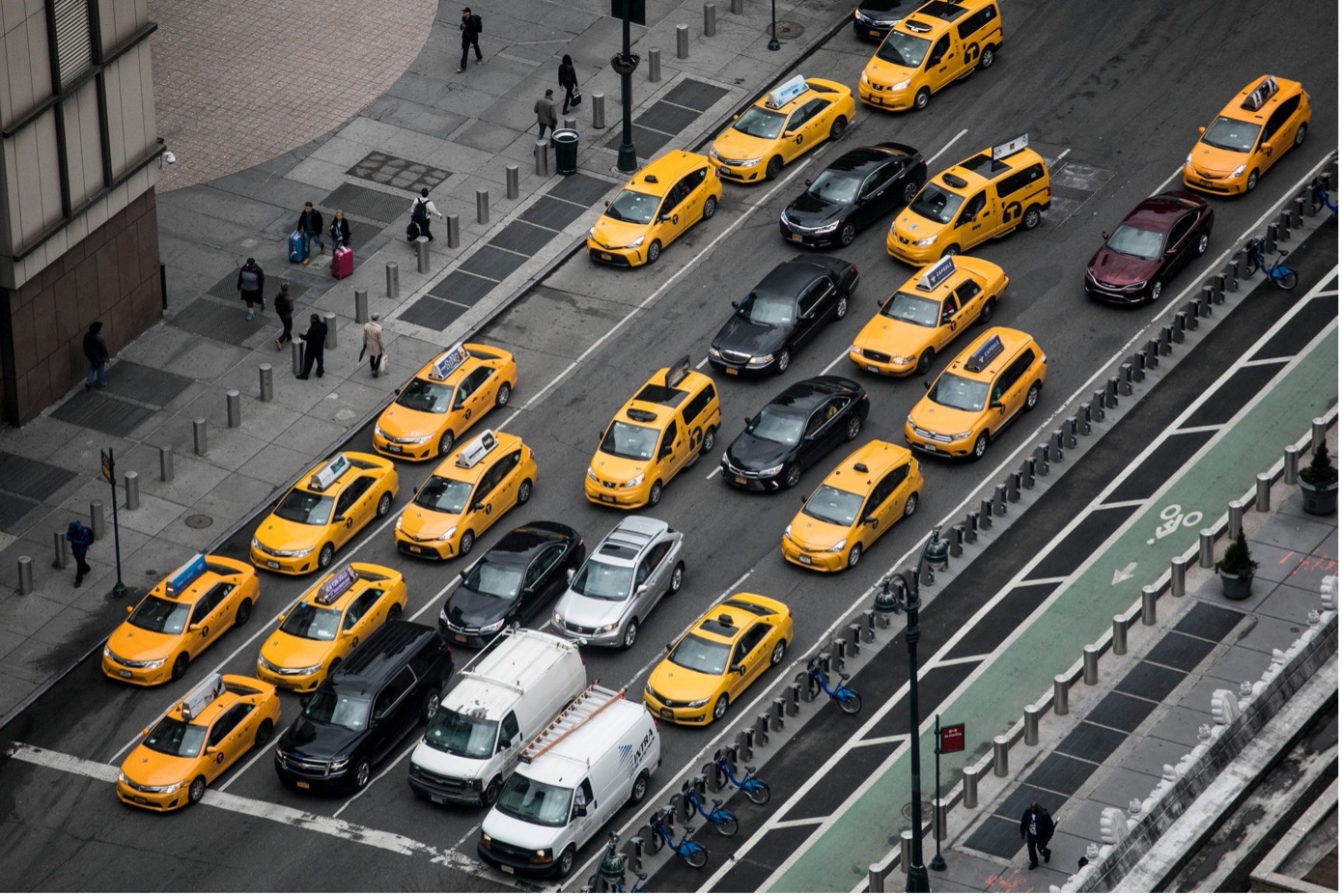
Since mid-2022, Cruise and Waymo have been allowed to offer a ride-hailing service without a safety driver in a quiet part of San Francisco from 11pm to 6am. The permit has now been extended to the entire city throughout the day. The company has 400 cars and Waymo 250. So far, it has not been an unqualified success.

A turbulent start

In a hilarious incident, an empty taxi was pulled over by police; it stopped properly, but kept going after a few seconds, leaving the officers wondering if they should give chase. The National Highway Traffic Safety Administration is investigating this incident, as well as several others involving Cruise taxis stalling at intersections, and the Fire Department reports 60 incidents involving autonomous taxis.

Pending further investigation, both companies are only allowed to operate half of their fleet. In addition to the fire department and public transport companies, trade unions are also opposed to the growth of autonomous taxis. California’s governor has rejected the objections, fearing that BigTech will swap the state for more car-friendly ones. It is expected that autonomous taxis will gradually enter all major US cities, at a rate just below that of Uber and Lyft.

Cruise has already hooked another big fish: In the not-too-distant future, the company will be allowed to operate autonomous taxis in parts of Dubai. 

The number of autonomous taxi services in the world can still be counted on one hand. Baidu has been offering ride-hailing services in Wuhan since December 2022, and robot taxis have been operating in parts of Shenzen since then.

Singapore was the first city in the world to have several autonomous taxis operating on a very small scale. These were developed by nuTonomy, an MIT spin-off, but the service is still in an experimental phase. Another company, Mobileye, also plans to start operating in Singapore this year. 

The same company announced in 2022 that it would launch a service in Germany in 2023 in partnership with car rental company Sixt 6, but nothing more has been heard. A survey by JD Power found that almost two-thirds of Germans do not trust ‘self-driving cars’. But that opinion could change quickly if safety is proven and the benefits become clear.

What is it like to drive a robotaxi?

Currently, the group of robotaxi users is still small, mainly because the range is limited in space and time. The first customers are early adopters who want to experience the ride. 

Curious readers: Here you can drive a Tesla equipped with the new beta 1.4 self-driving system, and here you can board a robotaxi in Shenzhen.

The robotaxis work by hailing: You use an app to say where you are and where you want to go, and the computer makes sure the nearest taxi picks you up. Meanwhile, you can adjust the temperature in the car and tune in to your favourite radio station.

Inside the car, passengers will find tablets with information about the journey. They remind passengers to close all doors and fasten their seatbelts. Passengers can communicate with remote support staff at the touch of a button. TV cameras allow passengers to watch. Passengers can end the journey at any time by pressing a button. If a passenger forgets to close the door, the vehicle will do it for them. 

The price of a ride in a robotaxi is just below the price of a ride with Uber or Lyft. The price level is strongly influenced by the current high purchase price of a robotaxi, which is about $175,000 more than a regular taxi. Research shows that people are willing to give up their own cars if robotaxis are available on demand and the rides cost significantly less than a regular taxi. But then the road is open for a huge increase in car journeys, CO2 emissions and the cannibalisation of public transport, which I previously called the horror scenario.

Roboshuttles

In some cities, such as Detroit, Austin, Stockholm, Tallinn and Berlin, as well as Amsterdam and Rotterdam, minibuses operate without a driver, but usually with a safety officer on board. They are small vehicles with a maximum speed of 25 km/h, which operate in the traffic lane or on traffic-calmed streets and follow a fixed route. They are usually part of pilot projects exploring the possibilities of this mode of transport as a means of pre- and post-transport.

Driving without a driver has a price (5/8)

In an autonomous car from SAE level 4, perception equipment – the eyes and ears – and software take over human brain functions. This requires accurate maps, laser, radar, lidar and cameras. The lidar, which means ‘detect light and range’, works in conjunction with the car’s cameras. This system pulses laser waves to map the distance to objects day and night, up to up to 100 meters with an accuracy of a few centimeters. The price of all this equipment is between €150,000 and €200,000. The lidar is a high-cost item, although this system is becoming increasingly cheaper due to industrial production. Together, these tools build a four-dimensional image of the environment, and all functions of the moving car are controlled using stored software and communications in the cloud.

Google/Waymo

Google’s X-lab began developing an autonomous car in 2009. In 2016, the company had already completed more than 1.5 million test kilometers and spent $1.1 billion on the development of an autonomous car. The company previously used a self-developed model (‘the firefly’, see photo). The company then deployed converted Chrysler Pacifica Hybrids, and these will be exchanged for fully electric Jaguar I-Pace cars.

In 2016, Google’s parent company Alphabet parlayed autonomous car developments into a new company called Waymo (derived from “a new way of mobility”).

General motorcycles/cruise

Cruise was founded in 2013 with the intention of developing a self-driving car. In 2016, General Moters acquired the company for an amount of $500 million. To date, the company has completed 700,000 test miles in San Francisco’s urban environment with no fatalities.

Uber

In 2016, Uber began working with Volvo to develop an autonomous car that could serve as a taxi. The company had acquired software manufacturer Otto for a net $600 million. The company predicted that there will be 75,000 self-driving cars on the road by 2019. That became zero. During the test phase, the company experienced several accidents, including one with a fatal outcome. In addition, Waymo became a target of data theft, a case that was decided in Waymo’s favor by the court. Uber therefore had to pay damages of €250 million (in shares). This led to the departure of Uber founder Travis Kalanick. His successor, Dara Khosrowshahi, has put the development of an autonomous car on the back burner. It was recently announced that Uber has signed a contract with Waymo to use this company’s autonomous cars in the future.

Tesla

Until recently, the use of lidar was not possible due to the high costs for car manufacturers that opt for accreditation at SAE level 3. Tesla therefore equipped its cars exclusively with radar, cameras and computer vision. The latter means that all driving Teslas transmit camera images of traffic and the way in which motorists react to ‘the cloud’. The company has been developing these images with artificial intelligence for years. It prides itself on the fact that its cars have rules of conduct for every conceivable traffic situation.

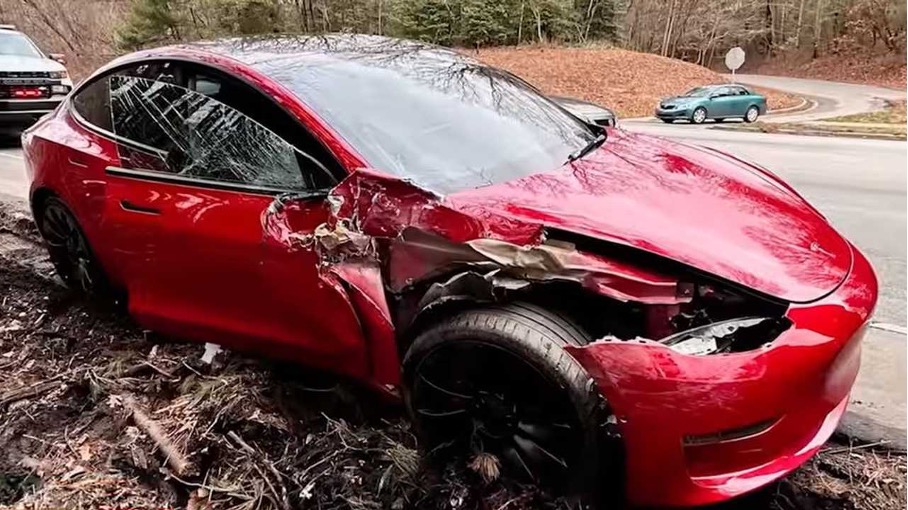
The development of the Tesla was accompanied by high expectations but also by many accidents, some of which were fatal. Last year, Tesla made available a beta version of the FSD (“Full Self Driving”) software package for a price of $15,000. However, the company had to recall as many as 362,000 cars under the authority of the Traffic Safety Administration because this package was encouraging illegal driving. It looks like that these issues have been resolved and some experts have suggested that Tesla will be able to qualify for accreditation at least at SEA Level 3. This still has to happen.

Ford and Volkswagen 

These companies threw in the towel in 2022 and unplugged Argo, a company that was supposed to develop an autonomous car to provide SAE level 4 taxi services. Instead, both companies announced focusing on the SAE levels 2 and 3, like most auto makers.

According to analysts at AlixPartners, the industry has invested $100 billion in developing car automation by 2023, in addition to $250 billion in development of electric cars. I will discus the profitability of these investments later.

The automation of driving: two views (4/4)

Currently, every car manufacturer plus hundreds of startups are working on developing artificial intelligence for driving automation. This should enable communication with the car’s passengers, sensing and anticipating the behavior of other vehicles and road users, communicating with the cloud and planning a safe and fast journey. I will write later about the investments made to achieve this goal.

Incorrect use of Tesla’s autopilot has led to fatal crashes

The development of car automation became visible when Google was the first to start a project in 2009. The activities that technology companies and the automotive industry carry out start from two different visions of the desired result.

Maintain the existing traffic system

The first view assumes that automation is a gradual process that will result in drivers ability to transfer control of the vehicle in a safe manner. It is provisionally assumed that a driver will always be present. That is why taking over control is no problem under specific conditions, such as bad weather and crowded streets. Tesla, an outspoken supporter of this vision, has therefore been talking about its autopilot for years. This came under heavy criticism because the number of functions that were automated was limited. Partly because of this, the so-called autopilot could only be used on a limited number of roads and under favorable conditions.

Most established automotive manufacturers primarily have in mind the higher segment of automobiles and announce they will only make relatively cheaper models suitable for this purpose at a later stage. Maintaining the current traffic system is paramount. The car industry wants to avoid at all costs that people will eventually stop buying cars and limit themselves to ride-hailing in autonomous vehicles.

To another traffic system

The latter is exactly the intention of the companies that adhere to the second vision. These primarily include non-traditional automotive companies, with Google (later Alphabet) in the lead. What they had in mind from the start was to achieve SAE level 4 and, in the long term, SAE 5 level, cars that can drive safely on the road without the presence of a driver. Companies belonging to this group advocate a completely new transport system. In their opinion, safe driving at SAE level 3 is impossible if the driver is not constantly paying attention. They believe that in the event of a ‘disengagement signal’, taking control of the car takes too much time and will result in dangerous situations. In addition to Google, Uber (in collaboration with Volvo) also belonged to this group, but now appears to have dropped out. This also applies to Ford and Volkswagen. General Motors is betting on two horses and aims to maintain accreditation at SAE level 4 with its subsidiary Cruise, although Alphabet’s subsidiary Waymo has by far the best cards.

Important message for the readers.

From next year, the frequency of my articles about the quality of our living environment will decrease sharply. I admit to an old love: Music. In my new website (in Dutch) I write about why we love music, richly provided with examples. Maybe you will kike it too. Follow the link below to have a look.

https://www.hermanvandenbosch.online

Why we should stop talking about self-driving cars (3/8)

The term ‘self-driving car’ is used for a wide variety of technical support systems for car drivers. The Society of Automotive Engineers (SAE) has distinguished six types. This classification is recognized worldwide.

The six SAE levels of automotive automation

At SAE level 0, a car has been equipped with various warning systems, such as unvoluntary deviation from lane, traffic in the blind spot, and emergency braking. At SEA levels 1 and 2, cars can steer independently or/and adjust their speed in specific conditions on motorways. Whether drivers are allowed to take their hands from the steering wheel depends on national law. That is certainly not the case in Europe. As soon as environmental conditions make steering and acceleration more complex, for example after turning onto a busy street, the driver must immediately take over the steering.

A properly functioning SAE Level 3 system allows drivers to take their eyes off the road and focus on other activities. They must sit behind the wheel and be on standby and are always held responsible for driving the car. They must immediately take over control of the car as soon as ‘the system’ gives a (‘disengagement’) signal, which means that it can no longer handle the situation. There is currently no car worldwide that is accredited at SEA-3 level.

This level of control is not sufficient for driverless taxi services. Automotive and technology companies such as General Moters and Alphabet have been working hard to meet the requirements of the higher levels (SAE 4). Their expensive cars (up to $250,000) have automated backups, meaning they can handle any situation under specified conditions, such as well-designed roads, during the day and at a certain speed. Under these circumstances, no driver is required to be present.

SAE Level 5 automation can operate without a driver in all conditions. There is currently no vehicle that meets this requirement.

The variety of options in this classification explains why the term ‘self-driving car’ should not be used. Cars classified at SAE level 1 and 2 can best be called ‘automated cars’ and cars from SAE level 3 onwards can be called autonomous cars.

The state of California introduced new rules in 2019 that allow cars at SAE 4 level to participate in traffic. Very strict conditions apply to this. As a result, Alphabet (Waymo) and General Motors (Cruise) have been allowed to launch driverless taxi services. All rides are monitored with cameras to prevent reckless behavior or vandalism.

Last week, you might have read the last in a series of 25 posts about improving environmental quality.  Right now, I have finalized an e-book containing all posts plus additional recommendations.  If you follow this link, you can download the book (90 pages) for free. A version in Dutch language can be downloaded HERE

The impact of the availability of ‘self -driving’ cars on travel behavior 2/8

If autonomous cars can transport us affordably, do we no longer want to own our own car? Are we switching en masse from public transport, do we leave our bikes unused, or do we walk less? Do we drive alone, or do we share the car with other passengers? Will autonomous cars share he road with other traffic, including cycling? Are we going to use a car more often and longer and how many cars drive empty waiting for a customer?

Of course, no scientific study can answer all these questions yet. Nevertheless, research offers some insight.

Ride-hailing

First, what do we know about the influence of ride-hailing? That is calling a taxi from Uber or Lyft and a handful of other companies with an app. Juniper Research expects that the use of this service, which already has a global turnover of $ 147 billion, will increase fivefold in the coming five years, regardless of whether the taxis involved are ‘self -driving’ or not. Clear is that most users seem not to appreciate the presence of fellow passengers: the number of travelers that share journeys is only 13%.

Research in seven major American cities shows that 49 to 61 percent of all Uber and Lyft-taxi rides would have been made by walking, cycling, taking public transport or not at all. These journeys only replace car use to a limited extent. As a result, the number of train passengers has already fallen by 1.3% per year and that by bus by 1.7%. At the same time, congestion has increased.

publication in the Journal Transport policy showed that travelers travel twice as many kilometers in every American region that they would have done if Uber and Lyft did not exist. It also turned out that taxis drive empty 50% of the time while they are waiting for or on their way to a new customer. Another study found that many Uber and Lyft customers who once used public transport buy a car for themselves.

The effect of ‘self -driving’ cars

The number of studies after the (possible) effect of the arrival of ‘self -driving’ cars is increasing rapidly. Research by the Boston Consultancy Group showed that 30% of all journeys will take place in a ‘self -driving’ car as soon as they are available. A considerable number of former public transport users says they will change. Despite the price advantage, the respondents will make little use of the option to share a car with other passengers, but it is known that attitudes and related behavior often differ. Nevertheless, this data has been used to calculate that there will be more cars on the road in large parts of the cities, resulting in more traffic jams.

Semi-experimental research also showed that the ability to travel with a ‘self-driving’ car results in an increase in the number of kilometers covered by around 60%. Unless autonomous cars drive electrically, this will also have significant negative consequences for the environment.

The Robottaxis in suburbs had a different effect: here travelers would leave their car at home more often and use the taxi to be transported to a station.

See robot taxis and public transport in combination

Despite all the reservations that must be made with this type of research, all results indicate a significant increase in the use of taxis, which will be at the expense of public transport and will result in more traffic jams in urbanized areas. This growth can be reversed by making shared transport more attractive. Especially on the routes to and from train, metro, and bus stations. Only in that case, will there be an ideal transport model for the future: large-scale and fast public transport on the main roads and small-scale public transport for the last kilometers and in rural areas.

‘Self-driving’ cars: a dream and a nightmare scenario (1/8)

How far are we from large-scale use of ‘self-driving’ cars. This and subsequent posts deal with this question. In answering it, I will focus on the potential contribution of self-driving cars to the quality of the living environment. Nowadays, the development of self-driving cars has faded a bit into the background. There is a reason for that, and I will get to it later.

When ‘self-driving’ vehicles first emerged, many believed that a new urban utopia was within reach. This would save millions of lives and contribute to a more livable environment. However, it is only one of the scenarios. Dan Sperling writes: The dream scenario could yield enormous public and private benefits, including greater freedom of choice, greater affordability and accessibility, and healthier, more livable cities, along with reduced greenhouse gas emissions. The nightmare scenario could lead to even further urban expansion, energy consumption, greenhouse gas emissions and unhealthy cities and people.

The dream scenario

Do you have to go somewhere? On request, a self-driving car will stop in front of your door within a few minutes to make the desired journey. After you have been safely dropped, the car drives to the next destination. Until a few years ago, companies like Uber and Lync were looking forward to the day when they could fire all their drivers and offer their services with ‘self-driving’ cars. Naturally at lower prices, which would multiply their customer base. In this scenario, no one wants to have their own car anymore, right? The number of road casualties also will reduce drastically in this scenario. Autonomous cars do not drink, do not drive too fast, never get tired and anticipate unexpected actions of other road users much faster than human drivers. At least that was the argument.

Quick calculations by the proponents of this scenario show that the number of cars needed for passenger transport could decrease by a factor of 20 (!).

The nightmare scenario

This calculation was perhaps a little too fast: Its validity depends on a perfect distribution of all trips over day and night and over the urban space and on the presence of other road users. What you don’t want to think about is that outside rush hour, most of the fleet of ‘self-driving’ cars is stationary somewhere or driving aimlessly in circles. Moreover, the dream scenario assumes that no one switches from public transport, walking, or cycling. Instead of improving cities, these types of cars have the potential to ruin them even further, according to Robin Chase, co-founder of Zipcar. Taxis, especially those from Uber and Lyft, are already contributing to traffic jams in major American cities and to the erosion of public transportation

Both views are based on suspicions, expectations, and extrapolations and a dose of ‘wishful thinking’ too. In the next posts, I will discuss results of scientific research that allows to form a more informed opinion about both scenarios.

The Netherlands: country of cars and cows

Last months, 25 facets of the quality of streets, neighbourhoods and cities have been discussed on this spot. But what are the next steps? How urgent is improvement of the quality of the living environment actually?

I fear that the quality of the living environment has been going in the wrong direction for at least half a century and in two respects. 

Country of cars

Firstly, the car came to play an increasingly dominant role during that period. Step by step, choices have been made that make traveling by car easier and this has had far-reaching consequences for nature, air quality, climate and environmental planning. Our living environment is designed based on the use of the car instead of what is ecologically possible and desirable for our health. At the same time, public transport is rarely a good alternative, in terms of travel time, costs and punctuality.

Country of cows

A second structural damage to the quality of the living environment comes from the agro-industry. About half of the surface of our country is intended for cows. These cows make an important contribution to greenhouse gas emissions that further destroy the remaining nature. But this form of land use also leads to inefficient food production, which also leads to health problems.

In the coming months I will explore two themes: ‘the rise of ‘self-driving’ cars’ and the ’15-minute city’. Both themes are case studies regarding the quality of the living environment and in both cases mobility and nature  play an important role. 

After the publication of these two miniseries with zeven posts each, the frequency of my posts on this site will decrease, although I will continue to regularly draw attention to the fundamental choices we have to make regarding environmental issues.

Meanwhile, I started a new blog ‘Expeditie Muziek’. I have always neglected my love for music and I am making up for it. I think readers who love music will enjoy my posts in which pieces of text alternate with YouTube videos as much as I enjoy writing them.

Curious? Visit hermanvandenbosch.online

25 Happiness

This is the 25st and last episode of a series 25 building blocks to create better streets, neighbourhoods, and cities. Its topic is happiness. Happiness is both a building block for the quality of the living environment and at the same time it is partially shaped by it. This is what this post is about.

A municipality with residents who all feel happy. Who wouldn’t want that? It is not an easily attainable goal, also because there are still many unanswered questions about the circumstances that make people happy.

In its broadest sense, happiness refers to people’s satisfaction with their lives in general over an extended period.

Can happiness be developed?

Only in a limited way. According to Ruut Veenhoven, the Dutch ‘happiness professor’, half of happiness is determined by character traits, such as honesty, openness, optimism, forgiveness, and inquisiveness. Five societal characteristics determine the rest. These are a certain level of material wealth, social relations, health, living conditions and self-determination. In between, culture plays a role.

Happy and unhappy cities

What about the happiness of cities, for what it’s worth? The happiness of cities depends on the self-declared degree of happiness (of a sample) of its inhabitants. Scandinavian cities dominate the top 10: Helsinki (Finland) and Aarhus (Denmark) rank first and second, Copenhagen (Denmark), Bergen (Norway) and Oslo (Norway) rank fifth, sixth and seventh. Stockholm (Sweden) is ninth. Amsterdam follows in 11th place. Two of the top ten cities are in Australia and New Zealand: Wellington, New Zealand’s capital, ranks third and Brisbane (Australia) ranks tenth. The only top ten cities not in the Scandinavia or Australia and New Zealand are Zurich (Switzerland) and Tel Aviv (Israel).

The bottom five cities are mainly cities that have been strongly marked by wars and conflicts: Kabul in Afghanistan, Sanaa in Yemen, Gaza in Palestine, and Juba in South Sudan. Delhi (India) ranks the fifth place from the bottom, because of the perceived very poor quality of life.

Independently from the place where they live, people who are happy are characterized by longevity, better health, more social relationships, and active citizenship.

Can cities improve their inhabitants’ happiness?

happiness-based policy provides ‘resources’ in the first place, such as a livable income, affordable housing, health care and, in addition, creates circumstances (‘conversion factors’) to support people in making optimal use these resources. For instance, through social work, opportunities for participation, and invitation to festivities, such as street fairs, car-free days and music in the street.

Municipalities such as Schagen and Roerdalen consider the happiness of their citizens as the first goal for their policy. Cities abroad that intend the same are Bristol, Seoul, and Vilnius, among others. Nevertheless, Nancy Peters (project leader happiness of the municipality of Schagen) remarks: We cannot make people happy. But the government offers a frame that helps people to become happy.

Together with the Erasmus Happiness Economics Research Organization (EHERO), the municipality of Schagen has agreed on 12 spearheads: meaningful work, meaningful contact, participation in social life, connection with the neighbourhood, social safety net, trust in the municipality, pride in the place where people live, satisfaction with relationships, sports facilities, quality of public space, neighborhood-oriented cooperation and the relationship between citizens and community.

The importance of participation

In the previous blogposts, many topics have been discussed that easily fit in one of these spearheads. In his book The Architecture of Happiness, Alain de Botton notes that the characteristics of the environment that ignite social activities contribute most to the pursuit of happiness.  In addition to the tangible properties of the living environment, participation by citizens plays is of importance as a direct consequence of self-determination. 

25 years ago, residents of two streets in Portland (USA) decided to turn the intersection of those streets into a meeting place. At first, only tents, tables, chairs and play equipment were placed on the sidewalks, later the intersection itself was used at set times. After some negotiations, the city council agreed, if this would be sufficiently made visible. The residents didn’t think twice and engaged in painting the street as visible as possible (See the image above). The residents agree that this whole project has made their lives happier and that the many activities they organize on the square still contribute to this.

The impact of happiness on the quality of the living environment.

But, what about the other way around, happiness as a building block for the quality of the living environment? Happy people are a blessing for the other inhabitants of a neighbourhood, because of their good mood, social attitude, willingness to take initiatives, and optimism regarding the future.  At their turn, happy people can make most of available resources in their living environment because of the above-mentioned characteristics.  Environmental qualities are not fixed entities: they derive their value from the meaning citizens give them. In this context, happiness is a mediator between environmental features and their appraisal by citizens.

Therefore, happy citizens can be found in Mumbai slums, and they might be happier than a selfish grumbler in a fancy apartment. At the same time, happy citizens might be best equipped to take the lead in collective action to improve the quality of the living environment, also because of the above-mentioned characteristics. 

Follow the link below to find an overview of all articles.

24. Participation

This is the 24st episode of a series 25 building blocks to create better streets, neighbourhoods, and cities. Its topic is the way how involving citizens in policy, beyond the elected representatives, strengthens democracy and enhances the quality of the living environment, as experienced by citizens.

Strengthening local democracy

Democratization is a decision-making process that identifies the will of the people after which government implements the results. Voting once every few years and subsequently letting an unpredictable coalition of parties make and implement policy is the leanest form of democracy. Democracy can be given more substance along two lines: (1) greater involvement of citizens in policy-making and (2) more autonomy in the performance of tasks. The photos above illustrate these lines; they show citizens who at some stage contribute to Policy development, citizens who work on its implementation and citizens who celebrate a success.

Citizen Forums

In Swiss, the desire of citizens for greater involvement in political decision-making at all levels is substantiated by referenda. However, they lack the opportunity to exchange views, let alone to discuss them. 

In his book Against Elections (2013), the Flemish political scientist David van Reybrouck proposes appointing representatives based on a weighted lottery. There are several examples in the Netherlands. In most cases, the acceptance of the results by the established politicians, in particular the elected representatives of the people, was the biggest hurdle. A committee led by Alex Brenninkmeijer, who has sadly passed away, has expressed a positive opinion about the role of citizen forums in climate policy in some advice to the House of Representatives. Last year, a mini-citizen’s forum was held in Amsterdam, also chaired by Alex Brenninkmeijer, on the concrete question of how Amsterdam can accelerate the energy transition.

Autonomy

The ultimate step towards democratization is autonomy: Residents then not only decide, for example, about playgrounds in their neighbourhood, they also ensure that these are provided, sometimes with financial support from the municipality. The right to do so is formally laid down in the ‘right to challenge’. For example, a group of residents proves that they can perform a municipal task better and cheaper themselves. This represents a significant step on the participation ladder from participation to co-creation.

Commons

In Italy, this process has boomed. The city of Bologna is a stronghold of urban commons. Citizens become designers, managers, and users of part of municipal tasks. Ranging from creating green areas, converting an empty house into affordable units for students, the elderly or migrants, operating a minibus service, cleaning and maintaining the city walls, redesigning parts of the public space etcetera.

From 2011 commons can be given a formal status.  In a cooperation pacts the city council and the parties involved (informal groups, NGOs, schools, companies) lay down agreements about their activities, responsibilities, and power. Hundreds of pacts have been signed since the regulation was adopted. The city makes available what the citizens need – money, materials, housing, advice – and the citizens donate their time and skills.

From executing together to deciding together

The following types of commons can be distinguished:

Collaboration: Citizens perform projects in their living environment, such as the management of a communal (vegetable) garden, the management of tools to be used jointly, a neighborhood party. The social impact of this kind of activities is large.

Taking over (municipal) tasks: Citizens take care of collective facilities, such as a community center or they manage a previously closed swimming pool. In Bologna, residents have set up a music center in an empty factory with financial support from the municipality.

Cooperation: This refers to a (commercial) activity, for example a group of entrepreneurs who revive a street under their own responsibility.

Self-government: The municipality delegates several administrative and management tasks to the residents of a neighborhood after they have drawn up a plan, for example for the maintenance of green areas, taking care of shared facilities, the operation of minibus transport.

Budgetting: In a growing number of cities, citizens jointly develop proposals to spend part of the municipal budget.

The role of the municipality in local initiatives

The success of commons in Italy and elsewhere in the world – think of the Dutch energy cooperatives – is based on people’s desire to perform a task of mutual benefit together, but also on the availability of resources and support.

The way support is organized is an important success factor. The placemaking model, developed in the United Kingdom, can be applied on a large scale. In this model, small independent support teams at neighbourhood level have proven to be necessary and effective.

Follow the link below to find an overview of all articles.

23. Governance

This is the 23st episode of a series 25 building blocks to create better streets, neighbourhoods, and cities. Its topic is the way how the quality of the living environment benefits from good governance.

In 1339 Ambrogio Lorenzetti completed his famous series of six paintings in the town hall of the Italian city of Siena: The Allegory of Good and Bad Government. The image above refers to the characteristics of governance: Putting the interests of citizens first, renouncing self-interest, helpfulness, and justice. These characteristics still apply.

Rooted in the community

The starting point of urban policy is a long-term vision on the development of the city that is tailored to the needs and wishes of citizens, as they become manifest within and beyond the institutional channels of representative democracy. In policies that are rooted in the community, knowledge, experiences, and actions of those involved are also addressed. Each city has a pool of experts in every field; many are prepared to commit themselves to the future of their hometown.

Participation

Governance goes beyond elections, representative bodies, following proper procedures and enforcing the law. An essential feature is that citizens can trust that the government protects their interests and that their voices are heard. The municipality of Amsterdam has access to a broad range of instruments: co-design, Initiating a referendum, subsiding local initiatives, neighbourhood law, including the ‘right to challenge’ and neighbourhood budgets. I will deal with participation in the next post.

Two-way communication

Barcelona and Madrid both use technical means to give citizens a voice and to make this voice heard in policy. Barcelona developed the platform Decidem (which means ‘We decide’ in Catalan) and Madrid made available Decide Madrid (‘Madrid decides’). Both platforms provide citizens with information about the policy, allow them to put topics on the policy agenda, start discussions, change policy proposals, and issue voting recommendations for the city council.

Madrid has developed its participatory electronic environment together with CONSUL, a Madrid-based company. CONSUL enables cities to organize citizen participation on the internet. The package is very extensive. The software and its use is free. Consul is in use in 130 cities and organizations in 33 countries and has reached some 90 million citizens worldwide.

City management

Each city offers a range of services and facilities, varying from the fire brigade, police, health services, municipal cleaning services to ‘Call and repair’ lines, enabling residents to report defects, vandalism, damage, or neglect. Nuisance has many sources: non-functioning bridges, traffic lights, behavior of fellow citizens, young and old, traffic, aircraft noise and neighbours. In many cases, the police are called upon, but they are too often unable or unwilling to intervene because other work is considered more urgent. This is detrimental to c23. Governanceitizens’ confidence in ‘politics’ and seriously detracts from the quality of the living environment.

Resilience

Cities encounter disasters and chronic problems that can take decades to resolve. Resilience is needed to cope and includes measures that reduce the consequences of chronic stress (e.g., communal violence) and – if possible – acute shocks (e.g., floods) and eliminate their occurrence through measures ‘at the source.’

For an adequate approach to disasters, the fire brigade, police, and ambulances work together and involve citizens. This cooperation must be learned and built up through practice, improvisation and trust and is not created through a hierarchical chain of command.

Follow this link below to find an overview of all articles.