
For a long time courses are completed with a diploma. However, the number of different qualifications has grown exponentially. in the US there eight times more different diplomas than 20 years ago. There are thousands of providers and most of these are not accredited. In addition, we are dealing with diplomas from many countries. In short, the value of a degree is difficult to judge beforehand.
But there is another side. Many people – young and old – do not aspire to graduate. They want a specific job, have appropriate training and receive a certificate that proves they possess the required competences [1] .
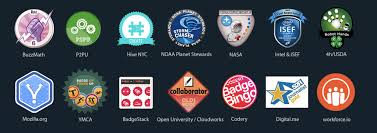
For both problems is a solution in the form of badges, micro-credentials or email credentials: These are (digital) documents proving that someone has specific knowledge and / or skills. There are now more than 3,000 organisations who provide badges, including educational institutions and 9corporate) training institutions [2] .
For a well-functioning system of badges several conditions must be fulfilled. Here are the main ones:
Level
The knowledge and / or skills a badge is referring at must be unambiguous. Also, there must be an unmistakable reference to the level of mastery that has been acquired. It measurement should be made explicit. The Degree Qualifications Profile , prepared by Lumina is a useful tool to identify the level [3] .
Compatibility
Badges must have a common technical standard and they have to include include information about the owner, the supplier, the content and the way in which this knowledge and skill is measured. The Open Badges Standard of IMS Global Learning is likely to operate as such. In the Netherlands, SURF is working on a technical specification of badges [4] .

Visibility
Owners must have a platform to show their badges. For this purpose various websites are in use, such as Backpack [5] .
The main enabler of badges is the rapid spread of competency-based education. This type of education requires an accurate description of learning outcomes; The knowledge and skills that a person has acquired after participating in formal, non-formal and informal learning activities.
Concordia University in Wisconsin is – as far as I know – the first university program -Master in educational technology – that is certified by badges. There are 50; each of which corresponds with some learning outcomes [6]. The time that students have spend to reach this goal is irrelevant.
Another interesting development is that providers of training (formal and non-formal) in a specific region or city work together and offer a broad range of badges. Here too, local employers are concerned [7] . The Open Badge Network [8] (Europe) has drawn up a brief Charter. In the US, the Cities of Learning initiative, for example, Chicago City of learning, can be mentioned [9] .

I see many advantages in the development outlined here, but at the same time I am also afraid of a fragmented focus on learning.
I have repeatedly accentuated the importance of the acquisition of critical thinking. It is inconceivable that students learn to think critically by taking part in just one educational activity. Therefore critical thinking can not be checked by just one single badge. The ability to think critically develops gradually if students are confronted repeatedly with realistic social and scientific problems, gain knowledge about these problems, do research, weigh solutions and eventually come to a judgement. This means that earning badges alone is not enough, but additional requirements are necessary concerning their consistency.
A more precise use of the term competence can contribute to this. A separate badge means that a student has demonstrated to own a certain amount of knowledge and skills. In that case, badges can be connected to modules, courses or work in practice. In contrast, a competency refers to the (intellectual) capabilities of a graduate.
The badges system is far from mature. It is a hopeful start to honour extracurricular experiences, and to enable the debundling of the acquisition of knowledge and skills by deploying various learning opportunities at home and abroad.
[1] For the requirements that can be imposed on badges: http://www.openbadgenetwork.com/wp-content/uploads/2016/01/O4A3-OBN-Guidelines-for-Open-Badges-in-Territories. pdf
[2] For an overview of what has been achieved in five years https://drive.google.com/file/d/0B7kHRuri9QdPQmRfdXZrblpSX0U/view
[3] The framework is developing rapidly and has eight levels. It is specified for knowledge and skills. these are in turn broken down into specialized skills, personal skills and social skills: https://www.luminafoundation.org/files/resources/connecting-credentials.pdf . This framework is very similar to the European Qualifications Framework for lifelong learning a life https://ec.europa.eu/ploteus/sites/eac-eqf/files/leaflet_nl.pdf
[4] , see: https://www.surf.nl/binaries/content/assets/surf/nl/2017/open-badges_surfnet-pilot-scenario’s_frans-ward_3feb.pdf
[5] are now more than a million badges placed on the Backpack website https://backpack.openbadges.org/backpack/welcome
[6] Educational institutions collaborate with employers. For example, this is done by the Foundation for California Community Colleges and the New World of Work
[7] Examples of this are: Open Badges Scottish Education Group, the UK Badge the project and the Open Badges DACH User Group in Germany. For a discussion; http://www.openbadgenetwork.com/wp-content/uploads/2016/01/O4A3-OBN-Guidelines-for-Open-Badges-in-Territories.pdf
[8] portal: www.openbadgenetwork.com
 The value-added of campus universities should rather be sought in teaching methods where the degree of interaction between students and teachers goes beyond incidental questioning and answering in lectures and seminars. Think of tutorials (meetings a few students with a tutor), projects (intensive meetings of students, occasionally attended by a teacher), working groups in problem-based learning (10-15 students, who meet with a tutor regularly) and some types of training. Activities like these outperform the capabilities of education online with respect to the support of aims like critical thinking and problem solving. Unfortunately, the domination of lectures and seminars prevents that campus universities take advantage of this potential value.
 Knowledge has become ubiquitous. The same applies to stupidity, greed, fundamentalism and the quest for power. Definitely, it applies not to peace, happiness or wisdom. In spite of undeniable progress with respect to income, medical care, education and technology last decades the world did not become a better place. The ubiquity of knowledge has not been very helpful. On the contrary, knowledge has been a steady accomplice in the decline of the earth.
 Printed or electronic sources in which knowledge is stored are ubiquitous too. The sheer number of scientific publications is doubling every 9 years since 1950
 Many teachers assume that students have to be saturated with disciplinary knowledge first before its application can be practiced. This outmoded idea has proven not to work because of the abundance of scientific knowledge, the blurring of disciplinary borders and the situated character of ‘real problems’. In stead, students acquire meaningful knowledge only if they learn to deal with unstructured problems from the first day they enter university. The development of a more structured knowledge base can wait and might be reserved for students who aspire a career in academia. Disciplinary bachelor programs might be replaced by the study of societal problems like environment, migration and integration, healthcare, energy and the like.

 The majority of contemporary universities are realizing these outcomes only partially. Research in the US has revealed that about 40% of college students did not make any progress with respect to analytical and critical thinking skills in four consecutive years
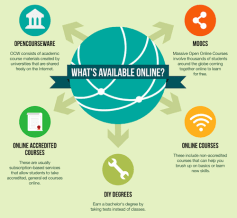 Universities can economize by flipping their classrooms radically and supporting their students in choosing appropriate open educational resources like MOOCs (= massive open online courses). At this time, MOOCs cover any part of scientific knowledge. The best scientists are involved in their development and educational technologists have designed the best visual support. The only expenses relate to delivering feedback at student’s assignments.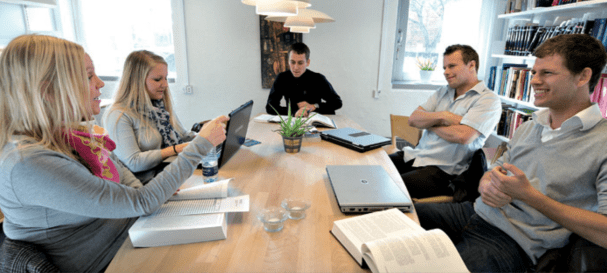

 Hierarchical personnel management and extensive planning and control systems enabled late 20th century companies to produce massive volumes at low prices for relatively stable and continuously growing markets. Nowadays, the environment is changing at high-speed, requiring flexibility and development of new products in short notice. The labour force is well educated and prepared to take or share managerial responsibility. At the same time most workers feel disengaged under conditions of vertical control.
 Ask any university teacher who is her or his boss. Some – probably those who have been employed the largest number of years – shrug their shoulders as though the answer matters. Others might count ten bosses at least: the chairman of the department, the head of the school, the managing director, the program director of the bachelor, the program director of the master, the director of education, the director of research, the chairman of the faculty council and the dean. Not to forget the chairmen of the education committee and the board of examiners. And we’re only talking about bosses at faculty level.
 The strong increase in complexity of higher educational institutions is accompanied by the diversity of tasks that academic personnel are performing simultaneously. Ask any university teacher to write down her or his tasks during an average week. The result: six to ten lectures or working groups in bachelor and master programs spread over three to five courses, the development of new courses, supervision of bachelor and master theses, meetings of committees, discussions with PhD students, delivery of information to prospective students, participation in teacher training, attending meetings and consulting colleagues, regional contacts, deliberations with foreign universities, tutorials with students, answering emails, and joining social media forums. They also do research, which involves various activities as well.





 Music: Listen, Look and Enjoy