Worksongs

Recently, I wrote a series of posts about the evolution of the music that immigrants from Europe brought to the US—country & western—and how it blended with rhythm & blues, which is mainly rooted in the African-American tradition. Rock ‘n’ roll, folk, ‘Americana’ and eventually Shania Twain and Taylor Swift positioned in this evolution. 

In the next episodes I take the opposite route. The starting point is the African-American tradition, beginning with the songs sung by slaves, which evolved through spirituals, gospel, and blues into rhythm & blues, Motown, funk, disco, and dance.

It is often said that jazz descended from African music. This is only partially true. Still, music in the Americas would have sounded completely different today if millions of slaves had not been deported to this part of the world. Slaves were not allowed to play the instruments they used in Africa. What was left of African music mixed with music brought by other immigrants and English replaced African languagesounded like, is only known since by a few gramophone records made in the 19de century. Earlier, though, there were wax rolls intended for pianolas, the first of which dates from 1826.

The most direct influence of African music on music in the United States, spirituals and gospel songs, in the first place,  comes from songs, which slaves sang while working. They did so for centuries, and the style has similarities with traditional African singing. Especially the role of a ‘cantor’ interacting with a ‘the choir’. As mentioned, drums are missing.

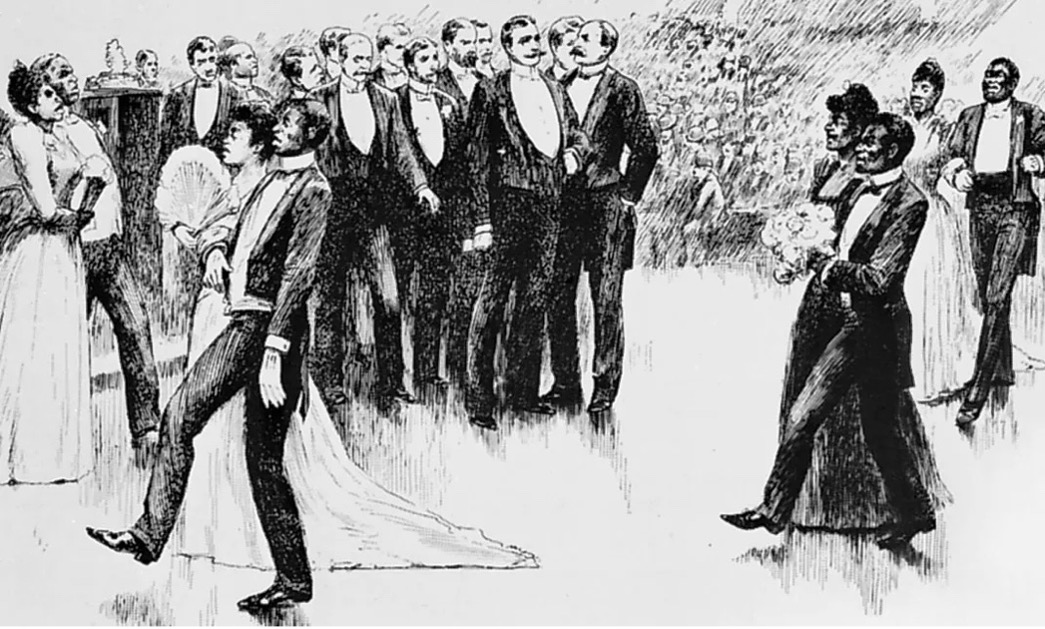
This recording is an example of a worksong, lyrics and music have been handed down.  The song ‘Po Lazarus’ is sung by James Carter & the Prisoners. The slaves pictured above were working to expand the railway network. Otherwise, they worked on plantations and building dykes.

This song is about a slave captured for the sheriff and shot dead. In other songs, slaves sing of their misery or give ‘disguised’ messages about ways to escape.  This was usually done by jumping on a train. Front singers were also hired who could rouse the slaves, so they worked harder.  

The song that follows next is also advice to slaves who want to escape. Namely wade through the water so the dogs cannot chase you. It is a contemporary rendition by an unknown artist.

The theme of trains played a role in many worksongs, as mentioned above, and much later after the abolition of slavery, this was still the case. This is Sister Rosetta Tharpe with “This Train”.  The recording is from 1964.

As more slaves converted, the songs more often took on a religious content. In the Bible, slaves found comparative material to their own suffering, for example the exile of the Jewish people in Egypt, hence titles such as: Example: Go Down Moses. The songs that emerged then were later sung by world-famous singing groups, like the Golden Gate Quartet here. This recording clearly explores the style of worksongs, but in highly polished form.

To some extent, the development of worksongs outlined so far was limited to what can be called ‘entertainment music’ and ‘religious music’.  But what happened in Europe with folk music, composers also drew inspiration from it. Performance no longer took place in pubs, churches and music halls, but in concert halls. There was talk of ‘Black Art Music’. 

Thus, in the mid-19de century, slavery had not yet been abolished, a choir, the Original Fisk Jubilee Singers, was founded at the University of Nashville.  This choir still exists to this day, more than 150 years later, and performs worldwide with, among other things, compositions dating back to the original worksongs, as far as surviving. You will also hear ‘Wade in the Water’ at a 2019 performance.

Incidentally, Miles Davis’ mother was also a member of the Fisk Jubilee Singers.

Finally, a performance by the Cannonball Adderley Sixtet from 1968. The song is called Work Song.  In content and form, it has nothing to do with a worksong. The composer Nathan Adderley, who plays cornet in his brother’s sixtet was inspired by it because in his youth he saw a group of prisoners working in front of their home in Florida. This was a ‘chain gang’, because of the chain with a steel ball at the end, with which they were connected. They too sang in songs in the tradition of the slaves.

Cannonball Adderly brings us right in the middle of the jazz tradition. Jazz is rhythmic music, partly improvised, with some members of the orchestra playing a solo. The chorus is often recognizable and easy on the ears; the interludes are complex and usually require a lot of technique. Jazz musicians usually seek to distinguish themselves from pop music through their craftsmanship, but the boundaries are fluid and repeatedly crossed deliberately and rightly.

Taylor Swift from “teenage wunderkind” to “artist of the decade” (part 2)

During the last five years, Taylor Swift is pushing her musical boundaries (again). Part 2 of this post covers the period from 2020, during which four new albums saw the light of day and she was named ‘Person of the Year’ by Time magazine. In 2022, that accolade went to Volodymyr Zelensky.

The outbreak of the corona epidemic led to the cancellation of a planned tour in 2020, which suddenly gave her an unprecedented amount of time and rest. Nevertheless, 2020 proved to be her most successful year yet, both artistically and commercially. In the second half of 2020, she released two albums in quick succession unannounced: Folklore and evermore (written with lower case). She had read many books and was fascinated by the variety of human characters she encountered in them. She continues to write from the ‘me-person’, but many songs are about other people, fictional or existing. Her lyrics reach an even greater degree of self-awareness, introspection and poetic content. 

Folklore

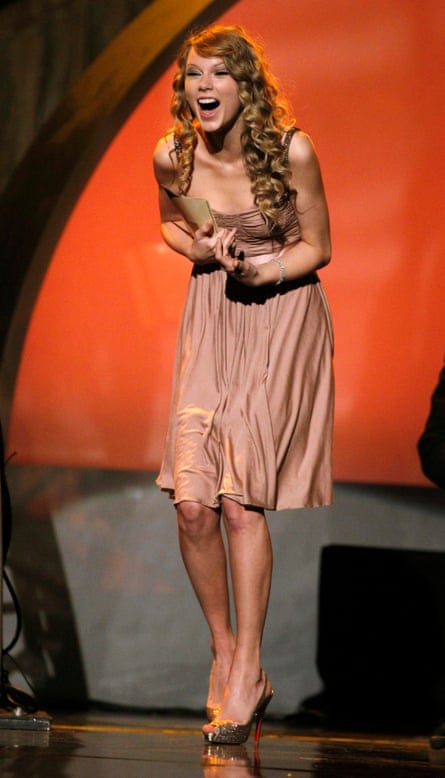
At first, Listen to ‘Betty’ from the album ‘Folklore’, performed live at the Academy of Country Music Awards ceremony at the Grand Ole Opry House in Nashville. It is part of a ‘teenage love triangle’. In this song, Taylor (in the person of a 17-year-old James) apologises for how he cheated on Betty with an unnamed person, who ‘gets to talk’ in the song ‘August’.

You can find the lyrics of this song here

In another song “Cardigan”, Taylor sings from Betty’s perspective. Betty still hopes for the relationship with James to continue. 

You can find the lyrics to this song here

In the third song ‘August’, we hear the anonymous girl James was in a relationship with over the summer. She laments that James has ‘made up’ again with Betty. But she resignedly says: “You weren’t mine to lose.”

The recording of these songs comes from the ‘Folklore Long Pond Studio Sessions’ a music film that features all of Folklore’s songs. Taylor Swift wrote these with co-producers Jack Antonoff and Aaron Dessner because concerts were not possible in corona time. They also provide the accompaniment on these recordings. Other songs you should definitely listen to and read the lyrics. Here are four further examples: ‘The 1’, ‘Mirrorball’, ‘This is me trying’ and ‘Peace’.

Most critics called ‘Folklore’ the best album Taylor had made up to that point. The New York Times goes even further and considers this album the best thing the pandemic has produced. 

evermore

Amid euphoria, a few months later ‘evermore’ appeared unexpectedly, an album that was also very well received. It resembles ‘Folklore’. The character studies go a little deeper; Swift still fathoms human emotions around love, grief, marriage and infidelity from the ‘I’ position. Some songs have a clearer pop accent, with melodies that are easy on the ears. This includes the song ‘No body no crime‘ To the more ‘poppy’ songs, you could add ‘Karma’ and ‘Anti-hero’. I will present the the music video for the latter song later. 

‘evermore’ is also characterised by dreamy ballads. ‘Willow’, for instance, has that same subdued quality as most songs from ‘Folklore’. 

You can find the lyrics to this song here

Similar songs on ‘evermore’ are: ‘Champagne problems‘ ‘Coney  island’ and ‘Marjorie’, The latter song is about Taylor’s grandmother, the opera singer Marjorie Finlay. ‘Tolerate it’ is about relationships between young women and older men. The maker of this (unofficial) music film has provided the song with images from the Netflix series ‘The Crown’, specifically Charles and Diana.

Midnights

The albums Folklore and evermore were based on fictional narratives. She imposed emotions onto imagined characters and stories, which liberated her from tabloid attention. On 21 October 2022, the tenth album, Midnights, was released. It matches older albums like 1989 more than the two previous two. T, such as anxiety, insomnia, self-criticism, revenge and schizophrenia and but also confidence in herself. She deals with these themes in a more abstract way to enable the listeners to recognize their own emotions.

The album incorporates a restrained electropop and synth-pop sound with elements of hip hop, R&B, rather than from indie folk and ‘alternative rock, labels that graced the previous two albums. One commentator speaks of ‘chillout music’. Critics were again very positive because of the understated production and vocal style. They also praised the refinement of Swift’s writing. 

You can now listen to ‘Would’ve, could’ve, should’ve.

The lyrics of this song are here

In this song, she laments the relationship she had at the age of 19 with a ‘grown-up’ man, the way he treated her and the trauma she suffered as a result: “I damn sure never would’ve danced with the devil at 19 / And the God’s honest truth is that the pain was heaven / And now that I’m grown, I’m scared of ghosts.”

Other songs from this album include ‘Karma’ and Bejuweled, a paraphrase of the Cinderella fairy tale. Worth mentioning is the ballad ‘You’re losing me’. Many saw in it the foreshadowing of the end of her six-year relationship with English actor Jo Alwyn. Furthermore, you should definitely listen to ‘Sweet  nothing’, about the periods of peace Swift experiences in her own home, ‘Maroon‘, a song about missed opportunities and ‘Midnight rain’ in which Swift muses on how things would have been different if she had not chosen her career first and foremost with a previous love. 

The song “You’re on your own, kid” from Midnights describes the insecurities young adults face when they have to build a position, face relationships and see friends go their own way too: “Summer went away / Still the yearning stays / I play it cool with the best of them / I wait patiently / He’s gonna notice me / It’s ok, we’re the best of friends”.

You can find the lyrics to this song here

Midnights was her fifth album to open atop the Billboard 200 with first-week sales of over one million copies, and its tracks, led by the single “Anti-Hero“, made Swift the first artist to monopolize the top 10 of the Hot 100.

Midnights is her the most commercially successful album too. Spotify reports never had so many albums have been streamed in one day, and it was the first time in history that Billboard’s entire top ten consisted of Swift’s songs.

The tortured poets department

Swift’s 11th album was released unexpectedly on April 19, 2024. She had been working on it in secret during the ‘Eras Tour’. She referred at the album as a ‘lifeline’, with introspective songs that depict emotional tumult, with self-awareness, mourning, anger, humor, and delusion as dominant themes. Swift wrote and produced the album with Jack Antonoff and Aaron Dessner.

The album broke numerous commercial records, including the highest single-day and single-week streams for an album on Spotify. It became the world’s best-selling album of 2024. ‘Fortnight’ was the highest rating single, co-written by Post Malone.

Listen to Fortnight here.

From a musical point of view, a variety of musical styles can be recognized, like minimalist synth-pop, chamber pop, and folk-pop effort with country and rock stylings. Fortnight is exemplary for synth-pop. The songs that are co-written and co-produced by Aron Dessner feature acoustic arrangements, driven by piano and strings, evoking folk-pop arrangements, compared to Swift’s 2020 albums Folklore and Evermore. Listen for example to ‘So high school’ en ‘Who is afraid of little old me’

Comments were polarized. Critics praised her songwriting for emotional resonance and wit, but others found the album lacking profundity. Stepwise, the favorable reviews grew in number. Paul Bridgewater saw the album as Swift’s “most cohesive body” finding the music sophisticated and the lyricism symbolic. Multiple reviews complimented the album’s heavy, unfiltered emotion.

Other activities

In 2023 Taylor Swift embarked on her sixth world tour. It lasted until the end of 2024 and includes 150 performances. In each show, she has been singing 40 songs taken from each of her 10 and in 2024 11 albums. Each album represents a period (‘era’), hence the name ‘Eras tour’.

Taylor wrote the song ‘Beautifull ghosts’ (2019) together with Andre Lloyd Webber for the film ‘Cats’, in which, incidentally, she had a role herself. You can watch a film clip in which Francesca Hayward performs the song as a frightened young cat. This clip is subtitled so you can easily follow the lyrics. On the music video below Taylor sings the song herself.

You can find the lyrics to this song here

For another film ‘Where the Crawdads sing’, she wrote the song “Carolina” (2022) You can also watch the music video below. Lyrics and composition are widely praised for being completely in tune and contributing to the atmosphere the film wants to create. Taylor’s unusually dreamy voice also fits perfectly with this.

Swift emphasizes visuals as a key creative component of her music-making process. Her production company, ‘Taylor Swift Productions’, is credited with producing all visual media. Swift debuted as a filmmaker with All Too Well: The Short Film, which made her the first artist to win the Grammy Award for Best Music Video as a solo director.[

Talyor Swift as a person

Taylor’s songs tell more about her as a person than you know from many people around you.  Still, if you want to know more about her and the thousands of articles about her in tabloids do not appeal, read Sam Lanski’s essay, written in response to the fact that Time magazine named her person of the year 2023. You find it here. Time described Swift as the first Person of the Year to be recognized for “achievement in the arts“. 

Relations

The relationship between Taylor Swift and American football player Travis Kelce seems to be stable and the two seems to be happy. Their public appearances together are less frequent, but when they do appear, their bond is clear and reinforces the image of a serious and long-term commitment.

Artisticy

Swift’s passion for writing and composing is clear in the 2020 Netflix documentary Miss Americana. We see images of a young girl who wants to become a singer. The dream came true. In 2011, Swift told The New Yorker that she considers herself to be first and foremost a songwriter. ‘I write songs, and my voice is just a way to get those lyrics across”. Unlike a lot of modern pop, her songs tell stories in succinct and emotive ways. Fans of Swift see her as a woman whose songwriting reflects their concerns. She writes about the anticipation and disappointments of romantic love, emphasising the intensity of the female experience. Nevertheless, humour and self-mockery are always present. Take, for instance, the song ‘Anti-Hero’ from the album Midnights. It is an absurdist clip in which Taylor juggles her own guises. The song depicts all her weaknesses, fears, self-hatred and the idea that her life is out of control.

You can find the lyrics to this song here

She’s the first woman solo artist to win the ‘Album of the Year Grammy’ four times, with each win coming in a different musical genre. It’s a credit to Swift’s masterful songwriting, as it demonstrates her ability to adapt her craft for different audiences. When it comes to mainstream music, Swift is widely regarded as one of the most talented and engaging performers on the scene. Her showmanship and stage presence are often praised.

Assets

As of June 2025, Forbes estimates her net worth at $1.4 – 1.6 billion, making her the richest female musician in the world. She achieved this status solely based on her songs and performances, which earned her widespread acclaim and recognition. On Spotify, she is the only female act to amass 100 billion streams, the only artist to have received more than 250 million and 350 million streams in one day (260 million on October 27, 2023, and 380 million on April 19, 2024), and was the first female act to reach 100 million monthly listeners.

Approximately 6–7% of Swift’s total net assets is represented by the $100 million she has donated in cases of natural disasters and supporting social and educational initiatives. 

Political impact 

Swift has positioned herself politically only recently, with her stance on issues such as gender equality and climate change. Initially, this was reflected in her support for women’s rights and civil rights in general. Secondly, she also pledged herself to the Democratic Party. This put her position within the conservative country and western establishment on edge.  It is widely believed that if Swift had done this earlier, Hillary Clinton would have become president. A survey conducted by the weekly magazine Newsweek in January found that 18 percent of American voters are more likely to vote for a presidential candidate if they have Swift’s support.

Impact on the music industry

Swift has been instrumental in changing the business game for musicians. She’s taken on record labels and streaming services. She is advocating for better deals for artists.

She has successfully used her massive number of downloads on Spotify and Apple Music to push both companies to improve the remuneration of young artists. At one point, she initiated a boycott of both streaming companies.

She used her influence with politicians to pass legislation that prevents companies like Ticketmaster from abusing artists’ popularity to drive up prices.

Finally, she has stopped investors (private equity) from enriching themselves by trading the master recording of her albums. She achieved this by re-recording each of her first six albums (‘Taylor’s Version’). As for the later albums, she had already negotiated ownership over the master recordings. This did not hurt her financially.  She recently repurchased the original master recordings too.

Becoming a victim herself

Her personal life and career have been subject to intense misogyny and “slut-shaming”, as well as rampant media scrutiny and tabloid speculation. Swift has also been a victim of numerous house break-ins and stalkers, some of whom were armed.

Each step Swift takes is under public scrutiny. Her private jet use has also been criticised for its carbon emissions. In 2023, Swift’s spokesperson announced that she had purchased more than double the required carbon credits to offset all tour travel and personal flights.

Though Swift has never spoken officially on the topic of mental health, she has written many lyrics that suggest the impact of her public expositor on her mental health and subsequent alcohol use.

Academic recognition

Time described Swift as the first ‘Person of the Year’ to be recognised for “achievement in the arts”, and she received an ‘Honorary Doctor of Fine Arts’ degree from New York University, where she also served as its commencement speaker on May 18, 2022.

In 2022, New York University’s Clive Davis Institute announced a course focused on Swift, which was to be taught by Rolling Stone’s Brittany Spanos. Swift was also awarded an honorary doctorate in fine arts, in recognition of her status as “one of the most prolific and celebrated artists of her generation”.

Journalists, politicians and scholars have devoted considerable attention to Taylor Swift’s lyrics and music, conducting research and offering insights. Swift, according to Vox, appeals to the feelings of the millennial generation in a way that Bruce Springsteen did to the baby boomers. She connects ethnic, cultural and national differences and is of great significance for women’s empowerment.

Well, the story about Taylor Swift is far from over, is it? 

Taylor Swift from “teenage wunderkind” to “artist of the decade” (part 1)

“From ‘country & western to crossover’ is a recurring theme in recent posts. Now is the perfect time to focus on Taylor Swift. At the start of her career, she decided to focus on this genre. After releasing three albums, she has since become a versatile artist.

Taylor Alison Swift is born on 13 December 1989 in Reading, Pennsylvania, US. Her parents named her after American songwriter James Taylor. To get right to the point, she is currently considered the world’s best singer-songwriter in the popular genre.

At nine, she performs at local festivals, singing her own songs. Taylor travels regularly with her mother to New York, where she take singing and drama lessons. Taylor feels attracted to the narrative nature of country and western music. She was a great admirer of Shania Twain.

At the age of 11, she recorded some songs. With these, she and her mother visited several record companies, but they thought she was too young. Yet she did not go unnoticed, because at the age of 15, Sony/ATV hired her as a ‘songwriter’ and record company Big Machine Record offered her a contract. The family then moved to Nashville.

In 2006, she debuted her first album ‘Taylor Swift’. This album subsequently spent 157(!) weeks on the Billboard 200 list. This made her the youngest artist in US history to reach number one with an album full of self-penned songs. 

First album ‘Taylor Swift’

You can listen to one of the songs from this album, titled ‘Tim McGraw’, here. He is also a singer-songwriter. In the song, she asks her ex-boyfriend to always think of her when he hears Tim McGraw’s song ‘Can’t Tell Me Nothing’. This recording shows Taylor meeting Tim McGraw and his wife Faith Hill. She was 16 years old at the time.

Click here for the lyrics of ‘Tim McGraw’

Other songs from this album that topped the charts were Teardrops to my guitarOur song and Pictures to burn. You can also listen to these songs by following the links.

Before I delve a little deeper into the development between 2006 and now, I want to illustrate her abilities. This recording was made during of the 2019 American Music Awards ceremony. The show is a ‘potpourie’ of seven songs from previous years. Swift herself was awarded the title ‘artist of the decade’ (2010 – 2020). She had previously been named ‘woman of the decade’.

I consider the last song, Lover’, one of the highlights of her work. 

On next version of the same song, she accompanies herself on guitar along with the band that has accompanied her for years, including during the big stage performances. 

Click here for the lyrics of ‘Lover’

I return to the beginning. In the early years, like Shania Twain, she was considered a country singer and on her first three albums ‘Taylor Swift’, ‘Fearless’ and ‘Speak now’, it was evident. 

Three characteristics are often mentioned as distinguishing country music: its narrative character, simple melody and the choice ofl instruments.  As for the first characteristic, even her later songs are about personal experiences. The typical country instruments such as banjo, dobra (steel guitar) and violin soon disappeared from the scene. Her songs are not complicated, but their literary content exceeds that of the average country song. The tempo is also much faster and therefore suits a younger audience better.

Fearless

Her second album is Fearless. Half a million albums were sold in its first week of its release. This turned into 18 million worldwide. It is also the most acclaimed album in the history of country music. Here is from this album Love story, the song with which she broke through internationally (2008). It tells the story of Romeo and Juliet, with Taylor in the role of Juliet. 

Click here for the lyrics of ‘Love story’

The songs on the first three albums were fueled by personal experiences: Infatuation, heartbreak and insecurity. A rotten afternoon at school could easily produce a world hit. She usually wrote down what she felt first and corresponding melodies bubbled up naturally.

Red

From the fourth album ‘Red’, you have already heard a song during her show at the American Music Awards ceremony: ‘I knew you were trouble’.

You can now watch and listen to another song from this album ‘We are never ever getting back together’. The song expresses her frustration over a revolving-door relationship with an ex-boyfriend, in which she also felt humiliated by his lack of appreciation for her music.

You can look and listen to three versions of this song. the first one is a recording for a limited number of fans, with her accompanying herself on guitar.

Click here for the lyrics of ‘We will never ever get back together’

Then compare this with tversion wo more ones from her world tours, namely the Red tour and the 1989 tour. You can hear the ‘pop’ content increasing; especially in the latter version where Taylor starts with a long introduction on an electric guitar.

Other songs you can listen to and watch here are: ‘Begin again’, ‘Everything has changed’ (featuring Ed Sheeran), ‘The last time‘ and ‘Red’.

1989

In 2014, she announced that her album ‘1989’ would be her first ‘proper’ pop album. On previous occasions, she had always waved away criticism from the Nashville establishment that her music was more pop than country, saying “I leave the genre labelling to other people”. Now she did just that herself. She considered it a ‘rebirth’, hence the reference to her birth year of 1989. The album is predominantly synth-pop, 80s-style and was widely praised and Taylor was now also added to the line-up of the decade’s best pop stars.

From ‘1989’, you’ve already heard ‘Blank Space’.  Other big hits from ‘1989’ were ‘Shake it off’, ‘Bad Blood, ‘Style’, ‘Wldest dreams‘, ‘New romantics‘ and ‘Out of the woods’. You can hear the latter song here. In it, Taylor accompanies herself on the piano. 

Click here for the lyrics of ‘Out of the woods’

The song describes a fragile relationship full of uncertainty and doubt .The recurring question ‘Are we out of the woods yet’ describes her unrequited desire to stabilise this relationship. According to critics, this song succeeds best of all the others on ‘1989’ in approximating the synth-pop of the 1980s.  Of course, you hear less of that on this acoustic version. On the music video, which you can see here, Taylor tries to escape from a magical forest.  The beautiful footage was shot New Zealand.

The two subsequent albums, ‘Reputation’ (2017) and ‘Lover’ (2019), unlike ‘1989’, include crossovers to rhythm & blues and hip-hop.

Reputation

In ‘Reputation’, she broaches the drawbacks of her celebrity after a period in which she had received a lot of negative press attention because of her many and what she considered opportunistic relationships, and themes of alienation and sexism come up. Reputation has a heavy sound and is made almost entirely with synthesisers and (drum) computers except for the last song ‘New year’s day’ which was recorded with only an acoustic piano. You can see the premiere of this song here.  Other songs include ‘Ready for it‘, ‘End game’, ‘Delicate‘, ‘Getaway car’, ‘Look what you made me do’and ‘Georgeous’, which you can watch now.

This song is dedicated to a new love, but whether it will be something she does not know. In any case, she doesn’t take it too hard: In that case “I’ll just stumble on home to my cats… alone”. Critics call the song a relief compared to the sombre nature of the rest of the album.

Click here for the lyrics of ‘Georgeous’

Lover

‘Lover’ covers the whole spectrum of adult relationships and love and, according to Swift, is “a love letter to love”. She also takes a stand on human rights, feminism and against racism. The production is lighter in nature than ‘Reputation’ and besides electronics, acoustic instruments make their return. In terms of style, it contains elements of country, folk, funk and pop. The album was received very positively by critics, critics also saw in it a consolidation of the qualities she had established before Reputation. Some raise the question, what will Swift come up with next…. 

You have already heard the title song ‘Lover’; it was the piano solo in her 2019 American Music Rewards performance. Other hits from ‘Lover’ include ‘I forgot that you existed’, ‘You need to calm down’, ‘me‘, ‘Soon you’ll get better’ and ‘The man’. Finally, an acoustic rendition of this song. It’s about double standards: much more is accepted from men than from women, so she imagines what it would be like if she were a man. For the witty music video, directed and played by Swift, she received an MTV Music Award.

Click here for the lyrics of ‘The man’

What you’ve heard so far now reflects Taylor’s first six albums.  In the next post, I’ll explore the last five ones and then you’ll get acquainted with other aspects of Taylor Swift’s singing.

Shania Twain, exploring the crossover between country and pop music

Since the 1950s, there are musicians, who want to enrich country & western music by building bridges to other types of music (‘so-called crossovers’), such as European pop, rhythm & blue sand rock. From the late 20ste century, the popularity of crossovers seems to have surpassed that of traditional country & western. A person that has contributed to this is Shania Twain who thus paved the way for Taylor Swift among others. To get acquainted with Shania , listen to her rendition of ‘Man, I feel like a woman’, a song from her third album.

Back to the beginning. Eilleen Regina Edwards was born on 28 August 1965 near Ontario.  She never knew her father. She was raised by mother and her stepfather, whose name she also took. He was an Oibwa, a Canadian First Nation and from his language would also come the name Shania, which she started using as a stage name around the age of 20. From the age of eight, she worked alongside her school to help earn a living for the family.  She cleaned in pubs and worked with her father in forestry.  Later, she became a singer in several bands with which she gained much appreciation.

Here is a clip from that time of otherwise poor quality on which she sings the song ‘What Made You Say That’, a song she did not write herself.

The lyrics of this song are here

Her Cinderella days were yet to come to an end. At her 22the, she took up caring for her younger brother and sister when her parents were killed in a car accident. 

She managed to get the attention of a record company, Nashville-based Mercury, and on her 28the , she released her first album: ‘Shania Twain’. It also contained the song ‘What Made You Say That’. The record company produced a rather explicit music video with it for the time, which you can hear here.

The album was not a commercial success, but it did attract the attention of producer Robert John ‘Mutt’ Lange, whom she married soon after and who was a key support on the three albums she released between 1995 and 2002.

The woman in me

The first of these (her second album) ‘The woman in me’ (1995) sold 20 million copies. Her husband had an unerring sense of marketing and replaced the country ‘flavor’ in this album for sales outside the US with ‘pop’ elements, for instance swapping violins for synthesisers. Market segmentation would continue in subsequent albums. 

The two most successful songs were ‘(If you are not in for love) I ‘am outta here’ and ‘Any man of mine’, a clear example of a ‘crossover’.  One of the rare pure country & western songs is ‘Whose bed have your boots been under?’, which is accompanied by a funny music video.  You can listen and watch it here.

‘I’m outta here’ is the first of the two recordings from this album. This song also has a humorous video, that also has several versions.  You can watch the somewhat absurdist ‘Mutt Lange pop remix’ here. In this video, drums play an important role. This was also the case in her concert tour.  This song was usually closing number (before encores) and she was always accompanied on stage by a local drum band in the process. Watch and listen here:

The lyrics of this song are here

The second song from ‘The woman in me”, that you can listen to and watch here is ‘Any man of mine’

Read the lyrics here

With this song, Twain reached No 1 on the country charts in the US for the first time. You can watch a live performance filmed in Dallas. The widely viewed music video (watch here) undoubtedly boosted Shania’s acceptance as a country singer. 

From the songs in this album, I picked a couple of good recordings: Come Over HereDon’t Be Stupid (You Know I Love) and From This Moment On.

Critics were generally positive, praising the way Shania adapted country & western music to the inevitable influence of rock and pop. Others felt that the album had nothing or little to do with country & western anymore. Still others felt that Twain did not need her superficial flirtation with country & western at all to excel as a singer. Critics looking back on this album a decade later believe that she has definitively put ‘country pop’ on the map as its own genre. Taylor Weatherby of Billboard speaks of a ‘brilliant fusion of country, pop and rock’.

Up

Shania’s fourth album ‘Up’ (2002), which sold 20 million copies, plays even further into the differences between outlets. Here  is the title track ‘Up’, live in Chicago. 

Three different CDs were released, a green CD that has a predominantly country & western character and also contains some acoustic songs, a red CD, on which pop and rock dominate and a blue CD with a dance and South American character. Using the links above, you can compare the three genres using the three official music videos of the title track ‘Up’. I think the differences are very small.

Again, comments were mostly positive. Something for all tastes, surely seems to be increasingly becoming Twain’s (or Lange’s) trademark, but it was also noted that ‘Up’ is “too generic and emotionless for that level of diversity”.

You can now watch two other songs. The first is “Thank You Baby (For Makin’ Someday Come So Soon)”. The music video was shot at a gallery in Vancouver and released only in Europe. 

You can watch and listen to this video here.

Read the lyrics here

Next, watch and listen to ‘She’s Not Just a Pretty Face’, live from Chicago. Billboard’s comments did not lie: The song is an “ultra-lightweight country-girl power anthem” but also “exquisite country pop”.

The lyrics are here

Her next new studio album came just 15 years after “Up”. Lyme disease significantly weakened her voice and she endured open throat surgery to strengthen her vocal cords. Moreover, she divorced in 2008, after Lange got into a relationship with her best friend. She remarried in 2011 with Frédéric Thiébaud,  ceo of the Neslé group[1]. She did not perform again for the first time until 2012.

Now

For this album ‘Now (2017) and for the subsequent ‘Queen of me’ (2023), Shania Twain not only wrote all the songs, but she also took responsibility over the production, something her former husband did for the previous albums. Listen to from ‘Now’: ‘Life’s About to Get Good’.

You will find lyrics here

The song, which is about coming out on top after a difficult time, was well received.  Billboard’s Andrew Unterberger called it ‘Come on over’-worthy (her third and best-reviewed album, 20 years earlier)

Queen of me

Netflix made a documentary of Shania Twain’s life in 2022. It was called ‘Not just a girl’, after a 2022 song that is also on ‘Queen of me’.  I am showing the ‘unofficial’ music video of this song, which consists of a collage of photos and videos covering her entire life as a singer. Those who want to hear ‘Not just a girl ‘live’ listen to the (mediocre) recording in Las Vegas here.   

Lastly, listen to a song from ‘Forever and for Always’ (album ‘Up’), recorded during the ‘Queen of me’ tour in September 2023.  The song is about friendships that last a lifetime. I noticed for the first time that her voice was lower than before. You (finally) start to see the age (58!).                                      

read the lyrics here

Music critics generally hold her songs, her vocal performances and her stage performances in high regard. That appreciation applies to a slightly lesser extent to her two latest albums. ‘Queen of me’ contains mostly unadulterated electro-pop. One critic notes that Twain “tries so hard to capture current trends that it already sounds behind the times”.

My next post is about one of the singers for whom Shania paved the way, Taylor Swift, whose artistry will be explored in the next two post.


[1] His name came up in another blog post of mine ear a few years members after this company was accredited as a ‘benefit corporation’, expressing that social considerations, consumer interests and nature carry equal weight with shareholder value.

From ‘rock & roll to ‘rock’

From ethnical to age group based division of musical preferences

in the second half of the 1950s rock & roll was a previously unprecedentedly popular type of music. But ‘rock & roll’ was played in the black community in the US much earlier and was simply called ‘rhythm and blues’, boogie-woogie or jazz. Examples include: “Roll ’em Pete” by Big Joe Turner and pianist Pete Johnson (1939), “Rocking this house” by Memphis Slim and the House Rockers (1946), “Rock and Roll” by Wild Bill Moore (1948), “Rock the joint” by Jimmy Preston (1949), “Saturday night fish fry” by Louis Jorden (1949) and “Rocket 88” by Jackie Brenston.

The following short film (15 minutes) shows many artists who can be retrospectively classified under the ‘rock & roll’ label. The influence of Afro-American roots, boogie-woogie in particular, is clearly audible.

While the term ‘rock and roll’ was well known, it did not refer to a type of music in the beginning. It was the name of the movement of a ship on the waves (‘rocking and rolling’) and later took on an explicitly sexual meaning when, among others, Trixie Smith sings ‘My (man) rocks me with one steady roll’ in 1922 or Billy Ward ‘I rock ’em roll ’em all night long’ in 1951.

Disk jockey Alan Feed was the first who used the term in 1951 as a designation for a type of music. His radio show was listened to by both white and black American youths. ‘Rock and roll’ has been said to be the first style of music to appeal to a specific age group and not an ethnic group as had been the case in the US until then. With that, the term is also linked to the development of a youth culture, with its own clothing, style of going out and dancing. The twist is inextricably linked to rock and roll. 

The genre’s breakthrough was caused by white musicians – or perhaps better their record labels – such as Bill Haley and his Commets with “Rock the joint“(1952), which had previously been sung by Jimmy Preston, “Rock around the clock” (1954), and “Shake, rattle and roll” previously sung by Big Joe Turner. 

The song “Rock around the clock” only became a world hit in 1955 thanks to the film ‘Blackboard Jungle’, a film in which later icon Sidney Poitier debuted. For the first time, riots broke out with fans wanting to attend a performance by the group. You can see Bill Haley and his Comets (and his audience) at work here

Bill Haley’s other hits included “See you later alligator” ,” Rock-a-beatin’ boogie“, “Rip it up“, “Hot dog buddy buddy” and more….

Bill Haley’s fame declined rapidly; when Elvis Presley appeared on the scene and appeared to have much greater sex appeal, his fans turned their backs on him. But first and foremost, he had a fantastic voice. Bill Haley was giant on whose shoulders, Elvis could glory. Here you can watch “Ready Teddy” (1957) on the Ed Sullivan Show. Usually only his upper body is in view, as people found the jerky movements with his lower body offensive to viewers.

In an earlier post, I  have explored his songs.

Rockability: Cross-over between rock and roll and hillbilly music

Others who rode the wave of rock & roll were Johnny Cash with “Folsom prison Blues” and, of course, Buddy Holly, whose career ended by a plane crash (1959). Buddy Holly gained great fame with songs “Peggy Sue“, “Oh boy” and “That will be the day“. Here you can listen to Peggy Sue during a performance on the Ed Sullivan show (1957).

Incidentally, some black artists did gain recognition as rock & roll artists, such as Little Richard, here with “Long tall Sally“(1955, with Bill Haley in the audience), Chuck Berry with “Johnny B. Goode“(1958) and Fats Domino. In 1957, the latter said: ‘What they call rock ‘n’ roll now is rhythm and blues. I’ve been playing it for 15 years in New Orleans’.

The now next song “Jambalaya” was certainly not meant to be rock and roll, but the musicians didn’t care about that and the audience even less. The musicians are none others than Fats Domino, Jerry Lee Lewis, Ray Charles, Ron Wood (now Rolling Stones) and Paul Shaffer. The totally revved-up audience provides the background ‘vocals’ (well, background….).

Elvis Presley was well acquainted with and greatly admire ‘black’ rock & roll artists.  When he was called ‘King of rock & roll’ he held it off by referring to Fats Domino, in his opinion (rightly) the only singer to whom this title was appropriate. 

The record industry, which was responsible for landing Bill Haley and Elvis Presley, later thought it would do well to launch a somewhat more polished version of rock & roll that was accessible to a wider audience and therefore more commercial. Partly as a result, artists like Ricky Nelson, here with “Hello Mary-Lou“(1959), and Del Shannon with “Runaway‘ (1959). 

This ‘new’ type of music was named ‘rockabilly’, a word that refers to the crossover of rock and country & western (‘hillbilly’ music). This is an example of how whites left their mark on historiography. Rock & roll music, as you have heard, was played from as early as the 1940s and has African-American roots.

Rather, whites, some of whom were country singers until then, were adopting the musical style of their black colleagues. 

Provider of a British rock and roll version was Harry Webb, who later adopted the stage name Cliff Richard, and his band ‘The Shadows’, previously called ‘the Drifters’. Their songs and instrumental numbers became world famous. They were widely imitated, especially in the rest of Europe.

Here, Cliff Richard sings with the Shadows “Move it” (1958), which was considered the first authentically British rock and roll song. 

The record company pushed Cliff Richard to impersonate Elvis, to dress as much as possible. It looks a bit forced, but he does his best. Here you can also see him in “Do you wanna dance“(1958).

It is fun to compare this performance of “Move it” from a performance by the same Cliff, now with Hank Marvin, one of the former Shadows in 1995. They perform at London’s Dominion Theatre with ‘The Queen’ in the front row. You can see it here.

But Great Britain had another answer….  

By the late 1950s, ‘skiffle’ music had gained high popularity. In essence, skiffle has the same roots as American country music, which in turn emerged from European folk music.  This can be well heard on a recording of Lonnie Donegan’s “Putting on thes tyle”(1957). 

The rise of skiffle was in response to the growing commercialization of mainstream pop music. The thousands of skiffle groups that sprang up all over the UK used simple instruments like guitar, mandolin and washboard or drums. For many, Lonnie Donegan was the role model. For ‘The Quarryman’ too.

Over time, ‘The Quarrymen’ developed their own sound, by adding a bit more ‘beat’ to their songs. They changed their name and with it music history. You can see their first gig at ‘The Cavern’ here (1962)

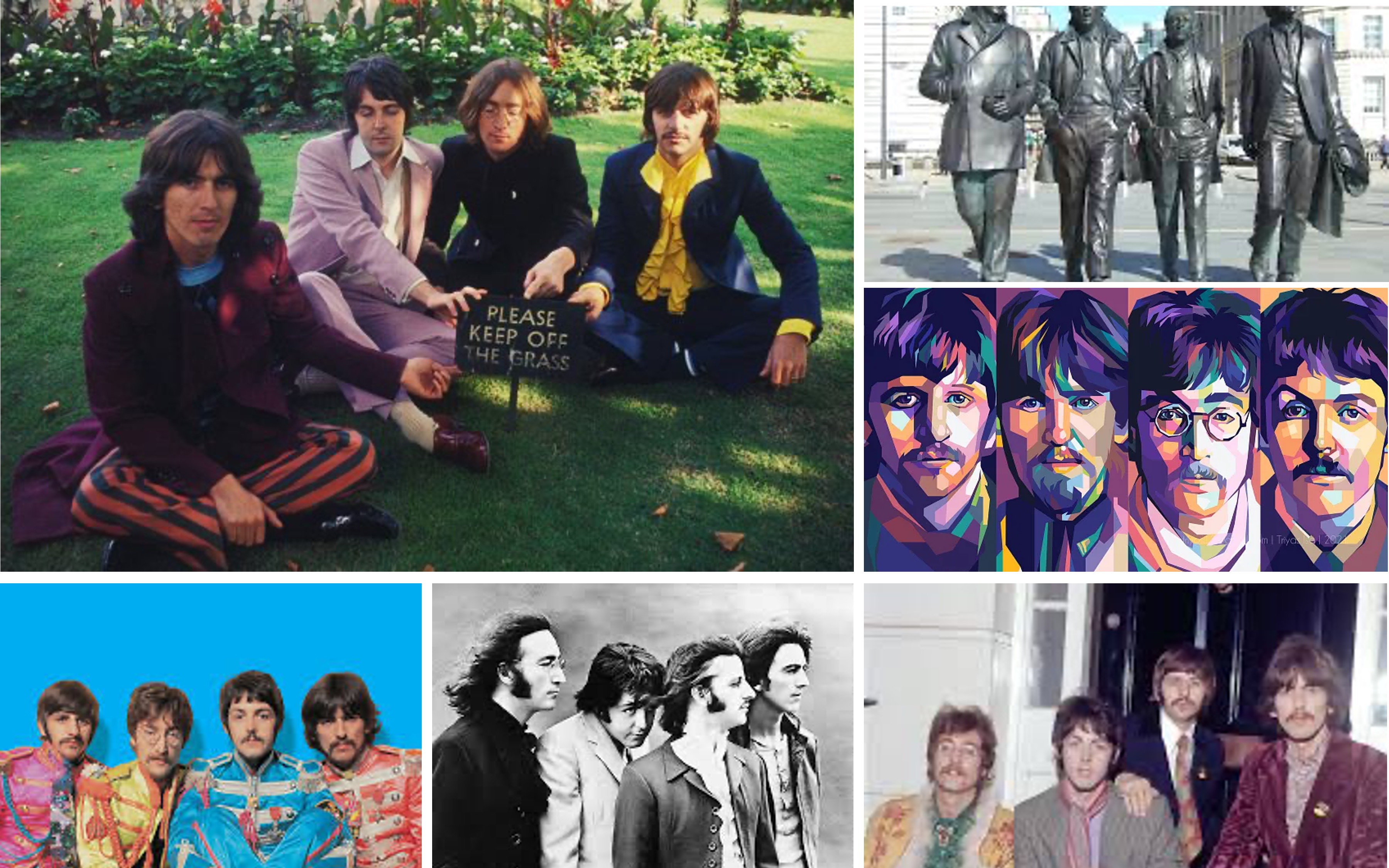
With their new name, ‘The Beatles’ conquered the world, at least musically, the ‘British Invasion’. Countless other English ‘beat groups’, such as Freddie and the DreamersHerman HermitsDave Clark Five traveled to the States. This list could also include the Rolling Stones, the Animals and the Yardbirds, but their music, especially in the early days, was more strongly inspired by the ‘rhythm & blues’ genre. All recordings date from the early 1960s.

The second half of the 1960s saw the emergence of many new styles of music, generally referred to by the term ‘rock’.  Within rock, a division tok place between ‘hard rock’, sometimes also referred to as ‘metal’, and ‘soft rock’, sometimes called ‘folk rock’.  Famous exponents of the former include Steppenwolf with, for example, “Born to be wild” and of the latter the Eagles with “Hotel California. From the turn of the century, the boundaries between pop and rock blurred and we also saw the rise of electronic (dance) music, with all its variations.   Of course, I will come back to all this later.

However, there are also musicians who keep the spirit of rock and roll alive. Some of them have recently formed the group “The Barnstones” and they made a brilliant album. This  super formation is featuring Jimmy Barnes, Slim Jim Phantom, Chris Cheney , Kevin Shirley and Jools Holland’, whose piano is unmistakably present.  Here you listen to the song ‘Johnny’s Gone ‘from this album, accompanied by a fast-paced cartoon. The best rock & roll ever from 2023….

Elvis Presley: ‘King of Music’ brought down by manager and doctor 

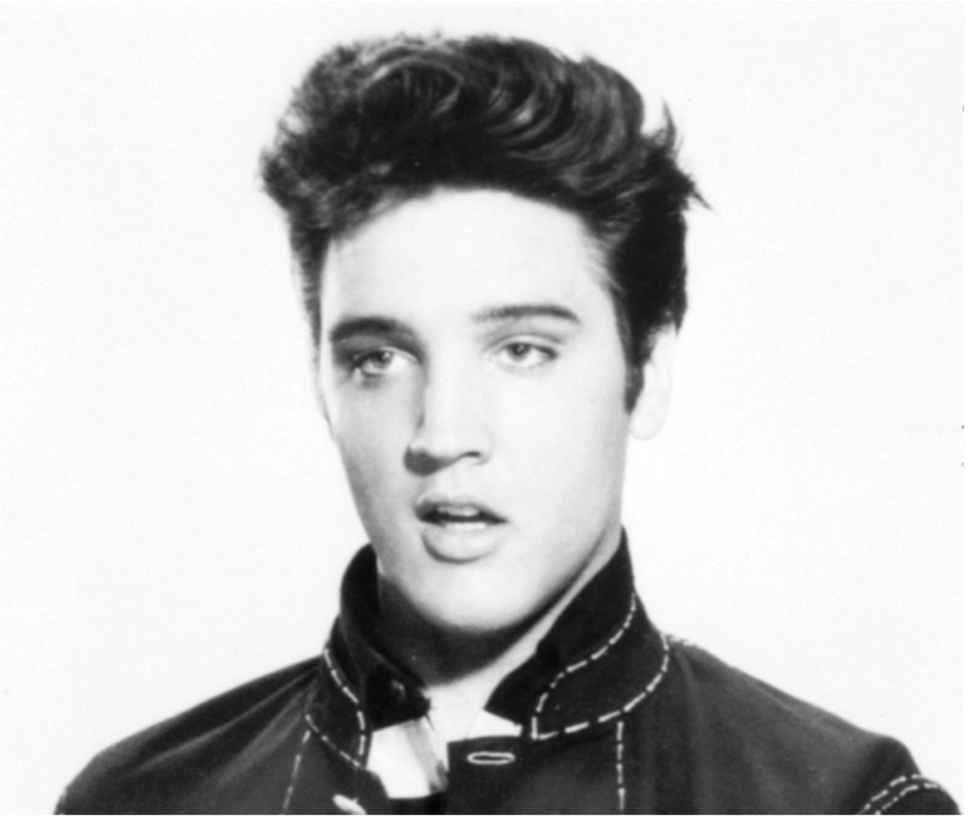
Elvis Presley was born on 8 January 1935 in Tupelo, Mississippi. His family moved to Memphis, Tennessee, in 1948. He learned to play the guitar from a boy next door. He was not a very popular kid at school. This changed after his appearance in the local minstrel show, after friends signed him up for the show.

The start of Elvis’ carrier

At 18the , Elvis went to work as a truck driver and in the meantime, he looked forward to an opportunity to use his talents as a musician. That this was successful was mostly due to coincidence. Elvis had had a song recorded at Sam Phillips’ studio to give as a gift to his mother. Phillips, the owner of the studio was just looking for a ‘white’ boy with a ‘black’ voice. The assistant who had recorded the record remembered Elvis and he, along with two other boys, guitarist “Scotty” Moore and bassist Bill Black, were invited to come and do some singing. Afterwards, the trio would be inseparable for several years. It seemed to be nothing and when the session had already ended, Elvis started singing Arthur Cudrups’ song “That’s all right, mama” (1946). That was the sound Phillips was looking for. The song appeared on local radio and the interviewer asked him what school he had attended in order to reveal his white identity. Phillips now recorded his song with “Blue Moon of Kentucky” on the B-side.

The trio was regularly invited to perform at local clubs over the following months, often as the support act for a more celebrity. At those gigs, Elvis was shaking on his legs with nerves, which led to the girls in the audience starting to scream. Elvis soon became more confident, but he developed the shaking of his lower body into an act in no time. The girls screamed, but the boys hated them out of jealousy. The police often got involved as these boys were waiting for Elvis outside. Later, even the national guard joined the police. He was much less heard on the radio.  The stations broadcasting country & western thought he was a ‘nigger’ and the more ‘rhythm & blues’ oriented stations thought he sounded too much like a ‘hillbilly’.

Breaking through and becoming a celebrity

Heartbreak Hotel became Presley’s first number-one hit, making him a national celebrity. A few weeks later, RCA released his first album “Elvis Presley”.  His raucous vocals had a great influence on then barely known singers like John Lennon and Keith Richards. Their appreciation was countered by the disgust of established newspapers and their readers and television presenters. Yet they all invited him to perform on their shows. Ed Sullivan, for instance, paid $50,000 for three performances, most of it  went to Elvis’ manager, “Colonel” Tom Parker. Half of the audience tuned into these shows to enjoy, scream or giggle at his songs, including, for example, “Blue Suede shoes”, which you can hear now, including the screams on a 1956 recording.

Meanwhile, his second film “Loving You” was released and he was shooting his third film “Jailhouse Rock”. The title song of this film had become a huge success. You can hear this song here.

In the army

On 24 March 1958, Elvis’ tour of duty broke. He had expressed his wish to be treated as an ‘ordinary’ soldier and so it happened.  He spent part of his military service in Germany, where he also met Priscilla Beaulieu, whom he would marry eight years later. She was only 14 at the time. He also got to know something completely different, namely amphetamine. The sergeant generously dispensed it to him and other soldiers because he had noticed that it made his men a lot more energetic.  Meanwhile, Elvis had also bought a new house for his parents and himself, Graceland.

His fans had no chance to forget him.  The record company had the necessary recordings on the shelf, such as “Wear My Ring Around  Your Neck“, “Hard Headed Woman “, “One Night“, “A Fool Such as I” and “Big Hunk o’ Love”. You can hear the latter one here.

Back from service, Elvis immediately dove into the RCA studio, where his best album up to that point, ‘Elvis Back’, was recorded. The album showed Elvis at his strongest, from raw rocker, emotional blues singer to interpreter of romantic ballads.  It includes his best-selling singles, such as Stuck on you“, “Is now or never” and “Are you lonesome tonight?” You can hear the last song here:

A few more albums were released in the 1960s that exemplified the then dominating ‘cosmopolitan’ Nashville country style.  Furthermore, 27 more films were recorded in the 1960s, mostly dubbed ‘dregs’ by critics.  The songs Elvis had to sing on those were invariably put on record and sold well too, but it depressed Elvis that he had no challenging projects on his hands.

Some of his most popular songs – all from films – were “Can’t help falling in love” (1961), “Return to Sender” (1962), “Viva Las Vegas“, the title track of a 1964 film that would only become popular years later, “A little less conversation” (1968) which became a number-one hit as a remix in a Nike advertisement at the World Cup only in 2002. “Crying in the chapel” which had been recorded in 1960 and was still on the shelf, was the only song to reach the top-ten. Most of the above-mentioned songs are fragments from films.  However, the fans wanted to see Elvis sing live.  That happened again from 1968 onwards.

Live again

Everyone thought Elvis should perform again and in 1968 the ‘Come back special’ was broadcast. Presley, tight in leather, appealed to the feelings of the of years gone by.  You can see and hear a medley of three old songs “Heartbreak Hotel”, “Hound Dog “and “All shook up. 

Elvis was uplifted by this performance, but Parker was furious because he  had in mind a sweet-voiced Christmas show. Presley recorded another album not consisting of film music for the first time in eight years, called “From Elvis in Memphis“.  Critics were positive.  For the first time, ‘soul’ took center stage, alongside rock and country songs.  A choice was made to put more emphasis on what was called the Memphis sound (akin to country & western) instead of the standard pop sound. The following songs date from this time and are partly on this album.  The recordings are from Las Vegas and Honolulu: “Burning love“, “The wonder of you”, “Suspicious  minds“, “Kentucky rain“, “Patch it up” and “In the ghetto”, you are about to watch. This protest song jumped that straight to number one on charts.

From his early childhood, Elvis loved gospel songs after his parents took him to performances by the Statesmen Quartet.

Elvis sings gospel

In 1957, he made his first gospel album “How Great Thou Art’. From this, you can listen to “Run on”. No older recording is available, so you can now watch a recording from 1972. 

His style increasingly becoming a mix of soul, rock and country, Elvis had been revived by his recent work. He craved challenging projects. He was invited several times to perform in films that went beyond the character of 1960s sneak peeks.  Manager ‘Colonel’ Tom Parker held it all off; the latter felt that Elvis should cash in on his renewed repertoire, now that it was once again attracting full audiences. In 1973 alone, he was booked for 168 concerts.

Continuing exploitation

From 1973, things went downhill. Elvis had repeatedly overdosed on barbiturates and had been hospitalized in a coma. Elvis abhorred drug use, but when his body doctor Nichopoulos prescribed them to him, he trusted their medicinal effects. In October, his divorce was pronounced. Priscilla had already left Graceland in 1971 with their little daughter Lisa-Marie (who, incidentally, died recently). He did not recover from the blow of the divorce. During his performances, he wore increasingly desperate costumes and screaming girls were long gone. These performances were sometimes toe-curling.  Sometimes Elvis couldn’t get out of his words, sometimes he stood stock-still and didn’t know any lyrics, without an extra dose of pep pills.

Despite all this, six more albums were released between 1973 and 1976, partly with old material. Eight songs from these still made it into the top 10. They include ‘My boy‘ (1975), “Moody Blue” (1976) and -praised and reviled – “Hurt”(1976). This is seen below in one of Elvis’ last performances in 1977.

Elvis dies

On 16 August 1977, his then-girlfriend found him dead the bathroom floor; he was due to fly to Memphis later that afternoon for a gig. Two days later, at was buried in the presence of thousands of fans. Investigations revealed that died of excessive medication. His doctor had prescribed him 10,000 doses of tranquilizers and amphetamines in 1957 alone. This doctor was acquitted of involvement in his death but after all he was removed from office. 

Apart from his doctor, manager, “Colonel” Tom Parker (1909 – 1997) also played a bad role. Friends of Elvis described it as a fraud as Parker was only after Elvis’ money. He managed all business contacts, appropriated 30-50% of all revenues and prevented Elvis from breaking new ground.  He also prevented Elvis from performing abroad, a great desire of his.  Parker, born as Dries van Dijk had moved to the US from the Netherlands without any documentation; he had lived for years on the frayed edges of society as manager of circuses, among other things. Once he became manager of several artists, no one asked for his passport any more. As an illegal with a made-up name, he could not travel abroad. In the 2022 film ‘Elvis’, his relationship with the “Colonel”, played by Tom Hanks, plays an important role. 

After Elvis’ death, the memory of his person and of his music has rightly lived on to this day. The albums are still sold, most of his fortune has been lost through mismanagement.

Elvis; the concert

I’m going to let Elvis shine one more time. “Elvis, the concert” was an extremely successful show that went around the world several times from 1997. The last time, in 2012, the show also landed in Ahoy, Rotterdam. Elvis could only have dreamt of that. How was this possible? Several high-quality ‘multi-track’ recordings of concerts in the early 1970s were available. Elvis’ voice was filtered out off these tracks. He and, the musicians are projected on large screens, cleverly edited and accompanied live by a band, some of which consisted of members of his original backing band. Sometimes you also see the original backing band (just watch the drums), but you don’t hear it. You can see here the recording of the concert in 2002, marking the 25ste anniversary of Elvis’ death[1] . 

Elvis was exploited as a ‘cash cow’ and was given incredible amounts of stimulants and narcotics to do so. He should have been coached and given more rest as well as artistic stimuli. Then he would have been together with Priscilla and Lisa-Marie, and he could have established his fame as the ‘King of Music’ worldwide. It only didn’t happen.


[1] You can watch a full replay of this concert here

The European roots of music in America: 100 years of Country & Western

In this and the following posts, I will discuss the spread of European folk music across the US and its subsequent cross-pollination with African-American music.

The emergence of the Hillbillies

Folk music is from always and everywhere. It was the main form of entertainment in past centuries, especially in rural areas and by poorer people.  Most of us know the often centuries-old songs, sang along and danced to them. When mass migration of Europeans to the US started during the 18de century, migrants took their music with them. Many settled in the eastern coastal region, the Appalachians and later they spread across the southern states. Music groups also emerged and were welcome guests at parties and pubs (honky tonks). In the early years of the 20ste century, the emerging gramophone record industry took notice of this music. Ralph Peer therefore travelled town and country to record the music. It was he who dubbed the inhabitants of the eastern and south-eastern United States ‘hillbillies’, and the name also became established for the type of music they made.

Musicians of the first hour were James Gideon ‘Gid’ Tanner (1885 – 1960), a chicken farmer who played the violin in his spare time in his band ‘the Skillet Lickers’ (‘Cotton-Eyed Joe’) and ‘Jimmie Rodgers (‘Kisses sweeter than wine’), who would be heard for many years to come. So was the Carter Family, a band in which successive generations would alternate until 1957.  Later famous guitarist Chat Atkins was also part of this band for a while. So was Johnny Cash after he married one of the members of the family.

Here, the Carter family sings ‘Wildwood Flower (1928)

The idealization of country & western life

In addition to the burgeoning record industry, the idealisation of the cowboy life captured in the growing number of westerns helped to popularise the genre. As a result, the term ‘hillbilly music’ was replaced by ‘country & western’ in the 1940s.

In the clip below, Patsy Montana sings ‘I want to be a cowboy’s sweetheart’ (1939) along with the Texas Rangers.

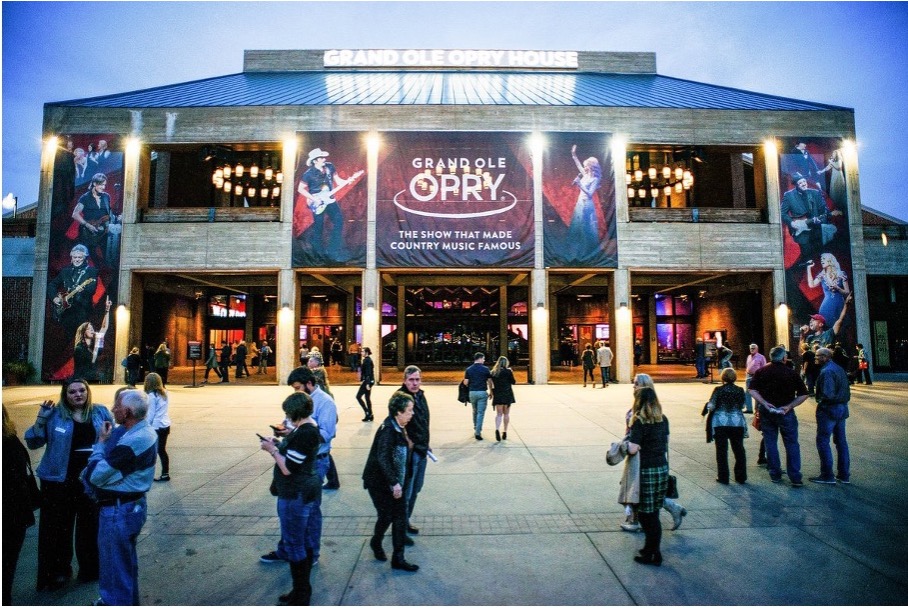
By now, the city of Nashville had become the hub of country & western, not least because many programs were broadcasted live from the Grand Ole Opry theatre, which, as the years progressed, became an arena with more than 4,000 seats (see title photo). Performances at this theatre launched many an artist and were also intended to preserve the traditional character of country & western. As a result, the genre has long remained the music of the conservative part of the American population. 

Country & western could be heard in every pub in the 1930s, and because of the volume, a (old) piano was often added a to the instrumentation that consisted of fiddle, guitar, dobro (a kind of steel guitar) and banjo or mandolin. It was also often referred to as honky tonk music. Bobb Wills (‘San Antonio Rose’), Ernest Tubb and Hank Williams sr were leading artists of this era. 

Here Hank Williams senior sings ‘Hey Good looking’

Preserving the traditional image of country and western music from the 1930s to the present day was the main aim of the CMA (Country Music Association) and its temple, the Grand Ole Opry.

At the other side many artists drew inspiration from other musical genres in search of their own sound.  The CMA was highly critical of this. For this reason, Billl Haley and somewhat later Elvis Presley were denied access to the theatre because of their emerging ‘rockability style’, one of these first ‘crossovers’ which laid the foundation for ‘rock ‘n roll’.

Here’s a performance by ‘rebel’ Bill Haley and his Comets: ‘Rock around the clock tonight’.

Back to ‘blue grass music’ of the 1940s

‘Excesses’ like this regularly led to a reappraisal of the ‘roots’ of country & western.  The ‘blue grass’ music of the 1940s, which would retain varying degrees of popularity for decades. Its founder is Bill Monroe (1911 – 1996) and his band The Blue Grass Boys, named after the nickname of the state of Kentucky, ‘Blue grass state’. This music stands out for the front singer’s high-pitched voice and perfect harmony singing with the background choir. The shrill voice initially had to compensate for the absence of a microphone. Another famous band was the Osborn Brothers (‘Rocky top’).

Here you can hear Bill Monroe and the Blue Grass Boys in ‘Blue moon of Kentucky’, a recording from 1975, the song had obviously been played for many years by then. 

The Nashville sound

The second crossover came from the capital of country & western itself, namely the record industry. During the 1950s, it saw with sorrow the popularity of rock ‘n roll and rhythm & blues grew. A team including Chat Atkins was hired to make country & western smoother. The steel guitar and fiddle gave way to background choirs and strings. But the great success of this approach was mainly due to the sweet-voiced Jim Reeves, Don Gibson (‘Oh Lonesome me’) and Patsy Cline. 

Here, Jim Reeves sings ‘He’ll have to go’. 

Soon there was talk of the “Nashville Sound”, which, at least for the moment, found favour with the country and western establishment., the Nashville sound was a great success.  However, the musician Atkins, who co-founded it, was increasingly unhappy with it because any move towards a jazzier sound was taboo. When asked to describe what was so typical of the Nashville sound, he rattled the change in his pocket and said, “That’s what it is. It’s the sound of money”.  The success came to a sudden end when Jim Reeves and Patsy Cline both died in plane crashes and music from the United Kingdom started to take the US by storm in the 1960’s.

Another step back to the ‘roots’

Many country & western fans felt ill-served by the slick Nashville sound on the one hand and the songs of the Beatles and their peers on the other. This again opened the way to steps back towards ‘roots’. Responsible for this were artists like Wynn Stewart, Buck Owens, Bob Wills and Merle Haggard. Their so-called ‘Bakersfield sound’ (named after Bakersfield in California), was in keeping with the rawer honky tonk of the 1940s. Bakersfield is an area where countless migrants had settled who had been expelled from the Midwest, which was ravaged by dust storms (‘Dustbowl’). The Bakersfield sound would resonate into the 1970s and helped form the basis of ‘folk rock’. But more on that later.

Here, Merle Haggttt and Bob Wills sing the classic ‘San Antonio Rose’.

The Nashville sound had by no means disappeared after the slump in the 1950s. The style was now called ‘countrypolitan’ and a host of artists, such as Lynn Anderson, Charly Pride, Donna Fargo, Ray Stevens and Chystal Gayle can be counted among them.  From the 1970s onwards, to this list can be added, among others, John Denver (‘Annie’s Song’), Kenny Rogers (‘Lucille’) and, from the 1990s onwards, Garth Brooks and the Dixie Chicks. 

All these artists contributed to stretching the gap between traditional country & western and other styles of music ranging from rock, soul, funk and, in the 1990s, hip-hop. The country & western watchdog at the ‘Grand Ole Opry’ watched suspiciously but could not do much against the artists who also topped the exclusive country & western lists. However, the Dixie Chicks’ popularity ended abruptly when, during a performance, they criticized President George W. Bush for his attack on Iraq. Country & western radio and television stations promptly stopped playing their songs.

Here the song ‘Cowboy take me away’ by the Dixie Chicks (2006), which still has country & western influences in terms of content and instrumentation, but whose melody can hardly be classified as such anymore.

The question therefore was at which point a song no longer belongs to the country & western genre and can be banned from dedicated radio stations and charts. Enough test cases of singers who could be described as ‘country stars’ like Shania Twain, Tayler Swift, Carrie Underwood and Maren Morse presented themselves in the early 21ste century. Their genre was called ‘country pop’.

I’ll limit myself to one of Tayler Swift’s first songs ‘Tim McGray’ (2006). Country or not?

‘Americana’ and other styles

Institutional pressure made a return towards more ‘traditional’ country & western music inevitable for less fortunate singers. This resulted in musical styles designated by the terms ‘folk’, ‘Americana’, ‘country folk’ and ‘country rock’. An additional feature was that some musicians who could be counted in this category also had a decidedly left-wing political stance, which did not help their popularity in country circles. Examples include Woody Guthrie, Pete Seeger, Donovan, Joan Baez and Bob Dylan. 

George Strait is still closest to the traditional country & western style, and you can hear his best-known song ‘Amarillo by morning’ here (a 2016 recording).

More along the lines of ‘country rock’ goes music by Gram Parsons, also a member of The Byrds and the Flying Burrito Brothers, also called the father of country rock. With Emmylou Harris, Gram has sung a series of duets. The Eagles also fit into this category.

An example of unadulterated ‘country rock’ is the Charlie Daniels Band, active from 1950 to 2020, the year of Charlie Daniels’ death. From this band, I showcase here its best-known song ‘The Devil went down to Georgia’ (1979).

Country & western has had a huge influence on contemporary music in the US, despite or perhaps because of the many crossovers and the fact that even the music of contemporary performers of ‘traditional’ country & western sounds very different from that of the Carter family or the Blue Grass Boys.  

Very different?  Again, not all.  There are several groups that draw full houses with their precise renditions of traditional country & western music. One such group is again a whole family with supporters: the Petersens.  They too have made their hobby their profession and with their enthusiasm they blow all the dust that may have settled on old songs. 

Here are the Petersens with Rocky Top, an authentic blue grass number from the 1940s. Incidentally, the Petersens also sing very different genres.  I have previously featured their rendition of the complete Bohemian Rhapsody on their traditional instrumental. That one also sounded like a bell.

Forever Young: ‘Weltschmerz’ from the 1980s

Alphaville in 2023

This post is focussing at one band and one song: ‘Forever Young’ by the German group Alphaville was a hit 40 years ago and it is again today.

In the 1980s, many young people were pessimistic about the future. Unlike for the ‘baby boomers’, job opportunities were downright poor. People were talking about ‘lost generation’ for a reason.  But the state of the world was also unstable. These were the years of the ‘cold war’ and many were afraid of ‘the (nuclear) bomb’. Alphaville’s big hits should therefore be seen against this background. 

Look and listen here at the ‘official version’ of ‘Forever young’. It starts with footage of a church that people apparently used as a hiding place:

In 1981, (singer) Marian Gold (stage name for Hartwig Schierbaum), Bernard Lloyd (Bernard Gössling) and Frank Mertens (Frank Sorgatz) formed the band Alphaville, initially called ‘Forever young’. They were joined by fellow members that changed over time. The name of the band was taken from the science fiction film Alphaville from 1965 by Jean-Luc Godard.

The band spent the necessary hours in a primitive studio, where cheap synthesizers and a drum computer were the main instruments. They sent recordings of which would later prove to be the three biggest hits in the band’s existence to several record companies: ‘Big in Japan’, ‘Forever young’ and ‘Sounds like a melody’. To their surprise, they received three offers. These titles all feature on the band’s 1984 debut album.

The band still exists, but Marian Gold is the only remaining member from the first hour. He was born in 1954 in Herford, Germany. As a young student in Berlin, he joined an artists’ collective, Nelson Community, where he formed the band Chinchilla. It also included Bernard Loyd. As a singer, Marian stands out for his multi-octave vocal range. 

In the years following their successful debut album, several other albums followed, most of which were well received but rarely containing songs that reached the absolute top. The most recent album (2022) is ‘Eternally yours’ and harks back to old success songs played in a symphonic arrangement. The band presented this version in a concert tour, along with a chamber orchestra. The last song I am featuring on this exploration is a recording of the symphonic version of Forever young. 

Before, I will delve a little deeper into the background of the song ‘Forever young’, here are the lyrics and their Dutch translation:

Alphaville: Forever young’

Let’s dance in style, let’s dance for a whileHeaven can wait, we’re only watching the skiesHoping for the best but expecting the worstAre you gonna drop the bomb or not?  Laten we in stijl dansen, voor een tijdje dansen
De hemel kan wachten, we bekijken alleen de lucht
Hopend op het beste, maar verwachtend het ergste
Zul je de bom laten vallen of niet
Let us die young or let us live foreverWe don’t have the power but we never say neverSitting in a sandpit, life is a short tripThe music’s for the sad men Laat ons jong sterven of voor altijd leven
We missen de kracht, maar nooit zeggen we nooit
We zitten in een kuil, het leven is een korte reis
De muziek is voor de droevige mensen
Can you imagine when this race is wonTurn our golden faces into the sunPraising our leaders, we’re getting in tuneThe music’s played by the, the mad man Kun je je voorstellen, na winnen van de wedstrijd
We keren onze gouden gezichten keren naar de zon
Terwijl we onze leiders prijzen stemmen we af op
de muziek gespeeld door dwazen.
Some are like water, some are like the heatSome are a melody and some are the beatSooner or later, they all will be goneWhy don’t they stay young? Sommige zijn als water, sommige als de hitte
Sommigen zijn de melodie, anderen het ritme
Vroeger of later zullen ze allemaal vertrokken zijn
Waarom blijven ze niet jong
It’s so hard to get old without a causeI don’t want to perish like a fading horseYouth’s like diamonds in the sunAnd diamonds are foreverHet is zo moeilijk om zonder doel oud te worden
Ik wil niet sneuvelen als een verzwakkend paard
De jeugd lijkt op diamanten in de zon
En diamanten blijven altijd bestaan
So many adventures couldn’t happen todaySo many songs we forgot to playSo many dreams swinging out of the blueWe’ll let ’em come true Zo veel avonturen konden vandaag niet gebeuren
Zo veel liedjes die we vergeten zijn te spelen
Zo veel dromen, die komen uit het niets
We laten ze allemaal uitkomen
Forever youngI want to be forever youngDo you really want to live forever?Forever, and everForever youngI want to be forever youngDo you really want to live forever?Forever, and ever Voor altijd jong, Ik wil voor altijd jong zijn
Wil je echt voor altijd leven?
Voor altijd en voor alle tijdenVoor altijd jong
Ik wil voor altijd jong zijn
Wil je echt voor altijd, leven?
Voor altijd en alle tijden.

Like many peers, the members of the band were gloomy about the world they lived in. Their first song ‘Big in Japan’ was about drug addiction of young people in 1980s Berlin.  ‘Forever young’ is focusing on the cold war. The threat that one of the world powers will use an atomic bomb and start a nuclear war widespread in those days. The song is about the resulting feeling of helplessness: ‘Hoping for the best but expecting the worst: Are you going to drop the bomb or not?” The song expresses little faith in political leaders.  In the original version, this was even stronger, but under pressure from the record company, the group made the lyrics less explicit: ‘Little fascist lady she loves you so. Following her leader, she’s getting in tune the music’s played by the madmen’ became ‘Turn our golden faces into the sun, praising our leaders, we’re getting in tune the music’s played by the mad man’. According to Marian Gold, the least successful line of the whole song.

The song has a strong allegorical character, and the lyrics are almost poetic. Its message is clear: The fear of dying from the bomb deprives young people of the will to live. What they want is a view of the future: ‘Youth’s like diamonds in the sun, and diamonds are forever’.

In an interview, Marian Gold said that in the first years of the band’s existence, none of the members could really play an instrument well. Therefore, they felt not good enough to play concerts, which they did on occasion with a lot of synthesizer support. ‘We felt more like studio rats’. Gradually this changed, also thanks to the arrival of new band members with ample stage experience.

The song’s fame was helped by the fact that other artists also included it in their repertoire. One of the most famous of these is by Laura Branigan, who ensured that it also received high praise in the US. 

The song ‘Forever young’ is in the repertoire of countless (wind) orchestras and choirs.  I show an example of both.

First, a recording of the Kreisorchester Borken from 2022. It is a filmed version of the studio recording for a CD of the orchestra.

Next, a recording by the Spanish choir Grupal from 2020.

The song has also been used in several movie pictures and TV shows. The producers of the popular US television series The O.C. (O.C. stands for Orange Country) had asked the Australian ‘Youth group’ to record the song as the title track. This resulted in another top spot on the charts in both the US and Australia. In the Netherlands, the song featured continuously on the NPO Top 2000.  The highest place it reached was 68ste in 2003; in 2022, it was at position 302.

Alphaville itself has also repeatedly released new versions, including a dance version.  The latest version dates from 2022. With it, the band toured Germany together with a chamber orchestra. For this occasion, a new album was released, playing a series of the group’s successes in a symphonic arrangement. I conclude with a recording of this symphonic version.  This version was recorded on WDR’s (also) 40-year Schlagerjubiläum.

Prog rock now (Prog rock 1965 – 2025 part 10)

De Japanse formatie Koiai

In the final installment of this series, I will demonstrate that progressive rock is alive and well. To do so, I will dwell on bands active in the post-2020 period. Some of these are groups and soloists you met in earlier installments; new groups are also featured. Their selection is not random; all were among the winners at the annual progressive rock awards after 2020.

The characteristics of post progressive rock that I mentioned in the eighth episode almost all apply to the songs you are about to hear. Integrating elements of other styles is perhaps the most important feature.[1]

Fish – Garden of Remembrance (from album Weltschmerz, 2020)

Singer Fish (Ferek William Dick) was known for his poetic lyrics in his early days with Marillion. The spoken word became increasingly central in his later songs. You will notice this in the song ‘Garden of Remembrance’. This is a subdued and melancholic song about dementia causing loss of connection with a loved one. ‘Garden of Remembrance’ is a metaphorical reference to a place where memories are preserved. The subtle accompaniment music adds impact to the lyrics. You can listen to this song here: 

Porcupine Tree: I drive the hearse (from album Closure / Continuation2023)

This melancholic and introspective song revolves around loss, goodbye and emotional pain, with a sense of resignation and reflection. The lyrics describe a deep personal bond that is broken, possibly through death or the end of a relationship. The metaphor of driving a hearse symbolizes the grief of the person who feels burdened by the final goodbye. 

You can listen to this song here: 

Haken : Nightingale (from album Fauna, 2023)

This complex song tells a story of an inner journey: a search for balance between darkness and light, chaos and order. A nightingale is often associated with beauty, inspiration and overcoming adversity.

Showcasing the group’s technical mastery, the song is a mix of heavy riffs, melodic passages and dynamic turns. You can listen to this song here: 

Steven Wilson: The harmony codex (from album The harmony codex 2023)

Surreal yet introspective, the song explores the power of art to create harmony in a chaotic world. It invites the listener to reflect on the relationship between order and chaos and transcending it through creativity. It is an experimental and atmospheric track that combines elements of progressive rock and electronic music. It is layered, with a mix of compelling melodies, complex structures, and it gives a cinematic feel. 

You can listen to this song here: 

Frost: Skywaving (from the album Life in the wires, 2024)

The text explores themes of communication and connection, referring to similarities and differences in ‘wavelengths’, evoking a sense of nostalgia and longing. The track combines Jem Godfrey’s airy vocals, lively keyboard parts, solid bass lines and complex drum patterns.                                                                                                                                                                

Musically, “Skywaving”, with its layered arrangements and dynamic transitions, belongs to the neo-progressive genre, with influences from electronic music and pop rock. 

You can listen to this song here: 

Big Big Train: Love is the light (from the album The likes of us, 2024)

This song explores feelings of alienation and feeling like an outsider. It highlights the search for connection and acceptance and how love serves as a guiding light in times of uncertainty. 

The song begins with a soothing violin intro, followed by rich melodies and interplay typical of Big Big Train’s progressive rock style. Alberto Bravin’s vocals add a fresh dimension to the band’s sound. 

You can listen to this song here: 

MEER – Golden Circle (from the album Wheels within wheels, 2024)

Golden Circle describes a protagonist struggling with inner turmoil and seeking meaning and solace in fleeting moments of euphoria. The song explores themes of longing and the search for meaning. It combines elements of progressive rock and pop, with innovative guitar chords and a dynamic build-up. Knut and Johanne’s vocals together create a compelling atmosphere that enhances the emotional charge of the song. 

You can listen to this song here: 

Geordie Greep – The New sound (from the album: The new sound 2024)

This song explores themes of ego, failure and the human need for recognition. It acts as a metaphor for “the museum of human suffering”, with the protagonist focusing on his pain and the desire to be remembered. ‘The New Sound’ mixes progressive jazz rock with unexpected twists and turns, alternating well-behaved melodies with subcutaneous tension. This combination reflects the balance between control and chaos explored in the song. 

You can listen to this song here

Transatlantic: The world we used to know (Forevermore 2021)

In the previous episode, I already featured some songs by supergroup Transatlantic. In 2021, the group outdoes itself once again by releasing two albums, partly with the same songs but in a different performance. The albums are: The breath of life and Forevermore. Together, they are referred to as ‘The absolute universe’. The epic song ‘The world we used to know’ expresses nostalgic longing for earlier times. It evokes images of a world once familiar and familiar but now changing, and highlights the search for meaning in this new reality. 

Characteristic of Transatlantic is its combination of complex structures and melodic passages. It contains impressive instrumental parts and harmonies reminiscent of classic progressive rock, with a modern twist. 

You can listen to this song here: 

Encore: Japanese super formation Koiai

Japanese guitarist Li-sa-X has been posting her music on YouTube since the age of 7 and in 2019 at the age of 14, she formed her own band, Koiai (close love). This consists of Li-sa-X, Hazuki and Rina who sings. They share their preference for complex progressive rock with jazzy undertones. You listen to this trio on the song ‘Looking up to you’ (1922), a song written by Li-sa-X.


Shortly after recording this song, Rina decides for another career and Kotono succeeds her. The band was further expanded with Kanato Sato, one of the world’s top drummers despite her age. Wakazaemon becomes bassist.
You can watch and listen to the song A new Picture (2023). It could be the soundtrack to a rollercoaster ride. The contrasting atmospheres are breathtaking and a tour de force for the members of the band.


It is definitely worth listening to two other recent songs by this group as well: One Way or Anotherr and Automatic.

Remarkably, many post prog rocksongs are contemplative in nature; perhaps one of the biggest differences between classic and contemporary prog rock.

This concludes this series. I hope you have become familiar with characteristics of progressive rock: often longer songs than usual, parts varying in tempo, measure and timbre, virtuoso playing, serious subjects ranging from mythological, fairy-tale, socially critical and introspective lyrics, and yet also a wide variety. With groups like Marillion, Porcupine Tree and Transatlantic, the emphasis is on melody and atmosphere; groups like Dream Theater, Haken and Rush explore the frontier with hard rock and metal.  You rarely find prog rock songs on charts; the ‘fan-base’ is too small for that. Concerts, on the other hand, are almost always sold out. 

Account of the series

To write this series, I used the English version of Wikipedia, articles by Daniel van Auken and others in Medium, the magazines Oor and Uncut, and Groen and Mourits’ book “Beatles onthoud die naam”. Occasionally, ChatGPT offered help in structuring information.


[1] The description of individual songs is taken from Wikipedia, various editions of the ‘Prog Report’ and Chat GPT.

Forerunners: Rick Wakeman, Peter Gabriel, Mike Portnoy, and Steven Wilson (Prog rock 1965 – 2025 part 9)

In the development of progressive rock, several musicians played an important role beyond the creative power of their bands. In this episode, I briefly consider four of these pioneers: Rick Wakeman, Peter Gabriel, Mike Portnoy and Steven Wilson. In doing so, I looked at their qualities as musicians, the extent to which their compositions broke new ground and their influence on other bands.

Rick Wakeman

Rick Wakeman was born in May 1949. In his younger years, he took several music courses and played in several bands. 

Wakeman was a member of progressive rock band Yes for 11 years between1972 and 2004, spread over five periods. In the remaining years, he undertook numerous solo projects and performed with the folk-rock band Strawbs. 

In 1972, he made the albums ‘Fragile’ and ‘Close to the edge’ with Yes. The latter album is considered a leading progressive one. Here you listen to the song ‘Get up, I get down’, in which Wakeman plays a church organ. 

Wakeman’s first three solo albums – all concept albums – are the best-rated recordings of his career: ‘The six wives of Henry VIII’ (1973), ‘The myths and legends of King Arthur'(1974) and ‘The knights of the round table’ (1975). You can listen to an excerpt from the second album here, including choir and orchestra.

That Wakeman was able to break through with his series on King Arthur was coincidental. Most viewers to the BBC had been gearing up to watch Andy Warhol’s motion picture ‘Blue movie’.  When this controversial film was cancelled at the last minute, viewers switched en masse to another net which was broadcasting a preview of King Arthur. Rick Wakeman commented: “Suddenly it seemed as if the whole country had discovered my music … it was a tremendous break.”

This is followed by a lesser period in which Wakeman hosts a TV show, composes film music but is also plagued by the effects of excessive drinking and smoking. He has constant financial problems and had to sleep on a bench in Kensington Gardens for a while. In the 1980s, Wakeman writes soundtracks for films, including the official 1982 FIFA World Cup aftermovie. He tackles all the musical jobs that he can get: In 1986, he released a solo album of new age music titled ‘Country Airs’. This contains ‘landscape music’, piano solos inspired by walks through the countryside. He also produces several albums of religious music. 

During his fourth stint with Yes, he and the group made two albums ‘Keys to ascention 1’ (1996) and ‘Keys to ascention 2’ (1997). He then works on new solo album ‘Return to the centre of the earth’ that would become his highest-grossing album in the 1990s, reaching a top 10 position in the UK. You are listening here to a recording made in 2005 during a performance in Cuba at the invitation of Fidel Castro.

Between 2002 – 2004, Wakeman toured with Yes – the fifth and last gig with the group. In next period, he performs in many places. The King Arthur trilogy plays an important role in this. He expands these albums and performs concerts worldwide. In 2023, he performs twice at the London Palladium, where he plays the complete trilogy.

In 2020, he returned to progressive rock with the all-instrumental album The Red Planet. Here, he performs with the English Rock ensemble, one of the occasional formations he has played with more often. 

Previous prog rock albums he has made as a solo project include No Earthly Connections (1973), Into the future (2000) and Out there (2003)

A prolific composer, Wakeman has a total of 108 albums to his credit. Only a limited number of these albums are commercial successes. 

In the early 1970s, Rick Wakeman was voted the best keyboard player in the popular genre along with Keith Emerson (of Emerson, Lake and Palmer). He went on to receive numerous awards for his virtuoso playing of the piano and other keyboards. In 2022, he received honorary membership of the Royal College of Music from the hands of the current King Charles. He is a Freemason and a member of the Conservative Party.

Finally, you can listen to a live performance during the Starmus festival, together with the English Rock Ensemble with special guest Brian May (Queen). A cross-section of Rick Waveman’s compositions will be played. 

Peter Gabriel

Peter Gabriel is an English singer (1950), musician and human rights activist, who until 1975 was a member of the band Genesis, for which he then wrote most of the lyrics. He attracts attention because of his theatrical announcements of the songs and his dressing up between songs.

Gabriel used the time after leaving Genesis to learn to play the piano and to write songs. His first solo activities involved the release of four albums, Peter Gabriel 1 to 4. Each album yielded at least one hit. ‘ Solsbury Hill’(1977) is about a spiritual experience of Gabriel at the top of a hill in Somerset. Gabriel himself says of it: ” It is about being prepared to lose what you have for what you might get”. Almost the entire song is written in 7/4 measure, which enhances the sense of (inner) struggle. From the second album, the song ‘Mother of violence’ (1978) stands out. This is an ode to rural compared to urban life. Gabriel sings the song, accompanied exclusively by piano and guitar. You can listen to it here:

Gabriel sees the third album as an artistic breakthrough. He gets interested in African music and experiences the value of a drum machine. Both this album and the song ‘Games without frontiers’ received high praise in the UK and the US. The song compares international diplomacy to a then-famous (children’s) game.  The song “Shock the monkey” (1982) on his fourth album was also successful. The monkey is a metaphor for feelings of jealousy. After each album, he made extensive tours, summarised on his live album ‘Plays live'(1983).

The next album was ‘So’ (1985), his best-selling album reaching top ten positions in both the UK and the US. So did four of the songs that appeared as singles: ‘In your eyes’, ‘Sledgehammer‘, ‘Big time’ and ‘ Don’t give up’ (featuring Kate Bush). Sledgehammer was a winner. Gabriel received the Brit Awards for best male solo artist and was nominated for four Grammy Awards. You can listen to ‘In your eyes’ here.

The following album ‘Us’ (1989) is introspective in nature.  The song ‘ Digging in the dirt’ refers to his psychotherapy, ‘ Come talk to me’ is about his struggle to get through to his daughter and ‘Blood of Eden’ which deals with relationship problems in general. This album garnered three Grammy Awards, including one for best music video. His next studio album,’Up’, took 10 years to release. During that time, he was touring or doing one of his many side gigs.

Peter Gabriel worked on his latest album to be named O/I for 21 years, interspersed with several worldwide tours and numerous other activities. When the album was released in December 2023, most of the songs had already been released as singles during the year: ‘ Panopticom ‘(++), ‘The court’(+), ‘ Playing for time’ (+), ‘Daddy long legs’ (+), ‘Four kinds of horses'(+++), ‘Road to joy’(_), ‘ So much, ‘Olive tree’ (++), ‘Love can heal’(++), ‘ This is home ‘(++), “ And still’ (+), and ‘Life and let life’ (+). You can listen to Four kinds of horses’ here 

Gabriel has written the soundtracks for several film, such as Birdy (1984) and The last temptation of Christ (1988), which is about the struggle between Christ’s humanity and divinity. In this film, Gabriel uses musicians from WOMAD, the World of Music, Arts and dance. This is an international arts festival, which he founded in 1982 and that still exists.

Peter Gabriel has won a host of awards during his lifetime, including six Grammy Awards, for best singer, songwriter, creator of music videos and of film scores. 

A prize of a very different nature was the Man of Peace award, presented to him at the seventh World Summit of Nobel Prize Laureates by former Soviet Secretary-General Mikhail Gorbachev.

From 1986, Gabriel organized Amnesty International’s Human rights concerts. From his long-term commitment to human rights, he founded Witness, an institution that trains activists in using video and internet technology to expose human rights violations.

Peter Gabriel’s life spans the entire prog rock era and developments within it have left a mark on his music. According to Rolling Stone journalist Gregg Greed, Gabriel is above all an “art-rock innovator, soul-pop craftsman and world music ambassador”. 

Mike Portnoy

Mike Portnoy (born 1967) is an American musician. He is best known as a drummer. His father was a DJ and his record collection familiarized Portnoy with various musical styles. At school, he took lessons in music theory; he taught himself how to play the drums. With a scholarship, he was admitted to the Berklee College of Music in Boston. Here he met John Petrucci and John Myung and together they formed the band Dream Theater, for which he would write most of the lyrics. In 2010, he swapped Dream Theater for the band Avenged Sevenfold. When the latter did not renew his contract, he wanted to return to Dream Theater, but this band meanwhile had another drummer under contract.  It was not until 2023 that Dream Theater and Portnoy were reunited. 

Portnoy has performed numerous solo projects, formed new bands and played in others. These are mostly progressive metal bands, the genre that suits him best. I mention the so-called Liquid Tension Experiment, with which he made three albums, partly together with former Dream Theatre colleague John Petrucci. You can listen to the song ‘Acid Rain’, performed live in Los Angeles in 2007, here.

Portnoy had been walking around with the idea of organizing a package tour in which three or four prog rock bands would participate each time. In 2008, this succeeded for the first time and the tour was named ‘Progressive nation’. He kept this initiative going for a few years. Participating bands included Dream Theater, Opeth, Beardfish, Anathema, Transatlantic and many others. In 2014, the first instalment of ‘Progressive nation at sea’ took place, a four-day cruise from Miami. Later, this sailing festival would be renamed ‘Cruise to the edge’ and it still exists.

Transatlantic

In the list of activities, Portnoy’s participation in the international superband Transatlantic should not be missed. This is an occasional formation formed in 1999 by four virtuoso musicians from renowned bands. The intention is to occasionally make an album and do some performances at the highest level imaginable. The members are, besides Mike Portnoy, Neal Morse, Roine Stolt and Pete Trewavas. During almost all tours, Daniel Gildenlow plays keyboards. The first album ‘SMPT:e’ was well reviewed; Robert Taylor of AllMusic speaks of “some of the best progressive rock music ever written”. Here you listen to the 31-minute track ‘All of the above’, a paragon of prog-rock. 

The album ‘Bridge across forever’ (2001) followed a year later. This album consists of four songs: ‘Duel with the devil‘, ‘Suite Charlotte Pike’, ‘ Stranger in your soul ‘ and the relatively short title track ‘Bridge across forever’. After this, the group took a break until 2009 and in that year the band released the album ‘The wirlwind’, which contains only one song, not coincidentally called ‘The wirlwind’. After another break, the album ‘Kaleidoscope’ follows in 2014, which is named ‘album of the year’ at the annual progressive music awards. You can hear the title track here:

In 2021, the next album ‘The absolute universe’ was launched. You can read more about this album in the final instalment of this series.

Steven Wilson

In 2017, ‘The Daily Telegraph’ described Wilson as “probably the most successful British artist you’ve never heard of”.  So, there is still something to discover. Steven Wilson is an English musician (born 1967). He has formed several bands and made solo recordings. In the 1980s, Wilson and his friends experimented with recording on cassette tapes, which they then sold.

His first solo album is ‘Insurgentes’ (2008). As an introduction, you can listen to one of its songs  made during a live performance in Frankfurt

At this time, Wilson is working on his eighth solo album to be released in 2025. It will focus on the feelings evoked by seeing the earth from space, ranging from overwhelming beauty to awareness of its insignificance given the vastness of space.

In 1986, Steven Wilson launched two projects with which he would make a name. He formed the band Porcupine Tree, an experimental, psychedelic band playing progressive rock, at first heavily inspired by Pink Floyd. In fact, fans would later call Porcupine the Pink Floyd of the 1990s.

Again, Wilson initially releases recordings of the band on cassette tapes; however, a contract with a record company is not long in coming. The band’s first album is ‘Arriving somewhere but not here’of which you can find a live recording here:

Porcupine Tree has grown into a well-known and esteemed rock band, which has performed worldwide.

The second project is No-Man. First a solo project and later a lifelong collaboration with Tim Bowness. Joined by changing session musicians, they also play progressive rock but mix it with synth pop, jazz and dance rhythms. The only genre avoided is hip-hop, which Wilson says he hates. The aim is to make mostly art-pop.

In 1989, No-Man released its first commercial single “The girl from Missouri”.  The first album ‘Flowermouth’ (1994) contains a wide range of styles. On the song ‘Teardrop Fall’, you can hear this very well. 

In 2013, Wilson’s third solo album is released, ‘The raven that refused to sing (and other stories)’ You can listen to a 2013 live recording of the title track here. 

This album throws high marks. The Prog rock report ranked it second among all progressive rock albums released since 2000. The title track is used in the trailer for the 2014 film Pompeii.

The album ‘Fear of a blank planet is Porcupine Tree’s best-sold and best-reviewed work. Here is a live recording of the title track

After touring in 2010, Wilson disbanded Porcupine Tree to devote himself entirely to solo projects. Incidentally, the band was reconstituted in 2021. One of these projects is the formation of a new band, Blackfield, together with Israeli musician Aviv Geffen. This duo is making six albums of what they call “melodic and melancholic rock”

From the first album, Blackfield I (2005), you can hear Pain here

You can also listen to another song, Jupiter, from Blackfield IV (2012).

The main difference with Porcupine Tree is that Blackfield mainly plays short songs with an appealing melody and a simple structure. More pop than progressive rock, in other words. My impression is that Steven Wilson did find it appealing to indulge in this genre for a change. The contribution to the six albums by Wilson and Geffen varies due to the time their other activities require. In all cases, production is in Wilson’s hands.

Wilson is a successful producer and in this role, he has worked with the likes of Elton John, Guns N’ Roses, XTC, Opeth, Pendulum, Yes, King Crimson, Fish, Marillion, Black Sabbath and Anathema.