
Folk rock, country rock & blues rock (History of rock after 1960 2/6)

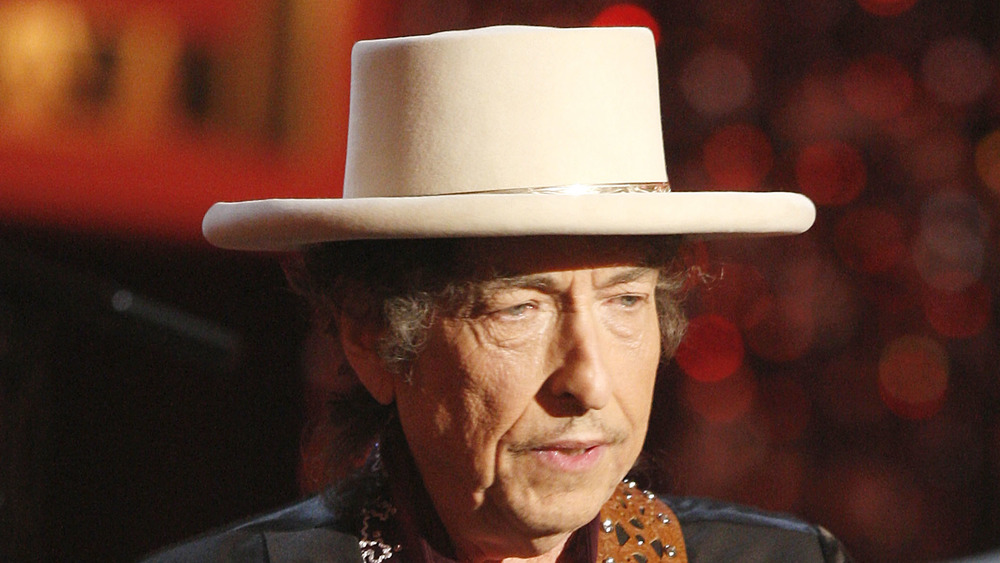
Bob Dylan (2011) Photo by Kevin Winter

The revolution in music in Western Europe had a huge impact in the US. Until the early 1960s, folk, surf music and the Nashville sound were dominant musical styles there. Almost overnight, these genres faded into the background in favour of music imported from Western Europe; only the ‘Motown sound, managed to hold its own. Talk was therefore of the ‘British Invasion’. The ‘Beatles’ performance on the Ed Sullivan Show (1964) was the starting point. You can see this performance HERE.

A much better picture of the Beatles’ reception in the US is provided by the following recording of their performance at the Washington Coliseum a few days after the Ed Sullivan show. The group sang five of his well-known songs. Remarkably, they more or less had to build the stage themselves.

Many members of (future) folk-rock acts, such as ‘Byrds’, ‘Jefferson Airplane’, ‘Lovin’ Spoonful’, ‘Mamas & Papas’ and ‘Buffalo Springfield’, also turned away from traditional folk music in 1964 and 1965. The careers of Chubby Checker, Ricky Nelson, Fats Domino, Everly Brothers and ‘Elvis Presley’ suffered (temporary) damage. The British invasion also influenced the style of garage bands. Their numbers also increased to an estimated 180,000 bands, of which at most a few thousand did record at one time or another. 

A US reaction to the British invasion was not absent. American artists blended the sounds of existing embattled genres with European ‘rock’ influences. 

From ‘folk’ to ‘folk rock’

In the early 1960s, ‘rock’ and ‘folk’ were separate genres, with their own audiences and festivals. ‘Folk’ as a genre – poetic songs accompanied by acoustic instruments – totally snowballed in the 1960s as a result of the ‘British Invasion’, which temporarily established the hegemony of Beatles and Rolling Stones and related groups and artists in the US. But several former ‘folk’ singers struck back. They mixed the existing ‘folk’ repertoire with rock, including the use of electric guitars and drums. One inspiration was the group ‘the Animals’ who turned the acoustic lament ‘House of the rising sun’ into an archetypal folk-rock song. Precursors in the US of ‘folk rock’ were the Byrds and Bob Dylan. The latter indicated that the rock version of ‘House of the rising sun’ had motivated him to perform with electric instruments.

The first folk-rock song of American origin was ‘Mr Tambourine Man’, a composition by Bob Dylan, sung here by the Byrds in 1965. In turn, the Byrds influenced countless other artists such as ‘the Mamas & the Papas’, Simon & Garfunkel and Sonny & Cher.

Compare the folkrock version HERE with the acoustic version sung by Melanie in 1968. 

Bob Dylan’s metamorphosis can be heard on his album ‘Bringing it all back home’. On 7 of the 11 tracks, he is accompanied by a band with electronic instruments. On his later albums, such as ‘Like a rolling stone’, he continued this trend, much to the dismay of some of his original fans, who made no secret of it during performances. I now play two songs from the album ‘Bringing it all back home’. 

Acoustic is ‘It’s all over now, baby blue’, live at the Newport folk festival:

Next you can watch and listen to Maggie’s farm, a solid rock version. Dylan sang this version at the same edition of the Newport folk festival. Bob Dylan achieved great fame as a folk singer, think of songs like ‘Blowin’ on the wind’ and ‘The times they are changing’.  Less well known is that Dylan was a lover of rock & roll from a young age. In 1965, he decided to manifest it as such. According to exegetes, when he sings ‘I don’t want to work on Maggie’s farm anymore’, Maggie’s farm symbolizes the folk music scene. Listen to ‘Maggie’s farm’ here, including the booing at the end.

To this day, a significant group of fans of original ‘folk’ and ‘country’ music has continued to exist, outside the US too. This genre is called Americana or ā€˜roots music’. Examples include The BandCreedence Clearwater RevivalCrosby, Stills, Nash & Young as well as Ry Cooder and Bonnie Raitt. Another example is the Dutch group ‘CCC Incorporated’. You can hear a recording of the latter here.

From ‘country’ to ‘country rock’

‘Country music’ also suffered badly during the ‘British invasion’.  But many songs by artists like Hank Williams and Merle Haggard remained popular, and their popularity increased again when a dose of ‘rock’ was added. After Gram Parsons joined the Byrds, the group turned to country rock and songs like ‘Sweetheart of the rodeo’ and ‘You ain’t going nowhere’ were considered prime examples of this genre. 

Here you can watch and listen but the latter song (1968):

In the 1970s, Emmylou Harris and Linda Ronstadt became performers at respite from this genre. So did John Denver and Neil Young. Members of Ronstadt’s backing band later continued under the name ‘Eagles‘ continued the tradition.

From ‘blues’ to ‘blues rock’

In the development of blues rock, there was no one-way traffic between the US and Britain. As early as 1958, the American blues guitarist Muddy Waters toured Europe (see my exploration of the development of the blues in the US) and, especially in Britain, this led to a true blues boom. This inspired among others the members of the (future) Rolling Stones, Cream, Animals, Yardbirds, Kinks, Who and others. All these bands added a ‘rock twist’ to it.  Their music became so popular in the US in the second half of the 1960s that one could speak of a second British invasion. The blues rock was fiercer and louder that the beat music that was starting to sound dated. In the US, Paul Butterfield Blues Band, Canned Heat and the Doors were the first exponents of this new genre.  The members of these the bands often played long solos during performances, following the blues. 

Here, Canned Heat plays ‘On the road again’

Blues rock was getting louder and louder, moving towards heavy metal. I will come back to this in a subsequent post. However, there were also bands that stayed closer to the traditional blues genre. In the 1980s, these included, for example, ‘the Fabulous thunderbirds’ and ‘Stevie Ray Vaughan’.

In the above, we see the dichotomy emerging between ‘soft rock’ and ‘hard rock’. Folk rock and country rock were the basis for soft rock. The emphasis was on harmonic melodies. Key artists were, Carole King, Cat Stevens, James Taylor. Commercial highlights were provided by Fleetwood Mac and Billy Joel.

Hard rock was fiercer, mainly featured repetitive ‘runs’ and distortion of the sound and joined blues rock. This genre had numerous variations from the 1960s onwards, ranging from acid rock, metal, pink and grunge. International successes were mainly achieved by Queen, Thin Lizzy, Aerosmith, AC/DC and Van Halen.

Early 1960s: Beatlemania (history of rock after 1960 1/6)

‘Rock & Roll’ caused a furore in the period 1940 – 1960. Initially played and sung by ‘black’ musicians, later white singers gained the upper hand.  The genre spread worldwide, thanks also to the polish the record industry applied to it. This alienated young people who felt more attracted to the catchy melodies and rhythms of the thousands of skifflegroups with their simple instrumentation. Their great example in the late 1950s was Lonnie Donegan. One such skifflegroups were the ‘Quarrymen’ from Liverpool, and when they picked up the pace and called themselves Beatles, the ‘Merseybeat sound’ spread around the world at lightning speed. 

The Beatles left behind an extensive body of work, consisting of 12 albums and a string of singles. The first five albums represent the ‘Merseybeat sound’: ‘With the Beatles’ (1963), ‘Please, please me’ (1963), ‘Meet the Beatles’ (1964), ‘A hard day’s night’ (1964) and ‘Help’ (1965). You can watch and listen to ‘It’s a hard day’s night’ here, sung not by the Beatles themselves, but by the Dutch cover group, ‘The Analogues’.Ā 

Those who still prefer to listen to the real Beatles and take in the enthusiasm of thousands of fans singing along can find a recording of ‘It’s a hard day’s night’ HERE.

The performance of the Beatles and many other British groups in clubs in Hamburg contributed greatly to the ‘sound’ and breakthrough of the new genre. The musical revolution affected not only professional groups such as ‘Gerry & the Pacemakers’, ‘Searchers’, ‘Freddie & the Dreamers’, ‘Herman Hermits’ and ‘Hollies’, among others, but also thousands of amateur groups who played the music of their idols or wrote their own songs. A phenomenon that resembled the American ‘garage bands’ I will come to write about. Singers like Dusty Springfield, Cilla Black and Petula Clark were also influenced by the new musical style.

The Netherlands had an early professional scene – Nederbeat – with groups like ‘Outsiders‘, ‘Q65‘, ‘Motions‘, ‘Shocking Blue‘ and, of course, ‘Golden Earring’. ‘Golden Earring’ made music continuously and in the same line-up from 1961. Only when George Kooymans fell seriously ill in 2021, the band decided to stop immediately.

Here is an (acoustic) recording of ‘Just a little bit of peace in my heart’. A song from 1968, which the group played until its last performances, and which has been continuously on the Dutch Radio 2 top 2000 since 1999 (2023: place 599). George Kooymans wrote this song after the end of his relationship with Melanie Gerritsen. He regretted it terribly and fortunately for him, she came back to him a year later.  They married and eventually celebrated their golden wedding anniversary together.

One of the most distinctive features of ‘beat music’ is its driving character, which is caused by the first three beats of each bar having an equal emphasis and the fourth beat having a distinctive ‘backbeat’.

It was not only ‘Merseybeat’ that set the tone. Some groups were more strongly influenced by American rhythm & blues, also because of direct contacts with musicians there. These included “Rolling Stones”, “Yardbirds”, “Spencer Davis group”, “Moody Blues”, “Animals“, “Them” and “Kinks“. 

Here is a 1965 recording of the very young ‘Rolling Stones’ with ‘I can get no satisfaction’. 

In many places, young people were also making music themselves. It was referred to as ‘garage rock’ because the usually young musicians practiced in the garages of their parents’ houses. GarageĀ rock songs often revolved around the traumas of high school life, such as lying girls and unfair teachers.Ā 

Here just a ‘random’ garage rock song in some venue. What rarely happened: This little band became famous and later called themselves ‘The Who’. If you know that, you immediately recognize the young Peter Townsend and Keith Moon.

By now, the term ‘Rock & Roll’ had moved into the background and was mainly referred to as ‘rock music’. In subsequent years into the first decade of the 21ste century, ‘rock’ would become an umbrella term for a variety of genres, with influences from almost all other genres, including classical music. From 2010, the influence of hip-hop, dance and electronic dance music increases, but as is the case with disco, the influence of ‘rock’ in popular music remains strong. 

Musicians in the 60s-80s embraced the predicate ‘rock’ to differentiate themselves from ‘pop’, which they condemned as being commercial. That said, many rock songs became roaring commercial successes and their creators made gold money. During this period, ‘rock’ was also seen as the musical expression of youth culture sometimes also of resistance to society. The blurring of the line between ‘rock’ and ‘pop’ repeatedly led to new more radical expressions of ‘rock’ such as ‘punk’ and ‘grunge’. 

I explore the development of ‘rock’ after 1960 in six consecutive episodes.

Becoming ā€˜moved’ by music (2): Voices

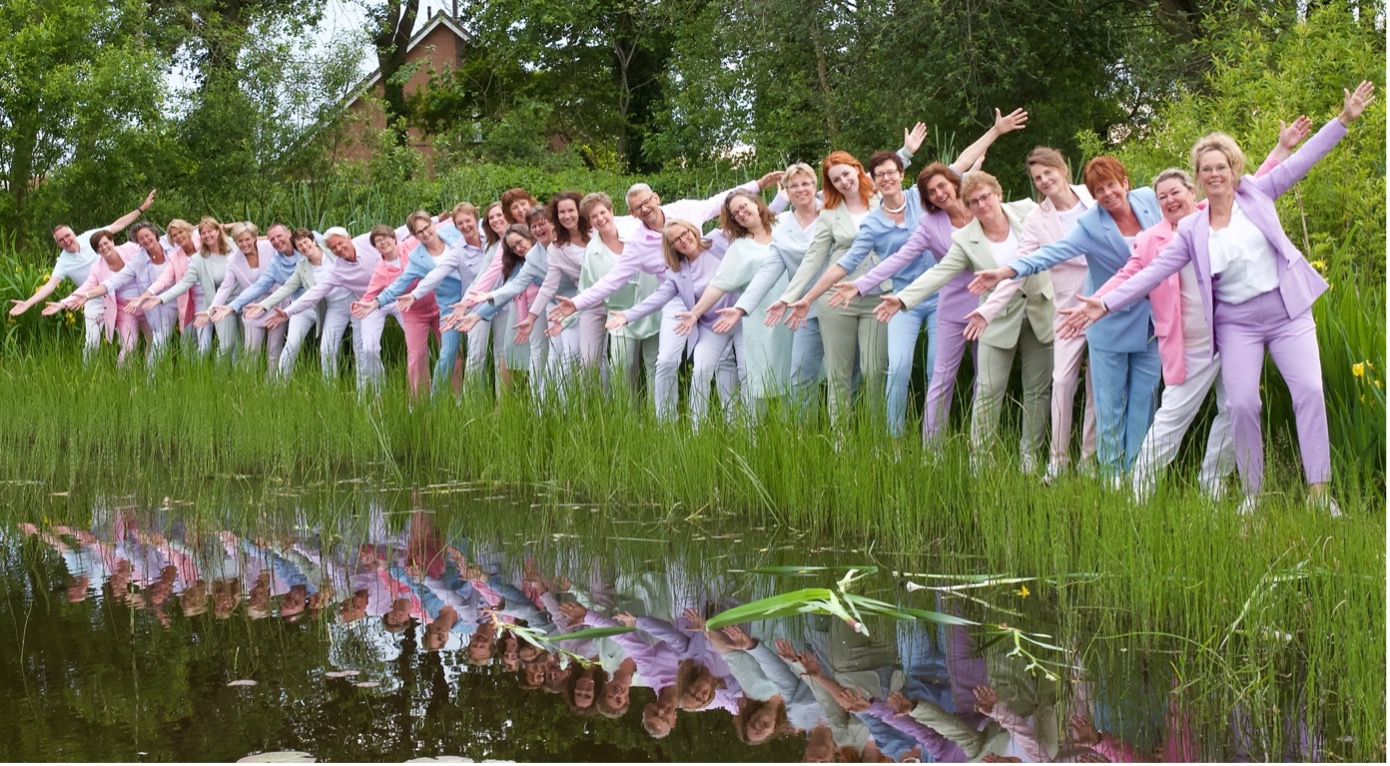
Pop choir Just4Fun from Oosterwolde

In the previous post, I explored the impact of the interplay of rhythm, tempo and timbre. For a while we ignored the role of melody by focusing at the effect of percussion instruments. The combination of these three elements has a huge influence on our experience. It is hard to stay in your seat with a band like ‘Slagerij van Kampen’. This is thanks to a brisk tempo, a stirring rhythm, the balance between repetition and variation and the variety of percussion instruments, each of which has its own unique timbre.Ā 

In the final performance, however, melody was reintroduced. By combining percussion and other instruments, the timbre became more varied and touching. This added to the overall experience.

Given de added value of melody, let’s focus on the impact of the human voice. To amplify its effect, we will not listen to individual singers with their particular characteristics but compare several choirs. In the first recording, the effect on the audience of human voices united in a chorus is immediately apparent. This is a performance by ‘John’s Boys’, an all-male choir from Wales.

The singing is like a warm bath. It gives you goose bumps, just like the jury members. You become emotionally involved in the content of the song, even though you hardly understand it, because of the polyphony and the changes in volume. It is also an indication of how important it is to have a look at the singers, which makes the emotions come across much more strongly.

I go one step further.  The Belcanto Choir from Vilnius sings a composition by composer Karl Jenkins (also from Wales), titled Adiemus, from the 1995 album ‘Adiemus: Songs of Sanctuary’. The lyrics consist only of meaningless words. The singing voices acts as instruments but at the same time no instrument can match the effect. The music itself contains Celtic and African elements. 

Like the first song, the singers’ enthusiasm is infectious and the polyphony, solo accents as well as the alternation between loud and soft bring the variation that keeps the listener enthralled. 

In both cases, the audience will literally move, but more so emotionally. That this succeeded is also proven by the long-standing listing of this piece of music on the NPO Radio 2 Top 2000.

Now, I compare the impact of both performances with that of two other choirs. Both perform the song ‘Can you feel the love tonight’, composed by Elton John in 1994 for the film ‘The Lion King’.  At first, we listen to the giant San Francisco Gay Men’s Choir, with orchestral accompaniment.

The massiveness, the polyphony and the swelling crescendos make the performance impressive, but what is missing is the emotion that played such a central role in the previous examples. Then again, the human voice is a wonderful ‘instrument’, but apparently it takes more than a perfect performance to bring about the emotive involvement in the listener. The question then is what that ‘more’ consists of.

You can listen and watch now the same song, ‘Can you feel the love tonight’, sung by a small choir called The King Singers.  Two things are different.  First, the choir succeeds in conveying the emotional value of the song through their expressive way of singing. Second, the variation in timbre goes far beyond polyphony alone. The singers’ individual voices are blended with the collective voices, and the registers from high to low are fully utilised.

Both heart and body are engaged when percussion instruments are added to a choir. The penultimate song that I’m going to present is the choral arrangement of the popular song ā€œAfricaā€. This song was released by Toto for the first time in 1982 and is still on the NPO Radio 2 Top 2000 list. It is an ode to Africa, tropical showers included. The song owes part of its popularity to the fact that ik makes you feel a touch of Africa. The Angel City Chorale also from Los Angeles essentially conveys that by its vivid impression of the tropical rain. The experience that his choir creates cannot be substituted by any orchestral presentation. Responsible for this are the imitation of rain and thunder, the enthusiastic presentation of singers and soloists, the polyphony and the way the singers move. The musical accompaniment enhances this effect but never dominates the choir.  The effect of rhythm and tempo does strengthen it.

In the final show everything comes together: the subdued nature of the sung word is suddenly reversed and, through a change in tempo, rhythm and timbre, leads to a complete turnaround in the audience’s perception. The audience, who at first listened breathlessly, now breaks into applause and dancing here and there. A performance that moves the ‘whole person’. I will follow him” was originally sung by Petula Clark in 1961. Now you listen to AndrĆ© Rieu and his Johann Strauss Orchestra.

Becoming ‘moved’ by music: The impact of rhythm, tempo and timbre

On this site I will be regularly dwelling on the question ‘what does music do to you’ and ‘why is that’. This post and the next one provide preliminary answers.Ā Ā I will return to these issues in due course.

We start simply. We leave out melody. What that leaves is rhythm, tempo and timbre. Each of these can be three simple or varied. Just fancy that you walk with a few people. Someone claps their hands every first beat of the beat, indicating the tempo. But what is the effect? Sure enough, your little group will be ā€˜in tune’ for a short time and walking will be easier. Even the most basic form of music encourages movement.

Combine stamping your foot on the ground and clapping your hand. That sounds different from just clapping on your hands. The difference is the timbre. Variation in timbre makes music more engaging.

We now look at samba band Segura from Maastricht. Pay attention to the rhythm, tempo and timbre.

What they do is to play short pieces in succession. The rhythm is hardly varied, the tempo fast, and occasionally speeds up, and the timbre is two-tonal. The little drums and the bass drums. No wonder samba bands are so popular. After a short time practicing, you can join in. The leader does the solos. People do move with the musicians, but you don’t stay to listen to them for long. It is possible that the repetition of themes has a transcendental effect on some people.

The next band is different cake. It is the world-famous Top secret from Basel in Swiss. The drummers practice themselves to death. Just listen to the difference with the former band and try to name it with the concepts of rhythm, tempo and timbre.

There are six notes (five differently tuned bass drums) and a group of high-pitched drums. With these, they produce widely varying rhythms, with constantly variating changes in tempo, do does the timbre too. At the same time, they make quite a show of it. The interplay is getting closer to perfection.

Only: it is overcomplicated. You keep watching and listening, but whether you will also stamp your feet or clap your hands? I didn’t.

Compare the impact of Top secret with that of Sanct Sebastiaan from Sanct Huibrechts Lille (Belgium), the percussion section of a traditional ā€˜schutterij’. They replaced the traditional repertoire with a modern one, using almost the same instruments as Top Secret, and producing a comparable timbre. When marching, tempo and rhythm changes are limited. The result is a show that is less complicated, but easier to follow, without any superfluous acrobatics. The video below shows their performance at the World Music Contest in the year 2023.

A preliminary conclusion: To start moving on music, the tempo should not vary too much, but not too slow; variation in rhythm and timbre will increase listeners’ engagement. 

We now look at the fourth performance, a percussion group called ā€œSlagerij van Kampen”. 

It is somewhat like the drumming in the former performances. The difference is in the timbre. They have dozens of different drums, they perform an entire concert work where they allow maximum differences in timbre and occasionally in rhythm, but each of the parts of the concert work basically has its own tempo. While listening, you feel that your limbs want to join in. It is now no longer about walking ā€˜in tune’ but rather about dancing!

Variation of timbre can be increased by adding melody with the use of non-percussion instruments. We are listening to ā€˜Slagerij van Kampen’ again. In their show ā€˜Beats ā€˜n brass’ they have supplemented the line-up with brass players, organ and guitar. This huge change in timbre will further enhance listener engagement. The energetic drumming and musical themes reinforce each other. Therefore almost no band or orchestra lacks a rhythm section.

Given the importance of the interplay of melodic and percussive instruments, the question arises as to the contribution of the human voice. This is discussed in the next post.

The 15-minutes city and to what residents care about (7/7)

To what extent does the 15-minute city match the ideal images of residents, many of whom are used to using the car?

For decades, the behaviour of urban planners and politicians, but also of residents, has been determined by images of the ideal living environment, especially for those who can afford it. The single-family home, a private garden and the car in front of the door were more prominent parts of those images than living in an inclusive and complete neighbourhood. Nevertheless, such a neighbourhood, including a ‘house from the 30s’, is still sought after. Attempts to revive the idea of ‘trese ‘traditional’ neighbourhoods’ have been made in several places in the Netherlands by architects inspired by the principles of ‘new urbanism’ (see photo collage above). In these neighbourhoods, adding a variety of functions was and is one of the starting points. But whether residents of such a neighbourhood will indeed behave more ‘locally’ and leave their cars at home more often does not depend on a planning concept, but on long-term behavioural change. 

An important question is what changes in the living environment residents themselves prefer. Principles for the (re)design of space that are in line with this have the greatest chance of being put into practice. It would be good to take stock of these preferences, confront (future) residents conflicting ideas en preconditions, for instance with regard to the necessary density. Below is a number of options, in line with commonly expressed preferences.

1. Playing space for children

Especially parents with children want more playing space for their children. For the youngest children directly near the house, for older children on larger playgrounds. A desire that is in easy reach in new neighbourhoods, but more difficult in older ones that are already full of cars. Some parents have long been happy with the possibility of occasionally turning a street into a play street. A careful inventory often reveals the existence of surprisingly many unused spaces. Furthermore, some widening of the pavements is almost always necessary, even if it costs parking space.

2. Safety

High on the agenda of many parents are pedestrian and cycle paths that cross car routes unevenly. Such connections substantially widen children’s radius. In existing neighbourhoods, this too remains daydreaming.  What can be done here is to reduce the speed of traffic, ban through traffic and make cars ‘guests’ in the remaining streets. 

3. Green

A green-blue infrastructure, penetrating deep into the immediate surroundings is not only desired by almost everyone, but also has many health benefits. The presence of (safe) water buffering (wadis and overflow ponds) extends children’s play opportunities, but does take up space. In old housing estates, not much more is possible in this area than faƧade gardens on (widened) pavements and vegetation against walls.

4. Limiting space for cars

Even in older neighbourhoods, opportunities to play safely and to create more green space are increased by closing (parts of) streets to cars. A pain point for some residents. One option for this is to make the middle part of a street car-free and design it as an attractive green residential area with play opportunities for children of different age groups. In new housing estates, much more is possible and it hurts to see how conventionally and car-centred these are often still laid out. (Paid) parking at the edge of the neighbourhood helps create a level playing field for car and public transport use.

5. Public space and (shopping) facilities

Sometimes it is possible to turn an intersection, where for instance a cafƩ or one or more shops are already located, into a cosy little square. Neighbourhood shops tend to struggle. Many people are used to taking the car to a supermarket once a week to stock up on daily necessities for the whole week. However, some neighbourhoods are big enough for a supermarket. In some cities, where car ownership is no longer taken for granted, a viable range of shops can develop in such a square and along adjacent streets. Greater density also contributes to this.

6. Mix of people and functions

A diverse range of housing types and forms is appreciated. Mixing residential and commercial properties can also contribute to the liveliness of a neighbourhood. For new housing estates, this is increasingly becoming a starting point. For business properties, accessibility remains an important precondition. 

7. Public transport

The desirability of good public transport is widely supported, but in practice many people still often choose the car, even if there are good connections. Good public transport benefits from the ease and speed with which other parts of the city can be reached. This usually requires more than one line. Free bus and tram lanes are an absolute prerequisite. In the (distant) future, autonomous shuttles could significantly lower the threshold for using public transport. Company car plus free petrol is the worst way to encourage sensible car use.

8. Centres in plural

The presence of a city centre is less important for a medium-sized city, say the size of a 15-minute cycle zone, than the presence of a few smaller centres, each with its own charm, close to where people live. These can be neighbourhood (shopping) centres, where you are sure to meet acquaintances.  Some of these will also attract residents from other neighbourhoods, who walk or cycle to enjoy the wider range of amenities. The presence of attractive alternatives to the ‘traditional’ city centre will greatly reduce the need to travel long distances.

The above measures are not a roadmap for the development of a 15-minute city; rather, they are conditions for the growth of a liveable city in general.  In practice, its characteristics certainly correspond to what proponents envisage with a 15-minute city. The man behind the transformation of Paris into a 15-minute city, Carlos Moreno, has formulated a series of pointers based on all the practical examples to date, which can help citizens and administrators realise the merits of the 15-minute city in their own environments. This book will be available from mid-June 2024 and can be reserved HERE.

Will the 15-minute city cause the US suburbs to disappear? 6/7

New concentrated construction in the suburbs

Urbanisation in the US is undergoing major changes. The image of a central city surrounded by sprawling suburbs therefore needs to be updated. The question is what place does the 15-minute city have in it? That is what this somewhat longer post is about

From the 1950s, residents of US cities began moving en masse to the suburbs. A detached house in the green came within reach for the middle and upper classes, and the car made it possible to commute daily to factories and offices. These were initially still located in and around the cities. The government stimulated this development by investing billions in the road network

From the 1980s, offices also started to move away from the big cities. They moved to attractive locations, often near motorway junctions. Sometimes large shopping and entertainment centres also settled there, and flats were built on a small scale for supporting staff. Garreau called such cities ‘edge cities’.

Investors built new suburbs called ‘urban villages’ in the vicinity of the new office locations, significantly reducing the distance to the offices. This did not reduce congestion on congested highways.

However, more and more younger workers had no desire to live in suburbs. The progressive board of Arlington, near Washington DC, took the decision in the 1980s to develop a total of seven walkable, inclusive, attractive and densely built-up cores in circles of up to 800 metres around metro stations. In each was a wide range of employment, flats, shops and other amenities . In the process, the Rosslyn-Balston Corridor emerged and experienced rapid growth. The population of the seven cores now stands at 71,000 out of a total of 136,000 jobs. 36% of all residents use the metro or bus for commuting, which is unprecedentedly high for the US. The Rosslyn-Balston Corridor is a model for many other medium-sized cities in the US, such as New Rochelle near new York.

Moreover, to meet the desire to live within walking distance of all daily amenities, there is a strong movement to also regenerate the suburbs themselves. This is done by building new centres in the suburbs and densifying part of the suburbs. 

The new centres have a wide range of flats, shopping facilities, restaurants and entertainment centres.  Dublin Bridge Park, 30 minutes from Columbus (Ohio) is one of many examples.

It is a walkable residential and commercial area and an easily accessible centre for residents from the surrounding suburbs. It is located on the site of a former mall.

Densification of the suburbs is necessary because of the high demand for (affordable) housing, but also to create sufficient support for the new centres. 

Space is plentiful. In the suburbs, there are thousands of (semi-)detached houses that are too large for the mostly older couples who occupy them. An obvious solution is to split the houses, make them energy-positive and turn them into two or three starter homes. There are many examples how this can be done in a way that does not affect the identity of the suburbs (image). 

This kind of solution is difficult to realise because the municipal authorities concerned are bound by decades-old zoning plans, which prescribe in detail what can be built somewhere. Some of the residents fiercely oppose changing the laws. Especially in California, the NIMBYs (not in my backyard) and the YIMBYs (yes in my backyard) have a stranglehold on each other and housing construction is completely stalled. 

But even without changing zoning laws, there are incremental changes.  Here and there, for instance, garages, usually intended for two or three cars, are being converted into ‘assessor flats’ for grandma and grandpa or for children who cannot buy a house of their own.  But garden houses are also being added and souterrains constructed. Along the path of gradualness, this adds thousands of housing units, without causing much fuss.

It is also worth noting that small, sometimes sleepy towns seem to be at the beginning of a period of boom.  They are particularly popular with millennials. These towns are eminently ‘walkable’ , the houses are not expensive and there is a wide range of amenities. The distance to the city is long, but you can work well from home and that is increasingly the pattern. The pandemic and the homeworking it has initiated has greatly increased the popularity of this kind of residential location.

All in all, urbanisation in the US can be typified by the creation of giant metropolitan areas, across old municipal boundaries. These areas are a conglomeration of new cities, rivalling the old mostly shrinking and poverty-stricken cities in terms of amenities, and where much of employment is in offices and laboratories. In between are the suburbs, with a growing variety of housing. The aim is to create higher densities around railway stations. Besides the older suburbs, ‘urban villages’ have emerged in attractive locations. More and more suburbs are getting their own walkable centres, with a wide range of flats and facilities. Green space has been severely restricted by these developments.

According to Christopher Leinberger, professor of real estate and urban analysis at George Washington University, there is no doubt that in the US, walkable, attractive cores with a mixed population and a varied housing supply following the example of the Rosslyn-Ballston corridor are the future. In addition, walkable car-free neighbourhoods, with attractive housing and ample amenities are in high demand in the US. Some of the ‘urban villages’ are developing as such.  The objection is that these are ‘walkable islands’, rising in an environment that is anything but walkable. So residents always have one or two cars in the car park for when they leave the neighbourhood, as good metro or train connections are scarce. Nor are these kinds of neighbourhoods paragons of a mixed population; rents tend to be well above the already unaffordable average. 

The global distribution of the 15-minute city idea 5/7

Vancouver’s 120 envisioned 5-minute zones (Image: Community of Vancouver)

A previous post made it clear that a 15-minute city ideally consists of a 5-minute walking zone, a 15-minute walking zone, also a 5-minute cycling zone and a the 15-minute cycling zone. These three types of neighbourhoods and districts should be developed in conjunction, with employment accessibility also playing an important role.

In the plans for 15-minute cities in many places around the world, these types of zones intertwine, and often it is not even clear which type of zone is meant.  In Paris too, I miss clear choices in this regard. 

The city of Melbourne aims to give a local lifestyle a dominant place among all residents. Therefore, everyone should live within at most 10 minutes’ walking distance to and from all daily amenities.  For this reason, it is referred to as a 20-minute city, whereas in most examples of a 15-minute city, such as Paris, it is only about the round trip. The policy in Melbourne has received strong support from the health sector, which highlights the negative effects of traffic and air pollution

In Vancouver, there is talk of a 5-minute city. The idea is for neighbourhoods to become more distinct parts of the city. Each neighbourhood should have several locally owned shops as well as public facilities such as parks, schools, community centres, childcare and libraries. High on the agenda is the push for greater diversity of residents and housing types. Especially in inner-city neighbourhoods, this is accompanied by high densities and high-rise buildings. Confronting this idea with reality yields a pattern of about 120 such geographical units (see map above). 

Many other cities picked up the idea of the 15-minute city.  Among them: Barcelona, London, Milan, Ottawa, Detroit and Portland. The organisation of world cities C40 (now consisting of 96 cities) elevated the idea to the main policy goal in the post-Covid period.

All these cities advocate a reversal of mainstream urbanisation policies. In recent decades, many billions have been invested in building roads with the aim of improving accessibility. This means increasing the distance you can travel in a given time. As a result, facilities were scaled up and concentrated in increasingly distant places. This in turn led to increased congestion that negated improvements in accessibility. The response was further expansion of the road network.  This phenomenon is known as the ‘mobility trap’ or the Marchetti constant.

Instead of increasing accessibility, the 15-minute city aims to expand the number of urban functions you can access within a certain amount of time. This includes employment opportunities. The possibility of working from home has reduced the relevance of the distance between home and workplace. In contrast, the importance of a pleasant living environment has increased. A modified version of the 15-minute city, the ‘walkable city’ then throws high hopes. That, among other things, is the subject of my next post.

The ’15-minute principle’ also applies to rural areas 4/7

Due to a long stay in the hospital, I was unable to post. I cannot guarantee continuity in the near future, but I will do my best…Ā 

In my previous post, I emphasised that urban densification should be coordinated with other claims on space. These are: expanding blue-green infrastructure and the desire to combine living and working. I am also thinking of urban horticulture. It is therefore unlikely that all the necessary housing in the Netherlands – mentioned is a number of one million housing units – can be realised in the existing built-up area. Expansion into rural areas is then inevitable and makes it possible to improve the quality of these rural areas. Densification of the many villages and small towns in our country enable to approach them from the ’15-minute principle’ as well. Villages should thereby become large enough to support at least a small supermarket, primary school and health centre, but also to accommodate small businesses. A fast and frequent public transport-connection to a city, to other villages and to a railway station in the vicinity is important.
 
A thorny issue is the quality of nature in the rural area. Unfortunately, it is in bad shape. A considerable part of the rural area consists of grass plots with large-scale agro-industrial use and arable land on which cattle feed is grown. Half of the Netherlands is for cows, which, incidentally, are mostly in stalls. Restoring nature in the area that is predominantly characterised by large-scale livestock farming, is an essential task for the coming decades.
 
The development of sufficiently dense built-up areas both in cities and villages and the development of new nature around and within those cities and villages is a beckoning prospect. This can be done by applying the idea of ‘scheggen’ in and around medium-sized and large cities. These are green zones that penetrate deep into the urban area. New residential and work locations can then join the already built-up area, preferably along existing railway lines and (fast) bus connections. These neighbourhoods can be built in their entirety with movement on foot and by bicycle as a starting point. The centre is a small densely built-up central part, where the desired amenities can be found.
 
In terms of nature development, depending on the possibilities of the soil, I am thinking of the development of forest and heath areas and lush grasslands, combined with extensive livestock farming, small-scale cultivation of agricultural and horticultural products for the benefit of nearby city, water features with a sponge function with partly recreational use, and a network of footpaths and cycle paths. Picture above: nature development and stream restoration (Photo: Bob Luijks) 

Here you can link to my free downloadable e-book: 25 Building blocks to create better streets, neighborhoods and cities.

How do higher density and better quality of life go together? 3/7

A certain degree of compactness is essential for the viability of 15-minute cities.  This is due to the need for an economic threshold for facilities accessible by walking or cycling. A summary of 300 research projects by the OECD shows that compactness increases the efficiency of public services in all respects. But it also reveals disadvantages in terms of health and well-being due to pollution, traffic, and noise. The assumption is that there is an optimal density at which both pleasant living and the presence of everyday facilities – including schools – can be realised.  At this point, ‘densification’ is not at the expense of quality of life but contributes to it.  A lower density results in more car use and a higher density will reduce living and green space and the opportunity to create jobs.

The image above is a sketch of the ‘Plan Papenvest’ in Brussels. The density, 300 dwellings on an area of 1.13 hectares, is ten times that of an average neighbourhood. Urban planners often mention that the density of Dutch cities is much lower than in Paris and Barcelona, for example. Yet it is precisely in these cities that traffic is one of the main causes of air pollution, stress, and health problems. The benefits of compactness combined with a high quality of life can only be realised if the nuisances associated with increasing density are limited. This uncompromisingly means limiting car ownership and use.

Urban planners often seem to argue the other way round. They argue that building in the green areas around cities must be prevented at all costs to protect nature and that there is still enough space for building in the cities. The validity of this view is limited. In the first place, the scarce open space within cities can be better used for clean workshops and nature development in combination with water control. Secondly, much of the ‘green’ space outside cities is not valuable nature at all. Most of it is used to produce feed for livestock, especially cows. Using a few per cent of this space for housing does not harm nature at all. This housing must be concentrated near public transport. The worst idea is to add a road to the outskirts of every town and village. This will undoubtedly increase the use of cars.

HERE you can link to my free downloadable e-book: 25 Building blocks to create better streets, neighborhoods and cities 

The 15-minute city: from metaphor to planning concept (2/7)

Carlos Moreno, a professor at the Sorbonne University, helped Mayor Anne Hidalgo develop the idea of the 15-minute city. He said that six things made people happy: living, working, amenities, education, wellbeing, and recreation. The quality of the urban environment is enhanced when these functions are realized near each other. The monofunctional expansion of cities in the US, but also in the bidonvilles of Paris, is a thorn in his side, partly because this justifies owning a car.

A more precise definition of the concept of the 15-minute city is needed before it can be implemented on a large scale. It is important to clarify which means of transport must be available to reach certain facilities in a given number of minutes. The list of facilities is usually very comprehensive, while the list of means of transport is usually only vaguely defined. But the distance you can travel in 15 minutes depends on the availability of certain modes of transport (see figure above).

Advocates of “new urbanism” have developed the tools to design 15-minute cities. They are based on three zones: the 5-minute walking zone, the 15-minute walking zone, which coincides with the 5-minute cycling zone, and finally the 15-minute cycling zone. These are not static concepts: In practice, the zones overlap and complement each other.

The 5-minute walking zone

This zone corresponds to the way in which most residential neighbourhoods functioned up until the 1960s, wherever you are in the world. Imagine a space with an average distance from the center to the edge of about 400 meters. In the center you will find a limited number of shops, a (small) supermarket, one or more cafes and a restaurant. The number of residents will vary between two and three thousand. Density will decrease from the centre and the main streets outwards. Green spaces, including a small neighbourhood park, will be distributed throughout the neighbourhood, as will workshops and offices.

In the case of new construction, it is essential that pedestrian areas have a dense network of paths without crossings at ground level with streets where car traffic is allowed. Some paths are wider and allow cycling within the 5- and 15-minute cycle zones. The streets provide access to concentrated parking facilities.

The 5-minute cycle zone and the 15-minute walking zone.

Here the distance from the center to the edge is about one kilometer. In this area, most of the facilities that residents need is available and can be distributed around the centers of the 5-minute walking zones. For example, a slightly larger supermarket may be located between two 5-minute walking zones. This zone will also contain one or more larger parks and some larger concentrations of employment.

This zone can be a large district of a city, but it can also be a small municipality or district of around 15 to 25,000 inhabitants. With such a population there will be little room for dogmatic design, especially when it comes to existing buildings. But even then, it is possible to separate traffic types by keeping cars off many streets and clustering car parks. The bottom line is that all destinations in this zone can be reached quickly by walking and cycling, and that car routes can be crossed safely.

The car will be used (occasionally) for several destinations. For example, for large shopping trips to the supermarket.

The 15-minute cycle zone.

This zone will be home to 100.00 or more residents. The large variation is due to the (accidental) presence of facilities for a larger catchment area, such as an industrial estate, a furniture boulevard or an IKEA, a university or a (regional) hospital. It is certainly not a sum of comparable 5-minute cycle zones. Nevertheless, the aim is to distribute functions over the whole area on as small a scale as possible. In practice, this zone is also crossed by several roads for car traffic. The network of cycle paths provides the most direct links between the 5-minute cycle zones and the wider area.

The main urban development objectives for this zone are good accessibility to urban facilities by public transport from all neighbourhoods, the prohibition of hypermarkets and a certain distribution of central functions throughout the area: Residents should be able to go out and have fun in a few places and not just in a central part of the city.

Below you can link to my free downloadable e-book: 25 Building blocks to create better streets, neighborhoods and cities