


 These words are from Daniel Doctoroff. In 2016 Larry Page (Google) invited him to be chairman/CEO of a new Alphabet enterprise, Sidewalks Labs. This company aims contributing to the transformation of urban environments through technologies that can drive efficiency, raise accountability, and foster a deeper sense of community. In others words, connecting Google’s expertise to the Smart City movement.’
Choosing Doctoroff as obvious. He was deputy mayor for city development in the Bloomberg administration. He is deeply concerned with the problems of American cities and at the same time he believes in the power of science and technology to solve them. In his view the Fourth Technological Revolution will integrate five core technologies:
- ubiquitous connectivism
- sensing
- social networks
- computer power
- robotics.
Deployed together, these technologies will significantly decrease mobility costs for citizens and for the community at large as well, personalize services and improve safety.
 Technologists and urbanists
The ultimate aim is improving the quality of life in cities and not the deployment of technology as such. Therefore Doctoroff carefully staffed Sidewalks Labs with technologists and urbanists. In his words, the first group is in general insensitive to the complexities of cities. The second group does not understand technology: Protecting the social fabric of cities comes first. Both groups talk different languages and do not communicate. Doctoroff believes that their successful collaboration can make the difference between Sidewalk Labs and technology-driven Smart City initiatives.
Shortening decision making
It is too early to judge whether Sidewalk Labs will fulfill these promises. The published research so far (a couple of titles is shown in this article) shows a great deal of involvement in the problems of the American cities, like the crumbling infrastructure, the lack of accessible health care, and the unaffordability of housing. The modeling of these problems, taking into account realistic population data, enables fast simulations of the impact of solutions and thus shortening of length of the decision making process. This research has revealed ingenious redesign of the public transport network, new models of integrated heath care and proposals that might significantly lower construction costs.
 The implementation of solutions
Labs does not limit itself to figuring out solutions; the company is also taking care of their implementation by creating start-ups. For instance, Flow is mapping traffic and (public) transport pattern to optimize networks and thus meaningfully increasing mobility. Link NYC is replacing the 7000 payphones with super-fast free Wi-Fi hubs, paid by advertising on the large hub displays.
In its health care research Sidewalk Labs made clear that most medical problems have social and environmental roots, for instance bad food habits and air pollution. At the same time health care in the US is more expensive than in any other OECD country and its quality, accessibility in particular, is unsatisfying. When it comes to solutions, Sidewalk Labs is focusing on e-health, for instance monitoring patients and consulting physicians at distance.

Mismatch between definition of problems and that of solutions?
At this point I became aware of a growing feeling of discomfort with the strategy of Sidewalk Labs.
Labs is brilliant in the realm of defining and modeling problems, freed from any reductionist bias. However, its search for solutions is technology-focused, for instance apps that offer real time affordable solutions for renting apartments or apps that shows vacant parking lots. Not to mention the free Wi-Fi facilities in New York. Flaws in the Smart City approach result partly from a technological bias in the definition of problems. Sidewalk Labs definitely cannot be blamed in this respect. But it fails to integrate technical and non-technical approaches in the the solution of problems. Exactly this is corresponding with distinction between Smart City 2.0 and Smart City 3.0 that I made recently.
 I assume that the focus on technological solutions in inherent in Sidewalks Lab’s connection with Alphabet. The ultimate ambition of Sidewalks Labs is to reimagine cities from the Internet up. That is why Alphabet has created the company. In the end, Sidewalks Labs’ mission is paving the way for new services to develop or to deliver by Google.
However, cities, their administrators and inhabitants are yearning comprehensive solutions for their problems. These solutions demand an integrated approach deploying high-tech, low-tech and also no-tech solutions. Here Sidewalks Labs falls short, in spite of Daniel Doctoroff inspiring citation above. Probably ongoing discussion between the technologists and the urbanists will enable this integration in the end.
This is the 4th episode in a series of 6 posts dealing with the ambiguities in smart city development. They were published earlier in smart city hub











 The value-added of campus universities should rather be sought in teaching methods where the degree of interaction between students and teachers goes beyond incidental questioning and answering in lectures and seminars. Think of tutorials (meetings a few students with a tutor), projects (intensive meetings of students, occasionally attended by a teacher), working groups in problem-based learning (10-15 students, who meet with a tutor regularly) and some types of training. Activities like these outperform the capabilities of education online with respect to the support of aims like critical thinking and problem solving. Unfortunately, the domination of lectures and seminars prevents that campus universities take advantage of this potential value.



 At first sight, students’ and employers’ interests are opposed. The recent Reimagining Education Conference at Wharton University revealed quite a different perspective
 Luckmann and Prange compare the current approach to learning in universities with the development of enterprise software. The implementation of massive all-embracing software in companies seldom results in satisfying solutions. The same applies to a curriculum that has to serve hundreds of students at once. In software development the agile approach is gaining ground, which in essence is based on interaction between developers and customers, taking customers’ needs and wants as starting point.
 In the same way, agile universities will put the interaction between students and teachers in the centre. Therefor they rely in a large degree on self-organization. A rich variety of teaching-learning interactions appear, mostly based on co-design. Students are getting acquainted with a broad range of disciplines and learn to search, apply and deepen relevant knowledge in projects, favourably in collaboration with parties outside the university.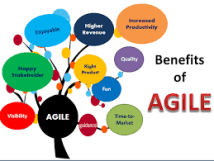
 Knowledge has become ubiquitous. The same applies to stupidity, greed, fundamentalism and the quest for power. Definitely, it applies not to peace, happiness or wisdom. In spite of undeniable progress with respect to income, medical care, education and technology last decades the world did not become a better place. The ubiquity of knowledge has not been very helpful. On the contrary, knowledge has been a steady accomplice in the decline of the earth.
 Printed or electronic sources in which knowledge is stored are ubiquitous too. The sheer number of scientific publications is doubling every 9 years since 1950
 Many teachers assume that students have to be saturated with disciplinary knowledge first before its application can be practiced. This outmoded idea has proven not to work because of the abundance of scientific knowledge, the blurring of disciplinary borders and the situated character of ‘real problems’. In stead, students acquire meaningful knowledge only if they learn to deal with unstructured problems from the first day they enter university. The development of a more structured knowledge base can wait and might be reserved for students who aspire a career in academia. Disciplinary bachelor programs might be replaced by the study of societal problems like environment, migration and integration, healthcare, energy and the like.
 Music: Listen, Look and Enjoy