


Smart cities intent deploying big data, information and communication technology to become more sustainable and livable. At best, they proceed not only in favour of their citizens but together with them in the first place. In addition, they enable citizens to develop initiatives of their own. So far so good.
Who is invited to the party?
The question is arising: who are those citizens? Or using Suketu Mehta’s words: Who is invited to the party? After all, making a living in big cities becomes unattainable for many. Buying an apartment in New York City is virtually beyond reach even for double-income couples. Not to speak about renting one. A mattress in a room in Chinatown NYC during an eight hours timeslot a day, costs you $ 200 a month.

Chinatown apartments – Photo: Getty Immages
Already now 50 percent of households in NYC spend more then 30 percent of their income at housing. Thirty percent of all households spend more than half of their income. As a consequence, 14 million households in the USA have already moved out of urban areas during the last decade. In the same period in Chicago only, the number of school children decreased by 145,000. We are in the middle of a large-scaled process of de-urbanization.
The real estate revolution
Saskia Sassen has been studying real estate in world cities since the eighties. Throughout this period, the size of speculative investments has increased annually. Over the past five years, rise has been spectacular. In 2015, it went up to $ 1 trillion, compared with ‘only’ $ 600 billion in 2014. More striking is that nowadays real estate transactions often include whole territories, for instance old industrial areas or railway yards. The purpose of these investments is demolishing existing structures and erecting fancy offices and expensive apartments. A recent example is the acquisition of Atlantic Yards in NYC for $ 5 billion. Currently a territory with small industries and homes. They will be replaced by fifteen giant apartment complexes.

Atlantic Yards, NYC – Photo AP
A similar phenomenon can be observed in London. The sale of entire areas – for instance the area of the Battersea Power Station – is accompanied by the privatization of public space. Granary Square near Kings Cross station is one of the biggest London ‘pops’ (private-owned public spaces) with its own rules and guards.

Granary Square, Kings Cross London – Photo: John Sturrock (the Gardian)
Booming housing costs: A global phenomenon
Booming housing costs are a global phenomenon. Even a sharp rise in rentals (sometimes 300%) indicates the beginning of gentrification in the favelas in Rio de Janeiro, which have become safer places due to pacification programs. The next next step will be large scale housing in cheap high-rise apartment buildings, as happened happening in many Asian cities. Leaving a lot of empty space for prestigous destinations.
The tragic human cost of smartification
In Africa, the process of smartification also took off. A number of smart cities are being built from ‘scratch’, for instance Eko-Atlantic City in Lagos (Nigeria). Bulldozers and police force are mighty tools in the process of their creation. Recently, the High Council of Nigeria has stopped the demolition of Mpape, a neighborhood of at least 300,000 inhabitants adjacent to the capital city of Abuja, because of the absence of any prospect of rehousing of the expelled residents.

The abolition of Otodo Gbame, Lagos (Nigeria) – Photo: Common Edge
In the end, the result of unbridled speculation might be that only the rich will benefit from smartification. Amsterdam too must be vigilant. During 2013 – 2014, property sales to investors increased by 248%. In 2016, the average price for housing increased by almost 23% compared with 2015 . Affordable rental is virtually non-existant.
Because of the exclusion of a large group of citizens, the process of smartifcation is at risk turning into a proces of foolification. Foolish cities are sterile cities, inhabited by a rich cosmopolitans. Without young people socializing at in the squares, craftsmen in their workshops, middle classes people in their shops and a diverse and plural group of inhabitants, they will become dead cities, in spite of all smart technology.
This is the second of a sequence of six reviewing aspects of the smartification of cities. Fiction or reality, mission or marketing, progress or illusion. This article has already been posted in The Smart City Hub.








 The value-added of campus universities should rather be sought in teaching methods where the degree of interaction between students and teachers goes beyond incidental questioning and answering in lectures and seminars. Think of tutorials (meetings a few students with a tutor), projects (intensive meetings of students, occasionally attended by a teacher), working groups in problem-based learning (10-15 students, who meet with a tutor regularly) and some types of training. Activities like these outperform the capabilities of education online with respect to the support of aims like critical thinking and problem solving. Unfortunately, the domination of lectures and seminars prevents that campus universities take advantage of this potential value.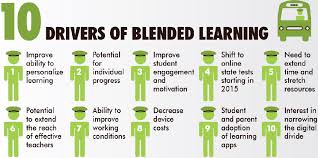



 At first sight, students’ and employers’ interests are opposed. The recent Reimagining Education Conference at Wharton University revealed quite a different perspective
 Luckmann and Prange compare the current approach to learning in universities with the development of enterprise software. The implementation of massive all-embracing software in companies seldom results in satisfying solutions. The same applies to a curriculum that has to serve hundreds of students at once. In software development the agile approach is gaining ground, which in essence is based on interaction between developers and customers, taking customers’ needs and wants as starting point.
 In the same way, agile universities will put the interaction between students and teachers in the centre. Therefor they rely in a large degree on self-organization. A rich variety of teaching-learning interactions appear, mostly based on co-design. Students are getting acquainted with a broad range of disciplines and learn to search, apply and deepen relevant knowledge in projects, favourably in collaboration with parties outside the university.
 Knowledge has become ubiquitous. The same applies to stupidity, greed, fundamentalism and the quest for power. Definitely, it applies not to peace, happiness or wisdom. In spite of undeniable progress with respect to income, medical care, education and technology last decades the world did not become a better place. The ubiquity of knowledge has not been very helpful. On the contrary, knowledge has been a steady accomplice in the decline of the earth.
 Printed or electronic sources in which knowledge is stored are ubiquitous too. The sheer number of scientific publications is doubling every 9 years since 1950
 Many teachers assume that students have to be saturated with disciplinary knowledge first before its application can be practiced. This outmoded idea has proven not to work because of the abundance of scientific knowledge, the blurring of disciplinary borders and the situated character of ‘real problems’. In stead, students acquire meaningful knowledge only if they learn to deal with unstructured problems from the first day they enter university. The development of a more structured knowledge base can wait and might be reserved for students who aspire a career in academia. Disciplinary bachelor programs might be replaced by the study of societal problems like environment, migration and integration, healthcare, energy and the like.

 The majority of contemporary universities are realizing these outcomes only partially. Research in the US has revealed that about 40% of college students did not make any progress with respect to analytical and critical thinking skills in four consecutive years
 Universities can economize by flipping their classrooms radically and supporting their students in choosing appropriate open educational resources like MOOCs (= massive open online courses). At this time, MOOCs cover any part of scientific knowledge. The best scientists are involved in their development and educational technologists have designed the best visual support. The only expenses relate to delivering feedback at student’s assignments.

 Hierarchical personnel management and extensive planning and control systems enabled late 20th century companies to produce massive volumes at low prices for relatively stable and continuously growing markets. Nowadays, the environment is changing at high-speed, requiring flexibility and development of new products in short notice. The labour force is well educated and prepared to take or share managerial responsibility. At the same time most workers feel disengaged under conditions of vertical control.
